Alma Mater

Sara's GHS diploma, 1939

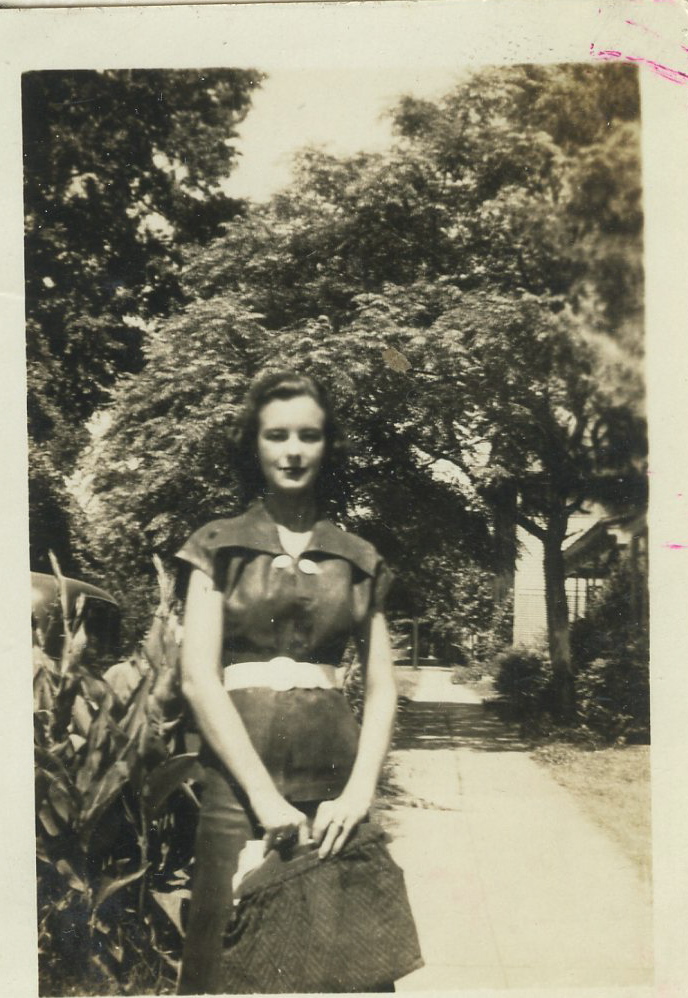
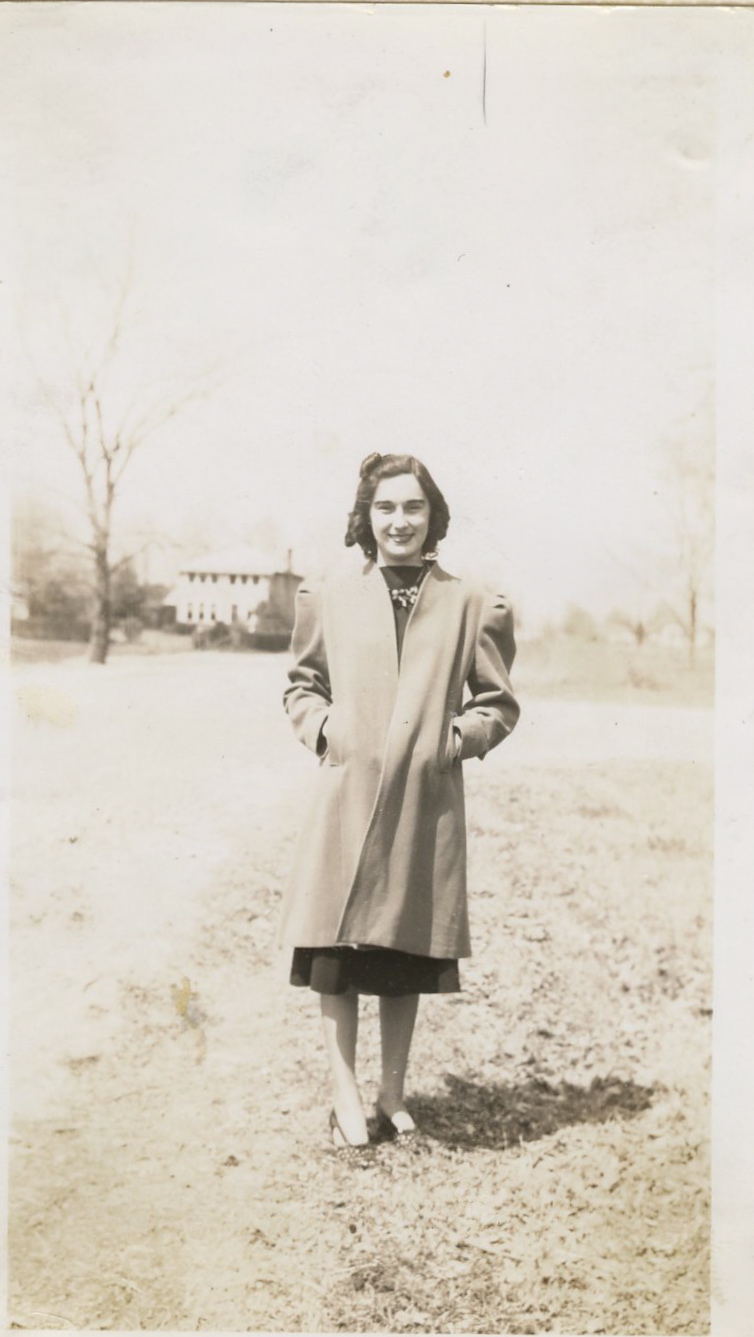
“In May of 1939 I graduated from Greenwood High School. There were a lot of parties, and it was an exciting time in our lives. That summer I spent a month in Jackson with Leota and was having so much fun I did not want to come home. Mrs. Taylor wanted me to stay with them and go to Millsaps College in Jackson, but Mama would not even talk about that.

Carlton Notgrass, Sara and Jack Locke, in front of Leota Taylor's Belhaven home, 1939.

“On September 10 I went to Delta State and met my roommate, Martha Frances Harris from Water Valley, for the first time. We had a room on the third floor of Ward Hall. We liked it up there because you were further from the matron of the dormitory, Ethel Gillespy, whom we called Toodles behind her back. She was very strict and was always leaving us little notes telling us to clean up our room.

DSU coeds, 1939-40; Sara is fourth from left; her roommate, Martha Frances Harris is far right.

“There were a few cute boys at Delta State, but the girls outnumbered the boys, making dates sort of scarce. We thought the boys were ‘rural’ as we called them. Most everybody over there came from small Delta towns, and since there were probably less than 400 students you soon knew nearly everyone. There were one or two football players I would have liked to have dated, but they treated me like a little sister.
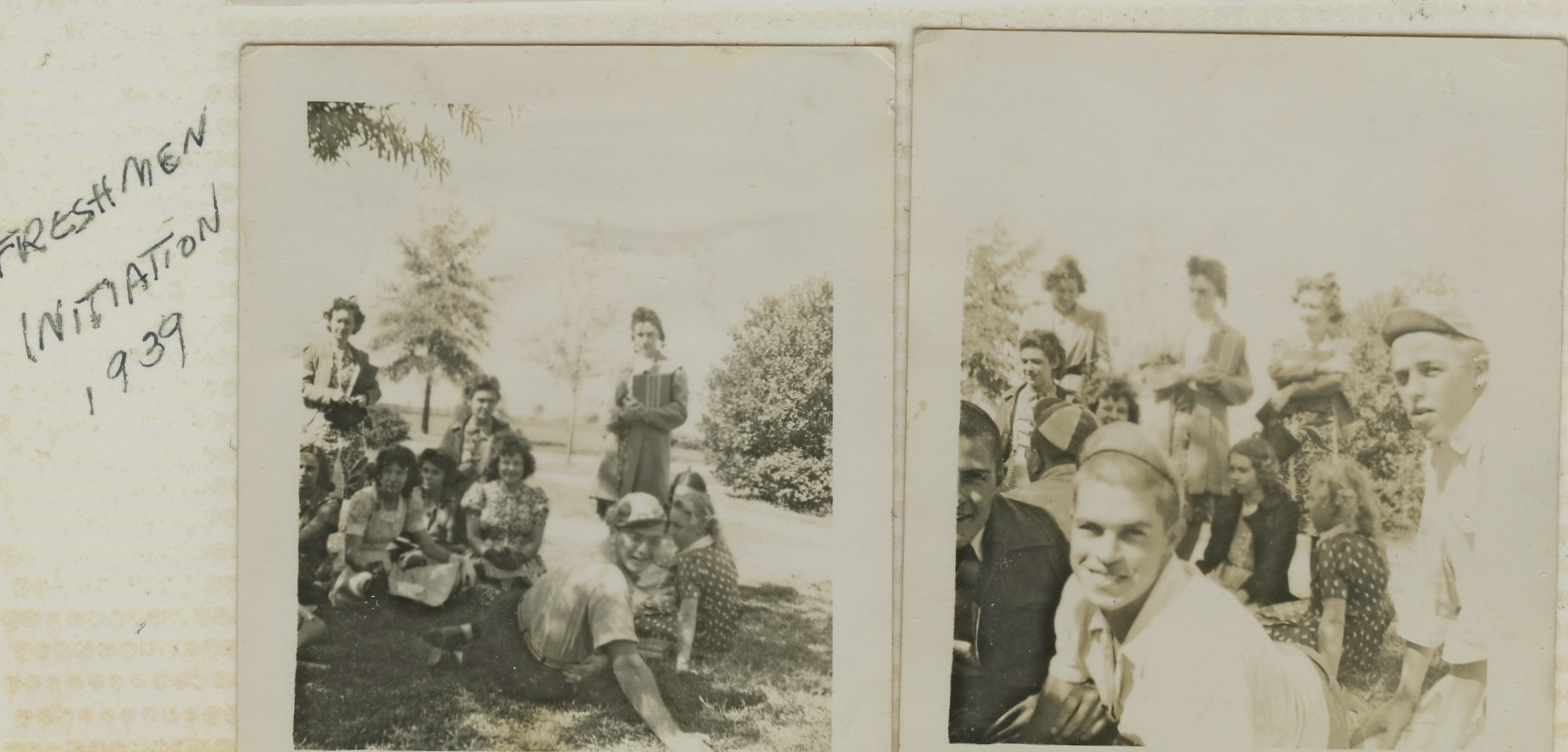
Freshman Orientation

Then all the freshmen boys had to have their heads shaved by the upper classmen, and if they had been cute we wouldn’t have known it.
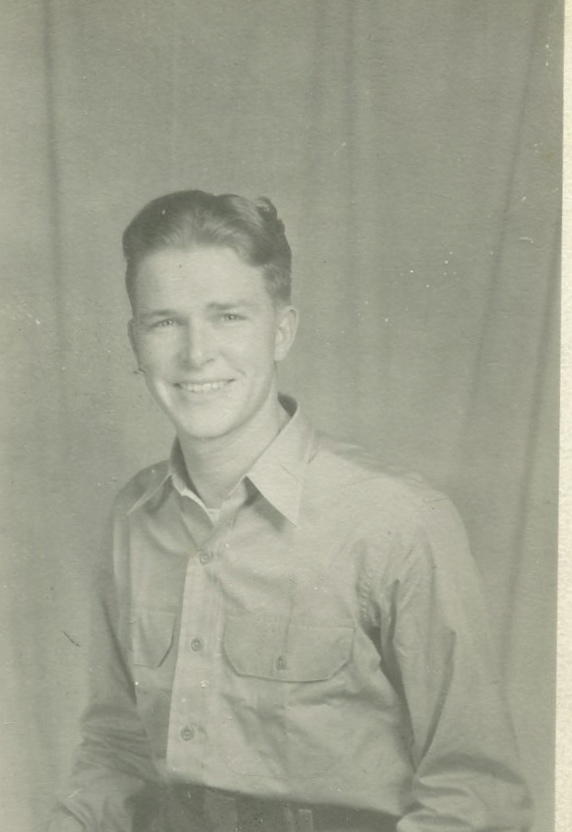
T.D.Wood, Sara's friend from 18 to 80.

“T.D. Wood, who was my age but a senior in high school, and I started dating every weekend and meeting at the little store on campus every afternoon. I had known him casually before I went over there. He was a good looking blonde and had it not been for him I am not sure I would have stayed there as long as I did. I did not care for some of my dormmates, most of my courses were a repeat of what I had already had in high school since I was taking a lot of business courses, and I hated the strict rules. Unless we could catch a ride with someone we had to ride the ‘bus’ to and from Cleveland. The bus was a big black car driven by a Mr. Wynn. He would stop and pick up passsengers all along the road, and sometimes he would take his girl friend with him, and it would be so crowded he had to ride with the door on his side open. I think we paid $1.00 to ride.”
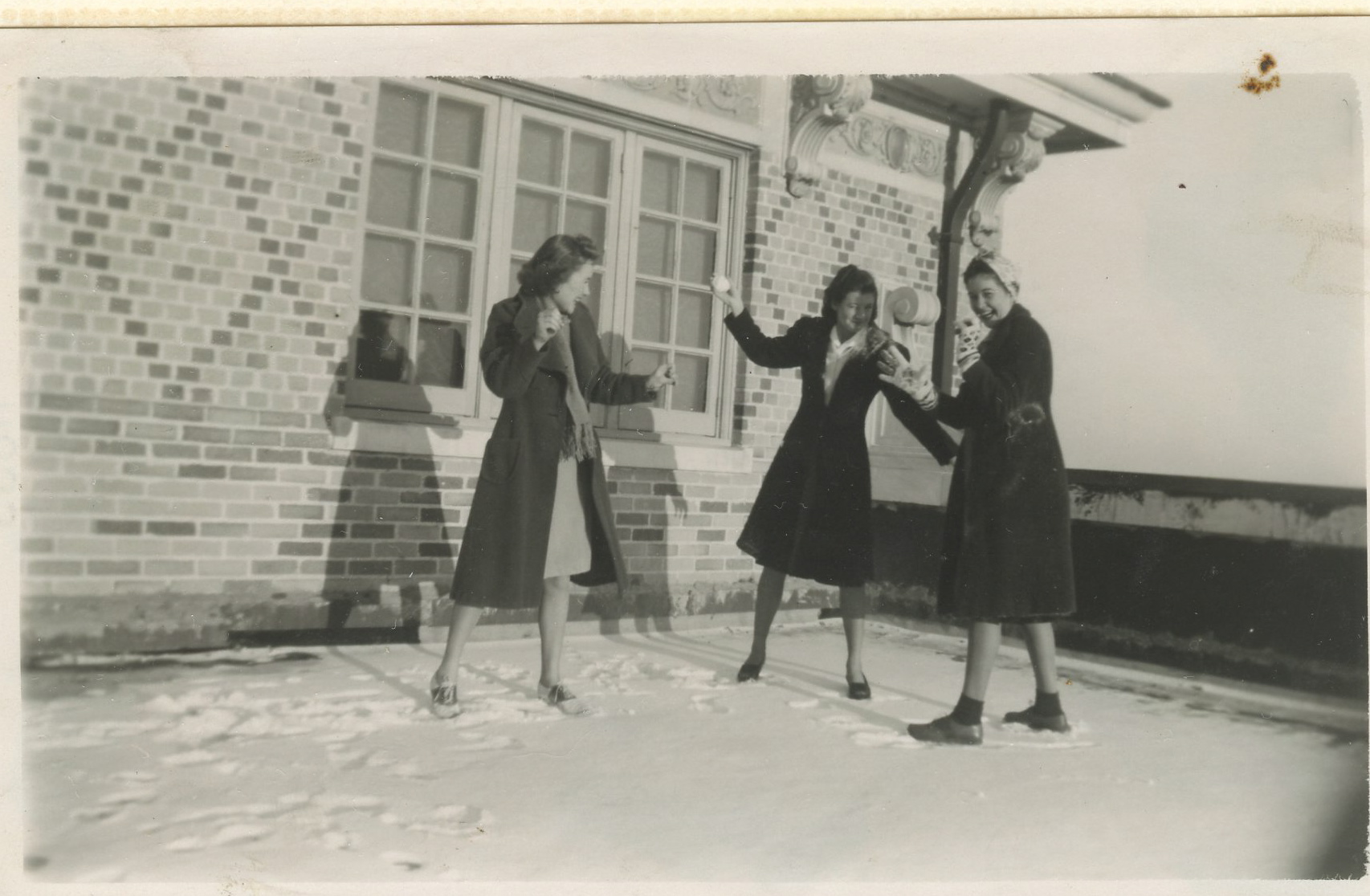
January, 1940 snowball fight on Ward Hall roof

Posted in Uncategorized | Leave a comment

Dancing on the Roof

Sara and Russell on the Heidelberg Roof, late 1940s

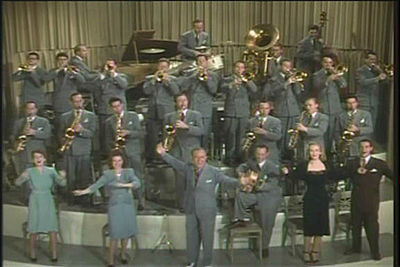
“This was the big band era, and we listened to the radio a lot. The Hit Parade on Saturday night would feature the top ten tunes of the week. We listened to Tommy Dorsey, Kay Kyser, Glenn Miller, Bennie Goodman, Sammy Kaye and a lot of others. Their programs would be broadcast from the ballrooms of big hotels. Many of the hotels had ballrooms on their roofs with an orchestra playing every night. We got to go on the Heidelberg Roof in Jackson, the Peabody and Claridge in Memphis and after we married to several in Chicago and New Orleans.”

Have you ever seen a happier couple than those two on the Heidelberg Roof? I’m not sure if that was taken before or after they married, but Russell has to be thinking that downtown Jackson is a long, long way from Anzio, and Sara’s life seems to be turning into all that she ever dreamed. Cathy and I are not even a blip on the radar in this photo, and that’s as it should be. I’ve always believed that my mother and father were happy before parenthood, during parenthood and “after” parenthood (i.e., they finally got their house back and told us to solve our own problems, thank you). I’d like to insert myself into that ballroom, anonymously of course, and buy them a round of drinks, delivered with a little note: “It’s just going to get better and better, because you found each other. And thanks for all you’re going to mean to so many people.”

Posted in Uncategorized | Leave a comment

Typing and Taking Off


Tattletale Buddy Stott with Rena Stott ("Rawa").

“With so many folks at our house you couldn’t get by with anything without someone finding out about it. One night I had a date with a boy named Bobby Garrard, and we were double dating. Hattie Chambless and I had to be home by eleven, but at nine they decided to check in on a dance in Clarksdale, sixty miles away. We drove ninety miles an hour and got back home on time. I prayed all the way. The next day Buddy Stott confronted me at the dinner table. Bobby had bragged about our trip up at the corner service station.

“I took shorthand, typing and bookkeeping along with my other subjects and always took five instead of the required four subjects, finishing school with extra credits.

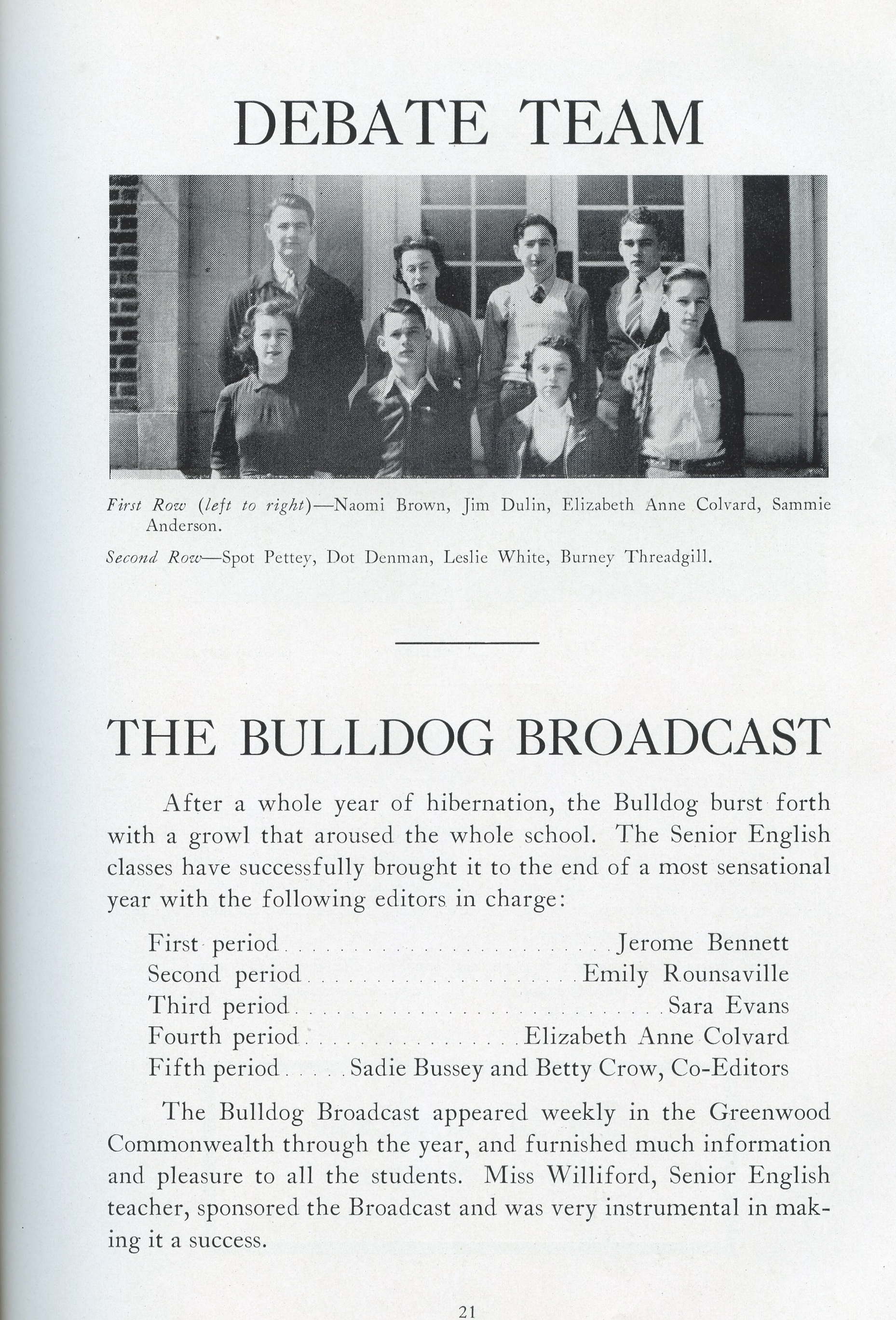
Page from 1939 Deltonian. Wonder why the newspaper staff didn't get their picture in here?

I was editor of the paper, the Bulldog Broadcast, and class historian my senior year. I was in the Dramatics Club and performed in one or two plays but soon realized there was no talent there. Most of those in the club had taken ‘expression’ lessons, which taught them how to recite and speak with expression.

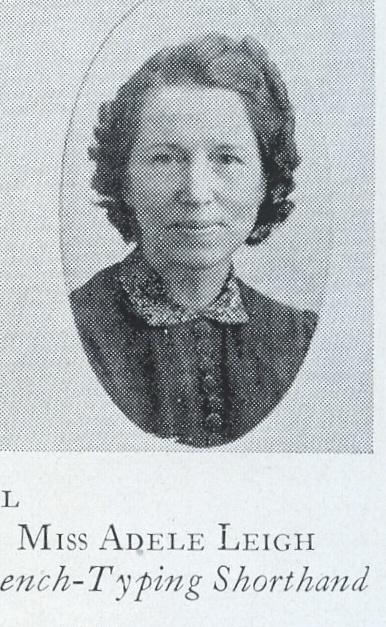
Miss Leigh, who probably had to teach Sara shorthand and typing. I'm sure they didn't pay her nearly enough.

“Mama had preordained that I should go to Delta State with Mary and that I should take secretarial courses so that I could get a job after one year of college. I think she had decided on the same course for Mary, but Mary soon decided that she hated typing. She went on to four years of college and became a teacher.”

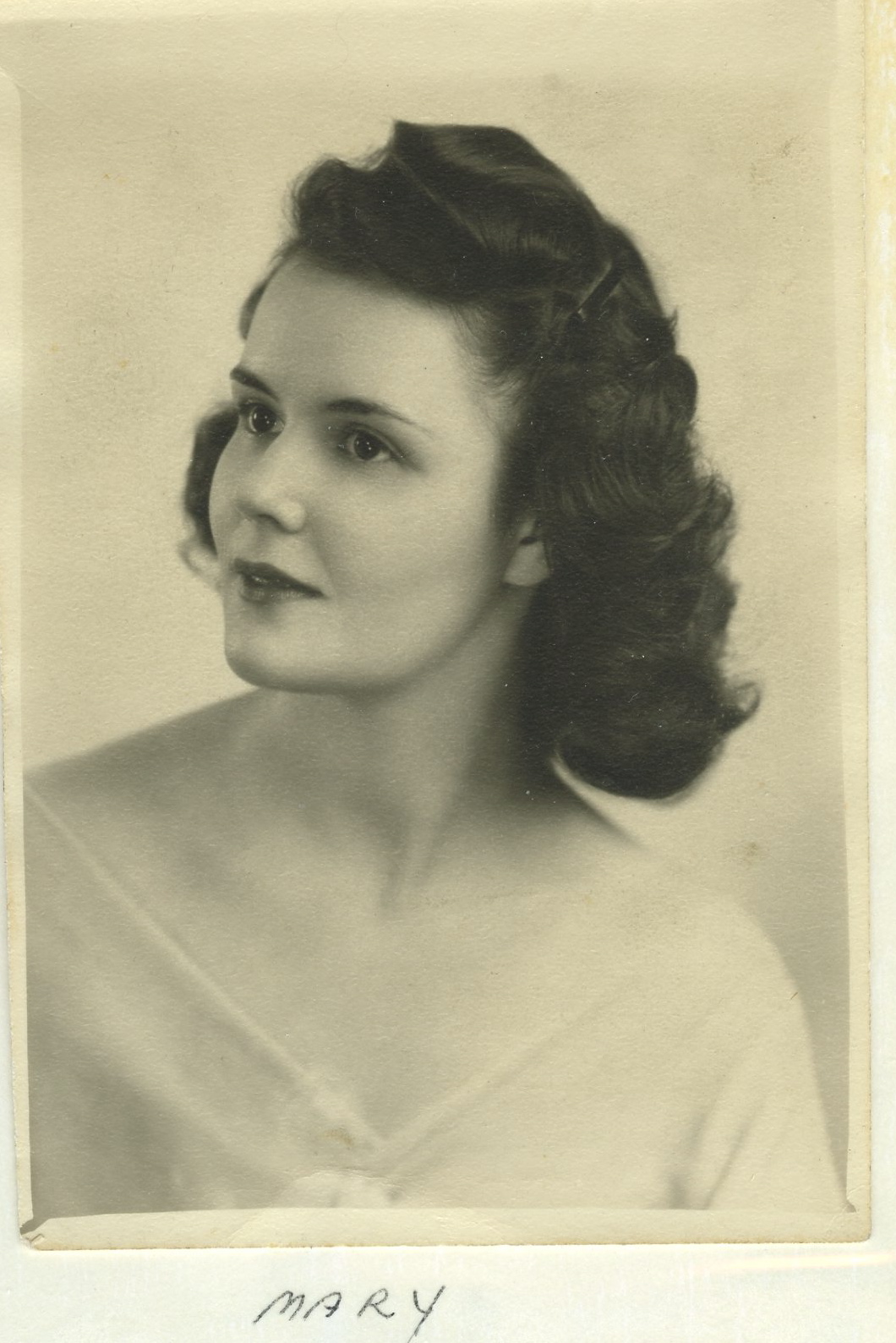
Mary Olive Evans ("Mamie"). Senior portrait, perhaps? Tiny definitely wasn't the only beauty in the family.

Jessie was intensely practical in sending her older girls out into the world, anticipating more of a boomerang effect than a slingshot. One year of college was the expected course, followed by a quick return to the safety of Greenwood and a brief secretarial career before marriage to an acceptable young man (and no ballplayers with watermelons and convertibles need apply). Tiny followed the course, with one infamous year at Ole Miss, a short time at Chassaniol Cotton Company and then settling down as a planter’s wife in Minter City. Mamie would not fit so easily into the mold and hung on tenaciously at Delta State for four years before beginning her teaching career in Itta Bena. Sara’s Delta State exploits were short and sweet and will be featured in the next few days.

By the time my generation came along, the expectations of these three women were dramatically different than Jessie’s. All of their children were expected to not only go to college but to finish college and make the Greater Evans Family proud in the process. If I had flamed out at Mississippi College, I believe I would have fled the country rather than come home and face Jessie and her daughters.

Posted in Uncategorized | Leave a comment

GHS, Class of ’39

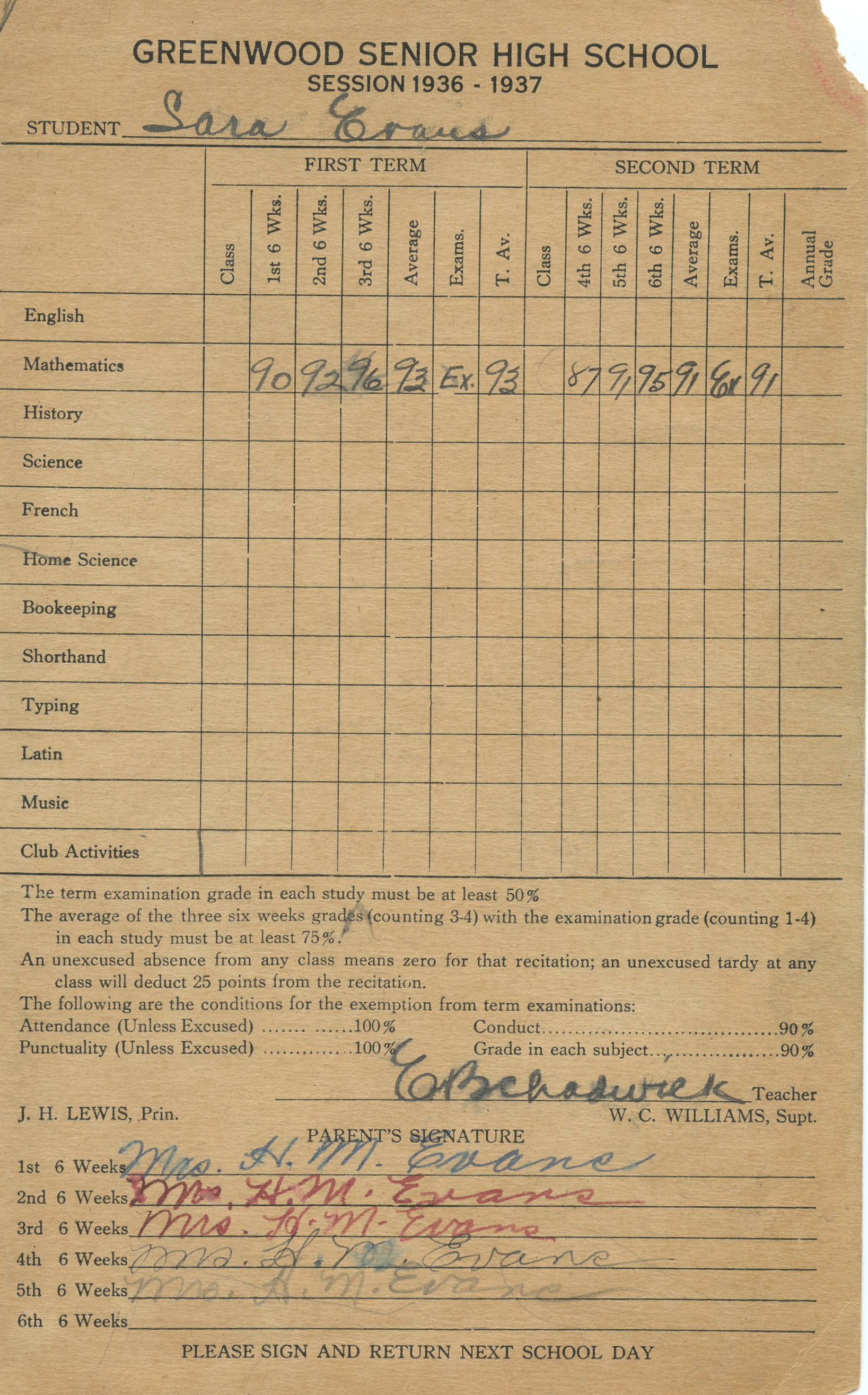
Sara's Geometry report card, signed by Coach Chadwick. If he hadn't been so cute, she might have made 100s.

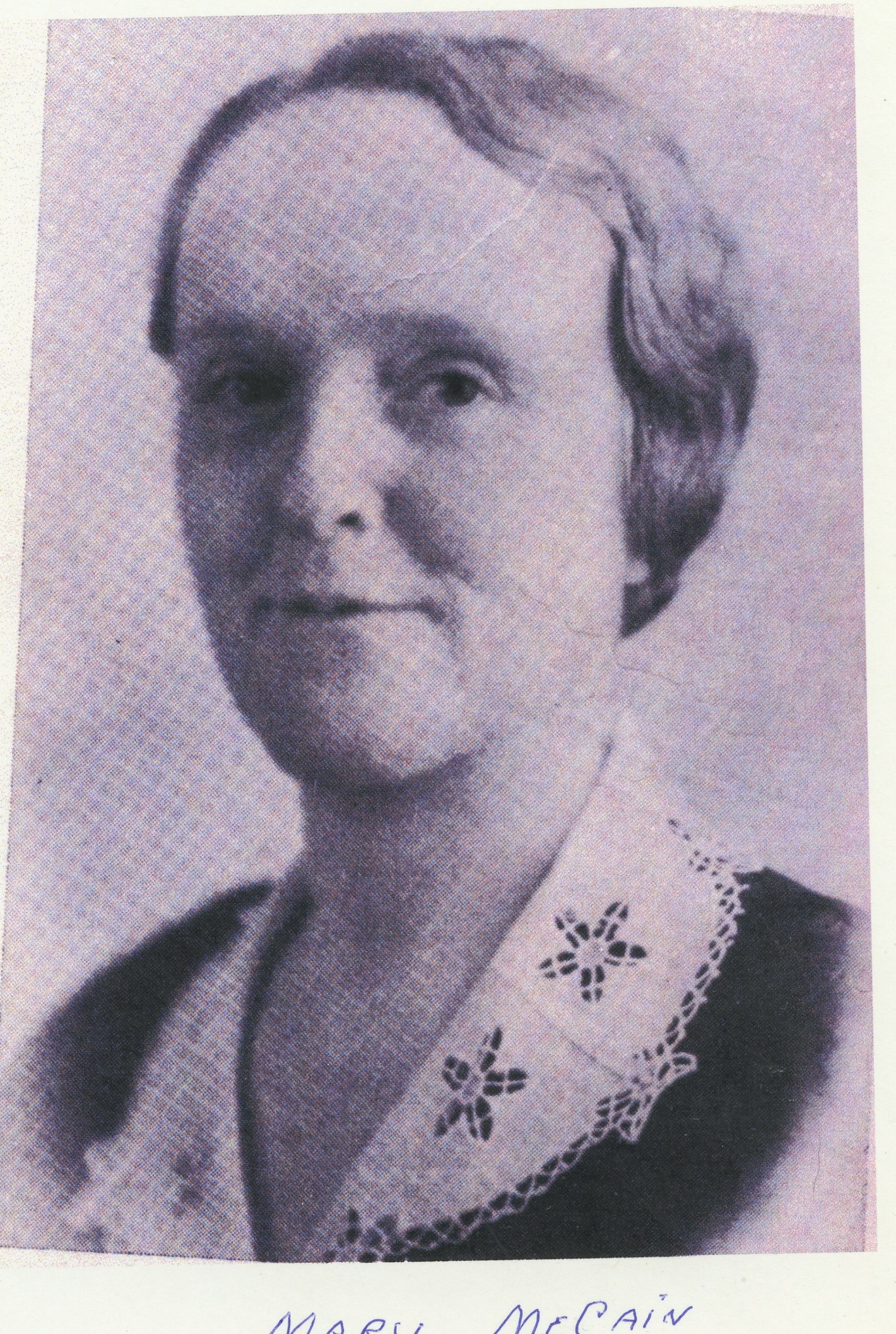
“I had a lot of fun in high school. I managed to make good grades and get in the National Honor Society, but I never liked to study and worried Mama because I didn’t bring many books home. We had some really good teachers in those years. One of the best was Miss Mary McCain, who taught me American History. When you left her class there wasn’t much about American history you didn’t know. I did a term paper on Andrew Jackson and felt like I knew old Andrew pretty well when I got through with that. She is now 90 years old [1990] and still a very good friend, and her mind is as sharp as it was back then.

Miss Mary McCain

“We had several good English teachers who gave us a very good English background. I feel that it was the knowledge I got from them that enabled me to later write for newspapers without any journalism experience.

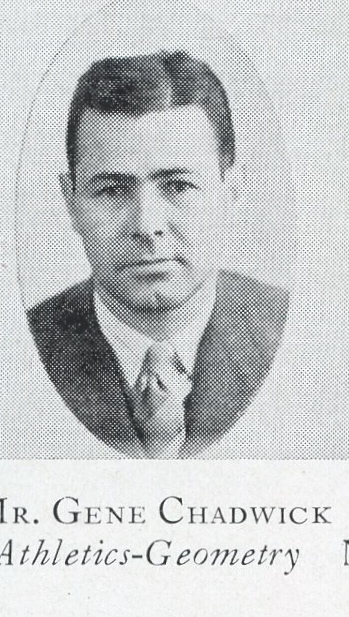
“The girls all had crushes on the football coach, Gene Chadwick, who was a bachelor and sort of the Clark Gable type. He had a terrible temper, and the kids said he would throw blackboard erasers across the room if he got mad, though I never saw him do it.

Coach Gene Chadwick

He was a big flirt, and the girls flirted with him. He taught geometry, and we didn’t learn much but had fun looking at him every day. He let me help grade papers, which flattered me, I guess, but which, of course, was not very ethical. He came to a high school reunion we had in 1978, and in 1985 I attended his funeral in Cleveland. He had died with cancer.”

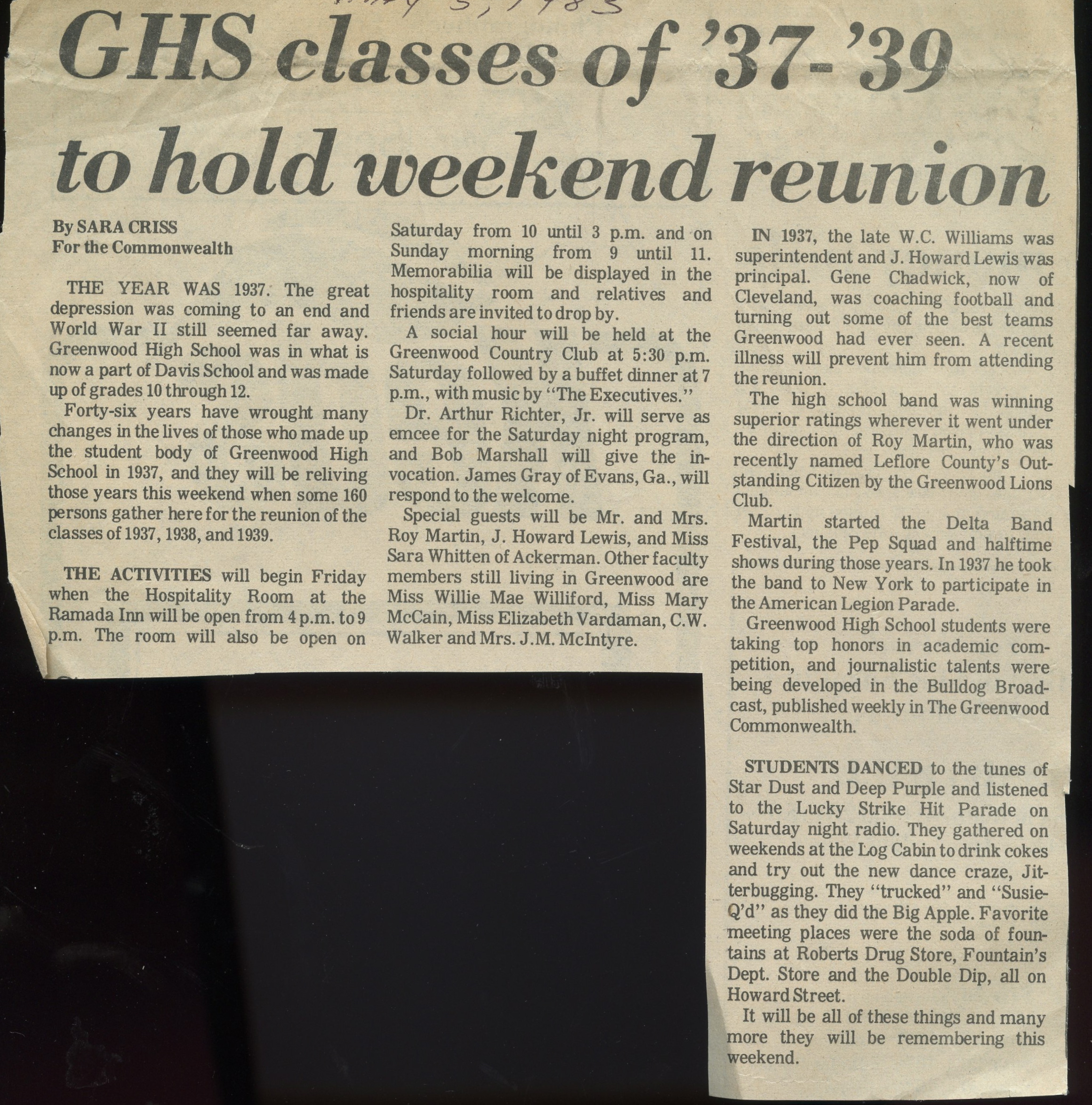
Sara's Commonwealth article about the 1983 GHS reunion for the classes of '37, '38 and '39.

I love that old photograph of Miss Mary McCain. Look back at it and try to imagine her as anything but a crackerjack high school history teacher. She is so confident and so full of spunk and, according to Sara, she could make the driest epoch in American history jump off the pages and dance. Sara would take me over to visit with Miss McCain in her big white house on East Claiborne, when she was well into her 80s. She was so lively and so interested in everything, both in Sara’s life and mine. Books lined every shelf and she could easily discuss any topic that came up in conversation. I found her so fascinating that I began writing to her occasionally, and I’ll bet I still have the letters from her in a box somewhere. And I hope they’re still making teachers like Miss Mary McCain, who left her mark on  so many young Greenwood minds. Talk about priceless.

And Coach Chadwick? I know Sara was crazy about him, but cute high school coaches are generally trouble waiting to happen. Regardless, if you were a teacher, wouldn’t it make you feel good to know that your students would track you down for their 40th class reunion and show up for your funeral, half-a-century after you tried to teach them about equilateral triangles? I hope he knew how much he meant to those kids.

Posted in Uncategorized | 2 Comments

Star Dust and Strikeouts

“On March 31, 1938, Tiny and B.J. were married at a friend’s house in Jackson and went to New Orleans on their honeymoon. B.J. was still over at Mississippi State, and he and Tiny lived in Starkville until the end of school. They had announced their engagement at a dance over there, and the orchestra dedicated ‘Star Dust’ to them, and I thought it was all terribly romantic.

Jessie Evans ("Tiny"), about 1936

“Buddy was at State so the crowd had thinned out some at 115 East Washington and Mary and I had moved upstairs. In the summer of 1938 my friend Mack and I somehow convinced our mothers that we were old enough to date baseball players. We had been going to all the ballgames and had met a few. I dated a school teacher (at least he told me he was one) from Cornwall, Pennsylvania, named George Patton. He was a catcher. She dated Woody Combs, who coached at a high school in Georgia. We both fell head over heels in love with them, even though we only dated them about the last month they were here.

“It was easy to fall in love when you were seventeen. We would go to the ballgames and watch them play and then they would come to see us after the game. We even talked Mack’s mother into taking us to Greenville and to Helena, Arkansas to ballgames. The trip to Helena was especially exciting because we had to cross the Mississippi River on a ferry boat and got to be with them on the boat. They rode home with us.

Eddie Amelung, Woody Combs and George Patton on Mississippi River ferry.

“We would go to Giardina’s and the Alice Cafe, which was on Market Street. They would drink beer, and we would play our favorite tunes on the nickelodian. Our favorite was ‘Thinking of You’ by Kay Kyser, and after they left we would cry when we heard it.

Kay Kyser and his band

George Patton and Woody Combs

They left for their respective homes in late August, and Mack and I just knew we would never want to date another high school boy after our exciting summer. We corresponded for about a year, but after that we had gotten interested in others closer to home. About five years later I got a call one night from my ballplayer friend. He was stationed at Camp McCain in Grenada and wanted to come see me. He did come, but the spark was gone, and I didn’t want to be with him. In fact, I could not see why I had ever been interested in him at all.

“I dated some of the players the next year, but by this time Mama was not liking the idea too well. She looked out one afternoon and I was going by in a convertible with three of them (one of whom was Tucker Clark from Morgan City) with a watermelon. I really caught it when I got back home and she told me that it was ‘common’ for me to be riding with them. I usually managed to have a good time, but it was not always to Mama’s liking.”

George Patton and Sara, 1938

The only comment needed here is that “common” was as low as you could go on Jessie Evans’ scale. And I doubt that Sara was ever in a convertible with a watermelon again.

Posted in Uncategorized | Leave a comment

The Dating Game

Sara in front of the Stott house, which may have been a safer place to meet dates than inside.

“Having a date was not always easy at the Stott house. Bama would stay dressed and take her seat in the front hall or on the porch in the summer to wait until a date arrived. Often one of the neighbors might also be visiting when they arrived, and you had to make introductions to all of them. On the other hand Mama was most often not dressed and had closed up in her bedroom to read and would not come out to meet them. I am sure some of the boys thought either that we did not have a mother or that there was something wrong with her.

“Big, who usually went to bed anywhere from six o’clock on, might think of something she had forgotten to do and come parading down the hall in a thin nightgown. Mama had told us not to go in the kitchen at night because we might wake someone up, so that made it a little hard if your date asked for a drink of water.

Olive Stott ("Big") in front of the old River Road hospital

“One night I had a date with a boy named D.T.Francis, who fortunately was just a good friend and someone I was certainly not romantically interested in.

D.T. Francis, who received an unexpected gift at the Stott house

One of the neighbors had called Big to ask if she had a bedpan they could borrow. The doorbell rang, and before I could get to it Big met D.T. and handed him the bedpan. Another time Tiny came in with a date and on the porch stumbled over a drunk man passed out on the floor. His last name was Evans and someone apparently directed him to our house, thinking he belonged there.

“Another time, trying to show my manners, I asked Tiny’s date to ‘sit down and come in.’ Some of the others heard me and teased me for a long time, asking me how he was supposed to get the chair in after he sat down.

“Mama would caution us not to stay up too late with a date on the porch glider because Big was in the habit of getting up at all hours and she might appear in the nightgown. Whenever we got in from a date we had to go in Mama’s room and over to the bed and tell her we were in, so there wasn’t much chance of us staying out past our deadline.”

Would you risk coming in late to face this mother?

Posted in Uncategorized | Leave a comment

Jessie and the WPA

Jessie and Tricia

“Tricia had started to school, and Mama decided to brush up on her shorthand and typing and try to get a job. She had not worked since before she married. There weren’t many jobs available then except those provided by the New Deal, a program started by President Roosevelt to help pull the country out of the Depression. The Works Progress Administration, or WPA as it was called, provided jobs for thousands of people, building roads and streets and public buildings, and developing recreational programs and parks, writing projects and numerous other activities.

“Mama got a job doing secretarial work on one of the projects, and she, like many of the others, continued to hold a job long after the WPA was phased out. Though there were many jokes about the WPA being a waste of money, it helped an awful lot of men and women find work. Many of the people who held WPA jobs had been wealthy or had had good jobs before the Depression hit.”

Jessie, dressed for work in front of the Stott house.

What kind of courage must it have taken for Jessie, 43 years old, unemployed for more than twenty years after the briefest of secretarial careers, to march out of that safe house on East Washington Street, turn towards downtown and present herself as someone with something to contribute? Her days at the business college in Memphis must have seemed like a dream, dimmed by years of marriage and children and sudden widowhood and struggle. I’m fairly sure Big and Uncle Roy didn’t push her to look for a job once the last little Evans was out the door to Davis School. But she did, and she got herself hired and she never looked back.

My early memories of my grandmother include visits to her office at the Red Cross building on the south end of Howard Street in the old fire station. Granny’s desk was off to the left side behind the huge dark counter, and its drawers were full of thick white note pads and sharp pencils and mysterious forms dealing with every conceivable sort of emergency aid. She let me type on her manual typewriter and gave me nickels to feed the Coke machine in the dark, cold storage room behind the office. When I had reached Junior High age, I would walk over and have lunch with her on occasion, and I like to think she continued working there for as long as she did so we could have those visits. I wish I had realized then what a brave lady she was to have created a career for herself. I just thought she was a cool granny.

Posted in Uncategorized | Leave a comment

Nicotine Fits

GHS boys, 1938. Good clean fun, no drinking.

“The Depression was not over but things were beginning to get better. It had had at least one good effect in that we were all pretty much equal. Only a very few had much money to spend, and I can only remember two girls who had their own cars, which made them more popular with the boys, who didn’t have cars of their own either.

“There was very little drinking and that was done by a few of the boys. I only remember seeing one girl take a drink while I was in high school. My friends would drive out to little stores across the tracks run by Chinese and buy cigarettes for one cent each. They smoked them while riding around but never took them home. I did not try one because I knew if Mama ever smelled the odor of tobacco on me she would throw a fit. On one occasion I was glad that I had not smoked because four or five of us were riding around and since they had only one cigarette they each took draws off it. The next day Mack turned up with a terrible case of scarlet fever, which was contagious, and they had to sweat it out, afraid they would get it from that cigarette. Fortunately none of them caught it.

Lucille McAlexander, the motoring terror of Poplar Street.

“Another time Lucille and Mack and I left Lucille’s house on Bell Avenue and drove down Poplar Street, which was then just a gravel road, and just a block from her house Lucille and Mack lit up and Lucille lost control of the car and went into a deep ditch. We had to get a wrecker to pull us out, and she had a hard time explaining how she lost control of the car that close to home.”

Mack Standifer, Sara and Lucille's partner in the ditch.

I am understanding more and more as I work through this memoir why Cathy and I got away with at least our share of indiscretions during our teenage years. There were hijinks skeletons rattling around in Sara’s closet, and I think she always knew that sticking a tentative toe over the line of good judgement was not a harbinger of a life of dissipation. For those of you who did not live in Greenwood, be reassured that Sara, Lucille and Mack turned out to be fine, upstanding citizens, if not necessarily good drivers.

Posted in Uncategorized | 1 Comment

Jake Joins the Pep Squad

Greenwood High School band, 1939

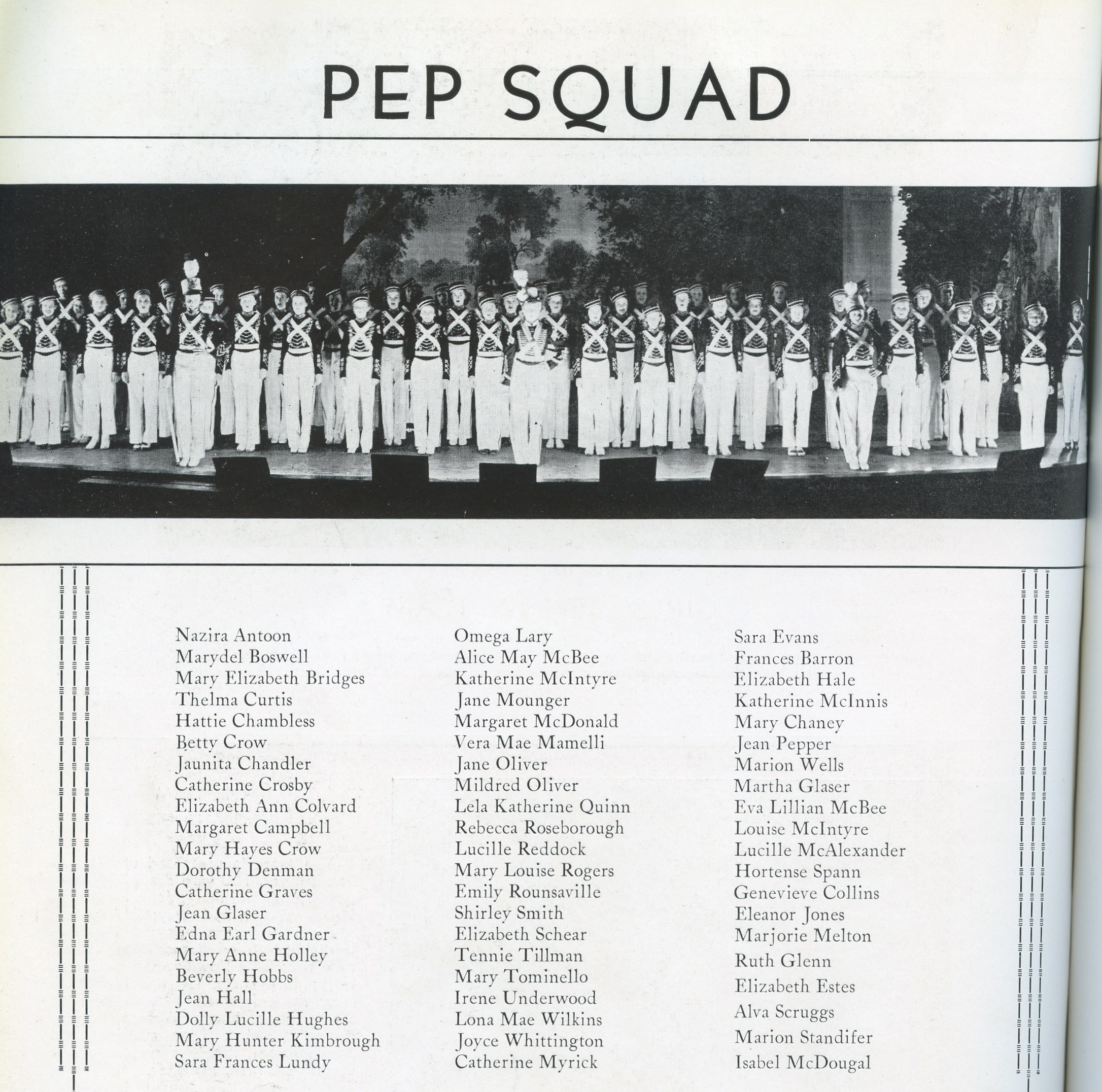
“We [Sara, Lucille McAlexander, Mack Standifer] joined the Pep Squad, a group of girls who marched with the band and cheered at the football games. Roy Martin, the band director, was noted for his big halftime shows, and we had to practice in the afternoons and at night before a football game.

GHS Band Director Roy Martin

“If you got out of step, which I often did, he would scream at you in front of everybody, but we all respected him and liked him. We were warned never to run off the field but to march off in formation. One night one of the girls, Alice May McBee, got confused and we messed up on an intricate drill and all ran off the field despite his prior instructions. He kept us there until midnight drilling, even though many were supposed to have dates after the game. It never happened again.

Pep Squad members in New York City. The infamous Alice May McBee is fourth from the right.

“Mr. Martin produced some of the best high school bands in the country. He died in 1985 at the age of ninety, and he and I were still very good friends even though I still remember the time I was out of step and he said ‘Jake, you’re out of step!’ and looked right at me.

The 1937-38 Pep Squad.

“We rode on a school bus to out-of-town games in places such as Belzoni, Leland, Cleveland or Clarksdale and Greenville, and we marched in the Christmas parades, the early Delta Band Festivals, and in the parades before the football games.”

Sara loved Greenwood High School all her days. One of my favorite childhood tales, which I would beg her to tell me over and over and over, was the saga of poor hapless Alice May leading the Pep Squad off the field. Actually, the way I remember Sara’s account, Alice May led them in the completely opposite direction from where they were supposed to be headed and they randomly marched around the field for awhile before dissolving into chaos as the football team stormed back out of the dressing room. This story would have me doubled over with laughter, which got Sara going and we would both be howling at the antics of a bunch of high school girls from long, long ago. And when she did something clumsy (not a rare event), Daddy would call her “Jake.” Notice that she is not on the front row in that Pep Squad photo; I suspect that she, Mack and Lucille were tucked safely in the back line, out of step and cutting up.

Posted in Uncategorized | Leave a comment

Three Musketeers

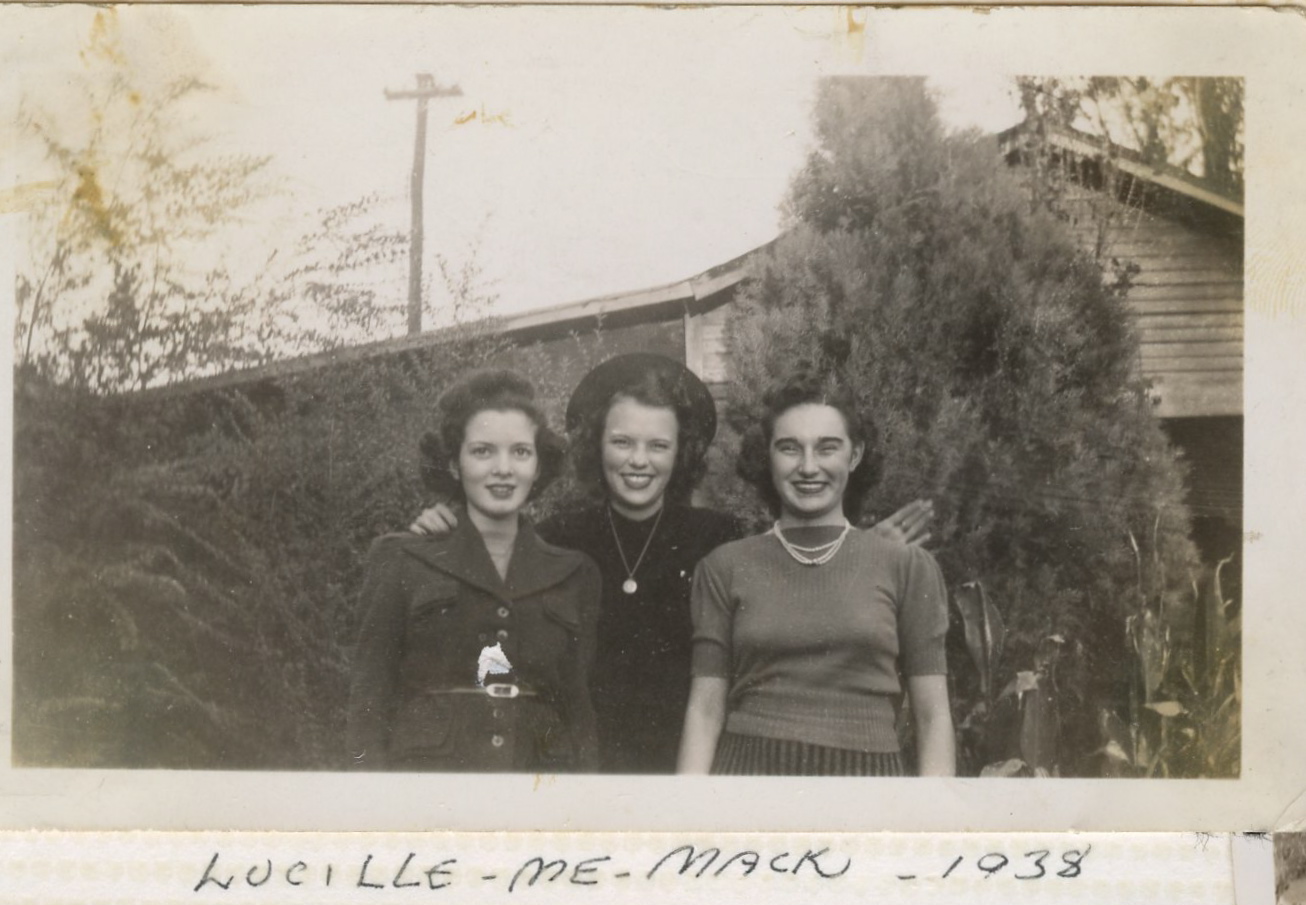
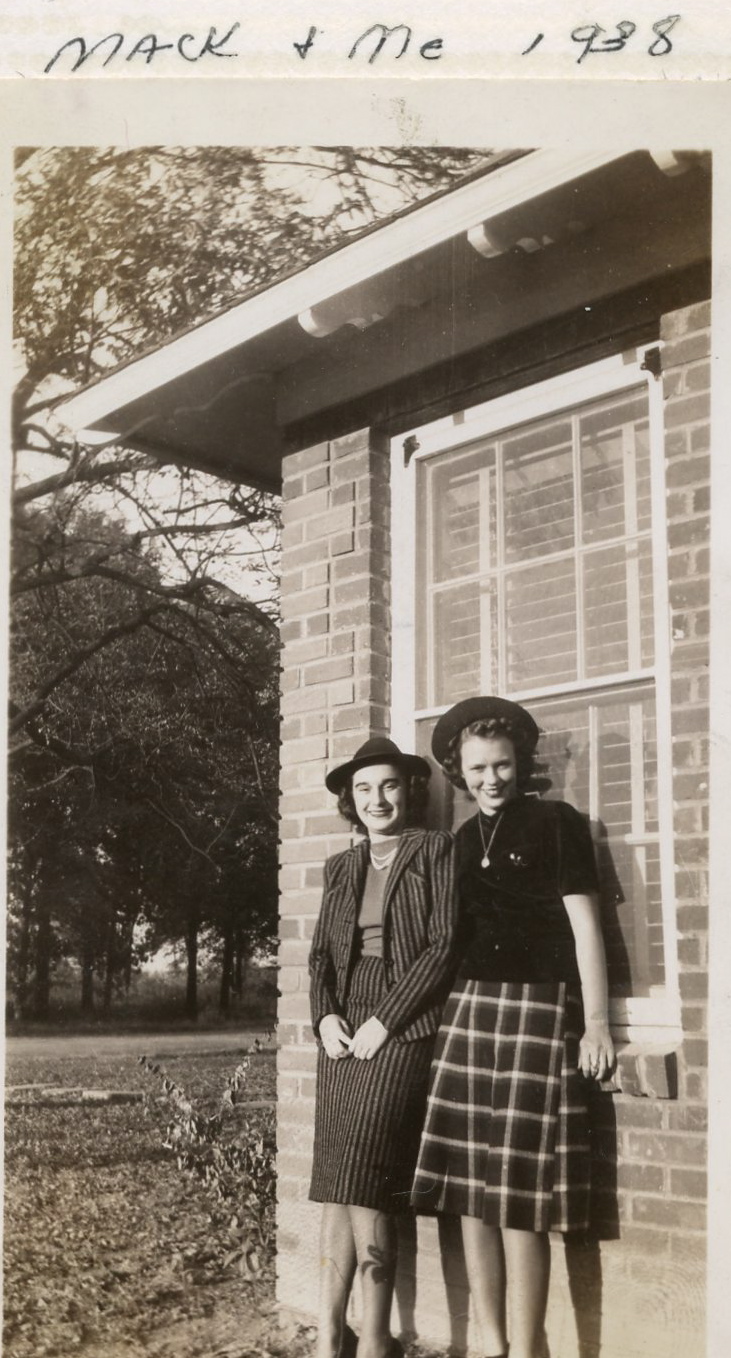
Lucille McAlexander, Sara and Mack Standifer, 1938.

“I went back to Jackson that summer of 1937 and again had some of the most fun of my life. The Taylors were such a fun family and did everything to make you have a good time. In the fall Mary went to Delta State Teachers College in Cleveland and Tiny stayed at home and worked at Chassaniol Cotton Office.

Sara loses it. Her friends are patient.

“I began my junior year of high school in September, 1937 and became inseparable with two friends, Marion (Mack) Standifer and Lucille McAlexander. We double dated a lot and I spent the night with them real often. Mama said we could not have anyone to spend the night at our house because she was afraid we would disturb Uncle Roy and Big, who went to bed very early.

Marion "Mack" Standifer

“They both had cars and we rode around a lot. Mack’s mother was a widow and had a very old car which sat in the garage most of the time since they could not afford to buy gas for it. She was renting rooms and trying to make ends meet but also trying to do everything she could to make us have a good time. We would pool our nickels and dimes to buy fifty cents worth of gas and ride until it gave out. Lucille’s folks had a nice car, and she always managed to have gas so with the two of them we could usually ride. I did not know how to drive, and of course we did not have a car, so I had to depend on them for a ride.”

Mack and Sara at the McAlexander house, southeast corner of Poplar and Bell Avenue. Surely they were dressed up for something special and didn't just hang out in hats and heels.

There’s just a hint of the Depression left here in Sara’s writings, an offhand reference to taking in roomers and scrabbling together nickels for gas money. These three girls look like they had weathered one of America’s most disruptive periods, the beginning of which had found them barely school aged, with a great deal of optimism and a sense of unlimited futures. If you lived in your aunt and uncle’s house and couldn’t have company over, that’s fine. If your widowed mother has a car but keeps it parked for lack of gas money, that’s just a challenge to be met. You’re seventeen and the world is your oyster, even if you’ve never seen an oyster in Greenwood, Mississippi. Just wait.

Posted in Uncategorized | 3 Comments