Crisco Connection

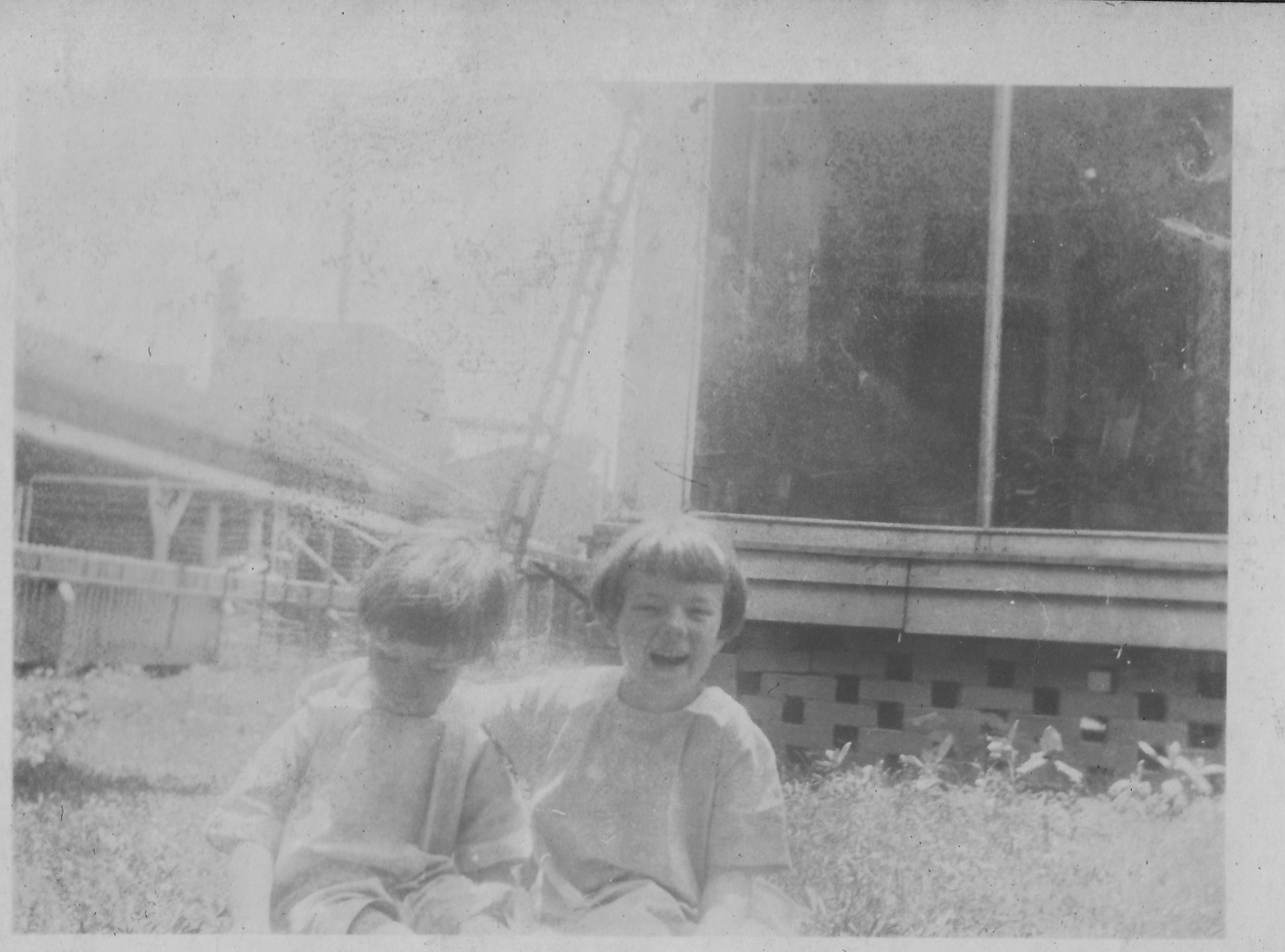
Mamie and Tiny at the Buckeye house

“We later moved to a house on Mississippi Avenue, stayed there a short time, and then moved to the ‘Buckeye house,’ which was located next to the Buckeye Cotton Oil Company (later Yazoo Valley Oil Mill).

“Buckeye Cotton Oil was owned by Proctor and Gamble. Daddy had gone to work as a bookkeeper for the oil mill and later was made manager. Mama said he was the youngest manager (at age 28) in the Proctor and Gamble system, and she was quite proud of him. The Buckeye house was later moved from River Road to Strong Avenue, where it still stands today.”

“The Buckeye” still stands, too, vastly enlarged and sprawling over many acres on River Road Extended. The complex has changed hands numerous times over the past decades, and I have no clue as to its function at this point, although I know it still involves crushing or pulping some agricultural product. In my grandfather’s old photo album, there is one large picture of the plant around 1920, and some of the brick buildings seen in that snapshot are still to be found deep within the maze of tanks and storage sheds that have surrounded them. For some reason, it sticks in my mind that the “Buckeye house” which Sara describes sat approximately where the brick office building now stands, right on River Road. That could be a faulty memory, and I wish, among so many other wishes, that I had asked Sara to point out the location of the old house on Strong Avenue. Just another mystery for the ages….

A swing around the internet yielded some interesting details about the Buckeye and Proctor and Gamble: That Ohio company was founded before the Civil War and quite successful in soap and candle manufacturing. An 1890s meat-packing monopoly cornered the market for lard and tallow, threatening the heart of P&G’s empire. Their chemists began to experiment with cottonseed oil and eventually stumbled on the process of hydrogenating that oil. Voila! Artificial lard, first called “”Krispo, then “Crysto,” (which offended some religious types) and finally, permanently, “Crisco.” With a massive market ad saturation campaign, P&G had housewives lining up at their grocers’ counters for this miraculous can, and the rest is history. P&G had acquired the cottonseed oil mill (ca. 1901) in Greenwood and one in Birmingham in 1902 for a steady soap oil supplier, but the advent of Crisco sent them into overdrive. An odd (and yet to be fully explored) sidelight to this story is that by the early nineteen-teens, a cabal of cottonseed mill owners in Texas began to fix prices, driving farmers and ginners out of business if they did not agree to the local mill’s standards. This practice spread throughout the South and led to the formation of a secretive society, the Sons of Plato, who conspired to set prices and deal with those who didn’t cooperate. Mississippi had several active chapters overseen by a “ruler,” the “Plato,” in Memphis. All very mysterious and troublesome, but broken up by a Louisiana lawsuit around 1912. I find it comforting that this was several years before Howard Evans took over the Buckeye. It is documented, however, that this was still a cutthroat business during after World War I.

To me, the Buckeye has forever loomed in our family history as a positive place and the source of pride that our father and grandfather helped to build it into a successful enterprise. Some of my earliest memories involve being bundled into the old Plymouth station wagon on a cold December night and tooling out Strong Avenue, past the hospital and the old Holiday Inn, to see the magical lighted star on top of the Buckeye. My mother (inventive sort that she was) may or may not have told me that our grandfather Evans put that star there himself, but that’s what I believed in those innocent days. I still think of him, and her, whenever I see the lights up there on River Road.

And the twist to this tale? Sara grew into the master of Crisco artistry, crafting delicate roses and leaves from that white paste, sugar and food coloring. I would sit at our kitchen table as she worked the mixture into just the right consistency and color and began to carefully shape the rose petals and tiny, veined green stems. Occasionally, a sample would be passed on to me, always with the admonition that “Your teeth are going to fall out.” A price happily paid for one of Sara’s Crisco Creations.

Posted in Uncategorized | Leave a comment

Three’s a Crowd

Sara with cinnamon bread, Mamie and Tiny

“By the time I came along Mama and Daddy already had two little girls, and I am quite sure everyone but Mama was hoping that this one would be a boy. Mama was probably thinking how much more fun it would be to make dresses and buy dolls and make doll clothes for three little girls instead of two. “It was in the early evening when I made my appearance, delivered by kindly old Dr. W.B.Dickens. He was assisted by a nurse friend of Mama’s who she called ‘Big Lane.’ (‘Big Lane’ later married Mr. Poland, the mean mailman who threatened to shoot mace at our sweet dog, Brownie, after she barked at him.) Mama said that after I arrived Big Lane rushed out to the fence to tell Mama’s best friend Mrs. Caldwell that it was ‘another girl, and she has red hair.’ My hair really wasn’t red, but I guess that the little fuzz that was on top of my head appeared that way. Since Daddy had auburn hair she thought that I might have it too.

“Mama had had the other two babies in the hospital which was in the next block. She did not want to go there to have me because that would have meant leaving Tiny, two years eleven months old, and Mary, sixteen months old. Tiny had been the first baby born in the Kings Daughters Hospital on River Road. Then when Mary came and Mama was in the hospital it seems Tiny got very sick and, according to Mama, ‘almost died.’ The the nurse who was staying with her let her get burned with a hot water bottle. “This was the explanation given as to why I was delivered at home, and was, I feel sure, the beginning of Mama’s belief that Tiny was ‘the sickly one.'”

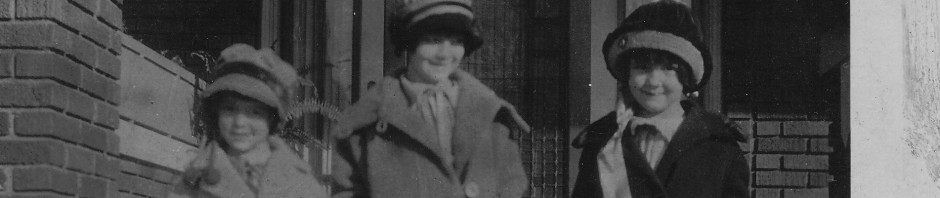
And so the original trio of Evans girls was complete. In the picture across this masthead, taken probably around 1927 or so, Sara’s on the left, the one with the impish hint of a smile. Tiny is in the middle, already showing signs of the near regal bearing and classic beauty that would mark her all her days. Mamie is on the right, a tiny version of the delightful woman I knew, just a picture of a little girl who’s scheming to get into something devious or mess with her sisters’ minds. They were as different as different can be, but in so many ways they were identical, and that led to some battle royales that are still legendary in Evans lore. More on all of them to come very soon.

Ed. note: The Kings Daughters Hospital was Greenwood’s third medical facility. The first was a “cottage hospital” on West Washington where a handful of minimally trained nurses took care of the sick. In 1908, the city provided $7000 for the purchase of the Bew house at 807 River Road and converted it into the first true Greenwood hospital. Sara’s aunt, Olive West Stott (“Big” to us) was the second RN to sign on there. By 1917, the rapidly growing town needed a more modern facility, and a three-story, dark brick structure, also on River Road, opened in April, 1918. Jessye Evans (“Tiny”) was the first baby delivered there, just a few days after the opening. The hospital was enlarged in 1936 and served the community until 1952, when the current complex was built just west on River Road. My memories of the old Kings Daughters Hospital are grim, as it was dark and dingy and the front screened porches came to be hidden behind decades of vines. The most daunting of high school dares was to speed through the dark tunnel that connected the front and rear wings, and a few brave souls actually broke in and explored the morgue. Not a place for the faint-hearted, which I was. In the late 1970s, the delapidated old hospital was pressed into emergency use as the courthouse. Only a slab and basement remain to mark the site of the original front wing; the back wing still stands as office and storage space for Greenwood Leflore Hospital. Behind it is the moldering shell of the Lois Aron Nurses’ Home, but that’s a tale for another day.

Posted in Uncategorized | 14 Comments

A Cloud of Witnesses


Jessie Mae West, probably about 1915

“Mama (Jessie May West Evans) was born on October 5, 1895, on a small farm near Durant in Holmes County, Mississippi. Her parents were Thedorene Chavis West and Anderson West. She had an older sister Olive (‘Big’) and a younger brother T.C. (no name, just initials). She went to a small country school and always told us she learned to read at age four. I don’t think they had twelve grades of school in Durant, but she did attend high school there before going on to Memphis to take a business course at Macon-Andrews Business College.

“Big had moved to Greenwood and in 1913 Mama too came here and worked as a secretary for Barnwell and Ashcraft Insurance Agency. She married Daddy in 1916. [Ed. note: They were married in the still-extant sanctuary of First Methodist Church, Greenwood].

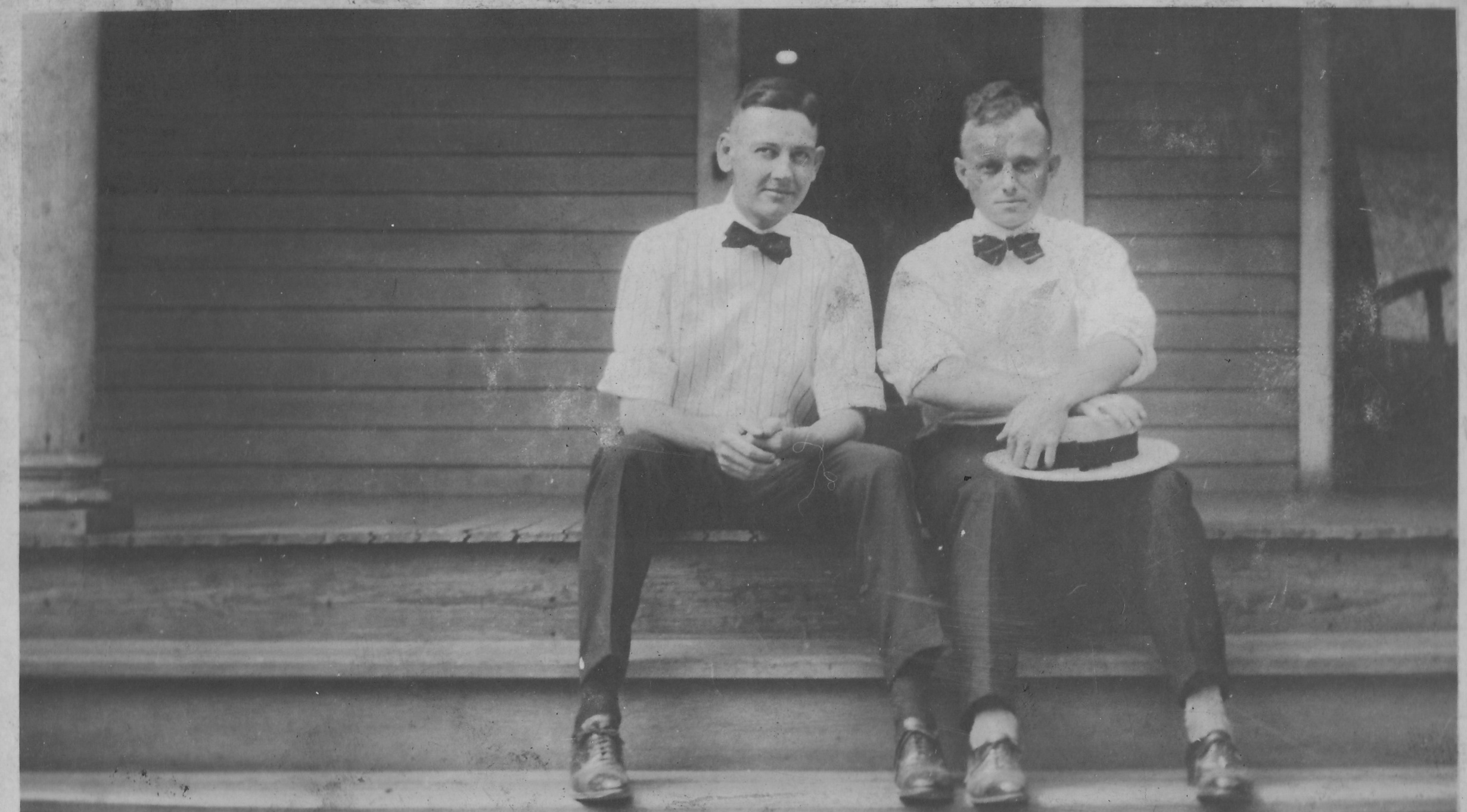
Howard Evans on the right, probably at the Buckeye

“Daddy (Howard McTyiere Evans) was born on June 28, 1894 at McNutt, near Schlater, Mississippi. He was born in the Old Court House which was being used as the Methodist Parsonage at the time. Daddy  had reddish curly hair and a stocky build. He was not very tall. He was a sweet, affectionate person who loved people. He liked politics, though he never ran for an office, and he liked conventions and parties and social life, none of which interested Mama. He liked to hunt and fish and go to the Elks Club to play cards and the Country Club to play golf. He liked baseball games and prize fights and was a ‘man’s man.’ He had many friends of all ages and was a very good businessman, highly regarded in the cotton and oil mill business. He had moved around a lot when he was a boy because his father was a minister, and Methodist preachers were never allowed to stay in one church for very long. He was graduated from Coldwater High School and attended Millsaps College.”

Buckeye Oil Mill, undated.

I am writing these blogs about Sara because “who I am” is so inextricably tangled with “who she was.” And so it goes with each generation, a fortunate and treasured strand for many families (ours included) and a never-ending curse for others. My mother was interested (but never obsessed) with genealogy and lineage and she credited her grit and penchant for adventure to her forebears. So, in order to move her story forward, we have to backtrack just a bit today and get a grip on her parents, my maternal grandparents, Jessie and Howard Evans. One is a cherished, warm memory and the other a shadowy figure of familial legend and lore.

Jessie West Evans, as I knew her, was God’s original template for grandmothers. Soft and slow-of-foot and quiet, always quiet, a gentlewoman in dark blue Keds surrounded by old furniture and hyacinths and Pond’s cold cream and a little bedroom TV that only received three shows: Lawrence Welk, Gunsmoke and As the World Turns. She adored her eight grandchildren without reason, but we all knew from the cradle not to call her on Saturday or Monday nights until Lawrence had blown the last bubble or Miss Kitty had locked up the Long Branch for the evening. She had Barrett’s Drug Store deliver gallon-size jugs of Pepto Bismol and Milk of Magnesia on a frighteningly regular basis, and some magical mixture of those two kept her hopping along well into her 80s.

Those are my memories, circa 1960. In Sara’s earliest mind, Jessie was a young housewife whose childhood Sears Roebuck paper dolls had come to life in her first three children, little stair-step girls with barely three years between the first birth and the third. Sara believed that if the first offspring had been a boy, Jessie would have just withered away with disappointment and none of us would have been brought into this world. She loved tiny girls and tiny clothes and tea parties and lemonade stands and all things frilly, and she doted on Tiny, Mamie and Sara in a fashion that was probably unhealthy by anyone’s standards. But in doing so, she shaped three lives that were full and confident and a gift to the next generation. Two more children, Son and Tricia, were yet to come and equally cherished, but you’ll have to be patient with the glacial pace of this blog to get to them.

So, here we have Jessie, known and revered and heavily documented in our memories and our hearts. Howard, my grandfather, is an enigma. He was gone in 1932, only 38 years old, the victim of a tragic incident that haunts us all down through the generations. But from 1921 to 1932, he was, in Sara’s reminiscences, a dashing figure……Handsome, successful, proud of his noisy houseful of girls and steadily climbing the corporate ladder at the Buckeye Cotton Oil Mill. In the faded photos of that day, he faces the camera dead-on, intense, with a spark in his eyes that suggests secrets and humor and a confidence that probably got him in buckets of hot water.

I can sense his presence even today when I pass that old house on Strong Avenue, the one he fashioned and built and took such pride in.  But it was in the Elks Club, now under renovation on Washington Street, where he all but reached out and touched me, three-quarters of a century after his death. I was wandering through that grand old hulk a few years ago, stunned by the craftsmanship of its woodwork and mantels and lighting, when I came into the main parlor. The Stickley chairs from the 1920s were still there, a fine layer of dust on their arms and cushions, facing the fireplace. It didn’t take an overactive imagination to pick up the odor of fine cigar smoke and the sound of laughter after a slightly ribald joke. Some essence of generations of Delta men lingered in that eerie room and my own DNA locked in on my grandfather’s, with his hand of cards and probably a half-empty whiskey glass and his plans to walk on back down Strong Avenue in just a little while, just a bit longer, to his waiting girls. It wasn’t a frightening feeling at all, more of a reassurance, an affirmation that this family, mine and his, had somehow discovered its proper place in the universe.

Unless you’re fortunate enough to be part of this clan, that’s likely more than you need to know about Sara’s folks. We’ll move on with her story tomorrow, if her great-granddaughter Charlotte will allow me the time and attention that this requires. For those of you who are more interested in Greenwood than in our family, I’m going to try to include some architectural and social history at the end of these blogs, when appropriate. See below.

Ed. Note: The Old Court House at McNutt was the Sunflower County Courthouse. Prior to 1871, the western section of Leflore County was part of Sunflower, and the county seat was not Indianola, but McNutt. When the new county was carved out, its county seat was designated as Greenwood and a new courthouse was built there, just northwest of the 1906 Leflore County Courthouse that we know today. Sunflower had lost its county seat in the drawing of the new county lines and the new one was Indianola. McNutt, which had several stores and churches along with the courthouse, dried up and disappeared. Only the cemetery, one of the loveliest in Mississippi, remains.

The Elks Club was built in 1912 on the site of the Selliger House, which was moved to another location on Main Street. R.H.Hunt, who had designed Davis School, FUMC and the Leflore County Courthouse, was the architect. For most of the twentieth century, it was the downtown meeting place for Greenwood’s leaders and businessmen, but membership dwindled dramatically in the late 1900s. It is now owned by Viking Corporation and is undergoing extensive renovations.

Posted in Uncategorized | Leave a comment

A Strong Start for an April Fool

Jessie and Sara, the April Fool

“Spring has always been my favorite time of year, April my favorite month, so it was appropriate that my story should begin on April 1, 1921, in a small frame house at 1109 Strong Avenue in Greenwood, Mississippi.

“I am sure it must have been a nice day. April days in Mississippi are nearly always nice, and I am sure the sun must have shown brightly on me that day because I have been blessed with a lifetime of happy wonderful memories, some of which I can share with my children and grandchildren.”

Reader, there you have Sara Evans Criss in a tidy nutshell, written as she approached her eighth decade. Relentlessly, often irrationally, optimistic…..a true believer that all the gods in all the heavens had smiled on her from the day she popped out in that “small frame house” on Strong Avenue. Had you asked her if there was ever a more enchanting town in which to be born or a more comforting and adventurous street on which to grow up or a warmer, more nurturing family to nestle in, she would have given you that “Why in the world would you ask me that?” gaze and shaken her head, “No, of course not.” It was the best of times, in her mind, with the best of people always around her and life just an unlimited Easter basket packed with all the sweet treats of the season and the century. She  burst into life as an April Fool, ever finding the funny twist to the tale, but she was never anyone’s patsy.

Strong Avenue in 1921 was a half-mile or so of cinder sprinkled over packed dirt, its blocks quickly filling with solid middle-class homes whose owners generally paid their mortgages with money gleaned in some fashion from cotton. Greenwood’s catbird-seat location at the edge of the verdant Mississippi Delta, served by no less than three rivers and two railroads, had transformed it from a rickety shantytown of saloons and sheds into the state’s premier cotton market. By 1921, a quarter-century of agricultural and political power had sprinkled the town with ornate mansions and Neoclassic public buildings. River Road, snaking along the track of the Yazoo,  was still the ultimate site for the big houses of the big men, and Strong Avenue was one step south of that mecca in geography and prestige. Its homes were solid but just a tad less showy than River Road….Strong homes built for the men who ran the cotton fibers through their sensitive fingers in the downtown factors’ offices or crushed the leftover seeds into oil, rather than those who owned the dark dirt where it was grown or who perched behind the polished bank desks and controlled the vast fortunes that flowed out of those fields.

Sara’s father, Howard McTyiere Evans, was a young man swiftly climbing one of those “secondary” ladders in the Cotton Kingdom. Within a year of her birth, he would be installed as the youngest manager in Proctor and Gamble’s system of “Buckeye” cottonseed oil mills, and Sara’s life, along with her mother’s and her two older sisters’, would take a short detour from Strong Avenue. The adventure was just beginning.

Posted in Uncategorized | 2 Comments

She was interesting, because she was interested

“She was interesting, because she was interested.”

That’s the purloined phrase that my sister used to describe our mother, Sara Evans Criss, to the grandchildren soon after Sara’s death on September 11, 2009. For the past nineteen months, crates and boxes full of Sara’s memorabilia have crowded my study, begging for attention and an organizing hand before they journey to Ole Miss’ journalism archives. The creased albums of fading Kodak snapshots…towers of yellowing scrapbook pages… Rubbermaid bins jammed with recipes, wedding invitations, childhood scribbles (hers and ours), report cards from schools that burned oh-so-long ago….Eyewitness accounts of days in our little town that captured the attention of all of America and much of the world. They greet me in the early morning quiet as I log on to my computer, follow me along the pre-dawn streets of Greenwood as I walk, stare at me through the eyes of my old dogs who loved Sara and who she loved in return, call to me as I procrastinate and confabulate and waste yet another precious day, and scream to me in exasperated desperation whenever I look at my own granddaughter, whose impending birth was one of the last happy facts that Sara knew. Charlotte’s tiny genes are 1/8th Sara and if she grows to be even 12 1/2 % of the character that her great-grandmother was, all of our lives will be a rollicking roller coaster of a ride.

So, among millions on blogs and jillions of words, why yet another one? Because, like my mother and my sister, I am a writer. And the mid-1950s incarnation of  a largely anonymous but determined line of women whose lives have been woven, through multiple generations, with the convoluted and tumultuous story of this strange corner of the world, the Mississippi Delta. My mother stood squarely astride that line, her earliest memories stretching to include her great-grandmother and her last thoughts of her three great- granddaughters. She was held by a woman born in 1845 and greeted her first great-grandchildren in 2008. A 163-year span, looking backward and forward, practically the whole sweep of Mississippi’s long history imbued in this one inimitable lady.

Sara Evans, the newspaper correspondent, was not a procrastinating writer. Her Underwood clattered away every afternoon in our kitchen, followed by the teletype version before the 5 p.m. deadline, carrying the Delta off to the wider world. She would be horrified, absolutely horrified, that I have let her carefully preserved history hover in the corner of my visual field for this year-and-a-half, not ignored but gently pushed down the list of each day’s tasks. Hers is a story that must be told, and it is my hope that a daily blog of her memories and escapades will focus my thoughts and perhaps bring a smile or a longing to have known her to you, an old friend or a perfect stranger.

There’s yet another walloping Delta storm moving into view through the west window of my study, and the dogs need that quick zip around the block before it hits, so the journey through Sara’s life must begin tomorrow. I promise.

Posted in Uncategorized | 2 Comments