Sara Criss’ Civil Rights Memoir #91: Maroon and White

“There was a lot of bitterness. Those who chose to stay at GHS resented the others leaving the school. Many of those leaving did so only because their parents could not accept the situation. Some left because their buddies were leaving, and in many ways it became a social issue, with some parents feeling that if theirs did not go to Pillow Academy they would be left out of parties and would not be with the ‘right’ crowd. Some of those who went to Pillow made remarks to the others about ‘going to school with the n—rs.’

“It was not easy for the black children either to have to leave their school and come to a white school where they knew they were not wanted. At Threadgill School they had not had to compete with the white students for grades, honors, etc. They had had their own homecoming celebration and had put on some of the best parades we had seen in downtown Greenwood.

“Everything changed in 1970. Sports were soon dominated by blacks as more and more white students dropped basketball and football and track. Attendance at the ball games dropped as fewer and fewer whites attended the games. In previous years the high school games had drawn huge crowds, and before the present stadium was built with a larger seating capacity the local men, including Russell, would get up at four in the morning to go stand in line at Roberts Drugstore to buy season tickets to the football games to be sure of getting seats.”

Posted in Uncategorized | Leave a comment

Sara Criss’ Civil Rights Memoir #90: Mass Migration

“Pillow Academy, the private school to which most of the white children fled, was established several years before the court orders for wide scale integration. It originally had only grades one through eight with about 150 students enrolled.

“I attended some of the federal court sessions in Greenville when integration plans were being discussed. It was clear that the local schools did not have a chance, and when I heard Judge Keady tell Hardy Lott, who was the school board’s attorney, ‘I don’t intend to hand down another decision that will be overruled by the 5th Circuit Court of Appeals,’ I knew the neighborhood school concept was soon to be a thing of the past. With Mary Carol in the middle of her sophomore year of high school, I could not imagine what lay ahead.

“As soon as the Court orders were announced, the students began to pull out of the public schools, and Pillow’s enrollment mushroomed. By this time they had started a high school program. Every day Mary Carol came home with reports of friends who had decided to pull out. Many of those in the senior class chose to remain at GHS since they had only one semester until graduation.”

Posted in Uncategorized | Leave a comment

Sara Criss’ Civil Rights Memoir #89: Bailing Out

“Also it was ordered that all persons other than school employees and pupils enrolled at that specific school must first go to the principal’s office to obtain admission to the campus. Otherwise they will be considered trespassers and subject to arrest and prosecution. It was further ordered that ‘any student who has in his possession an object that would be classified as a weapon while he is on school grounds or en route to or from school will immediately be suspended by the principal for an indefinite period.’

“By the time the schools opened for the first full day of classes [January 1970], the schools showed a loss of 840 white students and the addition of 10 Negro students compared to the enrollment figures of May, 1969. Greenwood High School’s enrollment included 592 white students and 242 Negro. The former black schools remained segregated. Faculties in all of the schools had been integrated.

“In an interview I had with Dr. Dribben, he said, ‘All we can hope for is that ther will be some change in the orders allowing us to go back to the 1-8 grade concept and to the neighborhood schools. We still hope to be able to carry through with the vocational program which we had planned and which was severely curtailed when grades seven and eight were removed from the elementary schools.’

“At the time he said that there were no white children at all in the seventh and eighth grades. All of these had been assigned by court order to a formerly all-black school and all had withdrawn from school. A number of them went to Pillow Academy, with more than 200 enrolled in the Greenwood private junior high, which was housed in two local churches. ‘We are about 1,000 under the number of children who were in school last year,’ Dr. Dribben said. He said they had lost blacks as well as whites. ‘One worry is the loss of state funds which will result from the decrease in enrollment,’ he said.”

Posted in Uncategorized | Leave a comment

Sara Criss’ Civil Rights Memoir #88: Shooting the Messenger

“On January 27, a group of jeering students at the all-Negro Threadgill High School attempted to block the exit of Dr. W.B.Dribben, superintendent of Greenwood Schools, and Assistant Superintendent W.O.Benjamin as they left a meeting called by members of the junior and senior class, all of whom had been ordered to attend predominantly white Greenwood High School. A short time later a fire was apparently set in a storeroom at the school, but it was quickly extinguished. The school officials were frequently jeered and shouted down as they attempted to explain the Federal court orders for Greenwood schools and asked for the students’ cooperation in making the changeover. Threadgill principal Wisdom Coleman and several other teachers tried to quiet the students, as did a counselor. When Dr. Dribben told the students they would not be allowed to act in the same discourteous manner at Greenwood High School, they began shouting and followed the two administrators to their automobile, demanding an apology.

“The school board issued a statement on discipline of students, stating that ‘any student who starts a disturbance or participates in one will be suspended from school immediately and will be able to re-enter only after satisfactory assurance has been given in writing to the principal by the pupil and his parents or guardians that there will not be a recurrence of this sort of behavior.'”

Posted in Uncategorized | Leave a comment

Sara Criss’ Civil Rights Memoir #87: Conundrum

“On January 26 [1970] at the Leflore County Court House, about 500 persons attended a meeting called for the purpose of showing support for the public schools in the face of recent total integration orders. One of the parents who conducted the meeting asked, ‘Will we live with this or will we try to destroy our schools?’ He added, ‘Our purpose is to bond the community together,’ and ‘Maybe we better try to learn to live with our people.’

“It was announced that the former all-white schools had lost 206 students since the previous Friday when the court order was issued. ‘We are going to use all of our energy to get quality education as long as the people want it,’ said John McHann, principal of Greenwood High School. At one point, De La Beckwith came to the front of the room and urged parents not to let their children attend the public schools under the new orders. At this point a number of persons began leaving the room, including us.’

Posted in Uncategorized | Leave a comment

Sara Criss’ Civil Rights Memoir #86: The Great Shuffle

“Some white parents said they would try to keep their children in the public schools even if the classes were heavily integrated the next semester, if the students were assigned to a previously all-white school, but that if they were assigned to a Negro school, they would take them out of school. Some of the white teachers expressed the same feeling. One of the principal fears facing both parents and administrators was large-scale resignations of teachers in Mississippi, which already had a shortage of qualified teachers.

“On January 24, 1970, the Greenwood Commonwealth carried a large headline, ‘GHS Must Enroll All Junior, Senior Classes, Faculty on 50-50 Basis.’ The article began: ‘The Greenwood City School System today prepared to comply with U.S.District Judge William C. Keady’s order of Friday which called for immediate integration of the 11th and 12th grades in both city high schools. The order, in effect, reduces Threadgill High School to a junior high. Judge Keady ordered the plan to be implemented by February 16, but school officials said they intended to be ready on Tuesday, the beginning of the second semester.’

“Under the plan, all ninth and tenth grade students will continue to attend the school which they were zoned into last August. In this ruling, all students east of the Illinois Central Railroad were to attend Threadgill and those students residing west of the ICRR were to attend Greenwood High School. Approximately 59 students attending Davis School were to be bussed to all-white Bankston Elementary School. All of those being transferred were black.

“It was also ordered that by the beginning of the semester the teachers, teacher aides, principals and other staff who worked directly with children at a school should be so assigned that in no case would the racial composition of a staff indicate that a school was intended for Negro students or white students. Since the ration of Negro to white students was approximately 50-50, it was presumed that faculties and staff would be assigned to all schools on this ratio.”

Posted in Uncategorized | Leave a comment

Sara Criss’ Civil Rights Memoir #85: The Hammer Comes Down

“In August, 1969, the Greenwood School District was ordered to come up with a new plan for further integration. U.S.District Judge W.C.Keady of Greenville approved a compromise plan calling for zoning and the Bankston School was left as it had previously been designated. The plan was ordered to be implemented in early September, but the opening of school was delayed two weeks and the city went back to court seeking relief due to shortage of time in implementing the plan.

“Judge Keady then allowed the city schools to return to the freedom-of-choice method for all elementary schools, grades one through eight, except Bankston, and the zone lines remained there. 178 white students were assigned to a Negro school, Threadgill, but none showed up for classes.

“On January 9 [1970], the Greenwood Separate School District was ordered by the Federal Court of Appeals to submit a new plan for providing total integration effective February 1, with the plan to be submitted by January 15. The Supreme Court ruling on January 14 meant that a new plan would have to be implemented for second semester calling for increased integration in the Greenwood schools. The board was ordered also to implement desegregation of faculty and other staff no later than February 1 according to the local teacher ratio which would be about 50-50 in each school.

“The school officials had been attempting to comply with the August order requiring one out of six teachers of the opposite race, and officials said they had difficulty in getting white teachers to go to the Negro schools even after running repeated advertisements in the area news media.”

Posted in Uncategorized | Leave a comment

Sara Criss’ Civil Rights Memoir #84: Unnecessary Cruelty

“In 1967, eight [black students] showed up at the Junior High School. I went into the principal’s office that day, and they were sitting there looking scared to death. I could not help but feel sorry for them, knowing that this was their parents’ choice and not theirs.

“Mary Carol came home one day upset because of an incident in the school cafeteria. No one would sit by the Negro students, and they usually sat to themselves. That day, however, one of them could not find a seat and sat down where Mary Carol and her friends were eating. Everyone but Mary Carol and Susan Clements left the table even though they were not through eating. Mary Carol said she did not want to hurt the girl’s feelings and, besides, that she wanted the rest of her hamburger. That afternoon another girl came up to her and called her ‘Blackie.’ I called Bobby Barrett, the principal and a friend of mine, that night and told him what had happened and asked him what I should tell Mary Carol to do in a situation such as this, since I felt she had done the right thing. He agreed and said some of the children had heard so much at home that they didn’t know how to act.”

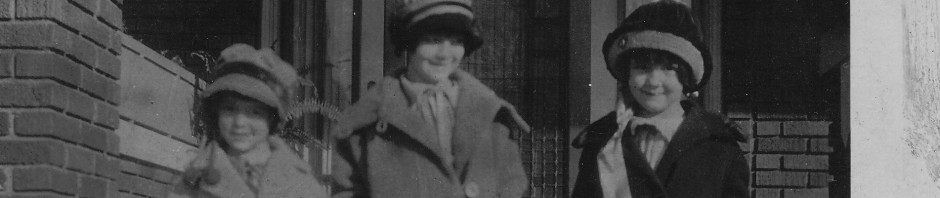
Ed. note: Obviously, this is getting very personal, and as this story involves me, I will abandon objectivity and comment. My memories of those Greenwood Junior High years and desegregation are jumbled, some very vivid and others dim. I do recall that we had two blacks in our grade, one boy and one girl, and they kept to themselves and tried their best to be invisible. There was no physical violence that I was ever aware of, but the hurtful things said and the little “digs” by adolescents who thought they were “cute” and “cool” were just unforgivable. On the day that Sara describes, we were all in the basement cafeteria of the old Davis School building because it was pouring rain. Most days, those of us who were in the “right crowd” walked to town and ate in the back room of the Post Office Cafe rather than demean ourselves by eating in the cafeteria. Anyhow, it was raining so hard that day that everyone crowded into the cafeteria, and I was unhappily sitting at a long table with several of the snobbier North Greenwood girls. When the black girl came and sat down across from me, the white group made a huge commotion of picking up their trays and saying a few nasty things and rushing off, laughing and taunting her. I was hungry, just as Sara said, but I was also painfully aware that this black girl was staring at her tray and crying. Not eating, just crying, shaking all over. I have never in my entire life, before or since, felt as small and ashamed and helpless as I did at that moment. I picked at my food for a few minutes, mumbled something about how sorry I was about what had happened  and left. When I got back to the main building, one of my “friends” made that crack to me about “Blackie,” at which point she got a verbal response from me which would have stunned my mother. I’m fairly sure I left that little tidbit out when I passed my story along to Sara. I never knew that she called the principal, but I did know I had the full support of both of my parents, neither one of whom ever intentionally hurt or mistreated anyone because of their skin color.

And the black girl who was so mistreated that day? She still lives in Greenwood and is a successful professional. When I moved back here, I saw her one day in her business and introduced myself. She said, very quietly, “Oh, I remember you.” I just hope she remembered me as the one who stuck it out with her that day, but I didn’t have the courage to ask.
Posted in Uncategorized | Leave a comment

Sara Criss’ Civil Rights Memoir #83: The Walls Begin to Crack

“After doing some investigating, my friend Hite McLean, a leader in the Citizens Council, brought me some notes about the three [black girls registered at Greenwood  High School], stating that Mayrene [Washington] was escorted to school by L.C. McSwine, a former Negro teacher in the Leflore County Schools, and James Moore, ‘the most consistent and vigorous picket at Liberty Cash Grocery in the early part of the year 1966.’ As to the other two students he noted, ‘These two will be remembered as having been arrested for picketing, etc. along with Stokely Carmichael and others in July, 1964, at the Leflore County Courthouse. Their arrests for picketing, etc. are now in the Federal courts, having been removed there by their attorneys, Benjamin Smith (registered agent of Castro of New Orleans0, Frank Pestana (identified Communist from California) and George Crockett (Vice President of the Lawyers Guild).’

“The three girls attended GHS that year and were graduated in 1967. The white students more or less ignored them. Mayrene was in Cathy’s typing class. The other students would not take the desks on either side of her. Cathy was one of the last to get to class because the class prior to typing was on the other end of the building. If the only seat left was next to Mayrene, she was afraid to sit there because of what the other white kids might say to her after class.

“The following year there were several more Negro students but none were in the graduating classes of 1968 and 1969 (Cathy’s class). One of the boys, whose father,  a Negro preacher, made him enroll at GHS, stayed one year and refused to go back the next year.”

Posted in Uncategorized | Leave a comment

Sara Criss’ Civil Rights Memoir #82: Schools in the Crossfire

“Of all the disturbing incidents which occurred during the troublesome ’60s, none affected us so personally as school integration, which began in the fall of 1966. Since 1954 we had known that it would happen someday, but I guess we kept hoping it would not come until ours had finished school.

“An article in the newspaper on September 6 stated that seven Negro girls had made application to register for classes at Greenwood High School. Plans for operation of the Greenwood schools on a desegregated basis were released. It was stated that the [Greenwood Public School] board had been ordered to end the operation of separate schools for the Negro and white children with respect to the first, eighth, ninth, tenth, eleventh and twelfth grades for the school year beginning September 1966 and with respect to all grades for the school year beginning in 1967. The plan also required that an adequate start be made toward elimination of race as a basis for the employment and allocation of teachers, administrators and other personnel.

“Since this was a ‘freedom of choice’ plan in which a student could transfer from a school they had previously been assigned to one in which they had been excluded in the past, we did not expect any widescale integration at this point. Three black girls registered to enter the senior class at Greenwood High School. They were Mayrene Washington, Willie Mae Lobe and Queen Edna Holmes.”

Posted in Uncategorized | Leave a comment