Sara Criss’ Civil Rights Memoir #51: Locked In

“A 21-year-old white Harvard student, Phillip Moore from Illinois, said Z.A.Prewitt, a local restaurant owner, hit him three times on the head near the SNCC headquarters. Prewitt was fined $25 on assault and battery charges.

“One of the most frightening experiences for us was on July 16 [1964] when three Negroes left the theater after an angry crowd had gathered. This was the fourth attempt that the same small group of Negro men had made to attend the theater. As they entered the theater about eight p.m. a large crowd of whites began gathering outside the theater, and Sheriff George Smith and his deputies arrived on the scene. At this point city police, who had previously been noticeably absent, also rushed to the scene, and Sheriff Smith and Assistant Police Chief Miller Wyatt escorted the Negroes to the police station down Howard Street. A crowd of whites followed behind them and milled about the streets. At the height of the disturbance, electric power to the downtown area was cut off for about five minutes. Police said they did not know who had cut off the power, but we later heard it was someone who was employed at the Greenwood Utilities.

“Criss and I had already gone to the police station and were standing inside when they came in with the three Negroes. There must have been 150 or 200 people standing outside the police station, and the police decided to lock the City Hall.

“Up until this time the national news media had apparently been unaware of all that had been going on in Greenwood since the passage of the Civil Rights Act, and I certainly did not want to be the one to bring them back in. Since I was the only one here writing for an out-of-town paper, I knew if the Commercial Appeal carried the story they would all pick it up. I knew also that if Gene Rutland at the paper found out I was ignoring it I would probably get fired. So I went in the Mayor’s office and called the Commercial Appeal. I told Rutland what was going on and why I had not sent it in but that I wanted them to know that things were building up down here and that anything could happen.

“He got all excited and asked, ‘Have you called the Governor?’ He suggested maybe I should. He did, surprisingly, go along with me about not sending the story in at this point, but I always wondered if he called the Governor because the next morning several members of the Sovereignty Commission appeared at the Court House. The Sovereignty Commission had been set up by the Legislature to secretly investigate the civil rights activities going on in the state.

“We felt sure they would hold the three there that night at least until the white crowd broke up, but one of the policemen told us they had called a taxi to take them home. The crowd was still outside the building, and we were just positive they would find the three in the river the next morning. In fact, I called about five a.m. to ask what had happened to them, and a police officer said they had a little scuffle between them and some whites, but no one was hurt. Afterward we learned that the sheriff had stopped some of the whites a few blocks from the station and told them to leave. They were following the Negroes.

“Assistance Police Chief Miller Wyatt never did quit teasing me about the night he and I were locked up in the police station.”
Posted in Uncategorized | Leave a comment

Sara Criss’ Civil Rights Memoir #50: Caught in the Middle

“On July 10 the Executive Committee of the Greenwood Citizens Council urged owners of businesses affected by the Civil Rights Bill to ‘resist its enforcement by all lawful means.’ In a five-point statement they promised support to anyone involved in litigation for refusal to serve Negroes. ‘You will have the backing of this community including financial assistance from the White Citizens Legal Fund,’ the statement said. It stated further: ‘We call upon every citizen in this community white and colored to join with us in giving no aid or comfort by word or deed to the advocation of forced integration.’

“That same day it was reported that FBI director J. Edgar Hoover had arrived in Jackson to talk with Mississippi officials about the racial situation. The Negroes continued to integrate the Leflore Theatre and on July 11, six of them left the theater voluntarily. Police and sheriff’s deputies had been called and informed that the Negroes were going to the theater. Three sheriff’s cars stood outside the building after they entered. The FBI had agents stationed at the theater also.

“By this time poor Mr. Marchand, the manager, was about to have a nervous breakdown. He had been caught between taking orders to integrate from his parent company and the local folks who were determined they would close the theater. After the six left, a crowd of about 50 white persons stood around for two hours outside the theater as sheriff’s officers stood by. At one point a fire alarm was turned in for the corner of Fulton and Washington Streets, where the theater was located, when an automobile caught fire.”

Posted in Uncategorized | Leave a comment

Sara Criss’ Civil Rights Memoir #49: Circling the Wagons

“It was a very busy time for me because along with all the other trouble, there were almost daily reports of Negro churches being burned and Negro crowds gathering in front of white-owned stores in their section of town and taunting the owners.

“As soon as the Civil Rights Bill was passed the city ordered the municipal pool closed along with the Youth Center and the Library. We had had the best city recreation program in the state with a full-time director, and this signaled the end of all of that. Hundreds of children had learned to swim under Red Cross instruction each summer and closing the pool meant the end of that program. There had been all sorts of instructional programs for children at the Youth Center, such as baton twirling, dancing, exercises, etc. All of this, too, ended. The Library opened three weeks later, but all of the chairs had been taken out so that no one could sit down in there.

“On July 10 the Kiwanis Club announced that they would operate the city pool for members, families and guests as a private club. Hite McLean represented the club and said the city would have no authority over the pool, which would be leased from the city. This venture did not last long as it was too expensive for the club, and the pool finally remained closed. At one point the Junior Auxiliary tried opening the Youth Center as a private endeavor, but this too was not successful.”

Posted in Uncategorized | 1 Comment

Sara Criss’ Civil Rights Memoir #48: Fireworks of a Different Sort

“I will never forget that Fourth of July, a Sunday [1964]. I rode through downtown to see if everything was quiet and noticed there was only one American flag flying on a day when normally there would have been flags in front of nearly every business and waving from the fronts of nearly every home. Surely not since the Civil War had there been such a loss of faith in our government. The patriotism, which normally seems to run deeper in Southern hearts, was not apparent on this sad day of our history. We were frightened, we feared violence, we had mixed emotions about a lot of things, and certainly we did not like a bunch of rednecks coming into town waving the Rebel flag, which we had always been taught to love and respect, as they drove around looking for ‘ni—-rs.’

“On July 8th a report was out that a group of national Negro leaders who had quietly desegregated Jackson facilities were to arrive in Greenwood. They did not show up, and we heard that some of the NAACP leaders were not agreeing with the tactics of the more militant SNCC group. The next night a gang of white men beat Jake McGhee at the Leflore Theater but he did not require medical attention.

“Every night Criss and I drove by the theater to see if there was any commotion, and usually there were was with the crowds of white men standing across the street. I always felt it was an explosive situation that could blow up at any time. One Sunday afternoon De La [Beckwith]’s son, who we called ‘Little De La’ along with several others, was carrying a sign in front of the theater saying ‘Coons go to this show.’ Big De La was watching from a station wagon parked in the alley next to the theater. I went around to the police station and told them that both De La’s were by the theater. This was during the time the police had been told not to interfere. They just looked at me and laughed, as did the mayor and Hardy [Lott], who were having a meeting in the City Hall with the two commissioners, Buff Hammond and W.G. Mize, to discuss the situation.

“After the meeting, Hardy worded the following statement to be given to the newspaper: ‘The City Council urgently appeals to the parents of all children to keep them away from dangerous situations created by the Civil Rights Act. As much as the City Council dislikes the thought, it is forced to face the fact that the federal government by court decree and the enactment of the Civil Rights Act has taken away from the State of Mississippi and local authorities the power to decide how racial relations shall be conducted, and has taken unto itself the authority formerly vested in the states and municipalities. As long as racial relations were in the hands of the State of Mississippi and its local authorities, they were handled in such a manner as to avoid the racial violence, discord and strife prevalent in the  North, but the Federal Government has now decided unwisely on a different and disastrous method of handling the matter. It is apparent that the method of handling racial matters decided upon by the Federal Government will promote racial strife, discord and violence. The City Council regards this with abhorrence but cannot shut its eyes to fact. We hope that good judgement on the part of the citizens of our City, both white and colored, will keep these troubles to a minimum, and we shall of course do our best to see that this is done. As one step toward attaining this end, we ask the parents of children to carefully control their actions during the trying years ahead.’ 

“The article was printed in the Greenwood Commonwealth the next day. It had a familiar ring to it as we remembered Governor Ross Barnett telling the crowd at the Ole Miss-Kentucky football game [that] law and order were out of the hands of the state.”

Posted in Uncategorized | 2 Comments

Sara Criss’ Civil Rights Memoir #47: Doomed Theatre

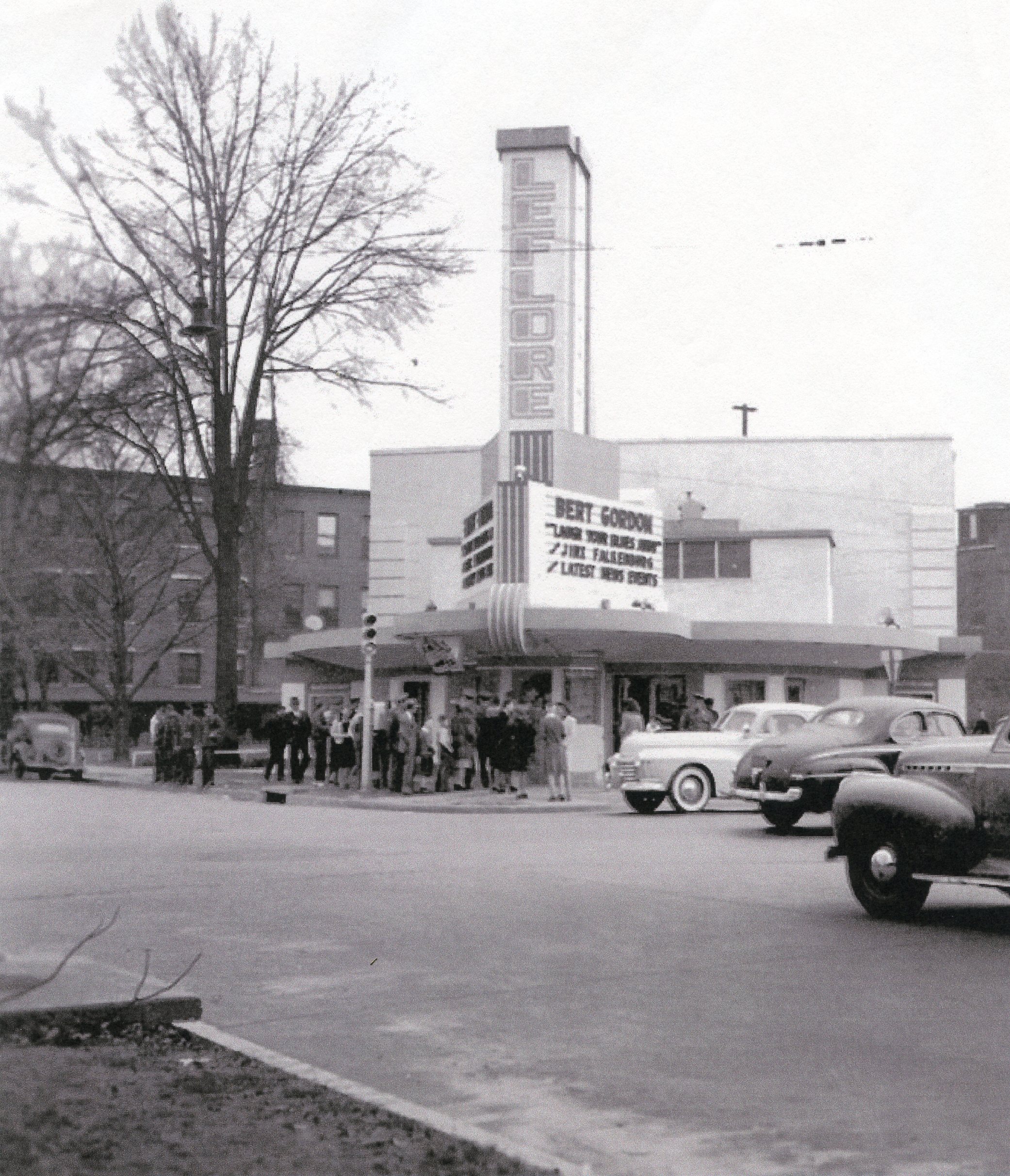
Leflore Theatre, 1940s

“One black family which was to play a prominent role in the integration activities that summer [1964] was the McGhee family. The mother, Laura McGhee, was both mean and crazy. She had caused a scene at the Red Cross office [where Sara’s mother, Jessie Evans, worked] one day, and Mama said she was afraid of her. The sheriff said he had carried her to the State Hospital at Whitfield on once occasion for a mental condition and that she fought the deputies who were carrying her down.

“Laura had two sons, Jake and Silas, who were to become famous in the efforts to integrate everything in town. They were attacked and shot at and arrested but remained undaunted in their efforts. Shortly after the Civil Rights Bill was passed, 18-year-old Silas spent about twenty minutes in the Leflore Theatre. He told police some white boys hit him several times and told him to leave and poured a cold drink on him. He was accompanied by three Negro youths who left without buying tickets.

“The theater was owned by Paramount Richards in New Orleans, and the manager, Harry Marchand, had been told to obey the Civil Rights law and allow anyone to buy a ticket. He was severely harassed by the Kluxers for carrying out their orders as were the employees of the Holiday Inn, which was under similar orders.

“Every night or so Jake and Silas and a few others would appear at the theater, and more trouble would start. There were service stations on the three corners around the theater, and large crowds of whites would gather in them to see what was going to happen. CB radios in cars and trucks had just become popular, and many of them had one. They used these to notify others to come to the area of the theater. They would show up, many with small Confederate flags attached to their antennas and Rebel flags on their cars and trucks. They were not all from Leflore County. Many came in from Carroll and other surrounding counties. On Sunday afternoons they would ride around the theater watching every movement the Negroes might make.

“Most of the white people stayed away from the theater because they feared there would be trouble, and it looked as if the theater would have to close. That would have suited the mayor and Hardy [Lott, City Attorney], who had told the police to cruise a block or so away from the trouble spot but not to take any action. There were times when anything could have happened, and there would not have been a policeman around.”

Jackson Daily News article from 1969

Posted in Uncategorized | Leave a comment

Sara Criss’ Civil Rights Memoir #46: Letter to Ohio

Sara's unmailed letter to Marge Doyle, 1964

“I sat on the back porch one morning and wrote a letter to my former neighbor and good friend, Marge Doyle in St. Clairsville, Ohio, but I never mailed it for fear she might not fully understand our feeling of desperation. I found it later, and its content reminds me of how real that feeling was. It read:

Dear Marge,  I’m on the porch drinking my coffee. The rest are asleep, and I happened to remember 13 years ago when we had nothing to worry about except when Jimmy would arrive (after several doses of castor oil) or whether Cathy was cutting a tooth or had been exposed to another Stigler ailment. It was so hot with no trees, no air conditioning and for me not even a porch, but didn’t we have fun!

Oh, Marge, you can’t imagine how sad it is down here, the terrible feeling of defeat and despair. We are so worried about what tomorrow will bring. The good relations with our Negroes are fast disappearing and nobody trusts each other anymore. We are so sorry for the good Negroes (and we do have many). They are frightened and confused. If they take up for the white people their friends ridicule them and call them ‘Uncle Toms.’ Georgia [Edwards, Sara’s maid, who had also worked for Marge Doyle] is sick (high blood pressure, gall stones, etc.) and just lies out there with her door locked, afraid the white students will come by. 

We have a number of COFO (Council of Federated Organizations) workers here, mostly white. They live with the Negroes and don’t look like they’ve had a bath or a haircut in weeks. The white girls fall all over the Negro boys and the Negro girls over the white boys. They came to the Court House yesterday with three Congressmen, two from California and one from New York (one a Negro) and they really put on a show for Court House employees, a white boy and a Negro girl drinking from the same bottle, etc. When they leave here the damage they’ve done to our relations with the Negroes will be hard to repair. We don’t know what the future holds but it looks pretty gloomy. We still have twice as many Negroes as whites so you know what a situation we’ll have. 

Several restaurants just closed up yesterday. We don’t know what they’ll do after the weekend. The pool closed, as did the library, but I guess they’ll open again Monday [unless] trouble starts. The drug store where all the teenagers gather closed their lunch counter and removed the booths yesterday after Negro agitators went in and sat down. Most of the Negroes taking part are the same ones who marched and demonstrated and are paid Civil Rights workers. And, of course, we do have our roughneck whites who are just ready to get into something, so each morning we get up and pray the day will bring no trouble. 

Please tell your friends we’re not heathens down here. We feel like after seeing all the television specials about Mississippi the whole country thinks we’re all KKK members. We’re really just wanting everything to be peaceful again, and someday maybe it will.”

Posted in Uncategorized | Leave a comment

Sara Criss’ Civil Rights Memoir #45: Change in the Wind

“On July 2 [1964] President Lyndon Johnson signed into law the Civil Rights Act which heralded the beginning of some of Greenwood’s most trying times. The state leaders as well as the local leaders had done everything in their power to pressure their Congressional delegation to stand firm against its passage. In April, Governor Paul Johnson had signed a bill giving a special $50,000 appropriation to the State Sovereignty Commission to aid a propaganda battle against the Civil Rights Bill. The measure had been rushed through the legislature, and the money was supposed to have been turned over to the Coordinating Committee for Fundamental American Freedoms, headed by attorney John Satterfield of Yazoo City, a former president of the American Bar Association.

“Also in April, ‘Operation Freedom Writers’ was launched in Greenwood with the opening of a mailing station in the lobby of the Greenwood Leflore Hotel. The Greenwood Lions Club sponsored the campaign to mail 4000 letters from Leflore County expressing opposition to the civil rights bill before the United States Senate. There were more than 25 cities in Mississippi participating in this program designed to organize opposition to the bill across the nation.

“The day after the Civil Rights Bill was passed we were all filled with apprehension as to how it was going to affect Greenwood. Prior to this time we had a totally segregated society. There were no black employees in stores or businesses except in janitorial or maid capacities. Blacks did not go to white restaurants, theaters and other places of entertainment. Public swimming pools were for white only and black only. They did not use the City Park or participate in any of the summer recreation programs except in their own part of town, which had one park, a swimming pool and a summer playground program sponsored by the Park Commission. The schools were totally segregated, as were the churches. The Negroes did most of their shopping in stores along Johnson Street and Carrollton Avenue and with the Chinese grocery stores located in their area. Very few blacks frequented the better stores on Howard Street, and there were no shopping centers at that time.”

Posted in Uncategorized | Leave a comment

Sara Criss’ Civil Rights Memoir #44: Freedom Schools

“The students, black and white, poured into Greenwood and fanned out all over the Delta to conduct Freedom Schools, teaching reading and writing, and assist Negroes in registering to vote. They came from prestigious schools such as Harvard and Yale, Sarah Lawrence and Vassar, and many were from wealthy families. Many were sloppy in their dress and some were outright dirty.

“They set up schools in Negro churches, and many of the local Negroes were wary of their being in their neighborhoods and refused to have anything to do with them. Bill Street with the Commercial Appeal and I spent one day going around to some of the Freedom Schools and observing them and talking to them. Most of them looked as if they had not had a bath or washed their hair in a month. When we got back to the house for lunch the first thing we did was give our hands a good scrubbing. It was quite an experience.”

Posted in Uncategorized | Leave a comment

Sara Criss’ Civil Rights Memoir #43: The Long Hot Summer Begins

“As soon as school was out black and white college students from the North and East began heading South to help in the civil rights drive. They were being trained in Oxford, Ohio. A press release from Oxford on June 25, 1964 stated: ‘We’ll just keep going on and accomplish something,’ said a Negro staff worker, Floyd McGlothan, 38, of an indoctrination course on civil rights for 400 student volunteers. McGlothan of Greenwood and other staffers of the National Council of Churches and SNCC are preparing the students for integration work in Mississippi this summer.

“SNCC had already set up national headquarters in a building in the Negro section of Greenwood and had one of the first WATS lines in Greenwood which they used to call the Justice Department, news media, etc. The press release continued: ‘The students are to leave Oxford for Mississippi this weekend, the second such group to complete a weeks training in a program to get more Negro voters in racially tense Mississippi. McGlothan’s statement was echoed repeatedly by other workers and students when asked if the strange disappearance of three Civil Rights workers in Mississippi would affect their plans this summer. The students are determined to carry out their work although some noted they have more fear now in going South because of the disappearance of the Civil Rights workers, one of whom was in a similar school here last week. So far none has dropped out of the program. ”Of course I’m scared in going to Mississippi,'”said Barbara Mutrick, 20, of Plainfield, N.J., but I can’t think about it. I expected things like this to happen,” she added. A Civil Rights leader, Bayard Ruskin, organizer of the march on Washington last summer, is tentatively scheduled to speak to the students today.’

“In a UPI release from New York June 24 Attorney General Robert F. Kennedy declared that the Mississippi racial situation is ‘a local matter for local law enforcement and Federal authority there is very limited.‘ The Attorney General made the remark before boarding a jetliner for West Germany and a memorial observance of President Kennedy’s famous ‘I am a Berliner’ speech a year ago. The article continued: ‘Asked about the disappearance of three civil rights workers in Mississippi, Kennedy declared that the Justice Department “has taken what action we can under the Constitution.” He said the new Civil Rights Bill would not be applicable to the Mississippi crisis as far as the security of the integrationists is involved. “The bill won’t give us authority because there is no national police force. In Mississippi, it is a local matter for local law enforcement.” Asked about suggestions from parents of Northern students now in Mississippi that 2000 special agents be deputized to assure the personal safety of the civil rights advocates, the attorney general replied: “We can’t do that.”‘ 

“At the time the article was written the three Civil Rights workers were still missing in Philadelphia, Mississippi.”

Posted in Uncategorized | Leave a comment

Sara Criss’ Civil Rights Memoir #42

“On April 9 there were 17 pickets, including five white ministers, arrested in front of the Court House. After they had picketed for 30 minutes, Chief Lary told them they would be restricted to ten and must be of voting age and a resident of Leflore County. The ministers were the first to refuse. Each picket was given a choice before being arrested and charged with unlawful picketing and refusing to obey police orders. Governor Paul Johnson had signed a new state law the night before prohibiting picketing of public buildings.

“At one time the number of pickets reached 24, including five children who appeared to be under age 15. Gray Evans, acting for Youth Counselor Charles Deaton, sent them back to school.

“Accompanying the pickets and advising them were two attorneys, one of whom was Jack Pratt of New York, attorney for the National Council of Churches, who told Lary he was violating their Constitutional rights. The ministers were from Warren, Ohio, Pittsburgh, Chicago and Indianapolis. The charges against them were dropped the next day. After they were arrested, they were jailed at the City Hall and Carol Franklin, a reporter for the Commonwealth, and I went down there to try to talk to them. As we were talking, the mayor [Charles Sampson] walked over and told us not to talk to ‘those God damn preacher.’ I told him later that he had played right into their hands, I was sure, and that they would go back to their churches on Sunday morning and tell their congregations it was just like they had been told down here. I just got a dirty look from the mayor.

“Buff Hammond, the police commissioner, did talk to them and later received a letter from one saying he was sorry and that they had been misled about the situation. Reverend Eade Anderson of the First Presbyterian Church also talked to some of them. Once more I thought a little dialogue might have helped, but there was no way to get the mayor to listen to anyone except Hardy [Lott].

Posted in Uncategorized | 3 Comments