Sara Criss’ Civil Rights Memoir #12: Days of Demonstrations

“I usually stood across the street from the Court House to observe the demonstrations and then helped the folks from the Commercial with the stories which were sent in to the Commercial Appeal on my teletype in the kitchen. They made fun of my darkroom under the stairs but processed all of their film in it. I would have loved to take pictures of the events but did not dare carry my camera down there because some of the local white characters resented the news people almost as much as they did the Negroes.

“There were many times which things looked as if they were going to get out of hand, and I was afraid I would be caught in the middle of it. One time when some of the Negro women started cussing the police and one bit the hand of an auxiliary policeman, I got scared and ran into Thompson-Turner Drugstore and called the Tri-State desk [at the Commercial Appeal] and asked [Editor Gene] Rutland to send someone down here, that I did not feel it was a good place for me to be.

“On the day of the first march, two of the local hotheads stopped Newsweek reporter Carl Fleming on the walk in front of the Court House and tried to choke him with his camera strap. Needless to say the story he wrote was not very complimentary. I just knew one of the newsmen was going to get hurt before it was over.

“Those who made the marches to the Court House were an odd assortment. There were a lot of old people, some in overalls and always an old crippled Negro who did yard work all over North Greenwood. I don’t think some of them even knew what they were marching for but had just been stirred up in the church meetings the night before. They were being led by leaders of the Student Non-Violent Coordinating Committee and other Civil Rights workers, some of whom obviously came to Greenwood because they saw it as an opportunity to be seen on national television.

“One of these was Negro comedian Dick Gregory, who tried his best to be arrested and had told some of his cohorts that they could reach him at the Greenwood jail. The police grabbed him from both sides and escorted him away, but he was terribly disappointed when the police would not arrest him. Part of their tactics was to get themselves arrested and thrown in jail because that assured them of more headlines. When all else failed, Gregory stood on the steps going into the Police Station and told Police Commissioner B.A. ‘Buff’ Hammond, ‘You have probably got more Negro blood in you than I have.’ When asked what he said, Buff just laughed and said, ‘I’m not worried about my ancestors. They’re resting peacefully. I’m more worried about saving Greenwood.'”

Ed. note: Karl Fleming (Sara’s spelling of his name is incorrect) wrote a very interesting autobiography of his journalism career, Son of the Rough South.  His time in Greenwood is extensively covered and it is well worth reading.

Posted in Uncategorized | Leave a comment

Sara Criss’ Civil Rights Memoir #11: On the Map

“By the next day some 55 newsmen, including a reporter from the British Broadcasting Company, had arrived in Greenwood to cover the story. They were asked to register at the police station, which they did. All of the television networks sent in their top newsmen as did newspapers from throughout the country, including the New York Times, Wall Street Journal and other major papers. All of the top magazines were also represented, including Newsweek, Time and Life, and it was inconceivable to local people that one small march involving mostly outsiders could have invoked such a widespread response.

“Perhaps it was the picture of the policeman, Switzer, and his dog which went out all over the country from our kitchen floor that helped to bring them in or maybe it was just because the civil rights struggle was just beginning to gather steam. Anyway, Greenwood was on the map, and it remained there throughout the coming years as one of the focal points of the civil rights movement.

“There were daily meetings at the Negro churches, attended by all of the newsmen along with the activists. Finally the mayor issued an ultimatum that no whites except newsmen and law enforcement would be allowed in the churches in order to try to avoid any trouble. The demonstrators would set up a time that they planned to have a march on the Court House, and then the next morning the television crews would arrive earlier and have the cameras already set up when they arrived. Many of those marching to the Court House were not even eligible to register to vote, either because of age or the fact that they were not residents of the county. At that time the minimum voting age was 21.”

Posted in Uncategorized | Leave a comment

Sara Criss’ Civil Rights Memoir #10: Trouble on Our Doorstep

“Meantime voter registration was picking up and there was a lot of tension in the community. Prior to this time [1963] Negroes had been allowed to register, but anyone registering to vote had to pass a test, and most of the blacks did not pass. Later the test was outlawed.

“I went out to the SNCC headquarters one day in March, 1963, to write up a fire which had partially destroyed the offices. [Sam] Block said all his voter registration records had been destroyed and claimed that Negroes had seen two white men running from the area at the time of the fire. SNCC Executive Secretary James Foreman then demanded that Federal troops be sent to Greenwood, ‘to protect local citizens from shootings and arson attempts.’

“On March 27, with me in the middle of preparations for Mary Carol’s ninth birthday party, things really started happening. I had the living room full of Brownie Scout decorations for the party when Criss [Russell Criss, Sara’s husband], who was meeting some Heinz big shots at the airport, called to say that as he went past the Court House he saw that a crowd had gathered and that apparently there had been some trouble. He called the paper in Memphis and told them to send someone down here to help me because he didn’t want me to get too involved if there was a lot of trouble.

“I went to the Court House and found out that eleven Negroes had been arrested and were in the City Jail, charged with breach of peace after a prayer-hymn singing march on the Court House. One of the policemen, James Switzer, had a German Shepherd which he had trained but which was not owned by the police department, and he helped the other officers break up the march.

“The Commercial Appeal sent James Kingsley, a reporter, and Barney Sellers, a photographer, down to help me, and they sent all their stories in over my teletype machine and developed their film in my little under-the-stairway darkroom. They set up a UPI telephoto machine on the kitchen floor and pictures were sent out all over the country to the various news media from our kitchen floor. There were three or four newsmen in the kitchen that night, and Cathy and Mary Carol were bugeyed as they watched the proceedings. The phone rang, and it was Russell calling from Memphis to check on things. Kingsley answered the phone and told him they were drinking up all his whiskey. I think he decided he had better get back home.”

Posted in Uncategorized | 4 Comments

Sara Criss’ Civil Rights Memoir #9: Fiery Nights

“On February 20 [1963] three Negro businesses burned and fire officials said there was no suspicion of arson. Sam Block, one of the original civil rights workers to come to Greenwood with the Student Non-Violent Coordinating Committee, reported the fire to United Press International and said they were deliberately burned in reprisal for the food distribution program. He said they had been mistaken for SNCC offices. The state fire marshal investigated and said no evidence of arson was found.

“City Prosecuting Attorney Gray Evans [Sara’s sister Tricia’s husband] filed an affadavit for the arrest of Sam Block on the charge of uttering public statements meant to cause a breach of the peace. He was arrested and put in the city jail. In city court he was fined $500 and sentenced to six months in jail. These penalties, except for $250, were suspended under the condition that he behave in a lawful manner for one year.

“During this period there were numerous incidents of shots being fired into automobiles carrying civil rights workers and of fires, and usually the national news media knew about these incidents before local officials were notified.”

Posted in Uncategorized | Leave a comment

Sara Criss’ Civil Rights Memoir #8: Nelson Benton and CBS News

“About this time [early 1963] the first of the national news media began showing up in Greenwood. Hearing about the commodities issue, CBS sent a crew in to cover the story. Nelson Benton was heading up the crew of three, including a photographer. I met with Nelson and he said the police had followed them all day and that he had never had this happen before. He said that he was from Virginia and considered himself a Southerner, too, and was certainly not trying to start anything, but the locals were suspicious of every outsider and often were quite rude to the newsmen.”

Ed.note: Nelson Benton was one of the most prominent and visible network news reporters of the Civil Rights era, and Sara felt he was fair and open-minded in his coverage of incidents in Greenwood. He was a native of Virginia, graduate of Chapel Hill, and went on to cover the Kennedy assassination, Vietnam, the space program and Watergate. In the early 1970s, he anchored the “CBS Morning News.” He died in 1988 at the age of 63.

Posted in Uncategorized | Leave a comment

Sara Criss’ Civil Rights Memoir #7: Commodities Controversy

Dick Gregory heading for Leflore County Court House, 1963, photograph by Sara Criss

“Some of the [Citizens] Council members were keeping an eye on every Negro who registered to vote and reporting this information back to their employer with the suggestion that they might want to fire this person. Some did lose their jobs. A list of persons applying to register was printed each week in the Commonwealth.

“I was afraid of the Klan, afraid that if I wrote something they did not like I would have a cross burned in my yard, or be threatened, or be included in the hate sheets being distributed, but I was also afraid of the Citizens Council because their members were my friends and I did not want to incur their ill will either.

“In the early part of 1963 a series of incidents took place, and the civil rights struggle in Greenwood was mounting. On March 20, the Leflore County Board of Supervisors was called into session by Fred Ross, Commissioner of the State Department of Public Welfare, to hear a proposal by the Department of Agriculture in Washington to reinstate the distribution of surplus food commodities on the expanded program which was stopped by the Supervisors in 1962, on account of the financial inability of the Board to continue the same, and because they deemed it unnecessary.

“The Department of Justice had gotten into the act and reported that there was a need for surplus food. The Board of Supervisors replied that this report was most likely made by professional agitators who had issued public releases that many Negroes were starving and hungry in the county. The Board was confronted with the proposition of accepting the offer of the Department of Agriculture to permit it to make the distribution at the sole expense of the Federal Government or to decline and ‘subject the people of Leflore County, Mississippi, to an invasion by Federal Agents and probably marshals.’

“Large numbers of Negroes showed up at the Court House to register to vote, many apparently believing if they registered to vote they would be given commodities. FBI and Justice Department officials began arriving at the Court House to photograph records along with with civil rights workers.

“The county voted to go into the enlarged commodity program for one month. The county had been distributing food to about 5200 welfare recipients. The expanded program, under which 26,000 of the county’s 47,000 population received commodities, had been discontinued in September. In February, Negro comedian Dick Gregory issued a press release stating that he was collecting food to be sent to the Leflore County Negroes who had been cut off the commodity list because of voter registration attempts. A.H.Bell, attorney for the Board of Supervisors, issued a statement as did the Mississippi Civil Rights Commission, that this was not true, that the move to cut down on commodities had no connection with voter registration.

“Two shipments of food were sent into Greenwood a week apart. Negroes signed up for the food, but in the first shipment there was not enough to go around. The Gregory incidents apparently did not create much tension, with many local citizens saying that if Dick Gregory wanted to feed the local Negroes that was fine.”

Posted in Uncategorized | Leave a comment

Sara Criss’ Civil Rights Memoir #6: Governor Barnett and the Ole Miss Riots

“One of the most disturbing incidents that occurred during this period was the integration of Ole Miss. We had been reading stories about efforts underway to get blacks into the University, and then on September 3, 1962, a federal district judge ordered the school to admit James Meredith. The governor, Ross Barnett, who was a firm believer in segregation, immediately went on television saying that we would fight the ruling by the court.

“Ole Miss played Kentucky in a football game in Jackson on September 29, and Russell and Pam [Roberson, Sara’s niece] went to the game. At the half time the governor addressed the crowd and Russell compared the cheering rally that followed to being ‘just like a mob scene in Germany during World War II.’ The crowd chanted ‘Never, never, never’ while they waved the Confederate flags. He said, ‘I was scared to death because I had seen what a mob could do, and I just knew we were going to have bad trouble if they tried to get Meredith into Ole Miss.’ He said he did not stand to cheer Barnett because he did not approve of the way he was trying to get the crowd even more excited. ‘It was almost like he was saying, “OK, boys, get your guns and let’s go.”‘

“The next night the riot broke out on the Ole Miss campus, two people were killed and Meredith was admitted to Ole Miss. A lot of the students went home because their parents were afraid for them to be on campus. My friend, Bill Street, with the Commercial Appeal, covered the story for the paper along with several others on the staff. He said it was one of the most frightening things he had ever covered, especially since they [the rioters] seemed to be making the newsmen the targets for much of their anger. When some redneck screamed at Street and asked him what he was doing there, Street answered, ‘I’m here to git that damned n—-r. I had loosened my tie and tried to look like one of the gang,’ he said, ‘because I though that was the only way I would escape.’

“Of the two hundred people arrested that night, most were not students. They had come in from everywhere to help incite the riot. By the next morning several hundred Federal troops had been sent into Oxford and Federal marshals stayed on the campus to guard Meredith.

“There were many people who did not agree with Barnett’s methods in handling the situation, but most were afraid to speak out. Again, there was always that fear that if you did not agree it would appear that you were supporting integration. My neighbor, [redacted], was visiting one afternoon and the Ole Miss fiasco came up. She said, ‘Do you know that [her husband, redacted] has a cousin who was at that game [Kentucky v. Ole Miss] and did not stand up to cheer the governor when he made that speech?’ I shocked her, I am sure, when I said ‘and you are looking at another one,’ referring to Russell, ‘who didn’t stand up either because he was so sure that Barnett was inciting a riot.’ I figured I would be put on the Citizens Council list of persons to be watched after that.”

Posted in Uncategorized | Leave a comment

Sara Criss’ Civil Rights Memoir #5: SNCC and Voter Registration

“Prior to 1963 there were less than 400 Negroes registered to vote in Leflore County. In 1960 the FBI came to Greenwood to look at voting records in the Circuit Clerk’s office. County officials stated that they had nothing to hide, that Negro applicants were treated just like whites when they applied for registration.

“Then in August 1962 Student Non-Violent Coordinating Committee members, Sam Block and Robert Moses, conducted a voter registration school in a building in the Negro section of town. They took a group of ten or twelve Negroes to the Court House in August to register. They had apparently notified CBS that they expected trouble, and CBS had a rented station wagon parked all day at the Court House with windows blacked out and cameras inside.

“The population of Leflore County at this time was 16,699 whites and 30,443 blacks. In Greenwood the population was 9,818 whites, 10,501 blacks and 11 ‘other races.’ In order to vote you had to register and pass a test in which you were asked to interpret part of the State Constitution. You also had to pay a $2 poll tax each year. Not many blacks attempted to register, and those who did usually failed to pass the test.

“City Attorney Hardy Lott, who was also attorney for Circuit Clerk Martha Lamb, made the statement to a Commercial Appeal reporter from Memphis that from 1955 through January 1, 1962, less than 100 blacks had qualified. ‘It has not been a case of the Negroes not registering, they just didn’t make application,’ he said. ‘A large number of Negroes had taken voter registration tests since concentrated drives were started in August sponsored by the federal government and their cohort organizations but the percentage is very small of those passing.’ Lott continued, ‘It’s not a case of discrimination on the part of the county. It is the ignorance on the part of the applicants that these Negro organizations are finding scattered around to take tests. Many can’t even read or write.’

“I always felt that we were to blame for much of the trouble we had by failing to let qualified applicants pass the voting test and then having the federal government come in and tell us that we would have to let everyone who applied and met the residency and age requirements register, even those who could not read and write. I still do not feel that anyone who cannot read or write should be allowed to vote.”

Posted in Uncategorized | Leave a comment

Sara Criss’ Civil Rights Memoir #4: The Citizens Council and Beckwith


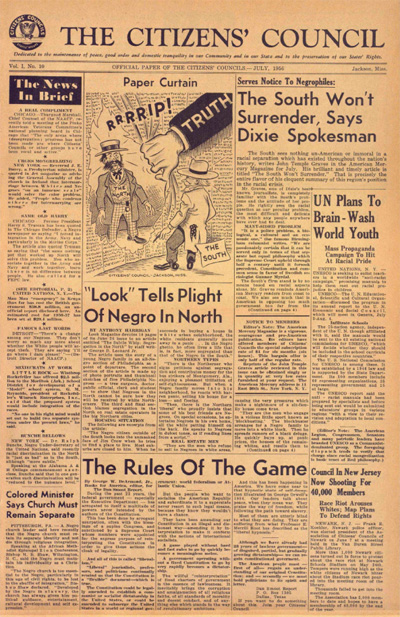
Citizens' Council newspaper

“The Citizens Council had an office in downtown Greenwood with Bob ‘Tut’ Patterson of Indianola, one of its organizers, in charge. He took his text on the literature being used by churches and even the Girl Scouts and the textbooks being used in schools. One day he showed me pictures of riots in cities in other parts of the country and would point to nice-looking people in the streets and warn me that this would happen in Greenwood and that it wouldn’t just be rednecks involved but probably some of my good friends.

“He visualized white girls marrying Negro boys if the schools were integrated and made many other dire predictions. I sometimes felt that he and some of his cronies were disappointed when some of these predictions did not come true because if they had they they could have said, ‘we told you it would happen.’

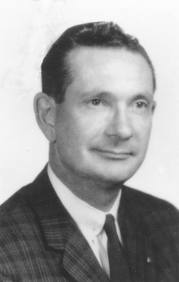
Byron De La Beckwith

“Later when De La Beckwith was arrested for the murder of civil rights leader Medgar Evers, Tut told me that they were just crucifying De La and that he had nothing to do with killing Evers and [redacted, local businessmen] put up bond for De La. I always felt that even though some of these people would not have advocated killing, the statements they made probably influenced people like De La and made him feel that he was helping to save the Old South if he did the job.”

Posted in Uncategorized | Leave a comment

Sara Criss’ Civil Rights Memoir #3: The Citizens Council

“About this time the Citizens Council had been organized in Indianola and quickly spread throughout the state. At first we did not pay much attention to the organization and little realized the role theywould play in the years to come. The Citizens Council was not like the Ku Klux Klan. Its members did not advocate violence but had as their goal a strong fight against any form of integration. It was made up of bankers, businessmen, lawyers and most of the town’s leaders, and in many ways they had more influence on people’s feelings and attitudes than did the Klan.

“The Klan was made up more of rednecks and working class people who were very secretive about their activities. The Citizens Council went about their work quietly and behind the scenes by putting pressure on local citizens to go along with their way of thinking. It was more or less expected of us to pay our $5 yearly dues to the Citizens Council and to stand behind them. Our neighbor, Hite McLean, who was quite active in the Council and a strong segregationist, talked me into being the publicity chairman one year, though there was precious little publicity to put out.

“The [redacted local bank] had a Council leader as a director and the employees knew they were expected to become members. Bill Richardson, whose mother, Mrs. Sumter Gillespie, had married the owner of the Commonwealth, said that at one point the presidents of the three banks called his mother in and told her that if the paper took any stand they did not agree with on the civil rights issue, they would not advertise again in the newspaper. Perhaps this was one reason that later on during all the racial strife the paper did not run any editorials to try to improve the situation or sometimes even to cover a racial disturbance.”

Posted in Uncategorized | Leave a comment