Life’s a Party

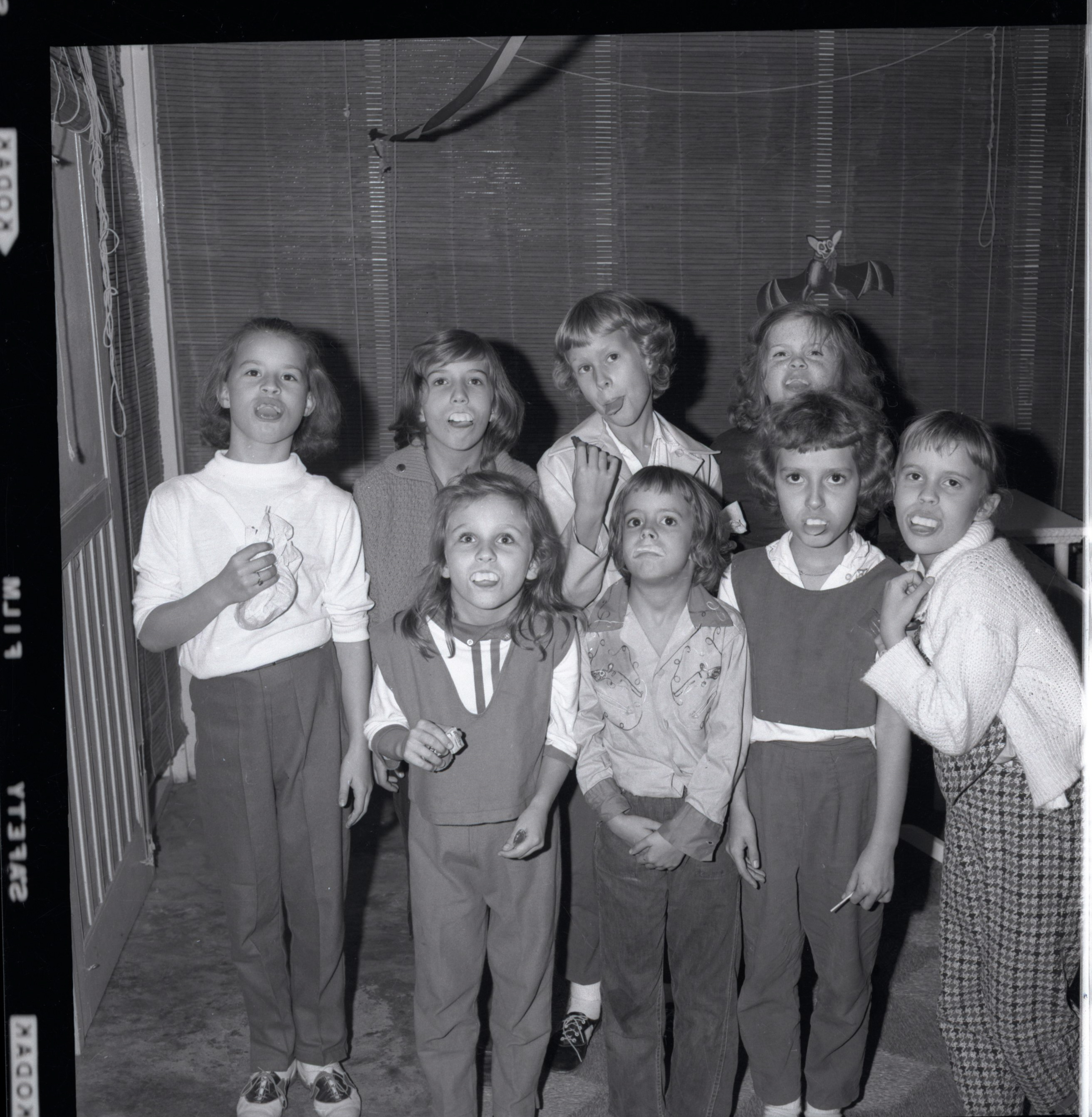
A back porch Halloween party, probably 1960. Front row: Linda Dribben, Mary Carol, ?, Cathy. Back row: Durden Pillow, Ann Wade, Ann Tucker, Jeannie Young

“We had birthday parties, Halloween parties, Christmas parties and I loved decorating cakes for all the occasions and collecting and using all kinds of cookie cutters.

One of Sara's bunny cakes

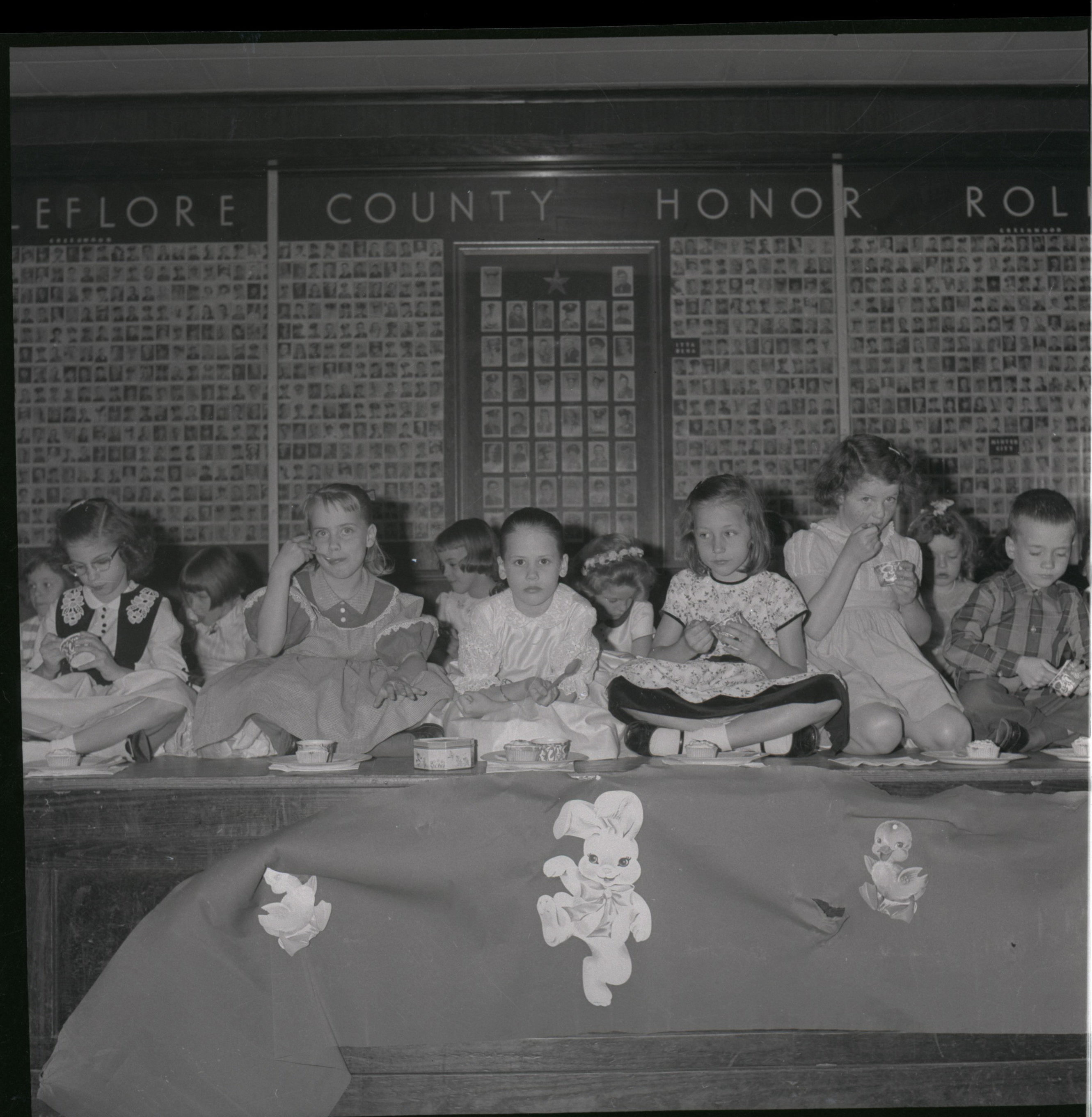
We had added the back porch in 1953 and it came in handy for all kinds of parties. When Cathy was five we had a big party at the Confederate Memorial Building and invited about fifty kids. When Mary Carol was six we had a big one for her at the American Legion Hut. We always had a theme for the parties and decorated accordingly. I had as much or more fun than the children.

The infamous American Legion Birthday party, 1960.

“Cathy’s one big party was a disappointment in one way, though, when she received fifteen boxes of bubble bath, all of which had probably been received by the givers. It was kind of like the Christmas to come later when she was about twelve or thirteen and nearly every gift she got was a sachet or several sachets.

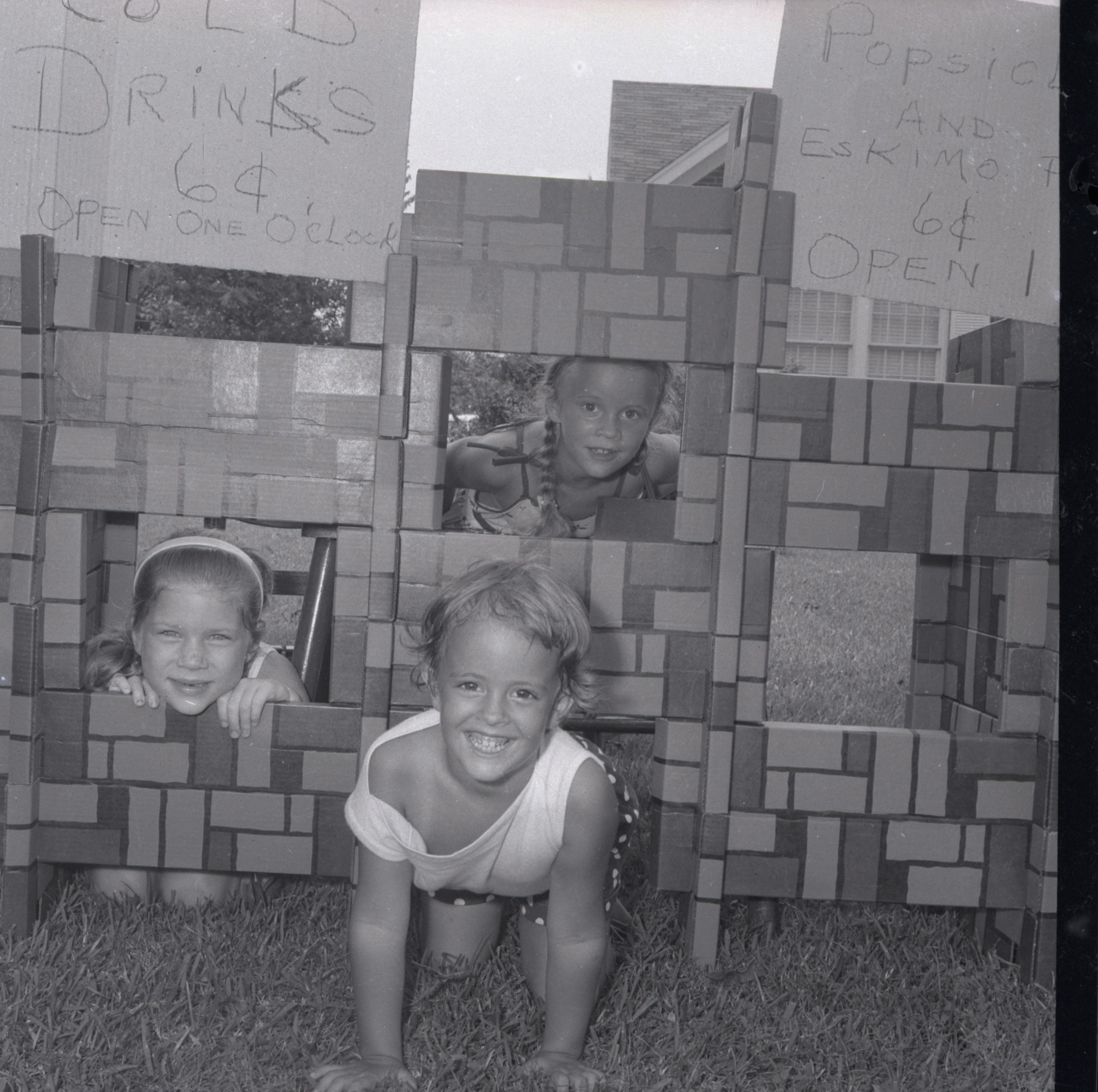
“We had lemonade stands in the front yard. I always ended up on the short end of the deal because I was expected to turn out brownies and cupcakes (decorated no less) and some of the neighbors [Sara gives a name here but we will leave that out] came over and filled their freezers with the cheap goodies. The children made money, but I always went in the hole. We did have fun though.”

Making money on East Adams

Martha Stewart would have thrown herself in the Yazoo River if she had ever been to one of Sara’s birthday parties. Planning began weeks in advance, usually for a Valentine’s theme (Cathy) or Easter (me). Elaborate decorations were created, cookies baked, cakes crafted and surprise balls filled with favors. The anticipation was almost unbearable and presents were just an afterthought. And since her girls only had two birthdays per year between them, Halloween and Christmas filled in the gaps. Skeletons were hung in the October hallways and grape eyeballs and spaghetti guts lined the staircase. Life-sized Santa was hauled out of the attic right after Thanksgiving and his bag was full and ready for visitors by December 1st. The kitchen seemed to operate non-stop and looking back, I simply don’t know how she did it. She had a job, a very demanding and unpredictable job, but somehow she always pulled it off.

Posted in Uncategorized | 1 Comment

Big Back Yard

Patricia Evans Ellington, everyone's favorite aunt.

“Tricia married Claude Ellington, whom she had started dating the year she finished high school. They were married at the First Baptist Church in 1955 and had a tiny little apartment on East Washington Street just across from the Stott house. She left the telephone company and took a job at the Bank of Greenwood.

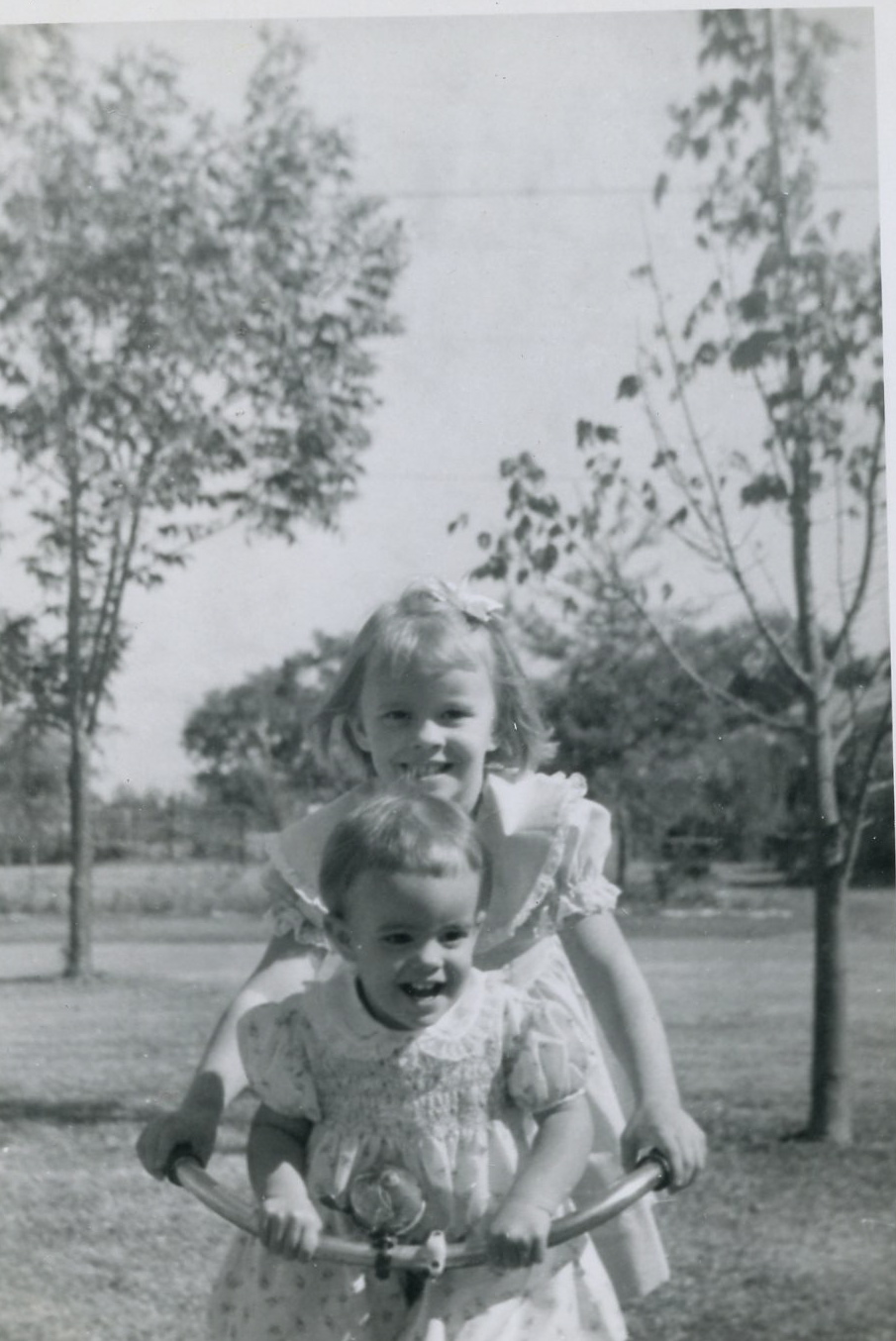
“We had a lot of fun with our two little girls. I sewed for them, turning out dozens of little aprons with appliques on them and little smocked dresses. Whenever Mrs. Bingham and Wee Moderns would put on a sale I would buy them little matching dresses. We also got lots of handdowns from Melanie [Mamie’s daughter] and the Gwin girls.

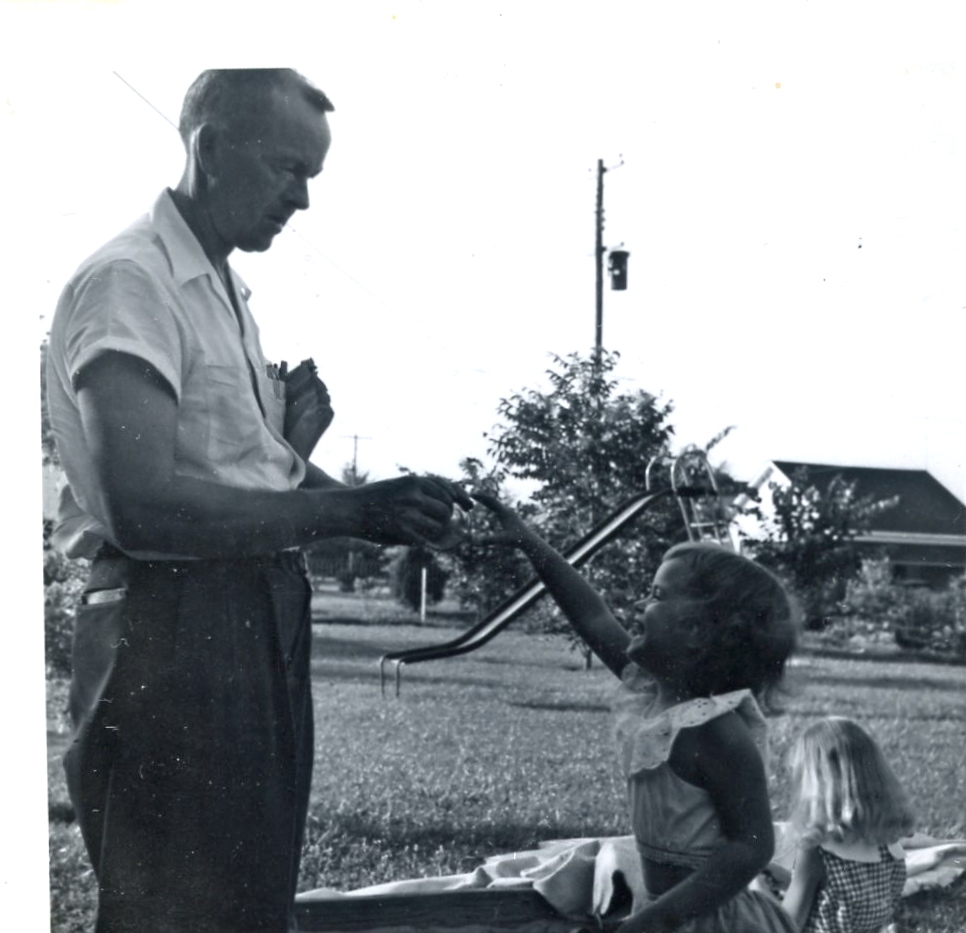
“When Cathy was about fifteen months old Russell built a little playhouse out of a big wooden box and put up a fence around a little playyard next to the west side of the house. We had a sandpile. Later he had Griff, our black carpenter, build a bigger playhouse in the backyard, and we got a swing set.

Our first playhouse

Tiny gave us a sliding board, and we fenced in the whole backyard. There was no shade and Russell went down by the river and dug up some willow trees to try to get some fast shade but later dug them up because he was afraid the roots would wrap around the water and sewer lines. A little oak came up in the middle of the back yard, and he put stakes around it to keep the children from stepping on it. That is the big oak which now stands in the middle of the yard and shades the whole backyard.”

Russell receiving some sort of treasure, Cathy in the sandbox

What a wondrous place to grow up. The fence that Russell and Sara built was short and flimsy and wouldn’t have kept a bunny in the back yard (and we did have a few bunnies), but who would ever want to escape? There were swing sets and sliding boards (hot as firecrackers on summer days) and sandboxes and tetherball poles and playhouses and enough grass to support a really good game of catch. Neighborhood children drifted in and out of the yard and the back porch, ruled at least peripherally by the ever-watchful Georgia. It was a magical, happy acre or so and it makes me feel good to see it being enjoyed, once again, by two little girls.

Sara was a whiz with a sewing machine and Cathy and I never lacked for dresses and play clothes. We did rebel fairly young at the “dress alike” concept, Cathy tending toward frills and my preference toward rolled up blue jeans and sweatshirts. And I know the hand-me-downs helped the budget, but I had some pants and shirts that were so bulky with old camp labels that I almost couldn’t wear them. The outermost label was “Cathy Criss.” But if you peeled that off, you got, in succession, “Melanie Bartling” and “Pam Roberson.” Or “Martha Gwin” and then “Nan Gwin.” I was practically grown before I found out you could buy underwear that wasn’t used.

Posted in Uncategorized | Leave a comment

Ding Dong School

“I was always trying to think of some way to pick up money and not have to leave home. Since I had done mimeographing on the side at the Chamber of Commerce I found an old mimeograph machine at Fisher’s [Stationery and Office Supply] one day and paid $50 for it and started doing some of that at home. That wasn’t too satisfactory because the ink on the machine was so messy, and I didn’t like having people coming to the house to bring me work, but I did make a little money that way.

“In the summer of 1955 a fellow named Dan Farrell, head of Taylor Chemical Company of Aberdeen, North Carolina, was referred to me by the Chamber of Commerce to mimeograph some letters. They had set up an office at the Holiday Inn to sell cotton poison that summer. Then Farrell asked me if I would come out there and help them out. Since Georgia was here I told him I would help for a few days, which stretched into three or four weeks. He and the other men with the company were so nice, and I made enough money for us to buy our first black and white television set.

Russell and Cathy with the first TV on the right.

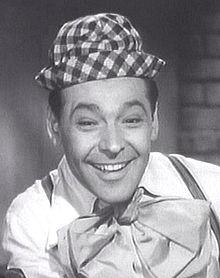
The cable company was just being organized and the reception we got on the cable was almost nothing but snow, but we watched it anyway, and the children spent hours watching Pinkie Lee and Howdy Doody and Miss Frances and the Ding Dong School.”

Miss Frances and the Ding Dong School

Buffalo Bob Smith and Howdy Doody

Pinkie Lee

Two indelible childhood memories: The smell of fresh mimeograph ink (Remember those study sheets that your teacher would carry in, still warm from the machine? That’s the smell) and curling up in Russell’s rocking chair early in the morning to watch TV. Miss Frances and the Ding Dong School stick in my mind; Howdy Doody and Pinkie Lee left no impression, other than what I’ve seen in old books. That chair took us through many a Saturday morning, with Roy Rogers and Sky King and Hopalong Cassidy and Huckleberry Hound and Rocky and Bullwinkle. When I left for college, we were still living in a black and white world, which I found humiliating. The Beamans had one of the first color TVs, and on occasion they would invite us down on Sunday evening to watch “Walt Disney’s Wonderful World of Color” and “Bonanza.” I was enthralled. Rumor had it that Lucille Ball’s hair was red and the brick road in the “Wizard of Oz” really was yellow and Mr. Green Jeans’ jeans were truly green, but how was I to know? I had unreasonable parents who, in some twisted logic, thought it more important to save for my education than to provide me with a technicolor childhood.

Posted in Uncategorized | 3 Comments

Camera Bug

Sara's darkroom enlarger instructions

“[Gene] Rutland [Commercial Appeal  editor] told me I would have to learn to take pictures for the paper, so I bought a Dura-Flex camera by Kodak, paid twenty something for it, and studied all the instructions. I had always liked to take pictures but had never had anything but a box camera. He told me they would pay me five dollars for each picture they used so I was determined to take a lot of pictures.

A Kodak Duraflex camera

“Since the paper was paying for my film I decided I would learn how to print my own negatives and pictures and then I could use part of the roll of film to take pictures of Cathy and Mary Carol. I bought a little darkroom kit from Sears and set it up in the closet under the stairs. I shared the closet with the hot water heater and struggled many an hour in the dark learning to load the film in a tank to develop the negatives. I bought a small Federal enlarger and all the other darkroom equipment I could afford and started printing. Photography quickly became one of my favorite hobbies, and I read everything I could get my hands on to teach myself all the tricks. I joined a camera club and the other members gave me a lot of hints.

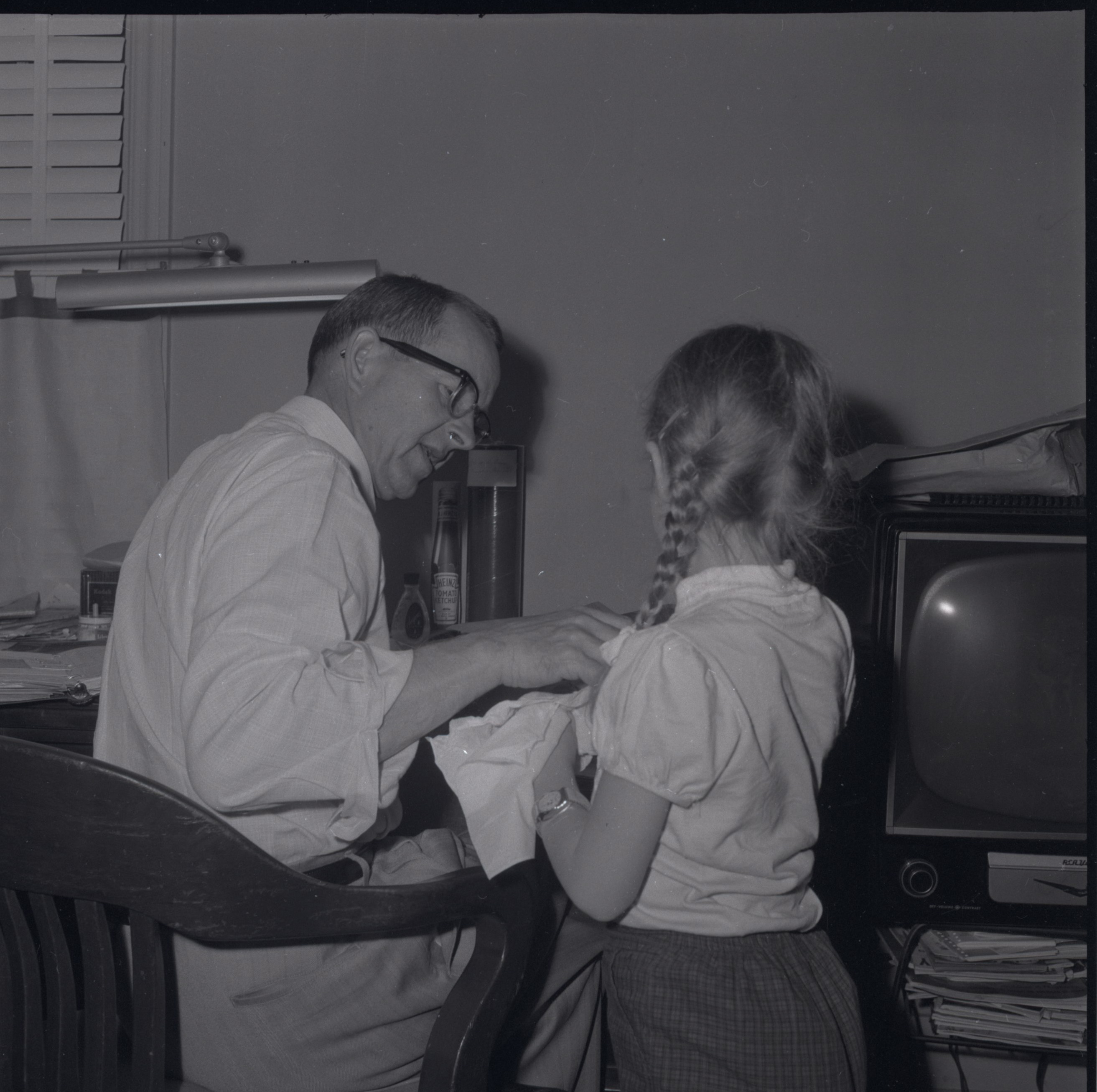
“I took hundreds of snapshots both for the paper and for myself, and then I decided it would be fun to do some portraits, so I bought flood lights, set them up in the living room with a big shade on a wooden frame as a backdrop. Russell and Tricia’s husband, Claude, had put the frame together for me. From that time on Cathy and Mary Carol were asked to pose almost daily. Thus came all the thousands of pictures and portraits we now have in albums and stacked away. Later I bought a Yashicamat camera which took much better pictures and an electronic flash which helped a lot.”

Cathy and I grew up with our own personal paparazzi. Once Sara got the hang of photography, she was insatiable. That “$5 per published picture” arrangement had her out on the streets of quiet little Greenwood on a daily basis, snapping Halloween parties and boys fishing and pick-up baseball games and carnivals and report card days and anyone who would stand still long enough for her shutter to click. Her bed (which always doubled as her desk) was littered with camera manuals and Modern Photography and borrowed library books on light and shadow and technique.

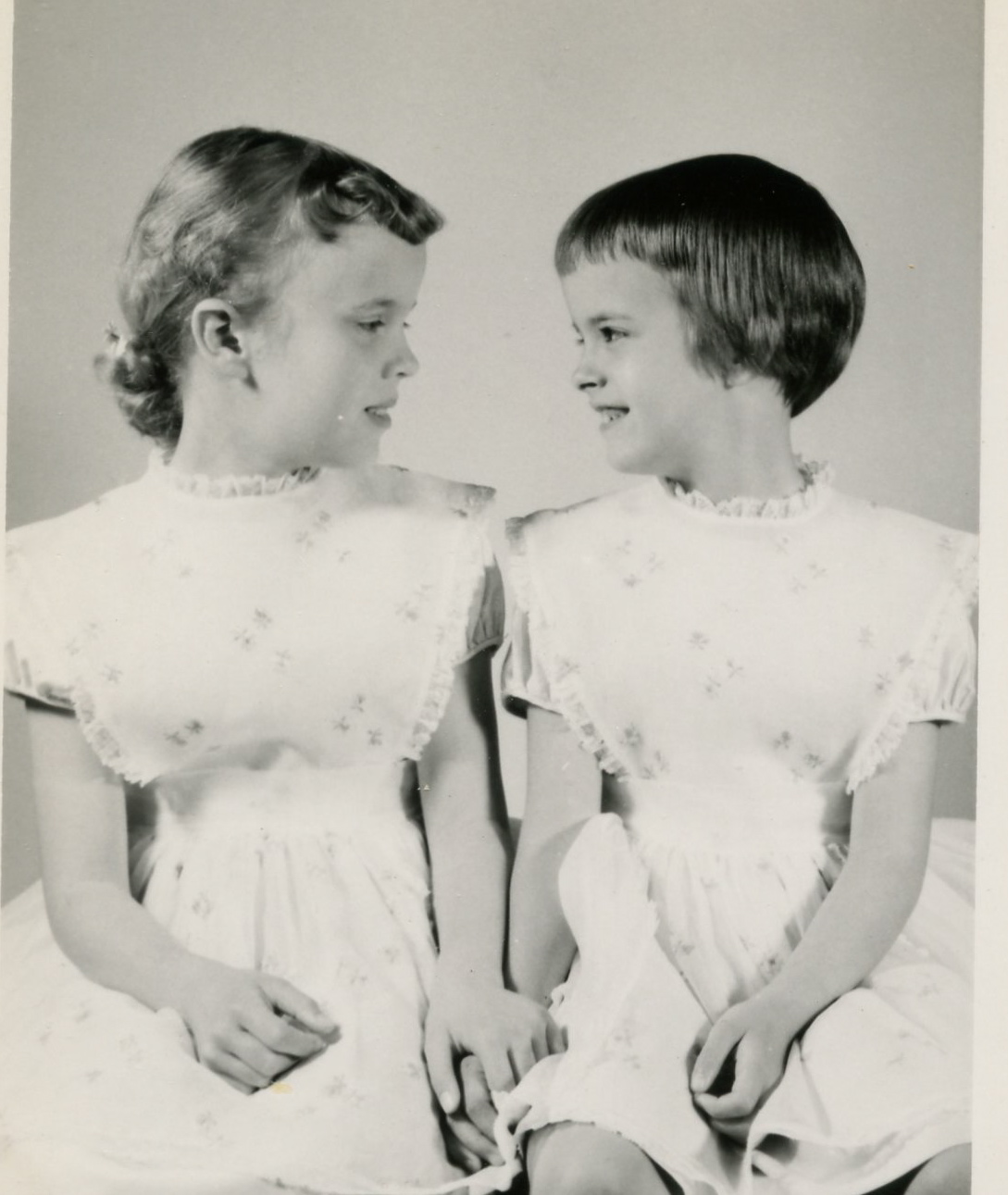
One of thousands of portraits. How in the world did Sara get us to hold hands?

And if there was no one else to photograph, Cathy and I were dolled up and herded into her living room “portrait studio.” Cathy loved it and there are entire photo albums, literally thousands of pictures, of her progression from kindergartener to college student, always carefully posed and highlighted. I, on the other hand, hated everything about this hobby of my mother’s. I was self-conscious and shy and wanted nothing more on Sunday morning than to get those scratchy petticoats off and get into jeans and a grubby shirt. Sitting under the hot lights and smiling while Sara barked orders was torture: “Sit up straight. Look up. Look down. Put your hands in your lap. Would it hurt you to just smile for a moment???” Yes, actually, it would. There were baseballs to be tossed and basketballs to bounce and dogs to tussle with, and I could imagine no need whatsoever for yet another picture of me. She was relentless, even taking a picture of me one Sunday morning in the top of a mimosa tree where I had taken refuge from the camera. What we had here was a failure to communicate.

One of my more cooperative days

When Cathy and I cleaned our her house in 2009, the hardest room for me was that tiny, tiny darkroom tucked under the staircase. It couldn’t have been more than 4 feet wide, maybe 10 feet deep, and for all the years of my childhood it held a rather large and very toasty hot water heater. Somehow, I’m sure with Russell’s help, she wedged in an L-shaped workbench that held a photographic enlarger and three trays of developer, stop bath and fixer. Those chemical solutions carry an overwhelming odor even in a large darkroom (remember the smell when you walked into Lamb’s Camera Shop?) and it was just concentrated in that small space. There was a half-moon-shaped cutout in the bottom of the door with a piece of heavy fabric over it to block out all lights. And every surface in the kitchen was doing double duty for dripping negatives and drying prints on Developing Days.

Sara was very satisfied with her makeshift photography lab and she turned out extraordinary work for a self-taught camera bug. When she was making prints just for fun, she’d often let us slip in and help, and I still remember the thrill of seeing those images emerge from shiny blank paper in the developing tray. The downside to this hobby was the bathroom ban. Until the upstairs rooms were finished, sometime in the mid-60s, the only bathroom in the house was directly across the back hall from the darkroom. Even a sliver of light from the bathroom or the small window that looked out over the back porch could ruin a batch of negatives, so we were banned from answering nature’s call while Sara was developing Commercial Appeal photos. I would hop from foot to foot, calling in and begging her to tell me when she would be finished, and it would always be “Just a few more minutes. Just one more picture. Go next door.” “Go next door” meant a dash across the driveway to the Gwins’ house, where we basically had free reign and lifetime bathroom privileges. God bless Nancy and Elmer Gwin: I’d be on dialysis now if not for them.

One thing to watch for when The Help comes out on DVD: In the “toilets on the lawn” scene, where Hilly Holbrook shoves the newspaper photographer out of the way, notice the camera around his neck. That’s Sara’s old Yashicamat. Wouldn’t she be proud?

No one was safe when Sara was loose with her camera.

Posted in Uncategorized | 2 Comments

Cub Reporter

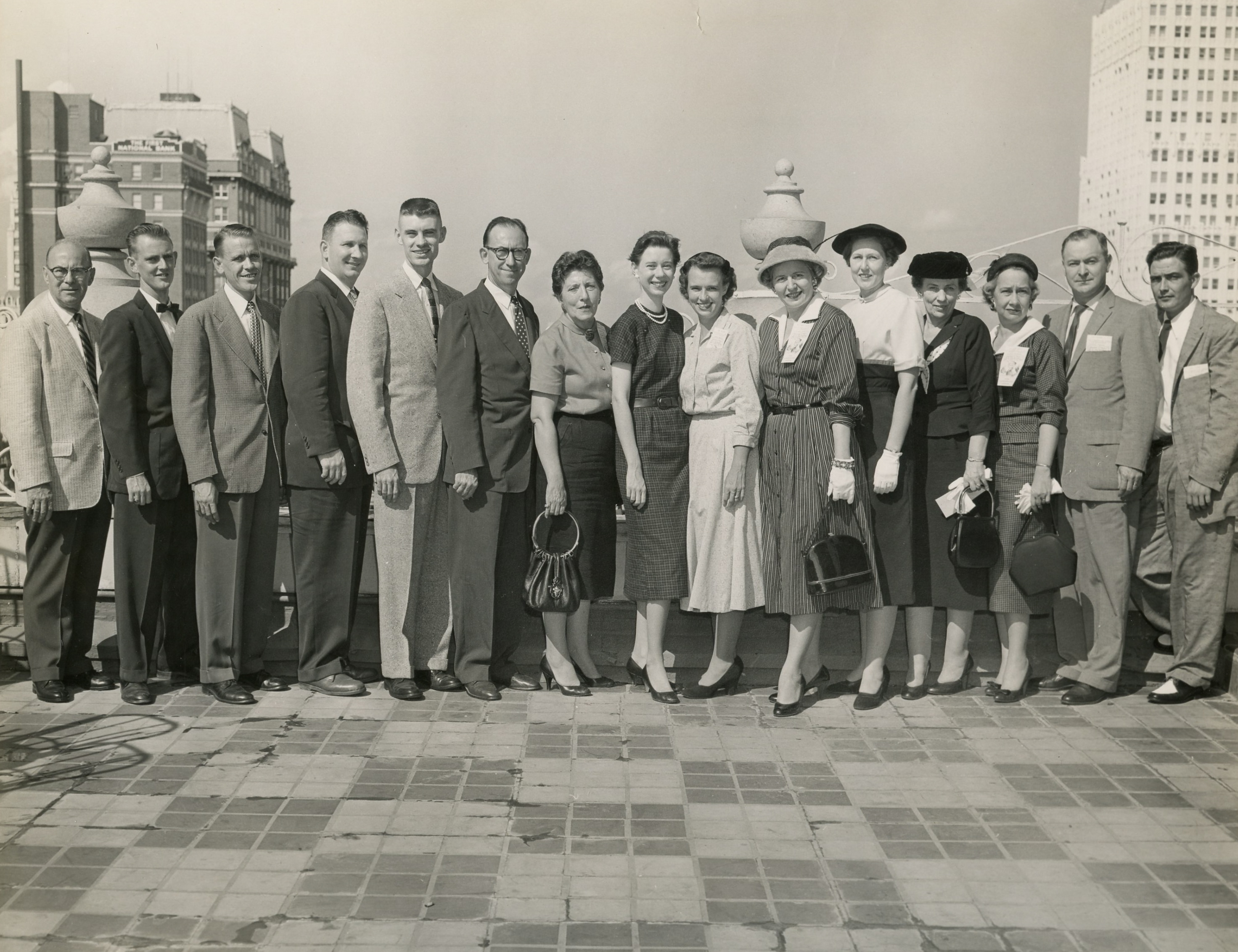
Commercial Appeal Tri-State Correspondents on the roof of the Peabody Hotel, late 1950s. Sara is in the middle, light dress.

“In 1954 I talked the Commercial Appeal into letting me send in the society column which came out every Sunday, since Tom Shepherd, editor of the Commonwealth, who had replaced Botts [Blackstone] as correspondent, was not doing much with it. They agreed to let me start sending that in, and later I applied for the job of sending in all the news. Tom was just sending in what had been in the Commonwealth. Finally, in 1956, Gene Rutland, the Tri-states editor, told me I was being given the correspondent’s job, and that I would be paid fourteen cents an inch for what they used.

“We realized that I would have to have a car if I were going to cover any stories for the paper so we bought a second-hand Dodge, which the children named ‘Kelly Black.’ I had not been driving for several years so had to go out and get a drivers license. We went out by the Golden Age Nursing Home for me to take my test, and I backed off in a ditch with the Highway Patrolman in the car. He laughed and said he thought I would be all right if I didn’t get out on the highway.

Me and Kelly Black

“It was nice to be able to take Cathy and Mary Carol places and to go to the grocery store, but when the Gwins next door turned up with a brand new blue and white station wagon, Cathy cried and asked, ‘Why do we have to have Kelly Black when they have a new station wagon?’ Elmer was doing well at the time in the lumber business and they could afford a lot of things that we could not.”

Sara takes the Big Leap. Actually, two big leaps, hiring on with a major tri-state newspaper and getting back behind the wheel of a car. She somewhat downplays the significance of what happened here in 1954, but for this still-young (33), relatively inexperienced journalist to tag on with one of the South’s premier newspapers…….Well, that was unprecedented. Gene Rutland, God bless his soul, must have seen something in her writing and her grit that told him the Commercial Appeal‘s Delta readers would be in good hands with Sara. And at the time, neither Gene or Sara or anyone else could have dreamed that she would go from transmitting a society column and covering the occasional debutante ball to the front lines of the civil rights struggle.

She was pretty much fearless when it came to news coverage. Navigating the roads on the way was a different matter altogether. For some reason (pride, perhaps), she didn’t relate the tale of Russell teaching her to drive soon after they married. Or maybe it was before they married, but I’m not sure he would have gone through with the commitment had that lesson been pre-nuptial. She apparently scared the living daylights out of him and most of motoring Greenwood before they limped back home to Walthall Street. After that, she left almost all the driving to him. Which was fine, until they moved to North Greenwood and two little girls came along. We had places to go and things to do and had to have someone with wheels.

I remember ‘Kelly Black,” although I have no clue why Cathy called it that. I thought all cars had names. And I also remember Cathy’s Christmas freefall when that station wagon appeared in the Gwin garage. Here we had a living room just jammed full of Santa Claus and she was out in the driveway, wailing about a Chevrolet. I just didn’t get it.  My first episode of car envy didn’t come until age 10, when Russell took me down to the Ford dealership on Main Street to see the new Mustangs. There was a candy apple red model in that back lot, and I went over the moon for it. I promised him I would be a model child for the next five years, until I got a license, if he would just to get that breathtaking sports car for me. He laughed at me. I cried. I pouted. I had a full-scale tantrum right there on the lot, until he jerked my spoiled self up and back into his company Plymouth and let me know that I would be grown with children before he even thought about buying me a car. Cathy got a shiny blue Barracuda when she finished college; I got a very used hand-me-down Heinz car, a monstrous screaming-yellow Ford Galaxie 500 that would seat about 8 people and got maybe 10 miles to the gallon. I drove it for 3 or 4 years, and then old softie Russell broke down and got me a Mustang. Not new, not red, but the car of my dreams. I wish I still had it.

Sara never turned into a good driver. She was a steering-wheel-gripping, nervous, jerky mess of a driver. And even after I was grown with my own children in the back seat, she would sling that right arm across me at every stop light. I learned early on to lean against the passenger door and brace myself for “The Arm.” The back seat was a safer perch, and I can still feel those plastic seats, the ones that would melt onto your legs in the summer heat (no one had air-conditioning) and the smell of snowcone juice soaked into the floorboards.

She never once had a new car. And I honestly don’t think that ever bothered her. She was confident enough that she never had to search for her self esteem with tail fins and chrome. As will be evident in the days to come here, her confidence came with teletype keys and camera lenses.

Posted in Uncategorized | 3 Comments

Sinner Man

Will Henry, our favorite sinner and backyard preacher

“This was Russell’s second time to attend a black funeral. He and Nancy Gwin [their next-door neighbor] had gone on Thanksgiving Day to Will Henry’s funeral. Will Henry had been our yard man as well as the Gwins’ so they felt honor bound to be there. They decided not to go to the church but just to the cemetery. They were bewildered when they realized the body was already at the cemetery and not at the church where the funeral services were being held.

“When he asked Georgia the next day why this was done she replied, ‘Oh, no, Mr. Criss. They couldn’t take him inside the church because he was a sinner.’ Then we wondered later how James made it in, because Will Henry and James were surely guilty of some of the same sins. Georgia did not like Will Henry anyway because he would stand under the kitchen window and holler, ‘Cook, I need some water.’ It made her furious because he wouldn’t call her by her name.

“We were really upset when he died after being injured while working on a tree for the city. One time he had assisted the children with grave digging by the playhouse for a ten-cent-store turtle which had died. Cathy, Mary Carol, Patricia and Gill Murphy, Mrs. Beaman’s grandchildren, stood solemnly by as Will Henry conducted the funeral.

Cathy serving as a pall bearer for Peter the Turtle. Mourners include Gil Murphy, me and Maria.
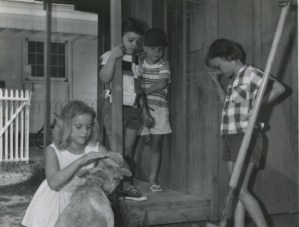
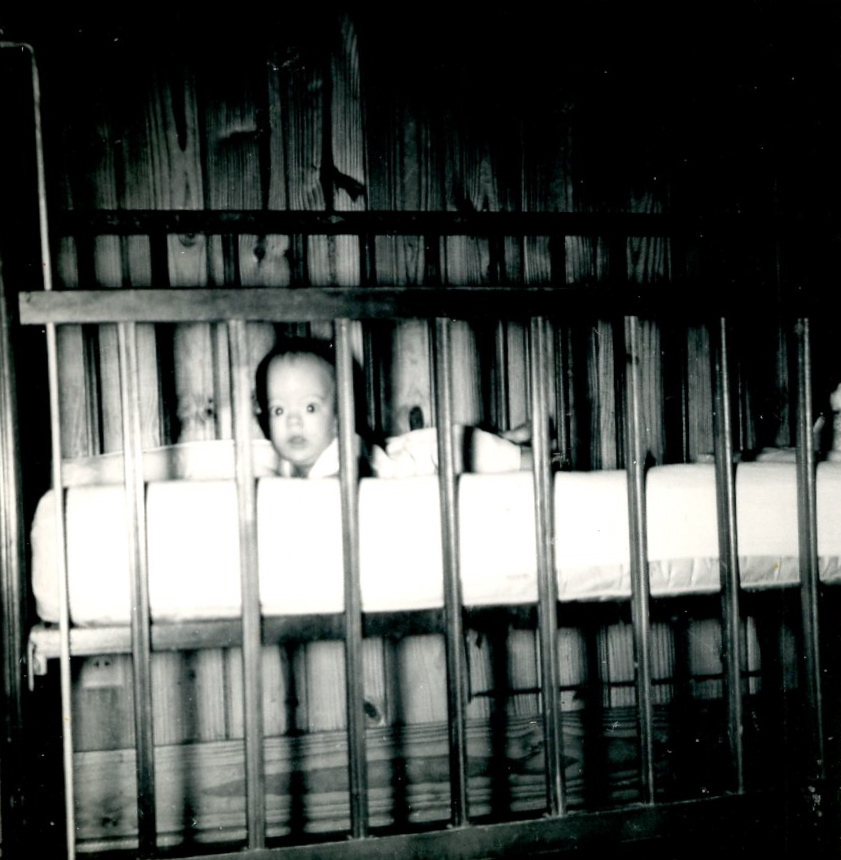
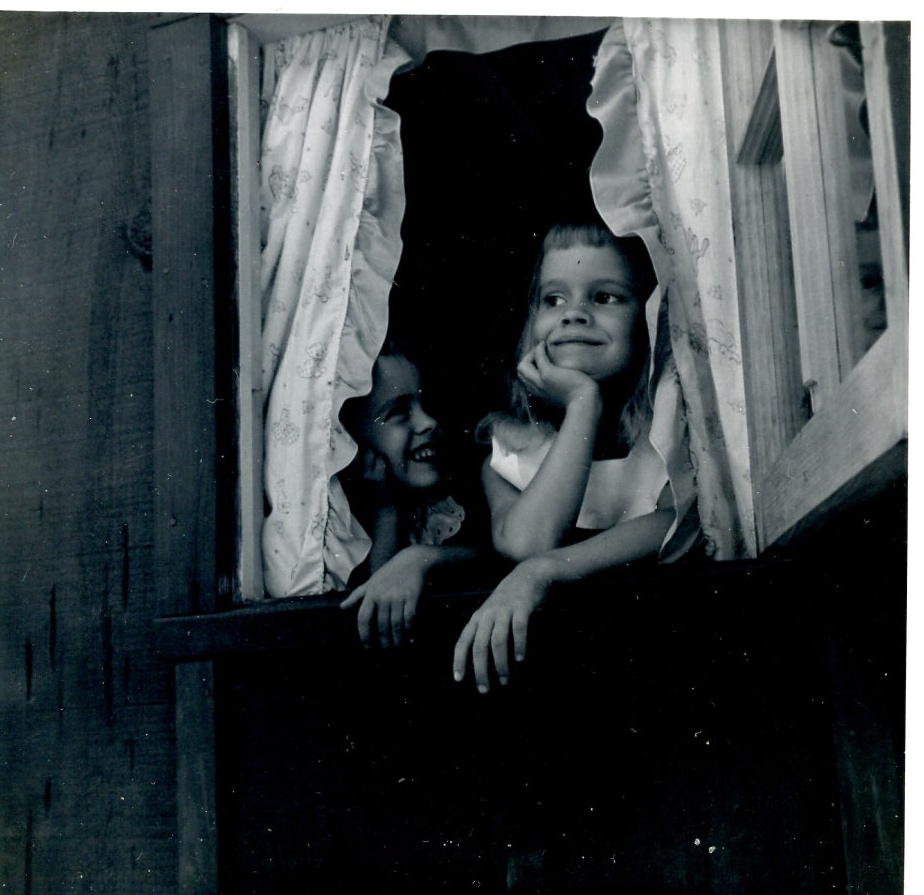
Cathy blesses Brownie following the burial of ol' Peter. You can see Will Henry's hand on the shovel.

“At least they were around to lay the turtle to rest. I had had to conduct the services all alone for Cathy canary, Chip, which lay down and died in the cage just after they left for school one morning. Russell was out of town so I had the unpleasant task of removing the body, which I carefully placed in a small cedar chest which I had received from Greenwood Furniture Store when I graduated from high school. I dug a hole next to the tool house and buried the chest and placed some flowers on the grave before they came home from school.”

Peter was one of many turtles who came to 409 East Adams in tiny cardboard boxes after a life in the dark terrariums of Woolworth’s. I would be flat out lying if I said I recalled anything extraordinary about ol’ Pete as opposed to any other reptile, amphibian or mammal we adopted, other than Brownie the Mutt. I do recall that Chip the Canary was a loud, smelly mess, not long lamented after his sudden demise. Anyhow, Will Henry was a very good sport about conducting Peter’s funeral, which was plotted and coordinated by Cathy. There was a solemn processional from the back porch to the side of the playhouse (see pictures above), a shallow hole dug by Will Henry, a Bible produced and a few words mumbled by this kind yard man who needed to get back to his non-ecclesiastical duties before Mr. Criss got home. I’m fairly certain Will Henry couldn’t read, so the Psalm or Proverb he recited must have been from memory. Cathy advised us to all look sad (again, see pictures above) and then scooted off to her next adventure.

The other children in the pictures are Gil Murphy, the grandson of my buddy Mr. Beaman and a favorite summer time visitor down the alley. The little girl was named Maria, and she was one of a series of friends who moved into the Spencer’s two-story duplex behind our house, now owned by John and Polly Henson. Gil and I took Cathy’s admonition to be mournful very seriously and spent some time wandering the neighborhood and speculating on just how long it would take God to realize that Peter was winging his little turtley way to heaven. Just as it was getting dark, we decided that enough time had passed for the miracle of salvation to have registered. We slipped into the tool house, borrowed Will Henry’s shovel and headed back to the playhouse. We deconstructed the small mound of fresh dirt and carefully lifted the burial box out. I don’t recall if I opened it or if Gil did, but our horror and disillusionment when one of us pried it open could not be measured. There was Peter, just as dead and just as unsaved as when we last saw him on this mortal coil. God had let us down, condemning our turtle to eternal damnation.

Gil fled for the safety of the Beaman house, leaving me standing there with an unsanctified turtle and a bucketload of questions, both of which were very quickly dropped in Sara’s lap. You have to understand at this point in the story that Sara was a woman of faith who had dutifully done her Sunday mornings at the Baptist church growing up, occasionally kept the nursery at St. John’s Methodist and made sure Cathy and I were deposited there each Sunday morning, petticoated and primped. She would go back home and drink coffee and read the Sunday papers. But her opinions on matters of the Book were her own and there were no spiritual discussions going on at the Criss house. So to have a visibly shaken six-year-old before her with decaying evidence of God’s indifference was something of a crisis. She looked at me, looked at Peter, rounded up Russell, got the turtle back in the ground and sat me down for a quick and simple lecture on the difference between souls and bodies. Tears were dried and life was hopeful again.

We were all saddened to lose Will Henry, especially Daddy, who had been at odds with him during their last encounter. Georgia missed him as well, though she would never admit it. He would stand in the carport, straining to see in the kitchen window, and call out, “Hey, Cook! I need some water!” Georgia would bristle and snatch an aluminum cup from the cabinet, slosh some tap water in and practically hurl ice cubes at the drink before rumbling out the back door to hand it to him, always with a cutting remark. Something tells me they thought the world of each other, but we weren’t privy to that world.
Posted in Uncategorized | 4 Comments

Valentine’s Day

Georgia and her family, 1971

“[Georgia] had married an older man when she was just thirteen and later married James Edwards ‘in a cotton field.’ We had a terrible time getting her record straight so that she would be able to get Social Security after James died. We finally traced her birth record and established that but could find no record anywhere that she was legally married to James, even though she was sure in her own mind that she was, saying that the preacher took the piece of paper to town (though she wasn’t sure which town) to record it. She was upset because she didn’t want anyone to think she had been living in sin.

“Russell went to towns where she thought it might have been recorded and searched court house records but to no avail. We knew James had cancer and that if he died she might not get anything. Russell had already helped her get on welfare and become eligible for food stamps. We finally told her that since she could not prove she had been married to James, the only thing they could do would be to let Reverend Valentine, their preacher, marry them. James balked and said he would not do this, but after much persuasion he did finally agree, and Reverend Valentine went to the house and married them. Before they could get married, however, they had to have a blood test, and James balked on that too. So Russell and Georgia tricked him by taking him to the Health Department and not telling him that was what they were taking the blood for.

“Sometime around 1970 James died, and we were asked to go to Stanley’s Department Store and buy white gloves for him to be buried in. We went to Fred’s and bought a plastic spray of flowers for the grave. After ‘leaving him out’ for a few days, which was their custom, the day of the funeral arrived, one of the hottest days of the summer. We went to their little church out in the area where they lived. We were the only white folks there. James’ sister and his children by a former wife were there. Georgia looked like she could have killed them because they had not paid him any mind and were crying and moaning and carrying on at the funeral.

“The open casket was at the front of the church. It was sometimes hard to understand what Reverend Valentine was saying with the noise being made by the family. Russell nudged me and said, ‘Reverend Valentine just asked you to get up and give a eulogy.’ I nearly panicked because James had not lived the most Christian life, and since I was the first one called on I did not know what was expected. I stood and very quickly got out the words, ‘James was a fine person. We will miss him.’ Then I asked the Lord’s forgiveness for being so hypocritical. All I could think of was Georgia saying if his girl friend came around she was going to get a gun or a knife after her.”

Georgia

This would be sad if it wasn’t so funny. Or funny if it wasn’t so sad. In the Mississippi Delta, there are two very distinct and different cultures which glide alongside each other, overlapping in more spots now than was historically the case, but still separate and often strange, each to the other. And the courts and the social scientists can prod and push and coerce and demand all they like, but those two cultures are simply never going to merge when it comes to such essential issues as birth, death and proper behavior on Sunday morning at 11 o’clock. And that’s just fine, because no one who lives it is the least bit bothered by it. It’s choice and comfort zones, not discrimination or racism, for goodness’ sake.

Black funerals are a cultural phenomenon, one that is much more familiar to most whites now than they were when Russell and Sara slipped into Reverend Valentine’s church to pay their last respects to James Edwards. It would have been considered a high honor to be asked to come and of course they wouldn’t have dreamed of saying “no.” But Sara never saw that eulogy request coming. She barely tolerated James and his shenanigans, because he kept Georgia upset and aggravated. And Russell’s trek around the state, looking for a scrap of legalese that likely never existed, was a true pilgrimage undertaken for a woman he cherished. That, and the indisputable fact that he would be Georgia’s sole financial support if he couldn’t get her married before James faded away. If he had had any hair by that time, he would have been pulling it out as he wandered through courthouses and cajoled two old souls and pleaded with the inimitable Reverend Valentine to make it all work. I remember Georgia huffing and puffing, mumbling under her breath, “We’s married, we done been married all this time, little ol’ piece of paper don’t mean nothin’.” And who’s to say she wasn’t right? In the end, it all worked out for the best, but Sara never went to a black funeral after that without at least the bare bones of a potential eulogy in her mind.

Posted in Uncategorized | Leave a comment

Porge

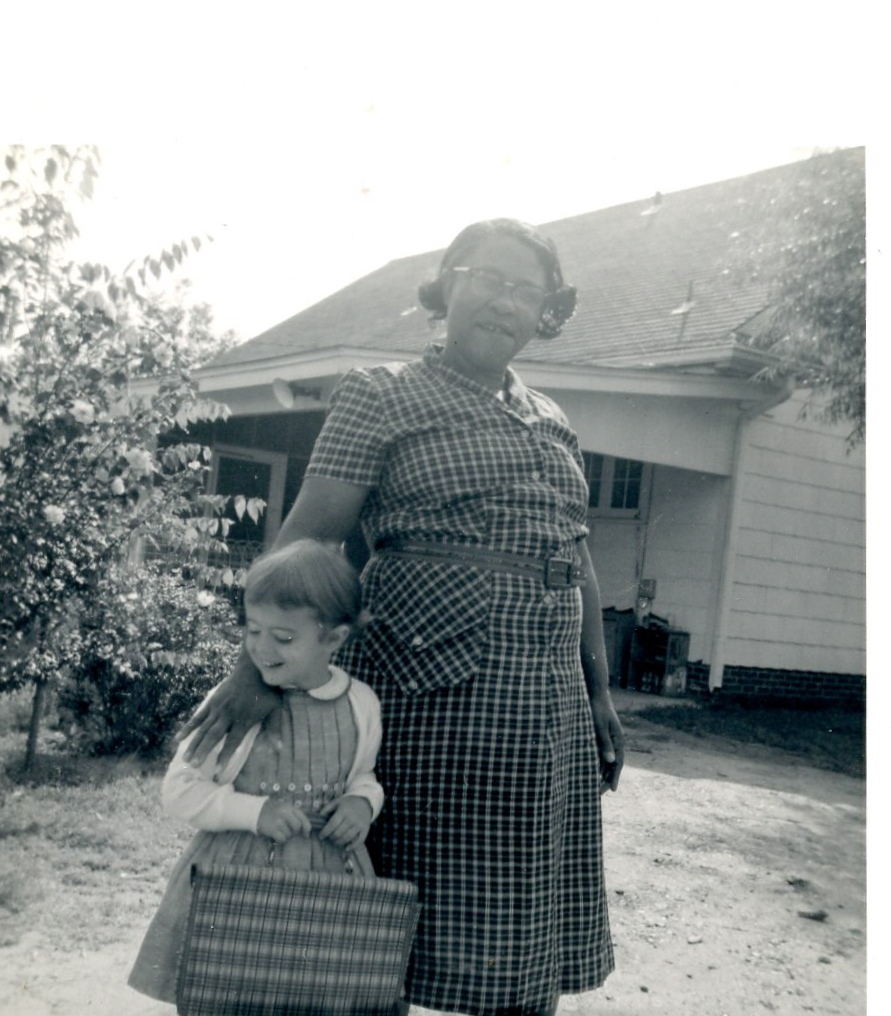
Georgia and me, probably 1958

“Georgia stayed most of the day Monday through Friday and half a day on Saturday. Wages were so low for household and yard help then and nearly everyone had full time maids and yard men at least once a week. We paid Georgia $12 a week plus $3 for cab fare, which was the prevailing wage at that time. She ironed, cleaned the house, cooked and nursed.

“Just the diapers were a big job since there were no Pampers or other disposable diapers at that time and we used cloth diapers. Unless you have ever used cloth diapers you cannot imagine how many a baby goes through in one day. We did have a washing machine but no dryer. On pretty days they were hung on the clothes line, while on bad days they were either hung in the attic or on a rack over the floor furnace in the hall.

“She [Georgia] soon became a member of the family and was like a second mother to Cathy and Mary Carol. She loved them like they were hers and still calls them ‘my children’ [1990]. She was a wonderful cook and spoiled us with all the good dishes she turned out. I made the desserts because that is what I liked to cook best, especially when I had someone else to clean up after me.”

Georgia in the Criss kitchen

“Georgia told us that she had gone to the second or third grade in a little rural school. She had mostly taught herself to read and write and probably could have learned easily if she had had the opportunity. When she came along, blacks in the South did not have the opportunities to become educated like white people. If they went to school at all, it was often to little one room schools on the plantations, and many of them never learned to read or write.”

I have anticipated and dreaded this posting since the blog began. Sara’s words introduced you to her and all her family, and all I had to do was add an observation or two at the end. But you don’t know Georgia Edwards, and it falls on me to present this remarkable saint to the world.
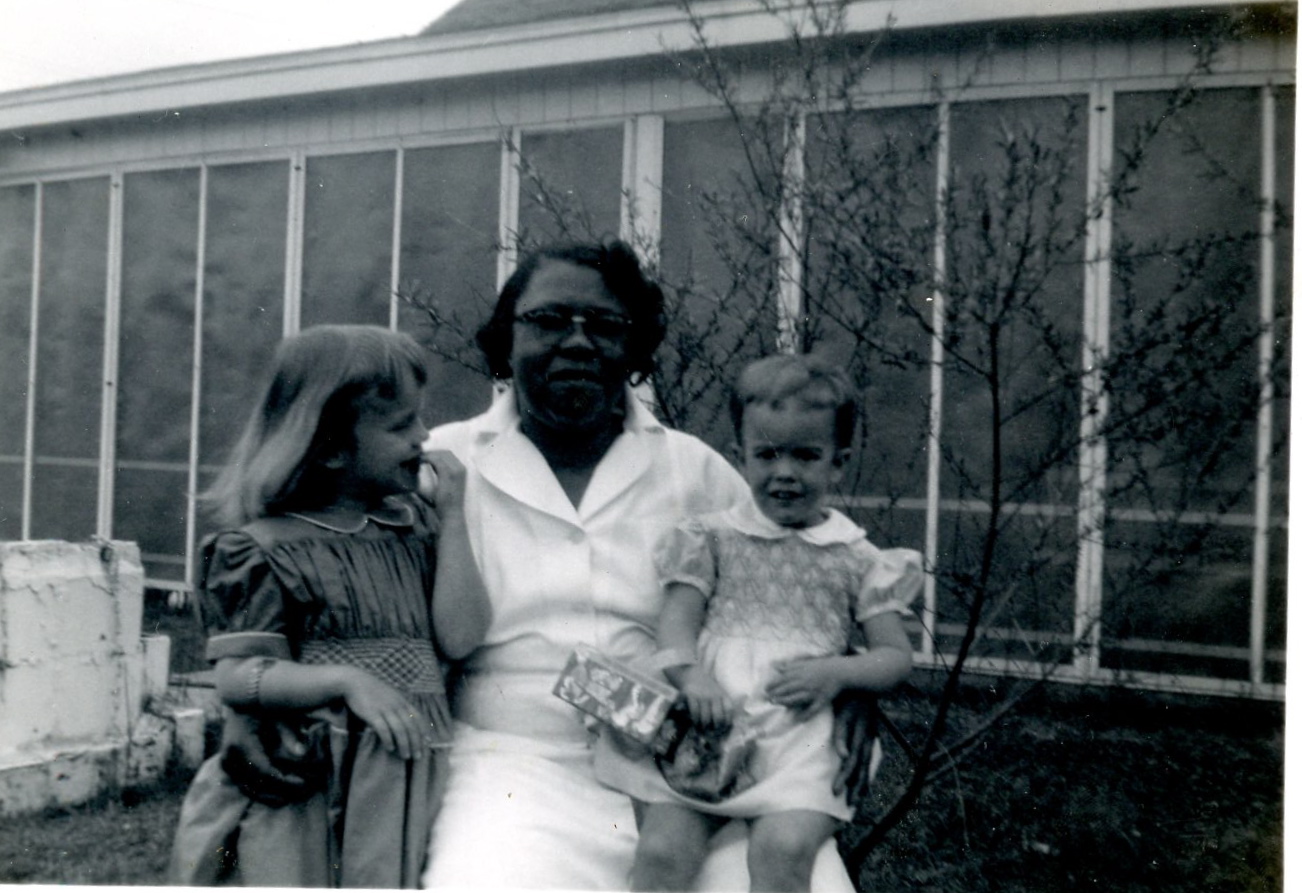
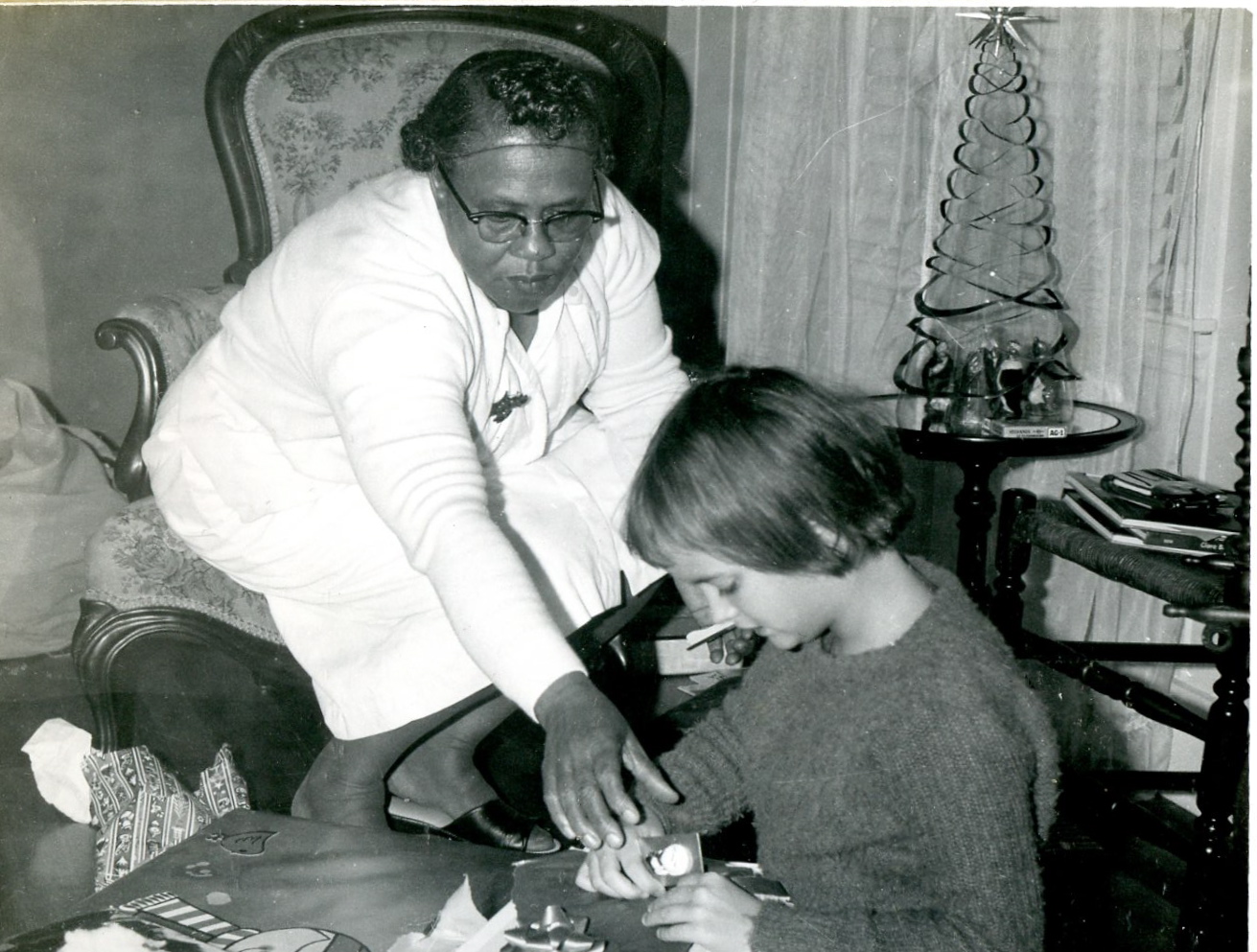
Christmas Eve, probably 1962

So, what can I say? Except that this gentle black woman, who Cathy and I called Porge, raised in a shack somewhere near Hazlehurst and married twice in cotton fields, somehow made her way up to the Delta and impacted my life in a way that few people ever have or ever will. I simply have no memories of my first years that don’t involve Georgia. My earliest, dim recollections are of trailing along behind her, with one thumb in my mouth and the other hand clutching her apron strings, listening to her hum gospel songs while she cooked and cleaned and ironed.  I certainly knew who my mother was, and there was never a better one than Sara, but Georgia was the quiet comforter who just radiated adoration for me. I truly believe that everyone who is mentally stable has had at least one soul in their life who was convinced they could do no wrong, leavened of course by others who were more realistic. I had two of those advocates: My father and my Porge. Blessings upon blessings upon blessings.

It is impossible to live in Greenwood, Mississippi during the last couple of years and not evaluate your life and upbringing in relation to the stories told in The Help. As I sat through that film with my husband, my son and my daughter-in-law, I just lost every scrap of composure about half way through the movie. I knew cruel families who mistreated their maids. They were not admired. And I knew that Georgia was as much a member of the Criss family as were any of the four of us who shared bloodlines. She took care of us and as she aged, we took care of her. One of the darkest days of my life was  when Daddy called me, his voice cracking, to tell me that Porge was gone. I was 37, she was just shy of 80, but I felt like the bottom rung of my life’s ladder had been chopped away.

Georgia and me, 1969

Posted in Uncategorized | 5 Comments

Sibling Rivalry

Do we really have to keep her?

“Five days later we went home but soon wished we were back in the hospital. Cathy was upset and did not like the attention being given to the new baby and that first night was almost hysterical. Russell and Mama put her in the car and drove almost to Minter City trying to quiet her down.

Please don't leave me in here with my sister.

“Mary Carol was a good baby and content to just stay in her bed and play a lot. We had made the mistake of spoiling Cathy by picking her up every time she cried and had learned a little before Mary Carol came along. Also this time we had both Georgia and Paralee to help, but Georgia was afraid of tiny babies since she had never had children and would not pick her up until she was three months old.

Cathy, Georgia and me, 1955

“One day I came home from a quick trip to the grocery store (I wouldn’t dare stay gone but a few minutes since I knew Georgia would not pick her up). When I got home she was just beaming and said, ‘I did it. She was crying, and I just couldn’t leave her in the bed.”

Cathy’s three-year-old meltdown remains the gold standard for sibling rivalry in this family, told and retold, but I’m sure there was nothing funny about it at the time. Something about the tight little world of parents with their first and only child is so manageable, so secure, so perfect. And then a stranger breaks the bubble. And all thoughtful parents must look around and wonder “What have we done?” So I find Cathy’s reaction perfectly normal and rational. I begged for a baby brother for many years and was always met with a brisk headshake from Sara and Russell. No waythey were going to rock that boat again. As soon as I crossed that threshold on East Adams and Cathy went into her infamous all-night tantrum, I was destined to be the caboose of the Criss family.

Better days.

Of course, I don’t remember that day that Georgia first picked me up. I just remember that she had me tightly in her formidable grip until she died 37 years later. More to come.

Posted in Uncategorized | 2 Comments

Baby Boomer #2

Sara and me, Spring 1954

“In 1953 we decided it was time to get a playmate for Cathy. In the late summer I found out I was pregnant again, and we started telling Cathy she was going to get a sister. She talked about ‘the sister’ all the time, and I don’t know what we would have done had she been a brother. We made arrangements with Georgia Edwards, who had worked for the Doyles, to start working for us after the first of the year so that Cathy could get used to her before I went to the hospital to have Mary Carol.

“Mary Carol was due March 25th. The weather had turned very warm. We had an early spring that year and had ordered our first window air conditioner from Sears but had not installed it yet. We had tried to explain to Cathy that I would be in the hospital for a few days and that Georgia and Granny would take care of her, but apparently we did not do our job well. On the 25th I went to Dr. Lucas and found out that my blood pressure had gone up. He told me to go right to the hospital. I got upset and so did Cathy, and I left her crying with Tricia and Mama. She had never spent a night away from me. Tricia and her boyfriend, Bob Fortenberry, took her out to the Delta Livestock Fair to try to make her happy. Georgia was at home with her during the day, and she remembers that she cried and Cathy cried.

“Finally, late in the afternoon of the 27th, Dr. Lucas came in and said that he was going to induce labor since he had gotten my blood pressure down. I always thought that since it was Saturday he was trying to get all the babies delivered so he could have a peaceful weekend. He also decided it was time to get another mama started, and then he went home to eat supper. There was already another [patient] in labor but with a different doctor. They lost both of the other babies, and Mrs. Aubrey Bell, who was in the hall, said Russell very calmly ate his hamburger during all the commotion.

“Mary Carol decided it was time to make her appearance, and they called for Dr. Lucas to come back. I never was sure whether he made it back in time or whether the nurse, Toodles Joiner, actually delivered her.”

Cathy and her playmate

So the truth comes out. I was ordered up as a playmate for Cathy, like a new Betsy Wetsy doll. Good grief. As will become evident over the next couple of postings, Cathy’s yearning for a little sister had evaporated by the time Sara packed her bag and headed for Greenwood Leflore Hospital, and the next few weeks, according to family legend, were just a bit rocky. Big Sis thought babies came with a money-back guarantee, and she wanted her money back immediately, no questions asked. And as I was the second daughter and fourth granddaughter in a row, she probably wasn’t the only one who felt that life might just be easier if we shipped this one back. I was handed off to Russell and Georgia for protection and we quickly formed our own little mutual admiration circle.

I’m still around, obviously, but Cathy has yet to decide if I’m a keeper.

Posted in Uncategorized | 2 Comments