Hell Hath No Fury

“Miss Lillie Lanham was an old maid who was trying to win one of the town’s eligible bachelors (moneywise, not looks-wise) Frank Wright, brother of Charles. He was living at the Irving Hotel. He jilted Lillie for a Miss DeCell, a school teacher, and Lillie beat him over the head with an umbrella. Later after he married and moved into a big house on River Road she threatened to blow up the house and was finally put in jail. Big had not cared for Miss Lillie because she thought she was trying to get Uncle Roy when he and Big were courting, but in late years they had become pretty good friends.

“Miss Lillie would call her with all the latest news. She apparently had a hot line to the police station and other choice news spots. While I was working for the Commercial Appeal she would sometimes call me and say, ‘Sara. Lillie. There’s been a bad wreck,’ and she would have all the details. I never knew where she got her news, but she was a pretty good source.”

[ed. note: The following names have been changed to protect the outrageous, as there may be family still around. Old Greenwood hands will know who we’re talking about and the rest of you will just have to guess.]

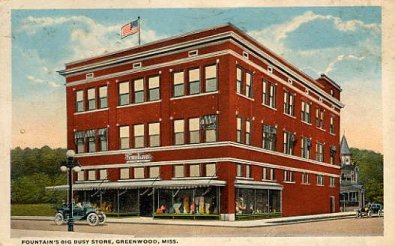
“Mrs. Jane Doe was another town character. When we were just children we would hear the grownups talking about her being a kleptomaniac. They would tell about her going to Fountain’s big sale one morning and taking a tablecloth and going back that afternoon to get the napkins. Sometimes Mr. Doe, whom she called Doodle, would return things that were taken.

Fountain's Big Busy Store, victim of Greenwood's kleptomaniac. Postcard courtesy of Donny Whitehead, aboutgreenwoodms.com

She knew everybody and everybody knew her. She had two sons and a daughter, whose name was also [  ]. When we were in high school Mrs. Doe and her daughter would ride around looking for the baseball players. They went through a period of dressing in lavender or purple from head to toe and they would hang out around the Double Dip Ice Cream Store on Howard Street because that was where the boys came in.

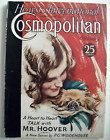
“Some friends entered young [    ] Doe in a contest to become Miss Cosmopolitan, sponsored by the magazine, and she was selected to be on the front cover and given a trip to New York after being named ‘Miss Cosmopolitan.’

Cosmopolitan cover from the 1930s. A current Cosmo cover would be too X-rated for this PG blog.

All of the children were nice. The last time I saw Mrs. Doe before she was killed in an accident going to Jackson was at the City Hall when they were counting votes. She had gotten interested in city politics. She was very buxom and had on a low cut knit dress and was leaning over the table in the Council Room watching them count the votes for Mayor.”

When Rawa (Rena Stott Roach) died a few years ago, she left me a nice little desk that had belonged to Lillie Lanham. I had no idea until I read this memoir that Miss Lillie was such a volatile character, and I have no idea why Rawa chose me to have that particular piece of furniture, which must have been Big’s at one time. Yet another mystery.

Posted in Uncategorized | Leave a comment

Shucks and Shotguns

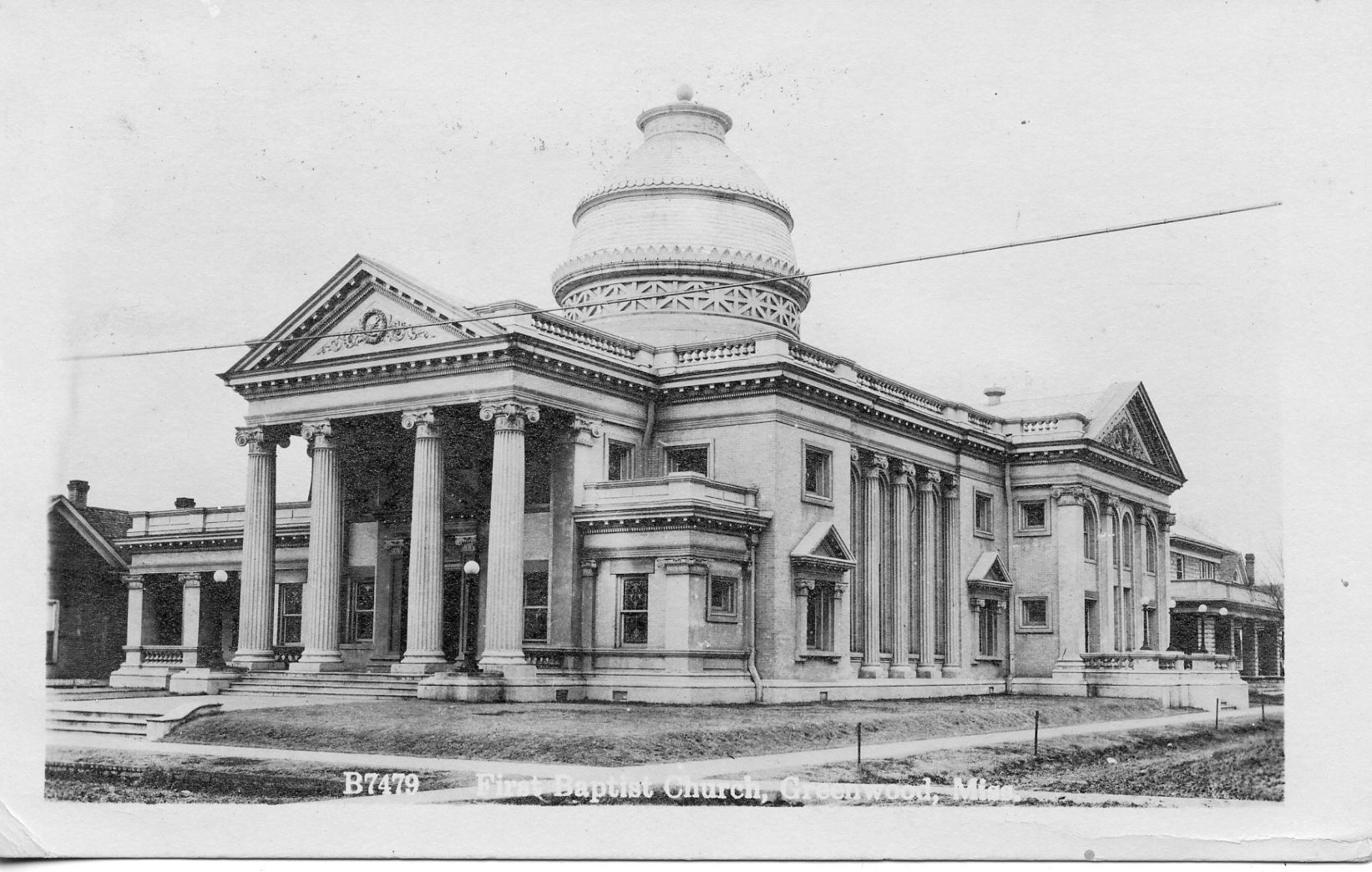
Sara on her 18th birthday, April 1, 1939. Notice the First Baptist Church dome in the background.

“We always said no one’s past was safe in Greenwood because if someone had been talked about twenty or thirty years before it was still being recalled and sometimes used as the reason we were not to get too chummy with kids, because they might be like their parents. No matter how saintly and Godly they might have become, we were told that they had not always been like that. And if they had grown up on the wrong side of the tracks, that too was remembered regardless of how successful they might have become.

“We had a lot of town characters, just as in any small town. One of the best known was Charley Ollie, the hot tamale man. Charley was a Turk who had a little cart he would push up and down the street shouting, ‘Get ’em while they’re hot.’ You could buy a hot tamale for a nickel and pull the shuck off and eat them right there on Howard Street. I have never tasted any since that seemed quite so good as those put out by Charley Ollie.

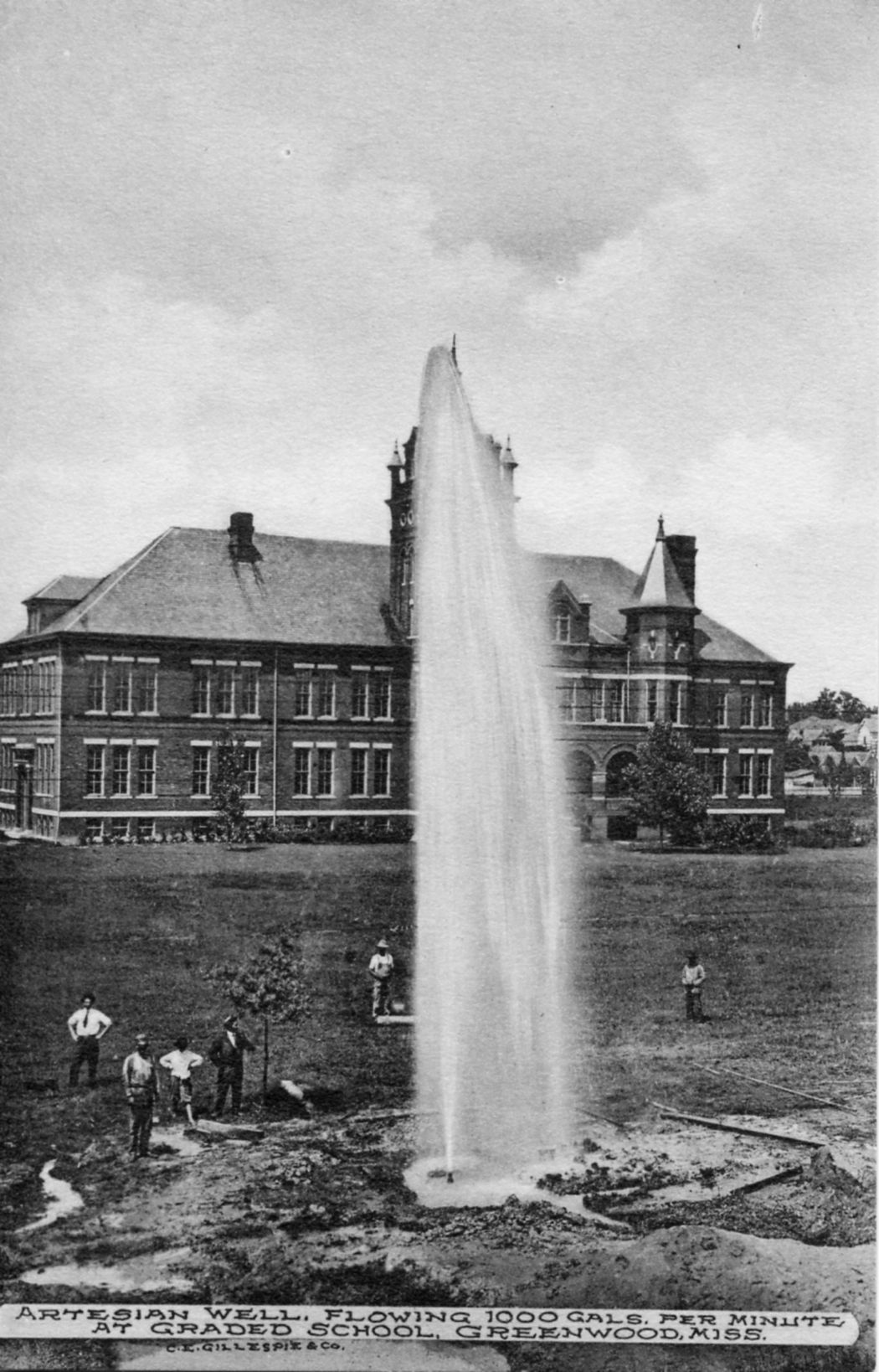
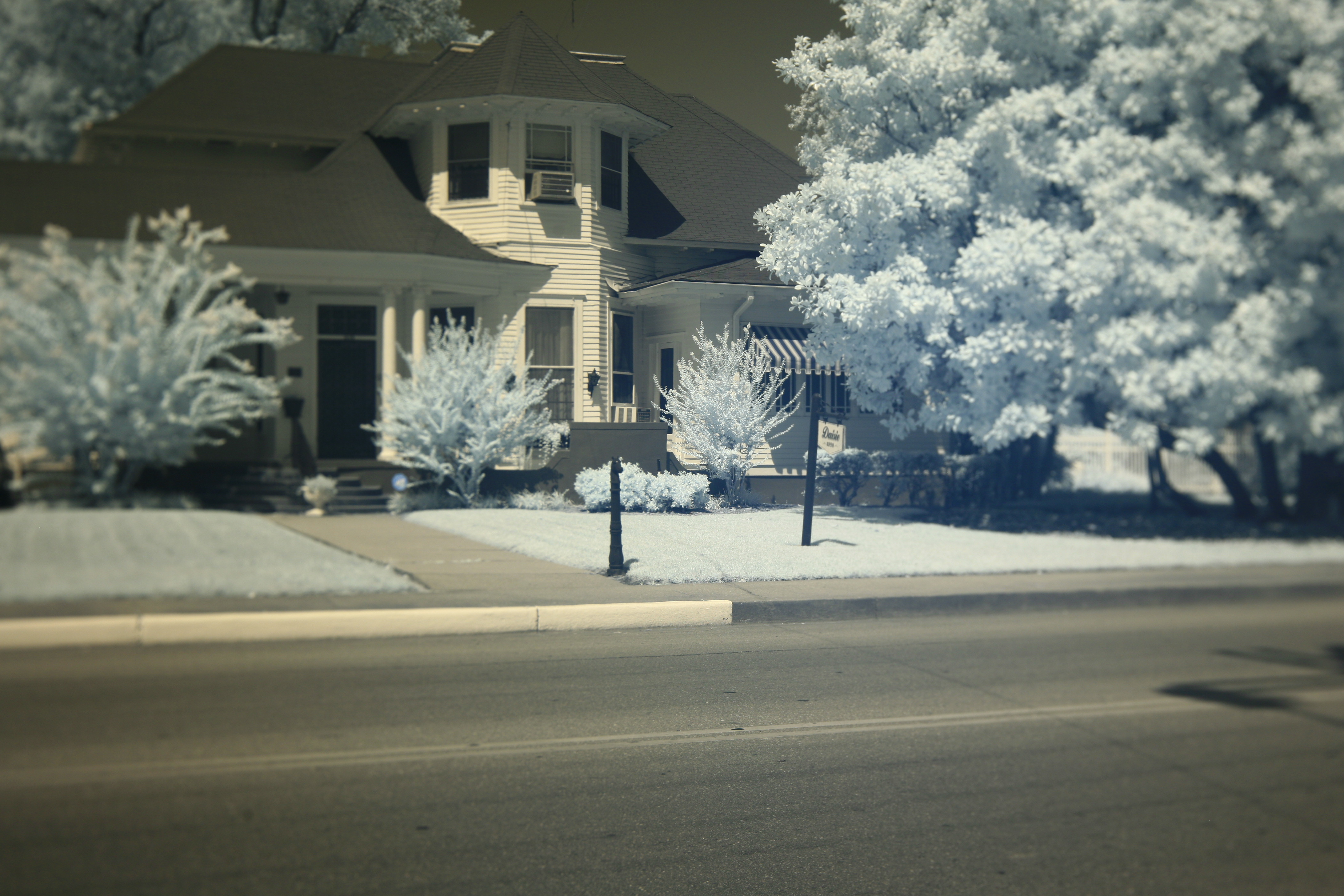
“Miss Daisy Wright lived in a big house which still stands across from the Greenwood Utilities. She was a do-gooder who at one time or another belonged to nearly every church in Greenwood because she would get mad at every one she was in if they would not let her run it. She donated the stone fountain next to Davis School commemorating the first artesian well (Greenwood gets its water from artesian wells) in Greenwood in memory of her husband, Charles E. Wright, who brought in the first well. The fountain has since been moved over toward Church Street after Davis School burned. There was a fountain on all four sides and we loved to drink out of it.

Artesian well gushing on the Davis School grounds. Photo courtesy of Donny Whitehead, aboutgreenwoodms.com

“One time when the city crews arrived to start cutting trees in front of Miss Daisy’s so that the street could be widened she went out with a shotgun and dared them to cut the first tree. The trees were not cut and the street was not widened until many years later.”

Downtown Greenwood from the Greenwood Utilities water tower; Miss Daisy's house is the large one in the foreground. Notice how many homes there are in the downtown area, circa 1930. Photo courtesy of Donny Whitehead.

We could use some of Miss Daisy’s gumption in Greenwood these days. We still have an ample supply of eccentrics and off-kilter characters, and we’re capable of getting our collective dander up when someone wants to bulldoze a Boulevard house for no apparent reason, but I’m not sure we’re as tight-knit as a community like the one Sara describes. And our unique Artesian fountain at Davis School? After they tore down the old junior high and relocated the fountain, it seems that no one ever hooked it up again. There’s a lesson about civic pride somewhere in that sad little vignette.

Posted in Uncategorized | Leave a comment

Wicked Ways on Washington

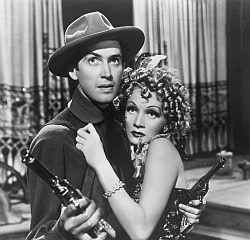
Marlene Dietrich did not live on East Washington, but she could have played some of the characters who did.

“Even though Mama so carefully shielded us from the facts of life, one could not grow up in that neighborhood without learning that all was not pure and innocent as little girls, ‘nice little girls,’ were made to think they were. There were always several affairs going on in town, with much whispering and gossiping about them going on by the ladies in the rockers on the porch.

“Miss Minnie [Minnie Attlesey, who lived next door to the Stotts]’s little row of rental houses attracted all sorts of people as did the big old two-story house with its apartments across the street. ‘Just look at that,’ Mama would say when the shoe salesman who lived in one of Miss Minnie’s houses would head up the back steps of the house across the street to see his lady friend while her husband was at work. She said the husband was supposed to be one of his best friends.

“Mama’s doctor, Dr. Gillespie, who was a bachelor, was seeing his nurse friend who lived upstairs in the big house. There was nothing wrong with that since neither of them was married, but the scandal was that Big, as she worked in the yard in the early morning hours, spotted him leaving and the ladies began whispering that he was spending the night over there. Their gossiping caught up with them when one of the neighbors happened to tell the nurse that Big had seen him leaving and that Mama had said something about it to her. The next thing we knew word got back to Mama, and her blood pressure shot up, and she was put to bed. Dr. Gillespie was called to see about her, and somehow she convinced him that she really had not talked about him, and he continued to be her doctor.

Tricia and Jessie, about 1940

“We picked up tidbits about the prominent man being shot at by his girl friend in the alley behind the Cotton Association and the mayor being threatened with a lawsuit for his unseemly behavior with a young girl, whose mother was promoting her and her two sisters with men. Then there was the woman who passed the house every night wearing very tight clothes and spike heels and whom we called ‘Apey’ because we thought she had a face sort of like a monkey. The word ‘prostitute’ was a forbidden one, but it was all right to whisper ‘street walker’ which we were told was what she was. We would hide and watch to see if she got picked up, which she often did.

“Then there had been the girl across the street who had moved before we came back to Greenwood but who Big said was taken across the street by her ‘old mother’ to meet old Jeff Attlesey in the Chinese laundry. Later we heard them say that she had been ‘run out of town’ because of her promiscuity. I always wondered how they ‘ran’ someone out of town.”

Mrs. Kravitz, watching Samantha

Remember the old “Bewitched” TV show in the ’60s? And Gladys Kravitz, who stayed glued to her living room window watching Samantha the Witch’s nose-twitching antics? Living on East Washington seventy years ago must have been akin to having a houseful of Gladyses peeping from behind those Virginia creeper vines. I can remember the decrepit two-story house (was is yellow?) across from the Stott’s house on Washington, now the site of an auto repair shop. The rocking chairs and glider at the Stott’s would be filled with mothers and aunts and grandmothers and cousins while we played on the floor, and there was a steady buzz of commentary regarding activities across the street. My first awareness that some houses were something more than warm and fuzzy homes was in reference to that old place across from Big’s, and it seems odd that I have no memory of it being torn down.

I love the story about Jessie and Dr. Gillespie. Imagine starting or perpetuating a rumor that led to a medical crisis that had to be resolved by the victim of the rumor. I can just imagine Jessie in that dark front bedroom, lying in bed and staring at the ceiling and thinking , “Lord have mercy, how am I going to get out of this one?” Given the choice between dying of a quick and merciful stroke or walking into his office to face the music, she probably prayed for the former.

Posted in Uncategorized | Leave a comment

Aunt Aggie, Mrs. Butter Ball and Hambone


One of the black women who worked for the Evans family; regrettably, Sara did not identify her in this photo.

“We got a lot of our produce delivered to the back door during those years. People who lived in the country and had gardens would bring peas, peaches, corn, tomatoes and other vegetables around, and Big had a scale on which they weighed them to see how much you owed them. We always referred to these friends by what they sold. For instance, Mrs. S.L.Ball was referred to as ‘Mrs. Butter Ball’ because she brought butter among other things. Mr. Daves brought eggs and butter and vegetables, and he too was ‘Mr. Butter Daves.’

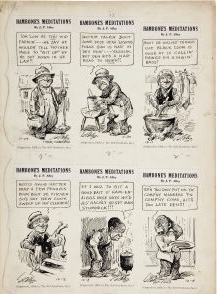
“Old Negro women would come to the door with a big flour sack slung over their shoulders filled with shelled peas or green beans. I don’t think they ever bought vegetables or butter or eggs from the store. There were several Negroes who roamed the streets and would stop by to see if you had any handouts or junk. One little wirey black woman was called ‘Aunt Aggie.’ It was she who first showed us sandwiches cut into two triangles, and we promptly called those ‘Aunt Aggie sandwiches.’ Then there was Hambone, a small little man who pushed a junk cart all over town. We always heard that J.P.Alley, the cartoonist for the Commercial Appeal for many years, modeled his Hambone character from our Hambone. His Hambone appeared every day in the paper with some clever comment in Hambone’s own dialect.”

Several of J.P.Alley's "Hambone Meditations"

“Then there was ‘Old Sam,’ another little black man who must not have weighed over 125 pounds but who could put away more food than anyone I ever knew. He did odd jobs around the house and yard and at noon Big would fill him up a plate of leftovers (all running together) that no one could believe he could possibly consume, but he always managed to eat every bite. We still refer to a plate full of food as a ‘Sam plate.’

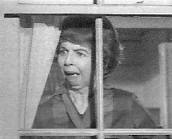
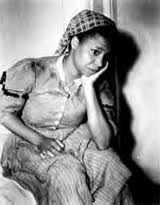
“After Irma [the Stott’s maid] left, there was Laura, who spoke in a high-pitched voice similar to that of Butterfly McQueen in Gone With the Wind. Laura was a good maid but had one fault and that was that she would grab your plate before you could finish eating. Today I can understand why, when she had to wash all those dishes in a dishpan without even a dishrack to put them in. Anyway, when today [1990] I reach for Russell’s plate and he is not quite through eating, he screams, ‘Laura, leave my plate alone!'”

This is Butterfly, not Laura.

“Speaking of conveniences, we never owned a real ironing board but instead used a wooden board propped up on high chairs in the back hall. There was no way to slip a garment over it so you pressed on one side and then when you turned to the other you invariably messed up the side you had already pressed. All of the clothes were made from 100% cotton with no Permapress fabrics, and they had to be starched with a thick blue starch solution, sprinkled, and rolled up in a towel before being ironed.

“We had a Negro woman named Delia Page who sewed for us. She lived in a better than average house which was neat as a pin. She had several children  and was so concerned about their education and had even bought a piano so one could take lessons. She came to Uncle Roy one day crying and told him that a well known lawyer had tried to attack her while she was in his office to discuss business. I can remember Uncle Roy and Big going to another lawyer to try to get something done about it.”

What can be said except that Sara lived in a world that has vanished in many ways? This is a memoir, not a social commentary, and I can say with certainty that Sara never mistreated anyone of any color intentionally. Later on these pages you will meet Winnie Baskin and Will Henry and Paralee and Georgia Edwards and many more black friends who, pardon the pun, added so much color to our lives. My advice is to head out to see The Help, filmed on the same Greenwood streets that Sara loved, and realize that courage and compassion don’t always find their way to the bestseller list or the big screen.

Ed. note: This is from Wikipedia, so don’t consider it gospel:

Cal Alley (1915 – November 10, 1970) was the editorial cartoonist for The Commercial Appeal in Memphis, Tennessee from 1945 until 1970.[1]

Born in Memphis, Cal Alley was the son of James Pinckney Alley, creator of the syndicated cartoon panel,Hambone’s Meditations, and the first editorial cartoonist at The Commercial Appeal in 1916. The character of Hambone was inspired by J. P. Alley’s encounter with a philosophical ex-slave, Tom Hunley, ofGreenwood, MississippiHambone’s Meditations ran on the front page of The Commercial Appeal. When the elder Alley died April 16, 1934, Cal Alley and his brother James took over Hambone’s Meditations. Pressure from Civil Rights groups brought the long-run cartoon series to an end in 1968.[2][3]

Posted in Uncategorized | Leave a comment

Sabbatical

Daughterofthedelta has reached the “100 postings” mark and will be more or less on sabbatical over the next ten days or so, posting when possible but making no promises,  as we are off to the beach and other exciting places. Stay tuned for tales of “Mrs. Butter Ball,” the Stott’s own “Butterfly McQueen” and bad behavior on Washington Street.

Posted in Uncategorized | Leave a comment

Baptists on Broomsticks

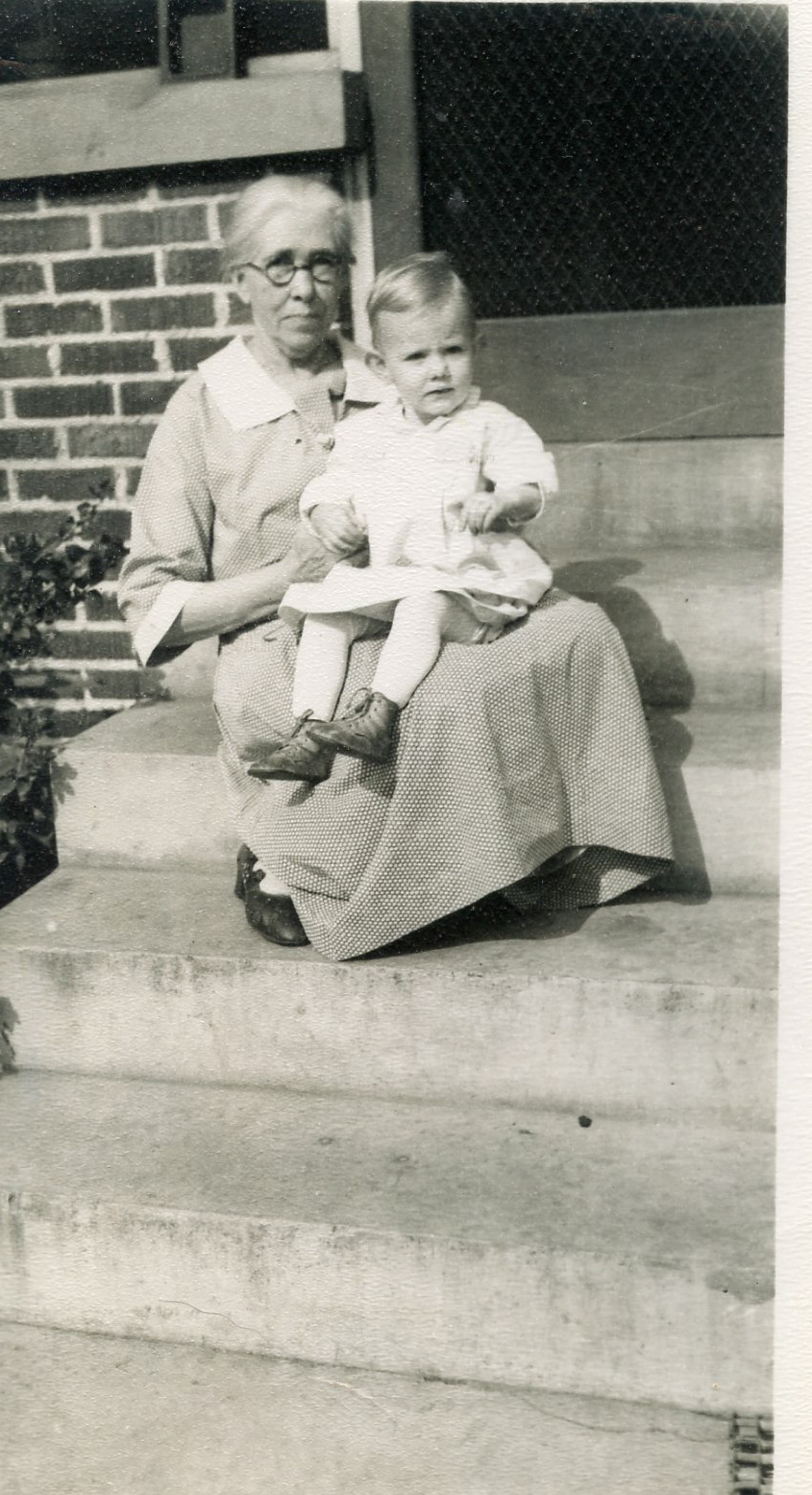
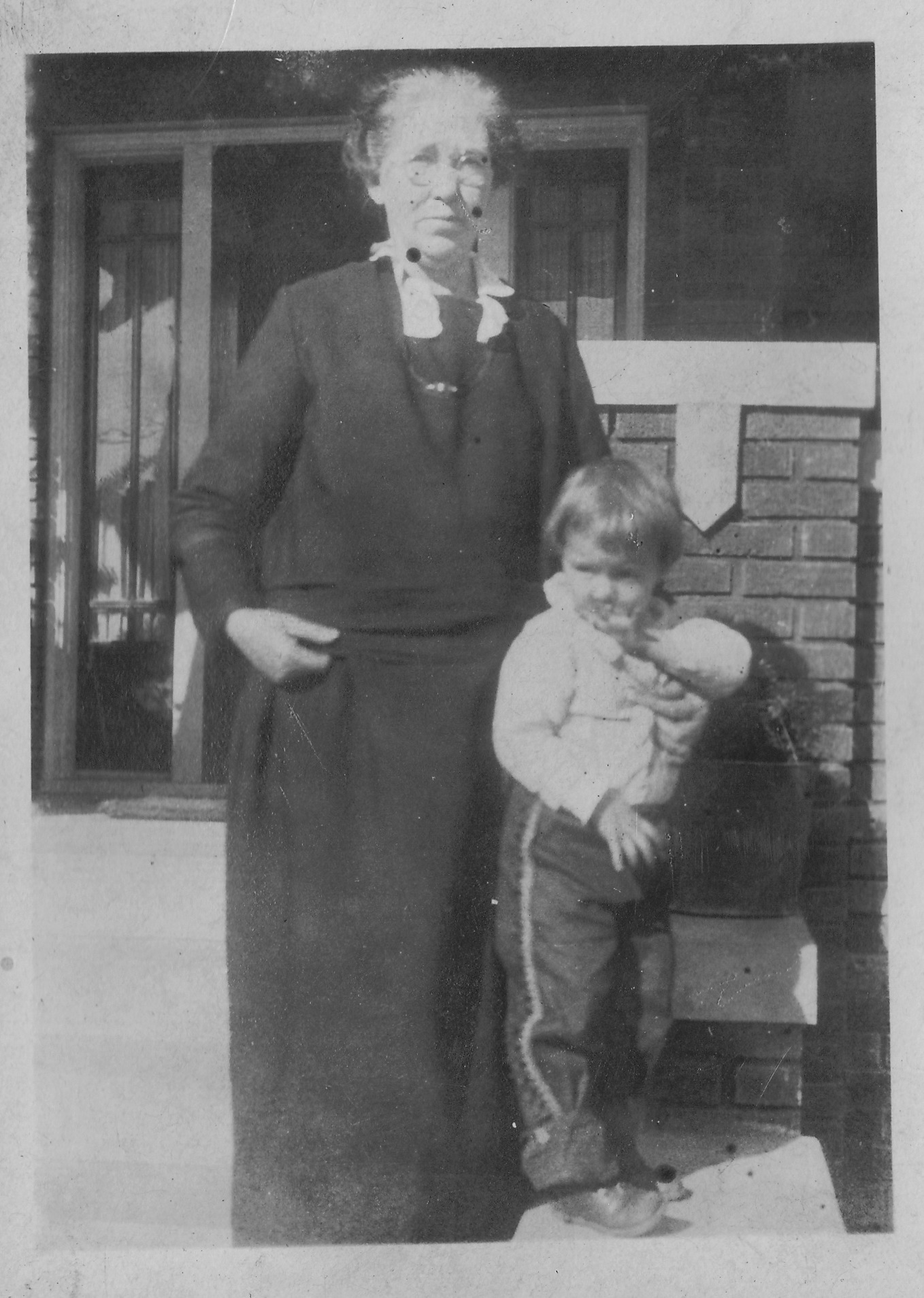
Bama with Tricia, 1933. She was 65 years old.

“At our house, children were not the only ones who had to suffer through teasing from the others. Poor Bama [Sara’s grandmother] never lived down our jokes about her ‘Stitch and Chatterer’s’ group, which was made up of ladies in her Sunday School class.

First Baptist Church, home of the Stitch and Chatterers.

They were in their fifties and sixties, and we all thought they were at least 100. One time their teacher, Miss Daisy Wright, invited them all out to her farm for a picnic. Bama made the mistake of telling us that they got broomsticks and all rode around on them pretending the broomsticks were horses.

Miss Daisy Wright's home on Fulton Street. Photo courtesy of Mary Rose Carter.

“I was excited the one time that Bama had the Stitch and Chatterers meet at our house. That was the only social life she had, and we really should not have laughed at her, but just the thought of Bama, who was not the type at all, riding a stick horse on Miss Daisy’s farm, had to be the funniest sight we could imagine.

“Bama was a good seamstress until her eyesight got bad. That kept her from reading much, too, and I remember her spending most of her time sitting in a rocking chair shelling peas, listening to the radio or talking to visiting neighbors or Mama or Big. From the time she came to live with us when she must have been in her early fifties, they told us her health was bad. I don’t think the doctors ever really knew what was wrong with her or what eventually resulted in her final illness. Today I am sure something could have been done for her.

“She loved to go to Fountain’s when they had the summer sale and buy herself a new Nelly Don dress, and she was the only member of the family who dressed and fixed her face and hair as soon as she got up. As I got older I realized that much of her life had been hard and sad, and that she had not had much of a life of her own. I realized too that we did not show much affection to her but resented her giving Mama advice on how to raise us or telling her what we should and shouldn’t be allowed to do. I think if she had lived longer we would have grown closer to her. Even though she and Mama were so different, Mama was always very good to her.”

Bama and Sara at 1212 Strong Avenue, probably 1923 or 1924.

Thedorene Chavis West was born in rural Holmes County just three years after the Civil War ended and probably never left that county until she moved with her daughter Jessie, son T.C. and mother Margaret Sproles (Bigma) down to Greenwood, following her eldest daughter Olive (Big). She had married Anderson West, a Confederate veteran 26 years her senior, which was not likely what she dreamed of as a girl on that farm near Durant. Her son drowned in Moon Lake at age 19 and she soon afterwards moved in with Jessie’s family, never having her own home again before she died in 1942. Sara remembered her as quiet and stern, unaffectionate, totally unlike Jessie, who just radiated comfort and love. She was in many ways a woman trying to straddle two worlds, the Reconstruction rural South of her youth and the increasingly fast-paced “city life” of Twentieth century Greenwood. It would be interesting to know what she daydreamed about as she sat on the front porch shelling those peas and rocking. The broomstick incident may have been the most outrageous stunt she ever pulled, and she just shouldn’t have shared it with her giggly grandchildren.

Posted in Uncategorized | Leave a comment

Shalom, Y’all

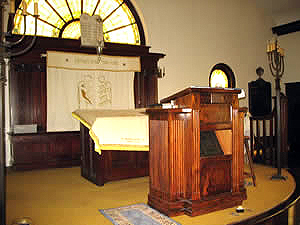
Ahavath Rayim Synagogue

“There were a lot of Jewish people in the neighborhood, probably because the Synagogue was located on Market Street. The last block of George Street toward the river had mostly Jewish people living there. Every year when they would be observing the Jewish holidays they would walk past our house in large groups. All of the little boys would be dressed in suits and wore hats. I was always envious of them for having two religious holidays every fall.
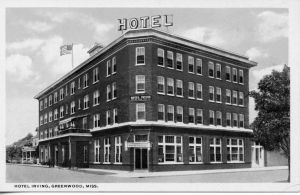
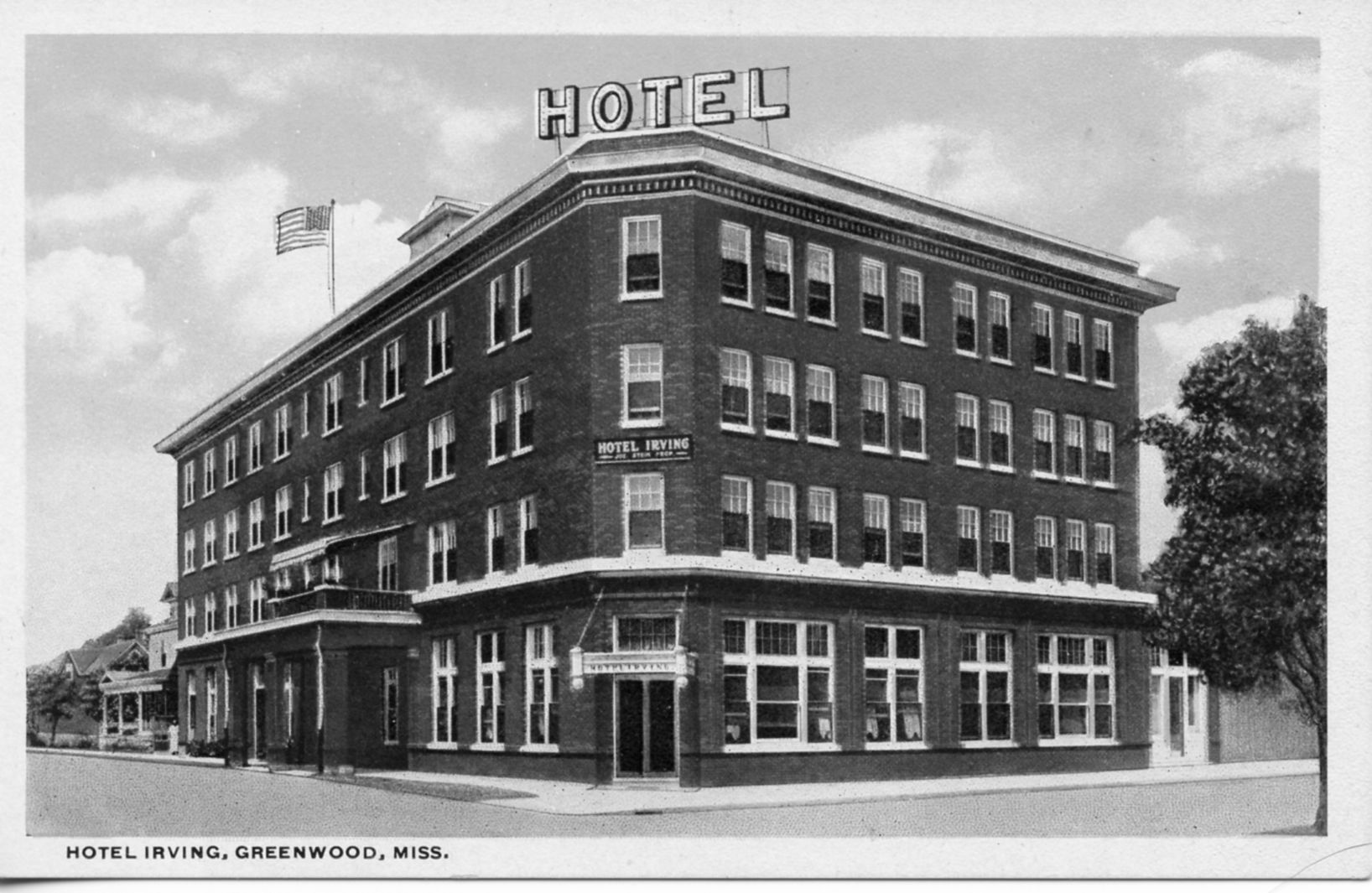
The Irving Hotel, now the Alluvian. Photo courtesy of Donny Whitehead, aboutgreenwoodms.com

“When we were growing up, Greenwood had a pretty large Jewish population but through the years this has steadily declined. Many of the stores were owned by them such as Stein’s Jewelry Store, Weiler’s Jewelry Store, Stein’s Grocery,

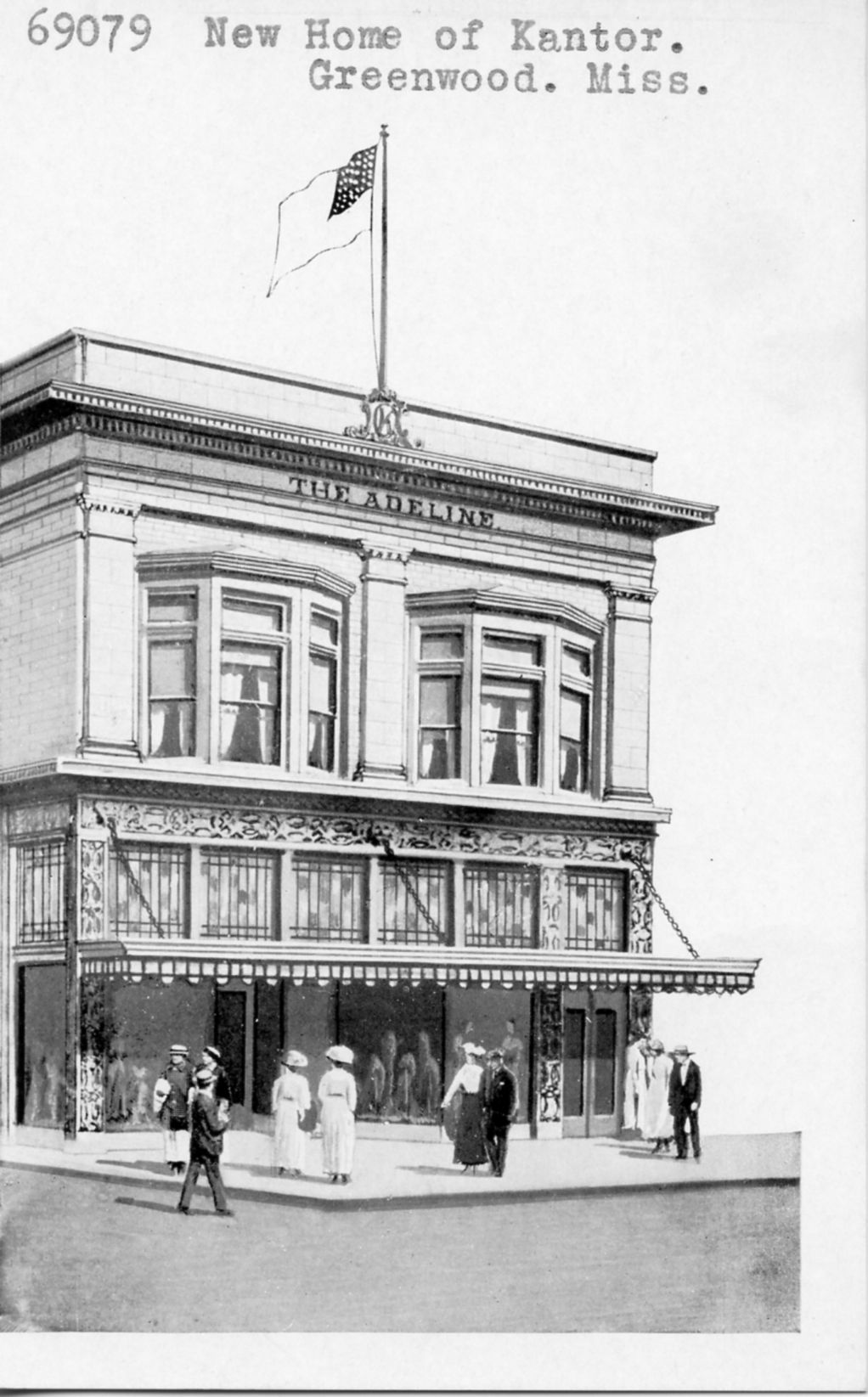
Kantor's, "Outfitters to Mankind," now Russell's Antiques. Courtesy of Donny Whitehead.

Kantor’s Men’s Store, Kornfeld’s, Orlansky’s, the Fashion Shop, Arenson’s Shoe Store, Diamond’s, and a number of smaller stores, also the Irving Hotel, Reiman Hotel (which later became the Greenwood Leflore Hotel) and a hotel where Russell’s Antiques is now [1990] which was the Weiner Hotel. Many had come from ‘the old country’ to America and had gone in business. Some could not even speak English when they came but quickly learned and the kids were some of the smartest in school.
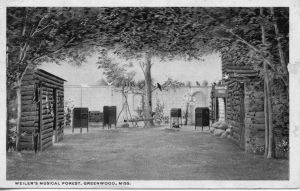
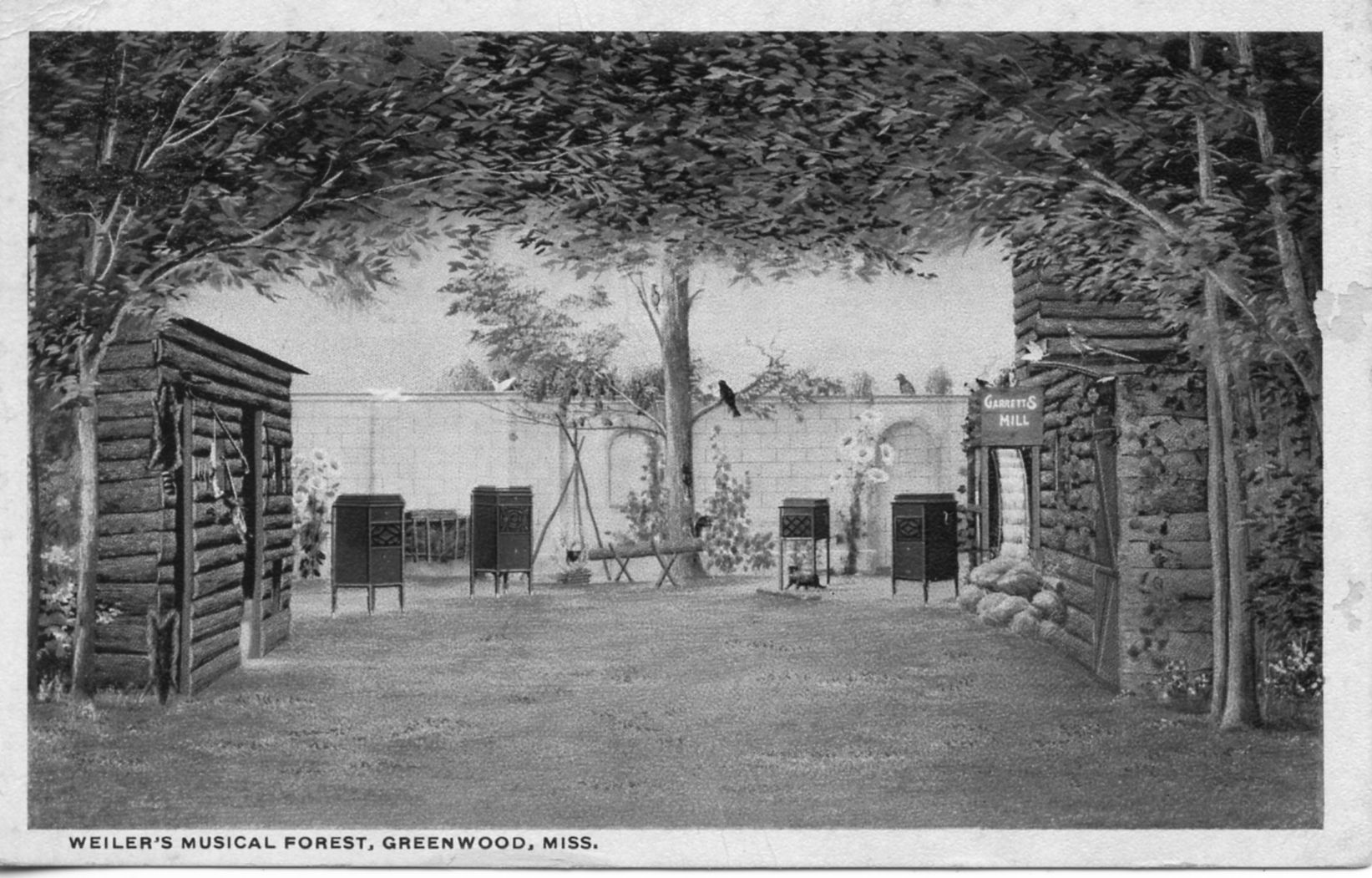
Interior of Weiler's Jewelers, "The Musical Forest," now Port Eliot. Courtesy of Donny Whitehead.

“I had an English and Latin teacher in the ninth grade named Regina Fuhrer. Her father was a rabbi and they had not been in the country too many years. She was a brilliant person and taught me more about English literature and grammar than any teacher I ever had. She chose me to go to the literary field meet held each year where students competed with others from other schools in the district. For three weeks she kept me after school every afternoon and drilled me until I thought I knew all there was to know. I think I came in third in the competition. She later left Greenwood and was living in Chicago when she fell from a window and was killed. She was never really given proper recognition for her ability because of prejudice against Jews.

“We were brought up in an era when there was an awful lot of prejudice against blacks, Jews, foreigners and Catholics. In fact Mama was pretty much prejudiced against anyone who wasn’t a Baptist. Nevertheless she had some very good friends in all categories. She just wanted to be sure that when we decided to get serious about somebody that they be Protestant and preferably a Baptist, even though she had married the son of a Methodist preacher.”

Greenwood’s Jewish population has dwindled to a shadow of its peak, even since I was growing up, and it is a poorer community for their loss. Sara filled our childhood with tales of all her friends, but two in particular stand out in my mind. Jerome Bennett lived two doors down on Walthall, and Sara considered him one of her most enduring and remarkable friends, someone who she felt had carried the best of Greenwood out into a wider world than she could imagine. Jerome dropped by Greenwood just a few months ago, along with his sons, and surprised Tricia with a visit. I hope that will happen again very soon, as I would love to walk the old streets of downtown Greenwood with this man that my mother adored.

Sara’s other close buddy was Toodles Kantor, a teenage companion who wound up living a few doors down from us on East Adams. Toodles defined elegance and class in everything she did, and I believe Sara was a bit in awe of her. When she and Sol sold Kantor’s and left for California, a bit of the light went out for Sara. They talked frequently by phone, less so as Toodles’ mind began to drift, but Sara always held out the hope that they would have more time together. Perhaps she got that wish in another life.

Ed. note: The Hotel Irving was opened in March, 1917 by Joe Stein on the lot where the old Warner Wells home once stood. That house was moved to the corner of Main and Church Streets and later housed the Morning Star newspaper. Mr. Stein was a Chicago native who had moved to Greenwood around 1900 and first opened the Kitchell Hotel on Carrollton (later the Weiner Hotel and then the Midway). He eventually bought up all of the block where the Alluvian Hotel now operates and also owned Stein Jewelry company (later owned by Frances Ball Russell and her son, Jim Russell, and now located in Madison). Joe and Lillie Stein lived in a second-floor suite with their son, Irving, and their apartment was a sort of Jewish community center in the 1910s and 1920s. In 1941, Mr. Stein sold the hotel, jewelry store and adjoining building (which housed DeLoach’s) to Max Williams; the family returned to Chicago. Williams died the next year and his son, Sam Williams, owned and operated the hotel through the 40s and 50s. In 1961, the Antoon family bought the hotel, which gradually lost business to highway motels and deteriorated before finally closing in the 1970s. It was bought and rejuvenated as the Alluvian by Fred Carl of Viking Range in the 1990s. [An interesting sidelight: Max Williams seems to have purchased the bungalow at 1212 Strong Avenue from Howard Evans in 1929].

The Kantor family arrived in Greenwood around 1897 as the Kantrovitz brothers. Their first store was on Market Street; in 1915, they legally shortened their name to “Kantor” and soon afterwards J. Kantor purchased a lot across the alley from the Ray Building and began work on an enameled brick storefront. His daughter, Adeline, laid the first brick in March, 1917, and the building is still named “The Adeline.” It opened for business in 1917 and remained Greenwood’s premier men’s store for some 70 years. Sol and Toodles Kantor left Greenwood in the late 1980s or early 1990s, which left Sara, their neighbor on East Adams, bereft.

Weiler’s Jewelry Palace opened in the 200 block of Howard Street in 1900, and A. Weiler claimed that it was the largest jewelry store south of the Ohio River. He eventually created a “musical forest” in the rear where Victrolas and record discs were displayed. The upper level of the building burned in the 1930s and again as the building was being renovated a few years ago for Port Eliot. For many years, Fisher’s Stationery was in business there.
Posted in Uncategorized | 1 Comment

Stage Sister

Mamie and Tricia, probably on their way to the Synagogue.

“Right next to to [Miss Fannie Weaver] was the Jewish Synagogue, and when Tricia was little Mary would dress her up every afternoon and put a bow in her hair and take her around to sit on the Synagogue steps. Tricia stood it for so long until one day she told Mary she was tired of being dressed up. That was during the period when Shirley Temple was so popular and we had taught Tricia to sing, ‘On the Good Ship Lollipop.’ Tricia was the pet of all the family, and Big and Uncle Roy adored her.”

Maybe if Mamie had promoted her little star somewhere other than the steps of Ahavath Rayim Temple on Market Street, we’d all be watching old Patricia Evans movies on American Movie Classics instead of Shirley Temple musicals. So much talent, forever under a bushel.

Shirley at her peak. She can't hold a candle to Tricia.

Tricia in one of many dance recital costumes. Hollywood paid no attention.

Posted in Uncategorized | Leave a comment

Dodgers and Desperadoes

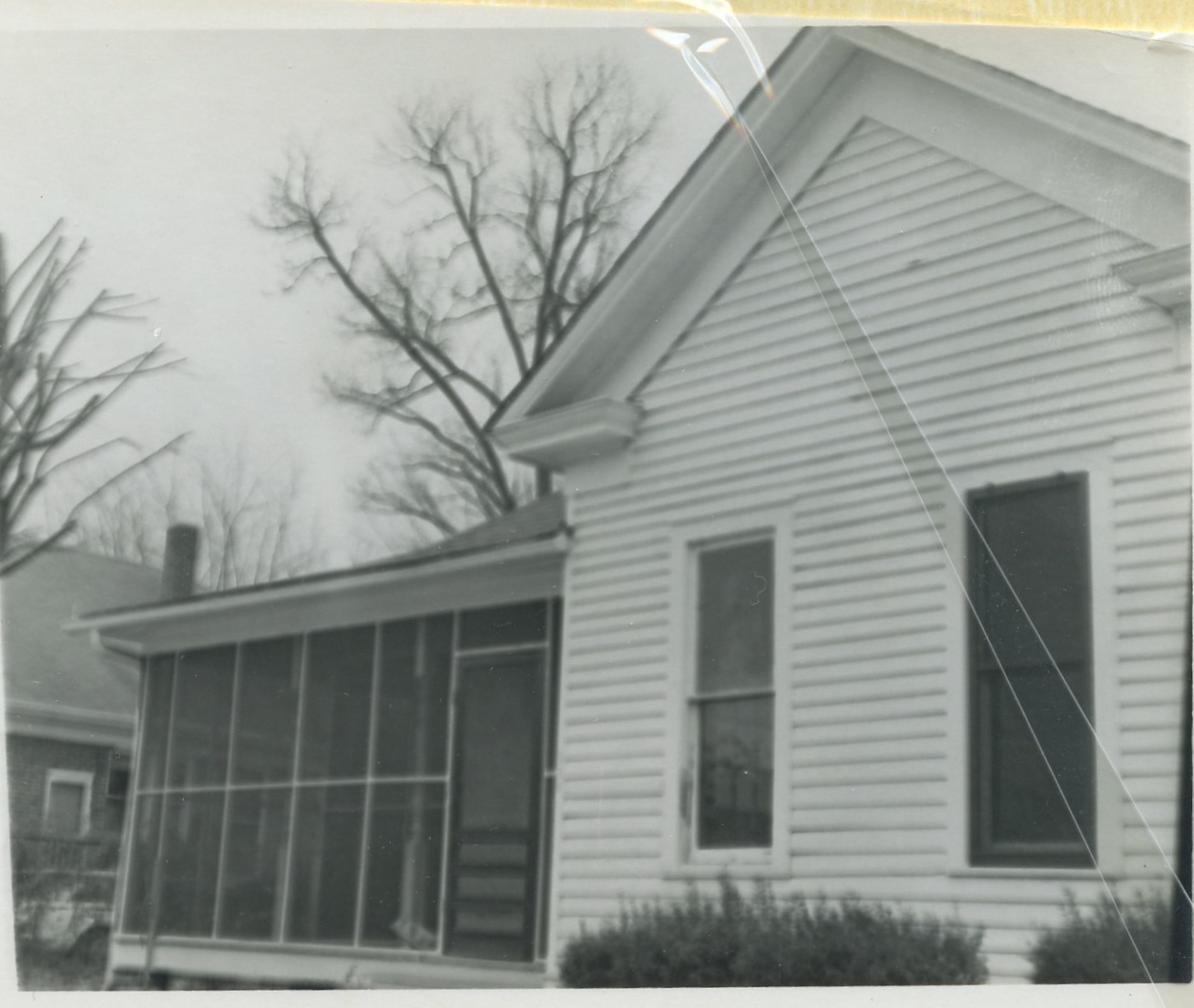
208 Walthall Street, once the home of the Meneese family, later Sara and Russell's first home.

“In the house behind us, where we lived when we first married, were the Meneeses. Mr. Meneese was a big fat man, and Mrs. Meneese was bent over terribly. They were having a rough time, and she would work all day down at the school canning fruits and vegetables, a WPA project. Their daughter, Dorothy, whom we called Daughter, was a teacher at the Indian school in Philadelphia. The Galey family had lived there before them.

“Next door to them were the Bennetts, a Jewish family who had two boys, Charles and Jerome, and a daughter, Helen Rose, who we called Sister Baby and who had one black eye and one brown eye.

Sara's lifelong friend, Jerome Bennett

They were very studious and quiet. Jerome was in my class and Charles a class ahead of me. Both have been extremely successful. Jerome was chairman of the board of White Motor Company and held high level positions with Ford Motor Company and Xerox.

“There was a big two story house across from us on Washington Street. Mr. and Mrs. Coburn lived downstairs and there were apartments upstairs. Mr. Coburn would get drunk and start hollering and cause quite a commotion. The Bilellos who lived in another big house next to them rented rooms to baseball players and, in the fall, to men working at the Cotton Association, so that made the neighborhood more interesting when we got old enough to notice.

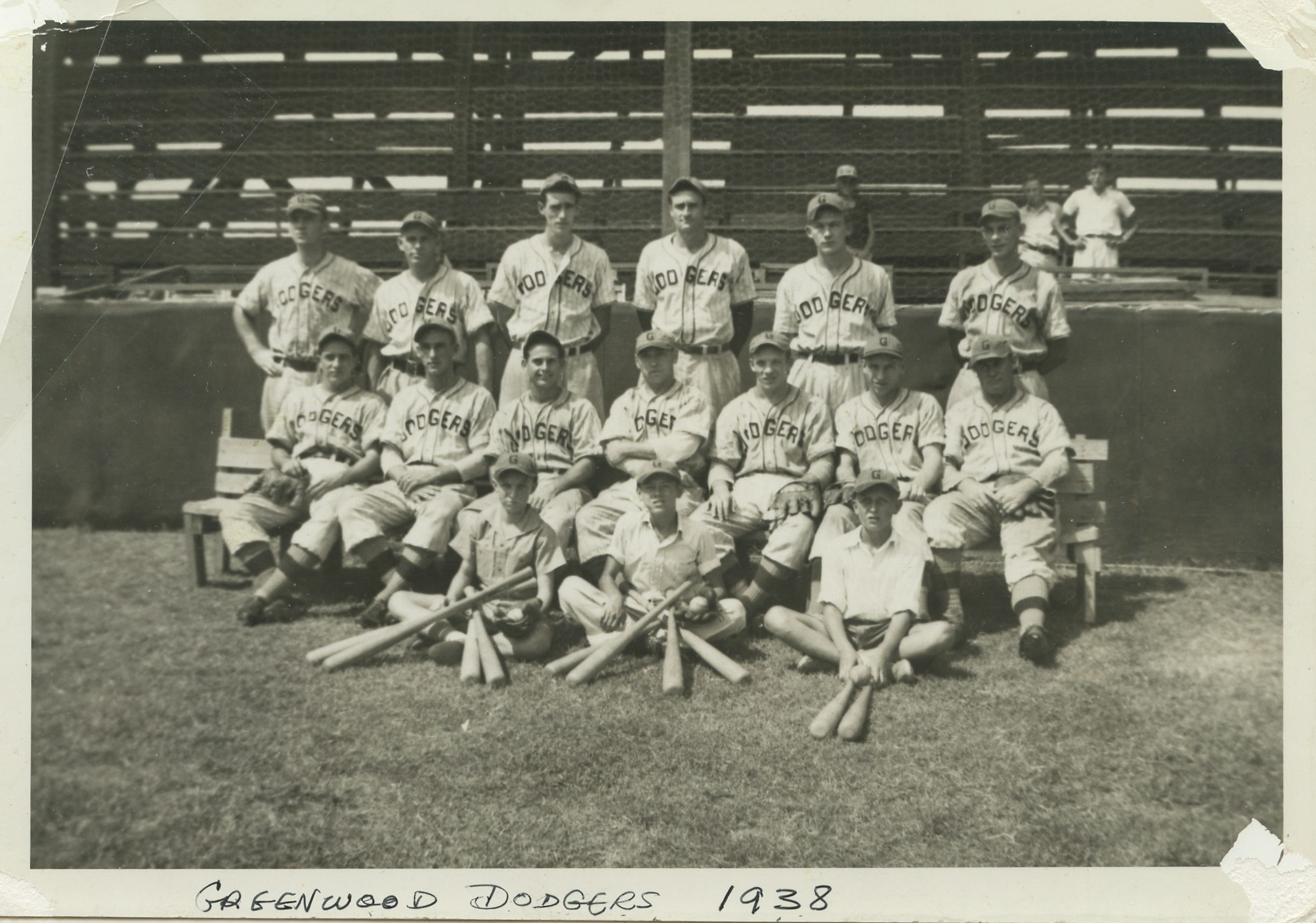
The 1938 Greenwood Dodgers

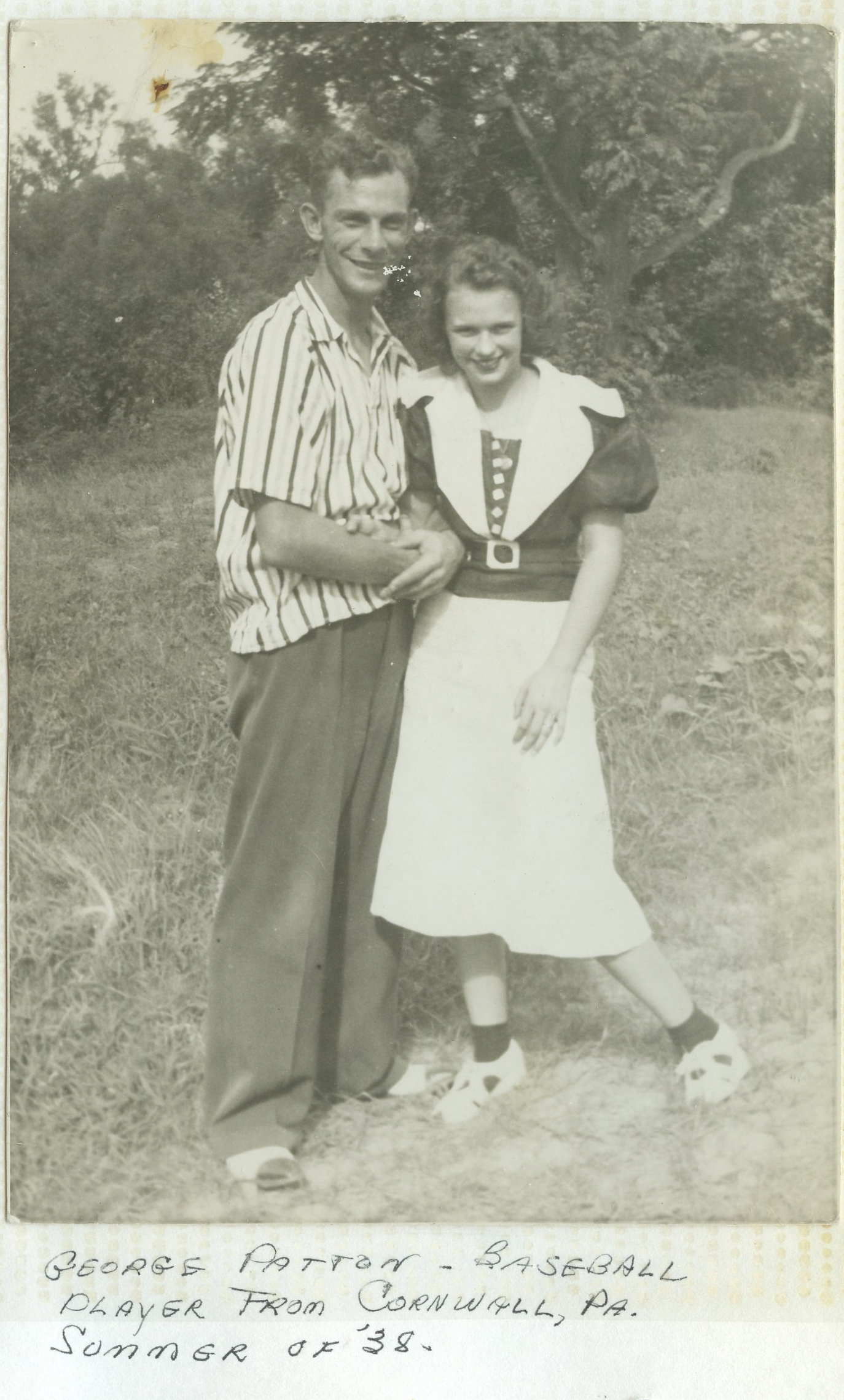
George Patton, catcher for the Dodgers, with Sara, 1938.

“The Blumenthalls, another Jewish family with no children, lived on the corner across the street, or rather next to the corner. There was a vacant lot where all the boys in the neighborhood gathered to play baseball and football. They kept poor Mrs. Blumenthal upset with their noise and once or twice they hit a window with a ball, breaking it. Finally she would emerge from her house and shout, ‘Go away furder, boys, go away furder.’ Whenever they would have chicken, the Rabbi had to come and kill the chicken and bless it before they could cook it. We did not buy chickens ready to cook from the store then, but would buy a live hen and they would kill them by wringing their necks.

“Miss Fannie Weaver lived around the corner on Market Street. She was quite a character who had had several husbands and kept a parrot on her porch. We would love to walk by and hear the parrot say, ‘Polly wants a cracker.’ Early settlers recalled: “a Sunday morning in the early 1900s when a wholesale jail break freed a dozen or so prisoners from the village jail located on the corner of Main and Market streets. In making their escape, they headed east on Market Street for the ‘commons’ or a wooded tract near Miss Fannie Weaver’s home. When she heard the commotion she ran out to see what was going on. Soon she was out in the road beckoning to the prisoners and shouting, ‘Run, run fast! Come this way.’ Meanwhile the jailer, John Groves, was in full chase after the escaping prisoners, shooting as fast as he could fire his gun and reload it. The bullets whistled in and around Miss Fannie, who had joined the run-aways and was urging them on to freedom. When it was all over, Mr. Groves said to her in indignation, ‘I nearly shot you, and it would have served you right if I had.’ When the writer asked Miss Fannie why she aided and abetted the fleeing prisoners in their wild dash for liberty, she replied, ‘I always felt sorry for the fellow who in trouble, even if he deserved it.'” [ed note: Sara copied this story from an old Commonwealth article.]

Let’s see: Here we have a three-city-block area, one block from Main and two blocks from Howard, that featured a talking bird, friendly professional baseball players, loud drunks, a future Fortune 500 executive, an agitated immigrant with glass issues, chicken-blessing rabbis, a massive jailbreak and an unlikely partner-in-crime maiden lady. And, as we’ve seen in recent days, there was also the neighbor who had supper with her mother’s ghost each night, an eventually notorious murderer, a steamboat captain and the heir to Jefferson Davis’ china. Would you buy this book or put it back on the shelf as just too outlandish? Were the Evanses and the Stotts, piled up on each other as they were at 115 East Washington, the “normal neighbors?” Wouldn’t you love to drop in for a visit along about, say, 1940? I certainly would.

In the center of it all, 115 East Washington: Mamie, Jessie, Rena(Rawa), Son, Sara, Big, John and Uncle Roy, with Tricia and The Cat seated on the floor, 1944.

Posted in Uncategorized | 2 Comments

Cruisin’

Sara and Tricia, around 1937 or 1938, maybe on their way to the Double Dip

“Miss Pattie McGlathery lived down the street on Walthall Street with her mother. Mrs. Telfair said that after her mother died, Miss Pattie set her place at the dinner table every day. After hearing this I was sure that Mrs. McGlathery’s ghost must be there to eat with Miss Pattie. They are both buried in the old Greenwood Cemetery. Miss Pattie was an aunt of Dr. Sam Brister, who was Cathy and Mary Carol’s pediatrician.

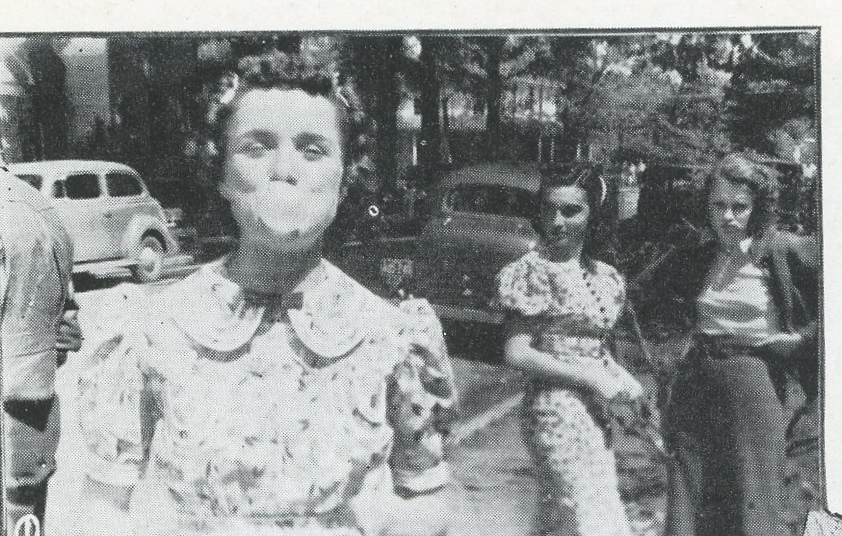
No clue who this is blowing bubbles in the 1938 Deltonian, but it's a safe bet that Sara didn't care much for her. Next to Sara is her friend Mack Standifer.

“In the summer we ‘played out’ nearly every night. All of the houses were right on the street with very little front yards. We would sit on the steps or in the swing in Big’s front yard and watch people go by. Sometimes boys from Itta Bena or Minter City or other small nearby towns would ride by and stop to talk to us. Everything seemed so safe then, and there were always a lot of people out riding or walking at night. We would go up to Howard Street to the Double Dip, an ice cream place, and get ice cream and try to see who we might see. There were several pool rooms on Howard Street where the men and boys hung out and played pool or dominoes or cards, and there were always boys standing around on the street, so after we were old enough to ride in cars the girls would cruise down Howard Street to see who was standing around.

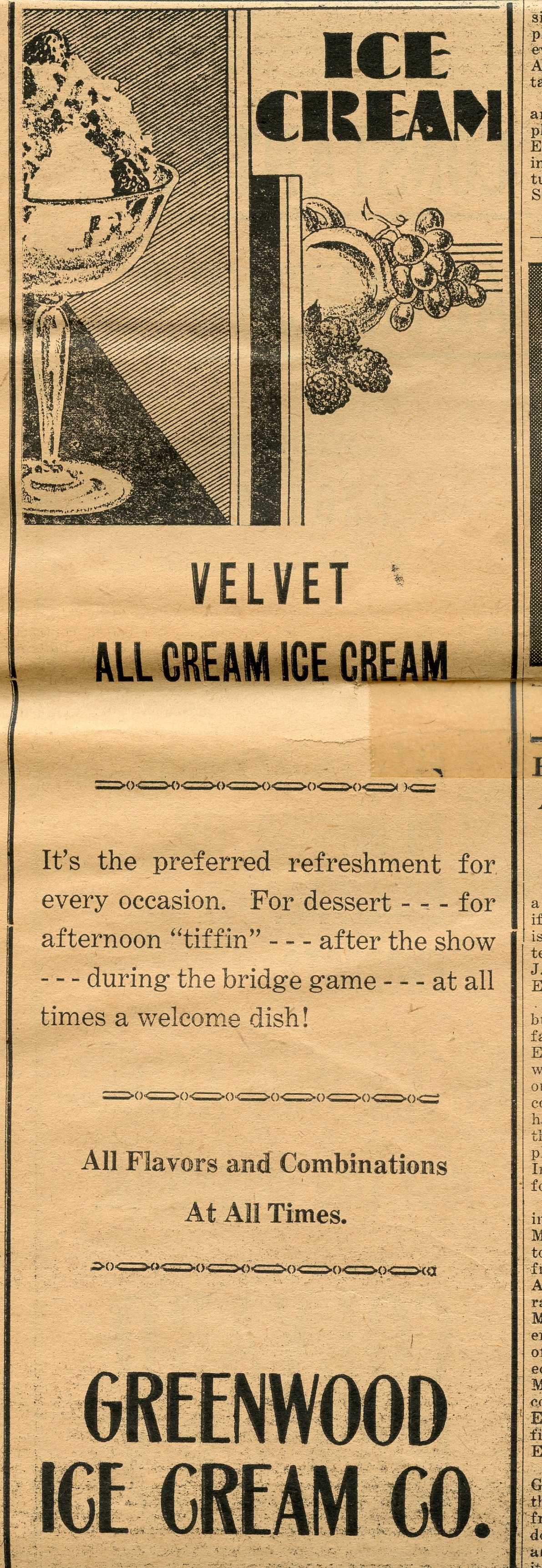
This ad is actually for Charles Wright's Ice Cream Factory, I believe, but I suspect they also supplied the Double Dip.

“All the drugstores had soda fountains and car hops, boys who brought the tray of drinks to your car, so whenever we had a nickel to spare we would stop by the drugstore and get a cherry Coke or lime Coke and flirt with the carhops. Sometimes we would go inside and sit in one of the booths and put a nickel in the nickelodeon to hear our favorite song. The boys who worked behind the soda fountain were called soda jerks. Nearly every boy at some time or other made his spending money behind a soda fountain.”

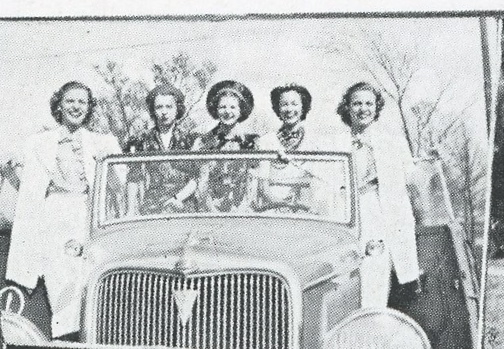
The Oliver twins and three friends, cruising Greenwood in 1938 Deltonian.


Having not raised children here in Greenwood, I have no idea where kids cruise now, although I’m fairly sure they still do it somewhere. For Sara (who didn’t even learn to drive a car until she was grown, but always managed to snag a ride), it was Howard Street, dotted with drug store soda fountains and ice cream parlors. For my generation, it was Park Avenue and the gravel lot around Lackey’s. The downtown soda fountains disappeared first, followed by the drug stores themselves, and Lackey’s went down many, many years ago. With gas at $3.50 a gallon and ice cream being something you buy at Walmart from the freezer case, where are the young riders?
One more note, a happy one: Sara never lost her fascination with soda jerks. After stringing along a lot of Greenwood boys, she married the counterman from Finlay’s Drugstore in Greenville, who gave her free sodas in exchange for her typing up his menus. Way to go, Daddy.

That cute soda jerk from Greenville, with his future sister-in-law, Mamie.

Posted in Uncategorized | Leave a comment