Doing the Evans Trot

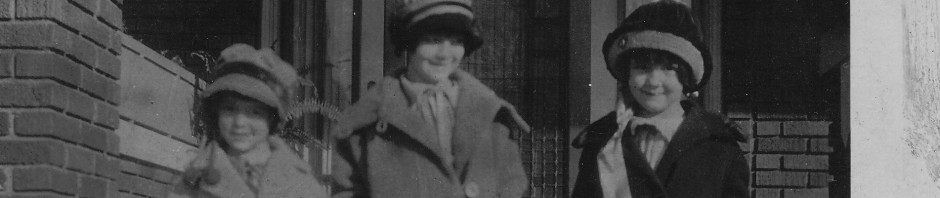
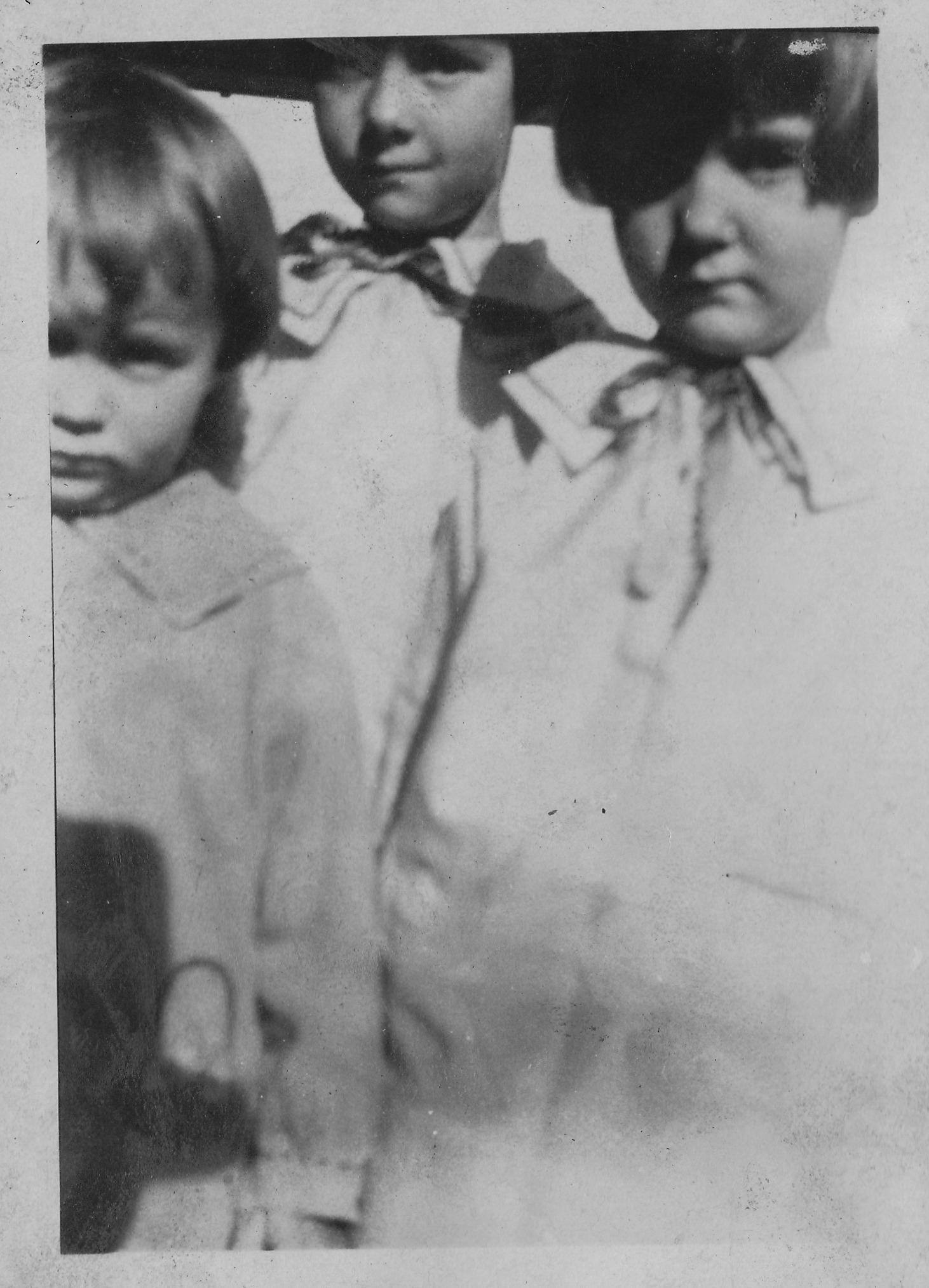
Sara, Tiny and Mamie

Sara, Tiny and Mamie, maybe waiting for the Syrup of Pepsin

“Mama hovered over all of us and was always feeling our foreheads to see if we had fever. She would call Dr. Dickens at the slightest provocation or if we had a runny nose and he would come with his little black bag. Sometimes we would all meet him at the door, and he would ask which one was sick.

“Mama always said that Tiny was the sickly one, and she felt her head so much that Tiny started feeling her own and would run to Mama and say, ‘Mama, I felt myself a fever.’

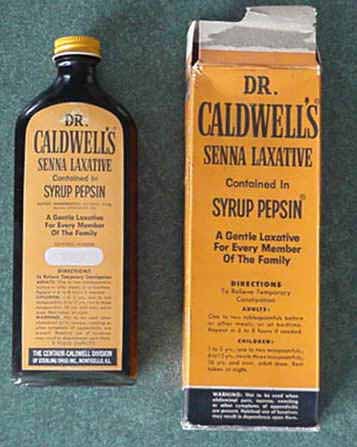
“Mama had a real hangup about regular bathroom habits, so every night before we went to bed we lined up for our Syrup of Pepsin, a nasty brown laxative. Mable Petty said that one night she got in line too and got a dose. 
“Then every few months we could expect a ’round of calamel.’ [sic]. This foul hot pink medicine was supposed to be a cure for everything that ailed you and was used to ‘clean you out.’ That it did, giving you a terrible case of diarrhea and, as I recall, making you feel twice as bad as you did before you took it. To this day hot pink is not one of my favorite colors.

“With so many of us sleeping in the same room we passed around the usual childhood ailments, chickenpox, whooping cough, mumps, etc. When we had colds or flu our chests were rubbed with Vicks salve and covered with a flannel cloth. There were no sprays, or vaporizers, or any of the other so called remedies available today.

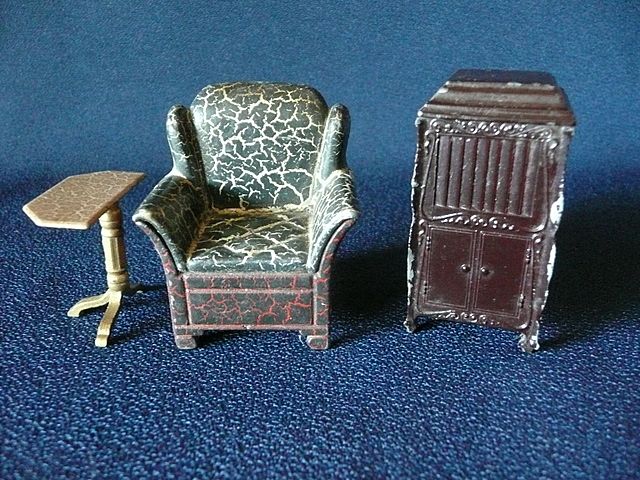
“One time I was sick when the circus came to town, and that was just about the worst thing I could imagine happening to me. Mama consoled me by calling Fountain’s and ordering a metal dollhouse complete with Tootsie Toy furniture. That helped the situation, but I never really got over missing the circus while all the others got to go.”
Sara was blessed with remarkably good health for most of her 88 years, but when she did get sick, it was an event. Declarations of pathologic superiority were frequent. “This is the worst cold I’ve ever had,” would be predictably followed by “This is the worst cold anyone has ever had.” “This is no ordinary diarrhea. No one can imagine how bad I feel.” Sympathy or skepticism were met with the same stony response: Sara Evans Criss was a medical miracle, the unfortunate repetitive victim of the most malignant bugs and vicious viruses. My strong suspicion is that this attitude was some deep-seated subconscious attempt to one-up Tiny, even decades after their last spoonful of Calomel.

Jessie never gave up on her alimentary fixation. She moved on from Calomel and Syrup of Pepsin to singlehandedly supporting the stock prices of Proctor & Gamble and the Phillips Company. As predictably as rain, the little courier car from Barrett’s Drugs would pull up on West Claiborne and out would come a gallon (!) of Pepto-Bismol and another gallon of Milk of Magnesia. These “Sam’s Club-size-before-there-was-a-Sam’s Club” containers sat in Jessie’s pink-tiled bathroom, their contents dwindling daily until they would be replaced by the next set. I found them wondrous mysteries, more so for their vivid pink and deep blue colors and the sheer size than for any medicinal properties they might offer.

We laugh at these two ladies and their respective obsessions about regularity and severity of symptoms. But each lived to see their 88th year, so who’s to say that we shouldn’t all be hitting the Pepsin and hoping we have the worst cold in the history of mankind.

And the lamented circus? Sara never missed an appearance by Barnum, Bailey, Ringling or any of their less flamboyant imitators through the years of my childhood. We didn’t just go to the circus; we met the train at the depot and followed the parade through downtown, then were awakened at dawn the next morning to go out and watch the elephants straining to raise the Big Top. Ringmasters were interviewed and clowns were photographed and, as with so many other doors that Sara’s press pass opened, Cathy and I were the luckiest little girls in Greenwood.

Ed. note: Syrup of Pepsin was invented by William Caldwell, a pharmacist and physician, in Monticello, Illinois in the late 1800s. It grew into a huge company before being bought out for 5 million dollars in 1925; ironically, the new owner also bottled Phillips’ Milk of Magnesia. Calomel was the more disturbing creation, basically mercury chloride, used not only as a laxative but also as a pesticide and in the treatment of syphilis. The Evans girls must have been made of stern stuff.

Tootsie toys were the creation of the Dowst Brothers, who fashioned die cast zinc/aluminum miniature furniture for popular cardboard dollhouses of the 1920s. Eventually a metal dollhouse was available (for approximately $3.00) and this is likely what Sara received as a consolation present.

Tootsietoy Dollhouse

Posted in Uncategorized | Leave a comment

Polar bears and Miss Pearl

Sara, Rena Stott, Buddy Stott, Mamie and Tiny, with Pearl McLellan's house in the background

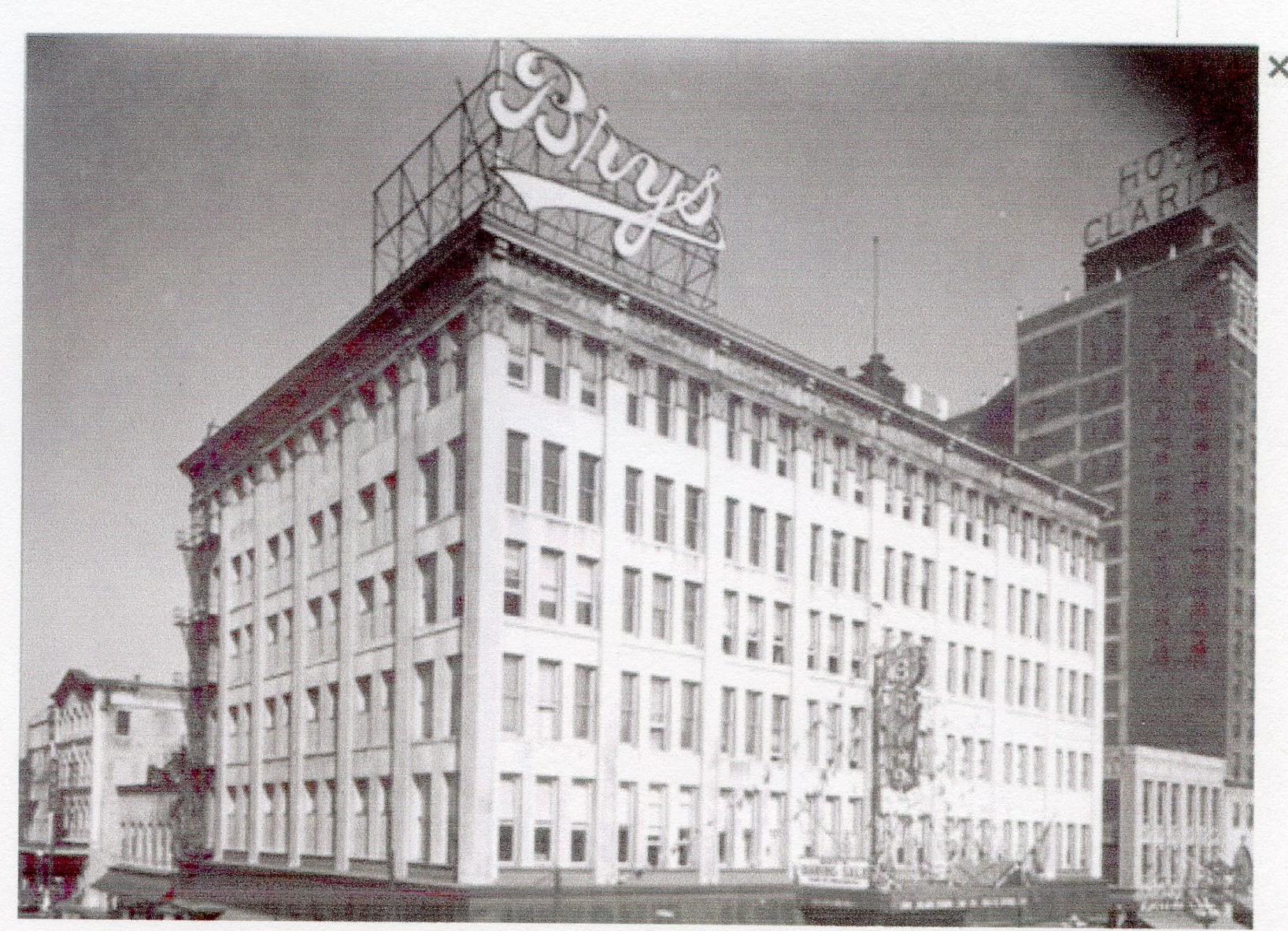
“When I was three or four years old Mama and Daddy went to Memphis and took Tiny and Mary. I stayed home with Bama, the only time I ever remember being left with her overnight. Tiny had a brand new hat for the trip, as I’m sure Mary did too. They went to the zoo, and while looking at the Polar bears Tiny leaned over the fence, and her hat fell off close to the bear’s cage. A big Polar bear promptly reached out and got it and ate it. They had to get on a streetcar and head straight for Bry’s Department Store in downtown Memphis to buy another hat. That story remained one of our favorites through the years.

“It was during that trip that Big, Mama’s older sister, came over one night to check on Bama and me. Miss Pearl McLellan, who lived next door, came in, and I asked Big if she knew ‘Mr. Pearl.’ That always tickled Mama and Big and Bama because Miss Pearl was kind of mannish anyway. Miss Pearl was a court reporter and later became a lawyer, the only woman lawyer in Greenwood. Mama would always say it wasn’t very nice for a lady to be a court reporter because they heard things no nice lady should hear during trials. However, I think Mama really enjoyed it when Miss Pearl came over and told her what went on in the courtroom. Mama said she liked the men and came over on Sunday because Daddy was home then.

“She had a sidewalk in front of her house and we didn’t so Mama would sometimes let us go over there to skate. We only had a walk leading to the street. They always told us that Miss Pearl’s was one of the oldest, if not the oldest, [house] in Greenwood. I believe it was just part of an old home which had been moved there. Anyway, it was an interesting old house, and I loved to occasionally get inside of it.

“Her mother, Miss Jenny, lived with her, and when she started acting strangely Mama and Bama would whisper that she was losing her mind. She probably had Alzheimer’s Disease, but that was before anyone knew there was such a thing. She imagined that she saw things all the time and would tell the postman to get a cat out of the bushes when there was no cat anywhere around. I was scared to death of her. Miss Pearl lived to be in her nineties and died just a few years ago. She continued to do some legal work for most of her life. She was tall and had black hair, which she parted in the middle and slicked down next to her head, and a sharp nose. One time when Uncle Roy’s [Roy Stott, Sara’s uncle] utility crews trimmed her trees drastically she got all upset and told him they looked just like armless veterans returning from the war.”

You simply can’t make these people up. To the best of my knowledge, there’s never been a novel written about Greenwood. My sister says she has one in her head (or perhaps on paper by now) but that it can’t be published until a lengthy list of Greenwoodians have moved on to their heavenly reward. Mildred Spurrier Topp wrote two delightful autobiographical books about growing up here in the early 1900s, Smile Please and In the Pink, with many of the names changed to protect the guilty. They are laugh-out-loud funny and Sara could provide the true name for almost everyone in their.

I wish Sara had written that missing novel. She never forgot a name or a face or a quirky story, and following her around Greenwood was a lesson in history and sociology and abnormal psychology for a wide-eyed child. Who could create characters like Pearl McLellan? Or Winnie Baskin, the custodian at the Court House and City Hall, who knew where all the bodies were buried? Or Minnie Attlesey, the tiny, ageless imp who lived in a dark house next door to Sara’s aunt and uncle, decked out in Civil War mourning until the day she died? Or the Burleson family, who lived in a rickety house under the Veterans’ Bridge, bobbing along on oil barrels when the river rose? Or Sally Gwin, who planted a mile of oak trees along Grand Boulevard? What sort of strange mix of genes and soil and intangibles produces this polyglot of memorable players on our stage?

Looking back, I realize what a treasure of encounters I enjoyed as a child, following Sara on her rounds and getting to know so many Greenwood natives, many of whom were children of the 1870s or 1880s. Her fascination with everyone and everyone’s stories wove a strand for me that stretched within a fingertip’s distance of Greenwood’s first days. Just another gift from Sara, never acknowledged.

Ed. note: Pearl McLellan’s house may, indeed, have been the oldest house standing in Greenwood when Sara lived on Strong Avenue. It did have the appearance of being just a section of a larger house, and was later moved to Carroll County. I’ll see if I can find the details on that. Bry’s Department Store was located on the corner of Main and Jefferson in downtown Memphis. An internet website provides a bit of background: “When Bry’s opened their store at Main and Jefferson, they competed successfully for over fifty years with Lowenstein’s, Gerber’s and Goldsmith’s. Bry’s was noted for its annual ‘Daring Sale’ in which it dropped prices and doubled the number of clerks. In 1912, Bry’s entered the history books when it became the first store to sell sheet music written by W.C. Handy. This was also the first store to use ladies as clerks. Bry’s anchored North Main and Goldsmith’s anchored South Main.” In 1956, Lowenstein’s bought out Bry’s, and it closed for good in 1964. The building pictured above has been demolished. [memphistechhigh.com]

Posted in Uncategorized | 6 Comments

Best Dressed

“The clothes we wore were a lot different than those worn by children today. Little girls did not wear shorts or pants, and certainly there were no blue jeans or jogging suits. Little girls wore cuffed bloomers showing beneath little dresses with no waists. They were called bloomer dresses. In the summer we wore teddies under our dresses. These were little one piece garments, and ours were made by Mama. In the winter time we were bundled up from head to toe since they were sure if anything but our faces was exposed we would catch a cold. We wore long stockings, high top shoes, toboggans (knit hats) and union suits (long underwear). All of our sweaters were cardigans, and they were not very pretty, but being wool were very warm.

“Small children usually wore leggings (long pants) under their coats. We slept in sleepers, which were one piece pajamas with a drop down in the back for going to the bathroom. Our Sunday dresses were usually made of crepe de chine or pongee material, and we wore long socks until anklets appeared in the late ’20s.

“Little boys wore short pants and knickers. They wore caps and lumberjacks (wool jackets, usually plaid). All of our clothes had buttons or snaps. There were no zippers. Clothes were very inexpensive. The 1927 Sears Roebuck catalog listed lace trimmed baby dresses for under one dollar and a little boy’s suit for a dollar. Little girls’ dresses were around two dollars.

“Ladies wore corsets (uncomfortable laced up affairs which Mama never stopped wearing) instead of girdles. Most of the ladies’ dresses were long waisted and loose fitting and ugly. They were long (about mid-calf rather than to the ankles as they had been a few years before). Everyone wore hats, and even after we grew up we wore hats and gloves to parties and to church or whenever we went to a city. Mama wore a hat everyday going to the Red Cross to work. A lot of the ladies wore hats to go downtown in Greenwood. All of the men wore hats, too, summer and winter. The summer hats were flat straw ones, and the winter felt. They wore a lot of caps too.

“Ladies did not wear slacks or shorts, and I never remember them not wearing stockings regardless of how hot it was. The bathing suits were one piece and came down to a few inches above the knees. People were very modest in those days. Bikinis had not been designed, and the ladies of those days would have been horrified at today’s suits.”

Jessie and unidentified friends on West Washington Street, ca. 1920

Sara was never, in my memory, fixated on clothes, other than the skill and challenge of creating them. She was a wizard with the sewing machine and spent hours every day (and she always had more hours in her day than the rest of us, usually beginning at 3 or 4 am) bent over the little Singer in the corner of her bedroom. Cathy and I had dresses galore and rarely darkened the door of Wee Moderns on Howard Street for a ready-made outfit. I can remember daily trips to Eaton’s Fabrics and the one across the alley from Chaney’s Drugs (can’t remember the name of that one, but it burned in 1966), silently cursing the Butterick and McCall’s people for making those pattern books so darned thick. Sara would be happily perched on a stool, licking her finger as she turned each page, patiently pointing out new designs. “Do you like that one? How about this one, it looks easy.” I was obnoxious, uncaring, unappreciative of the fact that I had a mother who was not only capable of creating anything she saw but who would take the time to do it. My mumbled responses would finally explode into “I DON’T CARE, JUST PICK SOMETHING.” She would raise an eyebrow (shades of Granny), smile and do just that. And I would soon wear the finished product, all those little jumpers and skirts and dirndles and, later, pantsuits and formals. She tried making shirts for Daddy, and that, as best I recall, was her only sewing misstep. Those shirts made terrific rags.

Cathy inherited the Singer gene and was proudly sent off to represent Mississippi in the Betty Crocker Homemaker of Tomorrow competition, 1969. (Sorry, Cathy, that’s just too priceless to keep under a bushel. Forgive me.) I couldn’t sew a Brownie badge on my sash, much less create a dress.  Sara sat patiently by me in the early summer of 1972, guiding me through the construction of 3 pairs of white shorts for my job as a Greenwood Parks counselor. She never fussed, never criticized, but must have known that disaster was inevitable. When my sloppily stitched seams gave way on a steamy June afternoon at Clerico Park, she laughed all the way to Walnut Street with a replacement pair, handing them to me through the cracked door of the equipment shed where I had taken cover. I don’t think any of my misadventures ever delighted her more than that. Revenge is sweet.

When my daughter was born, the Singer went into overdrive. To have put that child into all the dresses that Grandmother Sara turned out, she would have had to be changed a half dozen times each day. And probably the first time that it occurred to me that Sara was truly getting old was when I noticed that the little jobs she continued to do on the sewing machine were becoming uneven and undependable. She knew it, too, and quietly covered the old machine and moved it into the closet.

Two of her oldest Singer machines are in my storage room, survivors of the Great Estate Sale of 2009. One was loaned to the prop department for “The Help,” along with a vintage YashicaMat camera, and I hope you’ll notice both when that movie hits the big screen in August. Think about Sara when you see it, and how much she would have loved making tiny dresses for her three great-granddaughters.

Ed. Note: In the picture above, Jessie and two unidentified friends stand on the sidewalk across from the Greenwood Leflore Library, around 1920 or so. In the background is one of the few existing images of the Dr. T.R. Henderson House, on the site of today’s Big Star. Dr. and Mrs. Henderson gave the land and partial funding for the library, Confederate Memorial Building and the demolished sanctuary of First Baptist Church. The house was torn down in the 1950s. Beyond the house, the tower of the Leflore County Courthouse is visible, as is a small part of First Methodist Church.

Posted in Uncategorized | 2 Comments

Wild Indians

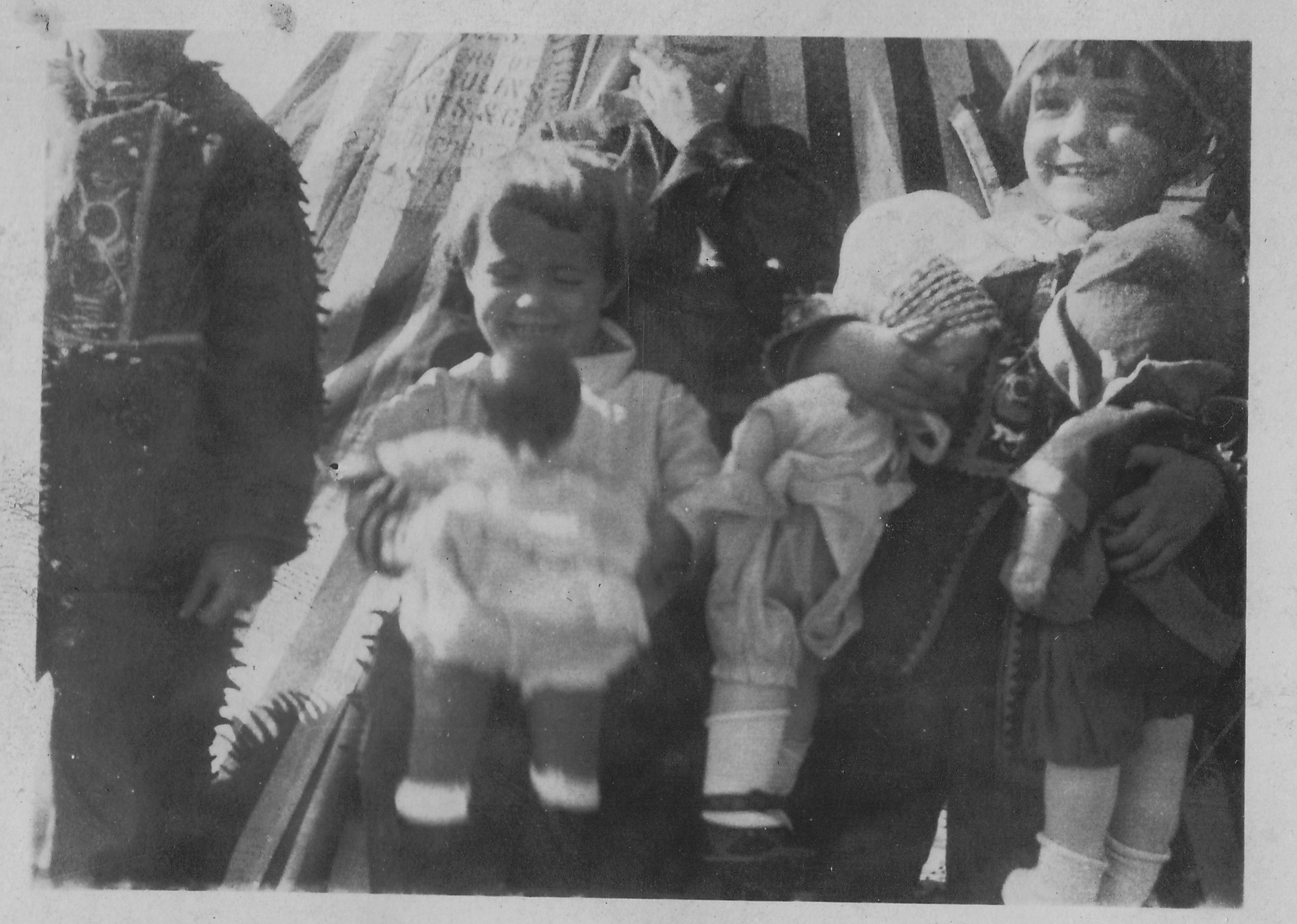
Mamie and Tiny in their Christmas Indian outfits, with Jessie, ca. 1925

“One Christmas when I was very small we got Indian suits and a striped tent. Tiny got a great big doll with a bisque head and long curls. Mary and I got several dolls, and Mary got a little car to ride in. Daddy took pictures with us and Mama and Bama and our cousins came over to play.

“Mama liked to cook, especially desserts, and while tasting them soon lost her once small figure, gaining a lot of weight which stayed with her until she died. The fact that she was fat never bothered me because she had such a wonderful soft lap to sit on, and she wiped away many a tear and soothed many a hurt while holding us on that lap which was nearly always covered with a big starched coverall type apron which she had made on her sewing machine. That old treadle sewing machine (there were no electric machines then) provided her many hours of enjoyment, especially making dresses and bloomers for us to start school in each year. She would go to Fountain’s and pick out eighteen pieces of fabric in solids and prints so that she could sew up six little sets of dresses with matching bloomers for us to wear to school. She made doll clothes too and had saved all of her own doll clothes which she had carefully designed and sewed by hand. We still have these as well as part of the broken head of her favorite doll.”

The picture above is one of many that must have been made on or soon after that special Christmas morning. All three little girls are decked out like Apaches, peeking out of a tiny striped teepee at the camera, which I assume was in the hands of my grandfather, Howard. We all know how Jessie and Sara felt about Christmas and how they wove it into an enchanted season for all of us as children, but I’ve often wondered how Howard felt about this explosion of gifts and gaiety. I like to think his attitude was much like that of my own father, Sara’s “Criss.” Daddy would grumble out of bed in the predawn hours of Christmas, throw on his ratty old striped robe and follow us into the Toyland that our living room had become overnight. He would sit on the couch with a cigarette and a cup of coffee, only rarely commenting on the chaos of dolls and forts and books and playhouses, smiling contentedly and then disappearing back to the bedroom. A dad’s primary duty, in this family, was always to be sure that the ladies, young and old, were insanely happy. When Sara married Criss, I’m certain he knew from her tales of “Christmas on Strong Avenue” that the last week of December was her time and not to be messed with or limited.

Sara, Buddy Stott and Mamie, Christmas ca. 1925

He was doomed from the start, and always a good sport, but he had no idea just how far this woman could go to celebrate the season. And that’s a tale for another day.

Posted in Uncategorized | Leave a comment

Fountains of Fun

Sara and Mamie with dolls

“The years we spent in the house on Strong Avenue were probably the happiest of our childhood. Mama and Daddy made a big production of every holiday and saw to it that we got everything that came to town, and the Christmases were wonderful with the living room always piled high with toys. Back then the stores did not carry toys all year. There were no discount stores, and the five and ten cent stores like Woolworth’s only carried small toys year round, mostly for around ten cents. We bought things like little folding fans, purses, celluloid dolls, little bisque dolls, paper book dolls, and that sort of thing when we went shopping with Mama. I was always the worst one about seeing something I just had to have and pulling on Mama and begging for it until she raised on eyebrow in a special way she had to let you know she meant business. Sometimes even that would not stop me, and I would be threatened with a good switching when we got home.

“The only time we really saw a lot of toys was just before Christmas, and they did not start showing them until after Thanksgiving. Sometimes Fountain’s Store would get in dolls such as the Bye-Lo Babies and Heebie Sheebie dolls at other times of year besides Christmas, and Mama would immediately buy one for each of us. The Bye-Los had breakable Bisque heads, and one of the Dacus girls who lived down the street from us broke mine. Of course I cried buckets of tears and Mama promised to have Fountain’s order another head, but even after the new head was attached it was never quite the same. I never felt quite the same about that Dacus girl.

“The Heebie Sheebie dolls had on different kinds of cute little outfits and are now collectors’ items, but, of course, ours were long ago given away. We learned not long ago that the boys were called Heebies and the girls Sheebies.

“Fountain’s had a wonderful Christmas toyland. Every year they would put a curtain over the side window until Thanksgiving afternoon, when they opened it for everyone to see what the new toys were that year. Billy Fountain, who was in charge of the third floor where the toys were, always set up an electric train in the window and it would be running through tunnels and there would be little houses and other buildings to make up a small village.

“We would always go after our Thanksgiving dinner to press our noses to the big window and start picking out the doll and other toys we wanted Santa Claus to bring us. Mama got just as excited as we did. The stores then had all different types of toys. We did not have Mattel and Fisher-Price or other toy companies which furnished toys for al the stores, so the toys were more unique. I guess we would have lost our minds if we could have gone in a Toys-R-Us store, but somehow I think each and every toy meant more to us then. Otherwise we would not still remember so many of them and the happy hours we spent playing with them.”

Sara loved dolls her whole life and her house on East Adams was filled with them when she died. Dolls that her mother saved, dolls she had as a little girl, dolls she gave to Cathy and me, dolls that she made herself……and the dollhouses that she so carefully fashioned from kits. Several of those we left with the new owners, whose two little girls mirror her own little girls in so many ways. I have no clue what the psychological implications were of all those miniature people that populated her house and her world, and I don’t care. Perhaps they reminded her of those rose-colored years on Strong Avenue or maybe they stood for an idealistic world that never really existed. It doesn’t matter. What does matter is that they brought her great joy for 88 years.

Ed. note: Fountain’s Big Busy Store was the culmination of Greenwood merchant W.T. Fountain’s retail enterprises. His first store, with partner F.R. Austin, was in the 200 block of West Market Street; in 1902, he went out on his own and opened a store on the northeast corner of West Washington and Howard, later the site of Barrett’s Drugstore for so many years. In 1914, he bought the lot on the southwest corner of that same intersection, tore down the house which was standing there, and began construction of the largest department store between Memphis and Jackson. A $40,000 project, three-stories tall, incorporating 22,000 square feet of floor space…..Elevators and plate glass windows and a tea room, all in the small but booming town of Greenwood. It had to seem like a mirage. Mr. Fountain sold ladies’ and mens’ wear, luggage, home furnishings, toys, china and all manner of dry goods. His house was a towered Victorian which sat just west of the store, on the site of the original First Methodist Church and, later, the Leflore Theatre. Fountain died suddenly in 1919; the entire downtown business district closed for the observance of his funeral. The store prospered and enlarged, eventually incorporating much of what is now the Bank of Commerce. By the late 1950s, though, competition drove Fountain’s out-of-business. One of my earliest memories, very dim, is walking with Sara through the nearly empty store…..I vaguely remember the staircase at the rear and the elevator and talking with someone in there, and in retrospect, knowing my mother’s great affection for this wonderful building, she was going in for one last look at a place that carried so many memories. I may have this wrong, but I believe she bought some mannequins, which stayed in our attic for years and frightened the bejabbers out of our friends.

Fountain’s closed, a victim of post-WWII progress. Sterling’s Five-and-Dime occupied part of the space, a store which I loved but which Sara always seemed to resent, both for its usurpation of Fountain’s space and the competition it gave Woolworth’s, which was her other mecca. Then even Sterling’s gave up on Howard Street and the old building gradually gave up and went dark. Solid, but unwanted, just another Howard Street white elephant waiting to be torn down for an unnecessary parking lot. Thank goodness for those who never gave up on downtown, as the Fountain Building is now home to two wonderful stores, Turnrow Books (where I spend most of my time and way too much of my money) and Mississippi Gifts, along with luxury apartments. Sara thought those were perfectly nice stores, but they never, never rivaled Fountain’s in her mind’s eye. In her world, the train rolled endlessly along its tracks in the big plate glass window, Christmas was always just around the corner and your Bye-Lo babies never got broken.

Posted in Uncategorized | Leave a comment

And Mable Makes Four

Mabel Petty, Mamie, Tiny and Sara, ca. 1928

“Mable Petty, who lived right across the street from us, was our best friend. She was Tiny’s age but played with all of us and was almost like another sister. Her daddy was a postman, and they did not have a lot of money, but Mrs. Petty wanted Mable to have everything that the Evans kids had. Mama always said it must have been quite a struggle for poor Mrs. Petty to try to get her every toy that we got. If we had a tea party and did not include Mable then pretty soon Mable would be out in front of her house having a tea party too.

“We played some over at Mable’s house too, and I liked going over there. She had big figurines in her living room, and Mr. Petty told me that he got them from under the ocean, and I believed him. They had a garden and fig trees which we liked to play under and pretend we had a house there.

“Mr. Petty died while we were living on Strong Avenue and I guess he was probably the first person I had known who died. We stood out in the front yard and watched people going in across the street.”

I wonder now which of the neglected homes on that block of Strong Avenue belonged to the Pettys, and what became of Mable and her mother after Mr. Petty’s death. The Depression was looming and the Evans clan would soon be gone for their three years in Jackson, never to return to the brick bungalow on Strong Avenue. So many questions. Including this one: Why doesn’t anyone name their baby girls “Mable” any more?

Posted in Uncategorized | Leave a comment

Little Rascals and Rabbit

Jessie, Sara, Mamie, Rena Stott, Buddy Stott and Tiny, ca. 1925

“We had two bedrooms, a bath, a kitchen and a breakfast room. Bama [Sara’s grandmother] had one of the bedrooms, and Mama, Daddy, Tiny, Mary and I all slept in the other. Later, when Son arrived, he too slept in there. Mary and I always had to sleep together, and Tiny slept by herself. The rooms, which seemed big to us then but really were not so big, were terribly crowded with no playing room, so we did a lot of our playing in Bama’s room, where Mama had her sewing machine.

“In the kitchen we had a big black wood stove which you had to build a fire in to heat it up. I don’t know how they ever knew whether the temperature was right for baking, but some wonderful cakes, pies, and teacakes came out of that oven along with biscuits and cornbread. Bama helped with the cooking, especially with the breads and teacakes.

“There was a small back porch where we kept the ice box. You did not have refrigerators then, and the ice man would come every day in a mule drawn wagon to deliver big chunks of ice. You would put a card outside the front door or in a window telling him how many pounds of ice to leave. There was one ice man who had a mule named Rabbit who knew at which houses he was supposed to stop. This story was mentioned in “Ripley’s Believe It or Not” one time. You had ice picks which were used to chip off pieces of ice for drinks. Ice trays came later with the electric refrigerator.

“We had a large open front porch and a side porch with a concrete floor. A brick wall came up a few feet from the floor, and sometimes when it was very hot Mama would let us turn the hose on the porch and pretend it was a swimming pool. It was on this porch that the ladies would sit in rockers and shell peas and beans or sew and visit with the neighbors. And we would play endlessly with paper dolls and dolls and card games and other toys Mama and Daddy provided for us. Sometimes in the summer months when we were bored Mama would order all kinds of games and books from Sears Roebuck to help entertain us.

“We had moved the little playhouse to our new home, and Daddy went right to work seeing that we had swings and a new sandpile. A sawhorse with a plank across it made a nifty seesaw. There were wide front steps and bannisters that you could sit on, and it was here that we played our games of ‘May I?’and ‘Who’s Got the Thimble?’ (or rock or whatever). The front walk made a fine place to draw off a hopscotch game with chalk or for jumping rope. We played jacks inside and on the porch. At night, when it was too hot to stay inside, we played out until bedtime. We played hide and go seek and tag and statues and caught lightning bugs in glass jars.”

Truly a vanished world that Sara describes. She longed for those childhood days all her life and gifted Cathy and me with the joy of those simple games. We cut paper dolls out of Butterick pattern books and the Sears catalogue.  Sara would chalk off hopscotch squares on our curving front sidewalk, between Daddy’s treasured boxwoods, and then demonstrate the proper etiquette for skipping from block to block. I remember her kneeling on the concrete floor of the back porch, patiently coaching me on jacks after the Toomey children moved in across East Adams. They arrived en masse, skilled in the fine art of that ancient sport, and I was being walloped in the neighborhood tournaments.  Sara tackled my deficiencies as if she were prepping me for Harvard rather than a backyard game.

My granddaughter will be able to instantly download a new game whenever boredom strikes, and jacks are unlikely to be part of her world. I would love to give her a day with Sara, Mamie and Tiny…..just a few hours on Strong Avenue, flooding the porch with the hose, hopping down the sidewalk like little bunnies, waiting for the ice man and his magic mule, nibbling teacakes warm from a wood stove. And I want to go with her. We may never come back.

Posted in Uncategorized | Leave a comment

Bungalow Babies

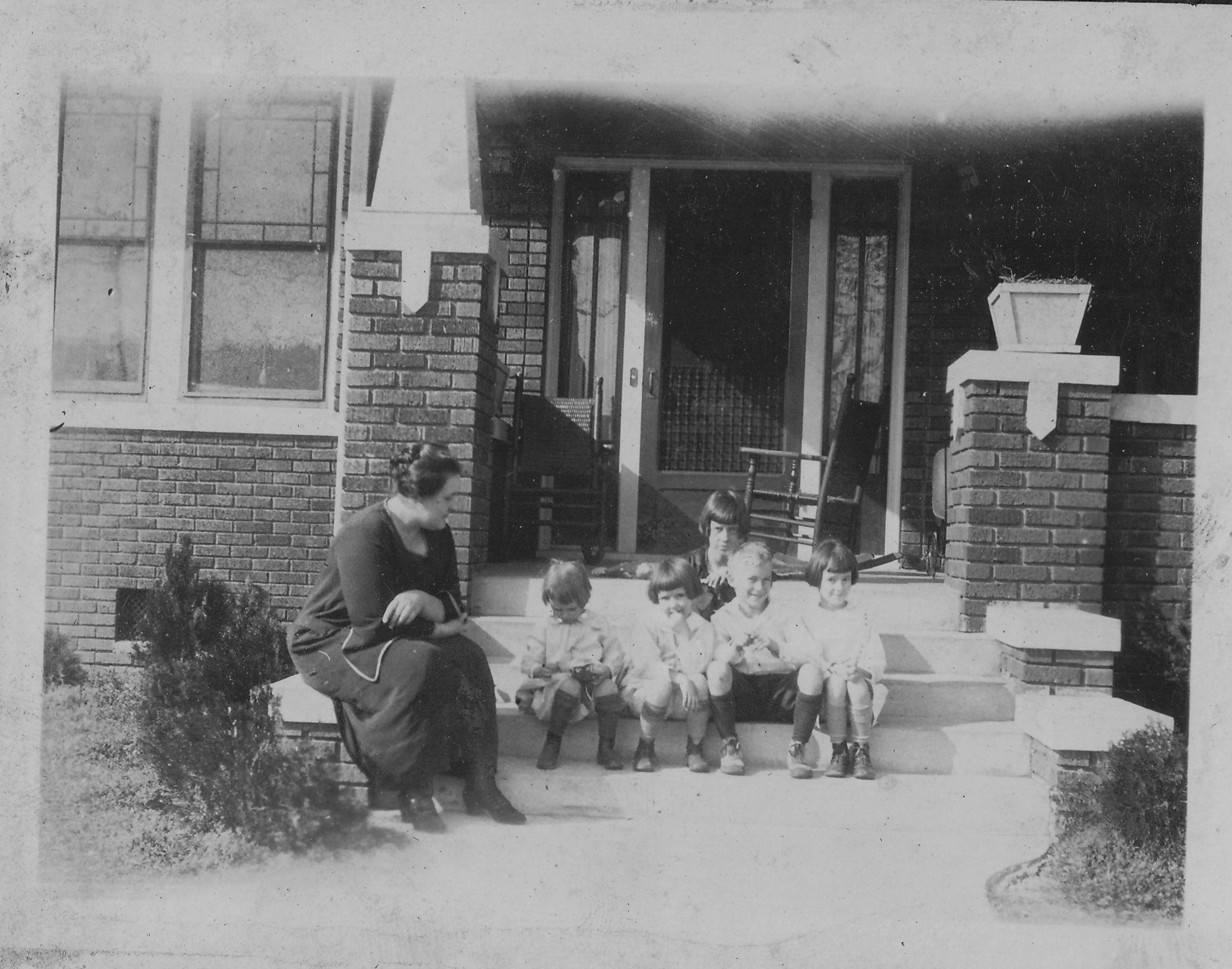
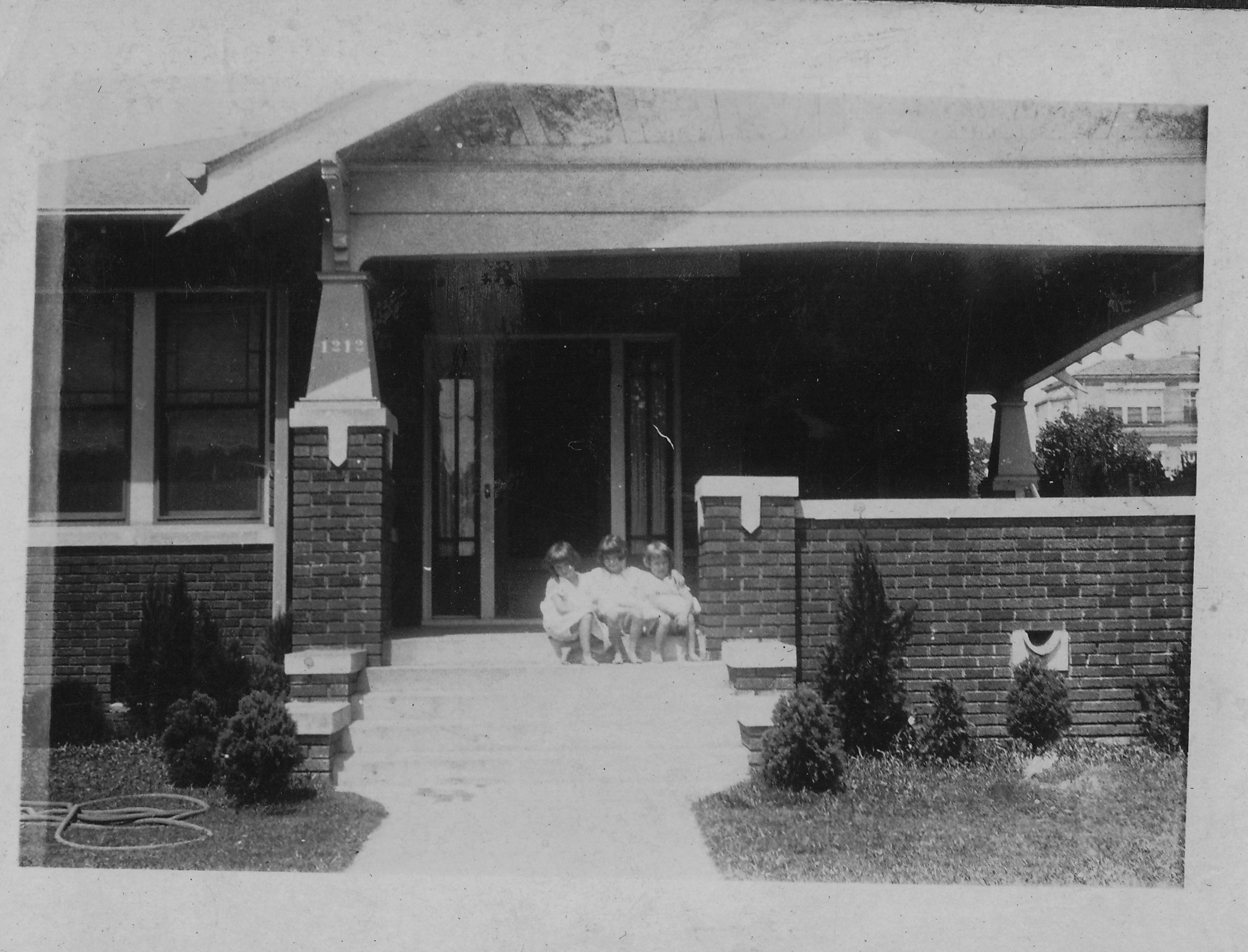
Mamie, Tiny and Sara on the steps of the Strong Avenue Bungalow

“When I was two and a half we moved to 1212 Strong Avenue into a brick house which Mama and Daddy had planned and built, and which Mama proudly described as ‘the first brick bungalow in Greenwood.'”

In A Field Guide to American Houses, Virginia and Lee McAlester describe the bungalow style: “Craftsman houses were inspired primarily by the work of to California brothers, Charles Sumner Greene and Henry Mather Greene, who practiced together in Pasadena from 1893 to 1914. About 1903 they began to design simple Craftsman-type bungalows; by 1909 they had designed and executed several exceptional landmark examples that have been called the ‘ultimate bungalows.’ These and similar residences were given extensive publicity in such magazines as Western Architect, House Beautiful, Good Housekeeping, and Ladies’ Home Journal, thus familiarizing the rest of the nation with the style. As a result, a flood of pattern books appeared, offering plans for Craftsman bungalows; some even offered completely pre-cut packages of lumber and detailing to be assembled by local labor….The one-story Craftsman house quickly became the most popular and fashionable smaller house in the country.”

And it stands there today, at 1202 Strong Avenue, easily recognizable, although altered (in an unfortunate and awkward fashion), just one lot removed from the relocated Buckeye House. It needs a coat of paint and a good scrubbing, but the very fact that it has endured for almost a century is cause for celebration. I would nominate it not only for the National Register of Historic Places but also for the National Register of Homes Where Kind Parents Raised Happy Children Who Were a Gift to Those Who Came Later.

Posted in Uncategorized | Leave a comment

Bye Bye Buckeye

Mamie and Tiny in the Buckeye playhouse, ca. 1922

“I do not remember the years at the Buckeye, but we had a big front yard with a playhouse, swings, sandpile and everything to make life fun. You could not buy gym sets then and Daddy had a swing set made out of wood. We also had a swing hanging from a tree limb.

“When I was two and a half years old, we moved to 1212 Strong Avenue into a brick house which Mama and Daddy had planned and built, and which Mama proudly described as ‘the first brick bungalow in Greenwood.’ Only a few streets were paved then. Strong Avenue was a cinders street. The house had a living room with a fireplace and wicker furniture (the same which is now on our back porch. [Ed. note: That wicker furniture is now in my sunroom. If the house catches fire, you’ll find me dragging the wicker table out to the yard as soon as I’ve rescued the dogs. I’ve never seen another one like it.] A large tapestry hung over the mantle. We had a piano and a Victrola in the living room, and we played in there as much as we did anywhere else. I can remember us putting the sofa (we called it a settee) cushions in the middle of the floor and playing on them, and we played paper dolls under the long wicker table. Mama was a good housekeeper, but she never fussed at us for making a mess if we were having a good time.

“We had a dining room which not only served as a place to eat but also provided Mama with a large table on which to lay out fabric (which we called material) and patterns to cut out dresses. I remember she held the patterns down on the fabric with glass jiggers instead of pinning them. (I don’t remember the jiggers ever being used for their intended purpose.) I would have liked very much to have had them for doll glasses (which I imagined them to be.) The dining room also had a large buffet (which we have now with the legs cut off and antiqued green), a big china cabinet where Mama kept her good dishes which were only used on special occasions, and six chairs.”

That wicker furniture spent almost 60 years on the big screened porch at 409 East Adams. When Sara died, most of it followed me a few blocks north to my home. The rockers are battered, their canvas seats barely grasping the wicker rings that support the cushions. I spray-painted them a pistachio green last year, but that paint doesn’t seem to want to hold. I find flakes scattered on the floor whenever I vacuum, as if Sara was quietly undoing my feeble attempts at decorating. She had a flair for making inexpensive items look cute and homey and, like her mother, a clean house was not a priority if we were having fun. On the shelves of that old wicker table, where she arrayed her dolls, I would set up tiny Civil War battles or drape blankets for a secret fort. It serves now primarily as the hopping-off point for Phyllis the Cat between the kitchen and the sunroom. It’s a happy table.

So, the mystery is this: What became of the piano and the Victrola and the china cabinet? The piano is the deepest mystery: Who in heaven’s name bought that and brought it into the most unmusically inclined clan of all time? Surely Jessie wouldn’t have had such a luxury in Holmes County…..and Sara’s descriptions of her father don’t paint him as the type who would have grown up with piano lessons. Perhaps Jessie looked at her three adorable girls, all perfection in pinafores, endlessly talented in every respect, seeing a future of concerts and chorales, and dashed out to Weiler’s Musical Forest for a Steinway. Doubtful.  I have never known anyone in this family, when confronted with an obligation to sing at funerals or wedding or such, to do anything more than hum a little off-key hum and stare at their shuffling feet. (With apologies to Tricia, who was a renowned clarinetist at Greenwood High before she turned to baton twirling.) And the Victrola…..that will reappear in later installations of this blog, so dust off your Al Jolson facts.

Ed. note: Strong Avenue, once the “Promised Land” for Jessie and Howard, is a heartbreaking stretch of road now. Its cinders have long since been paved over and the street extended out to the Highway 49-82 Bypass. The Old Greenwood Cemetery, tucked in the curve where West Washington Street doglegs into Mary Street and becomes Strong, is a quiet, almost forgotten space. When I was a child, Sara would often pull her Plymouth off the road on the east side of the cemetery and help me navigate the concrete steps that arched over the iron fence. Then we would wander all over those sacred few acres as she told me tales of the Greenwoodians hidden beneath the monuments. And every time, every single time, she lamented the careless WPA workers who knocked down most of the markers, forever erasing the names and memories of men and women who braved the early days of the Delta. Now even the fences and the concrete steps are gone and the grass is only occasionally mowed (more often now; thank you, Mayor McAdams), and it’s not possible to spend a quiet hour in the Old Cemetery without feeling vaguely threatened by the living, rather than the dead.

Following Strong Avenue west from the cemetery, it bears only a passing resemblance to the proud street that Howard and Jessye chose for their 1923 home. If you look closely, you can still discern the lines of fine Neoclassic and Prairie style homes, remnants of an early 1900s cotton boom town, lining a shaded road with tangible evidence of success and pride in community. Most of the houses are desperate for paint and many bear the telltale sign of rental decline, multiple black mailboxes nailed onto the front porches that once welcomed neighbors to a single family’s castle. Cars line the curbs with long-flattened tires and litter skitters along the gutters. But here and there, on just a few lots, you can spot a home where someone still cares and is trying valiantly to stem the tide of decay. Those people should be given a parade down Howard Street.

Posted in Uncategorized | Leave a comment

Bama and the Big Bang

"Bama" and Sara on Strong Avenue

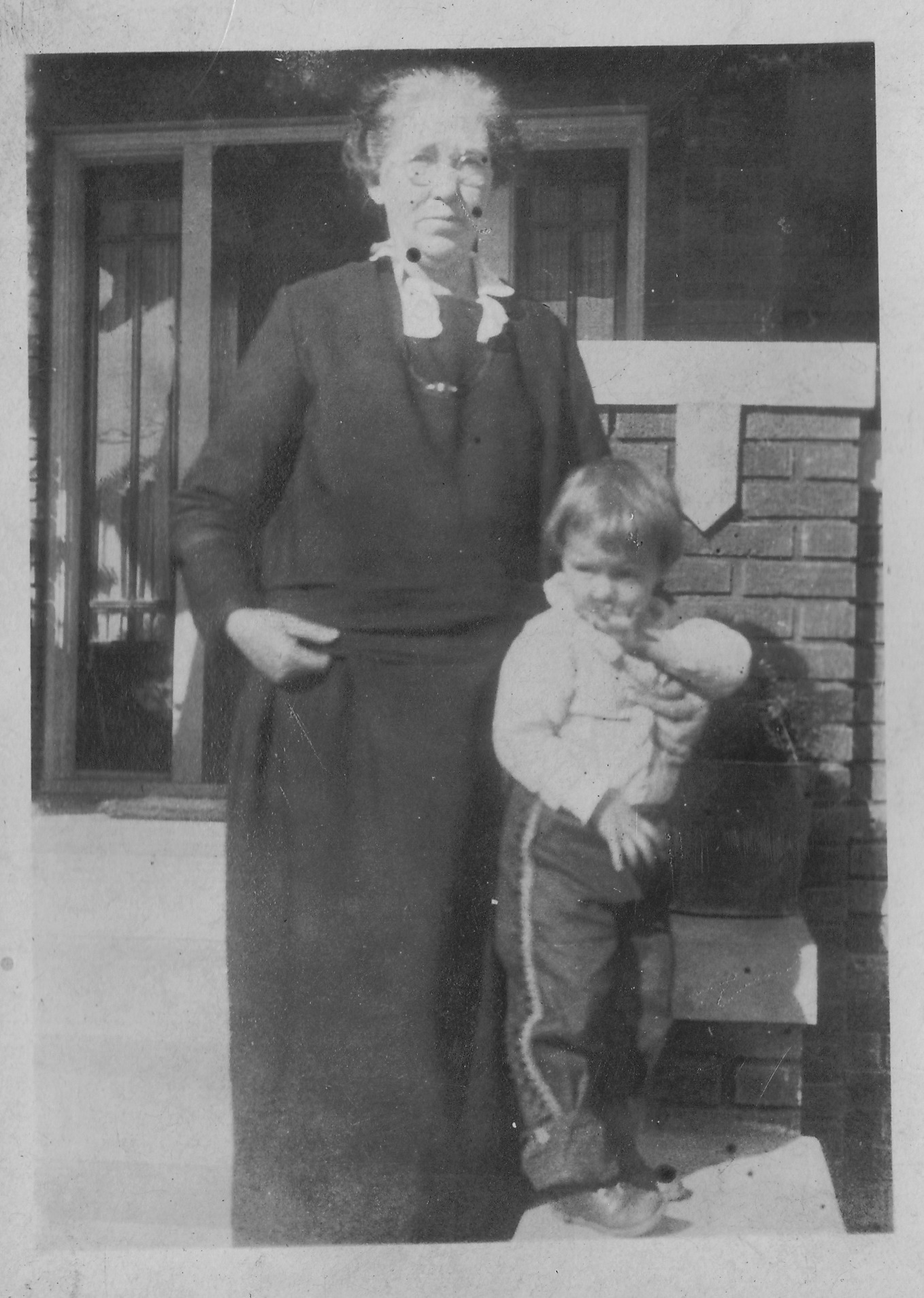
“Our grandmother, Mama’s mother, who we called Bama, lived with us. She was born November 13, 1868, in Holmes County. Her father, Harmon Chavis, died with she was thirteen months old, and she really knew very little about him except that he had come from Louisiana. (We believe he may have been French or at least Cajun.) Bama’s family had been poor, and Mama always said she had had a hard life. Bama was 25 years younger than her husband [Anderson West]. She seemed old to me all my life, but was only 72 when she died in 1942. She was very different from Mama and not a particularly affectionate person. I don’t remember her playing with us or reading to us or telling us stories. Very seldom did she keep us while Mama went anywhere because she usually expected to go too.

“When storms came up she and Mama were afraid of the storage tanks which were located close to the Buckeye house. I don’t know what they thought could happen, but they were afraid of storms anyway, and I guess the tanks just gave them something else to worry about. Both of them were worriers anyway.”

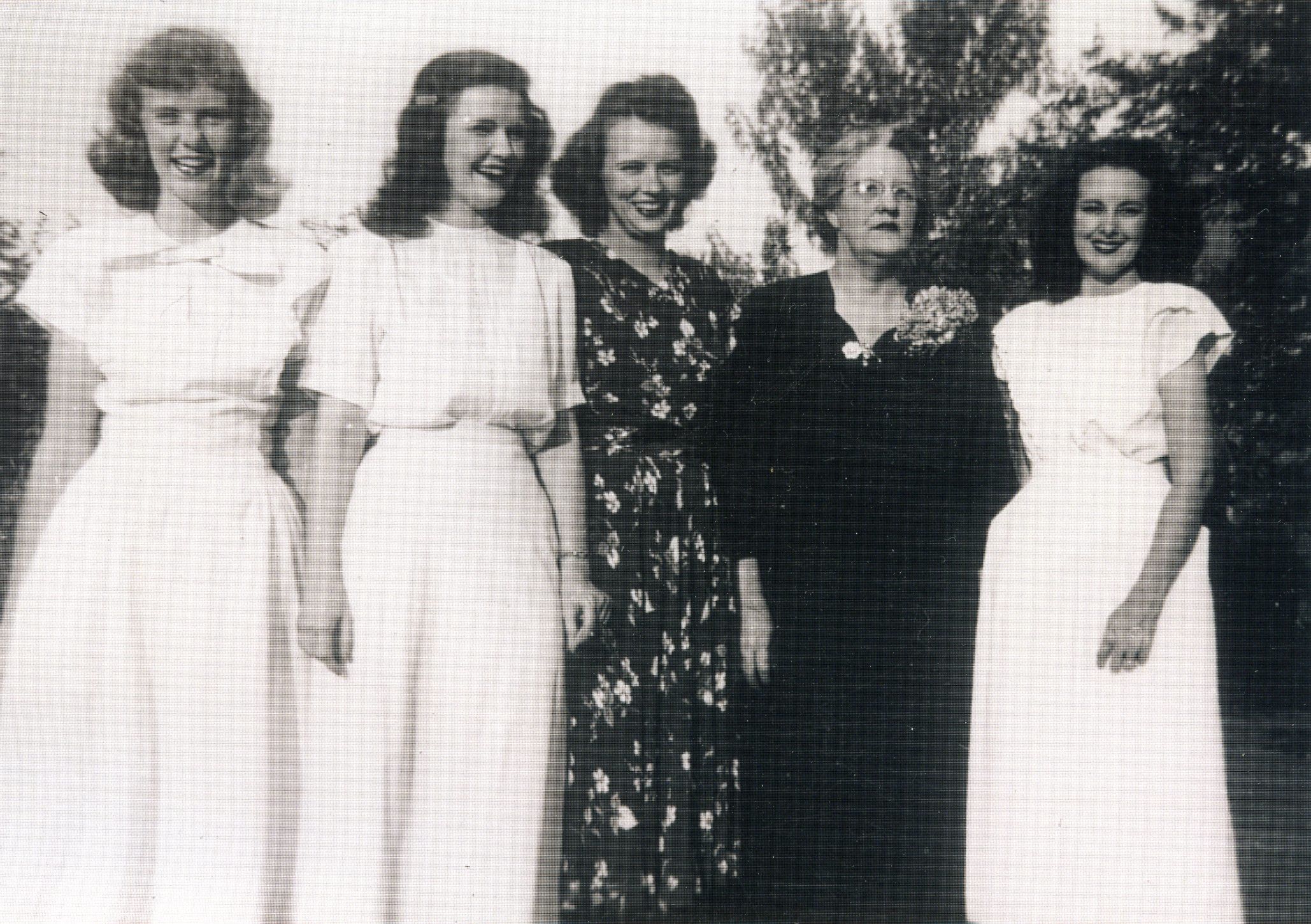
Bama, with the inflection on the first syllable. All my life, I heard stories of Bama and Bigma ( Sara’s great-grandmother) and their life in Holmes County. The West line seemed to be our tenuous connection to some sort of antebellum aristocracy, and these were not West women. They grew up on hardscrabble farms carved out of the unforgiving dirt of Holmes County and likely had only a sketchy education. Neither was going to turn any heads physically. And that 25-year-age-difference between Bama and Sara’s grandfather, Anderson West……Can you imagine what she must have been thinking? I remember Granny describing him as “bitter” and broken down. Did he return from the Civil War like that? Or did years of fighting the soil to scratch out some sort of existence just wear him out? And why would a young woman find him a suitable mate? Just how slim were the pickings in 1880s Durant? But apparently they found some spark of affection and made a home and raised three children, one of whom blended their genetic details with the Evans mix to give us five perfectly lovely offspring (Well, OK, to be honest, Son was no Cary Grant, but those girls are knockouts. All of them. See below.)

Tricia, Mamie, Sara, Jessie and Tiny

Added to my list of family regrets is the sad fact that I never took Son up on his offer to go out to Holmes County and see the house site where Granny grew up. Maybe we should have all gone out, grandchildren and great-grandchildren and great-great-grandchildren, just one day, and stood  where Granny and Big played on the porch with their dolls and T.C. shot marbles in the dirt. Bama wasn’t always old, as Sara thought she was…..and perhaps a few hours spent in her world, looking around at the trees and the fields and the hills that were hers and Anderson’s, just for a little while, would have opened some windows into the soul of the stern, unsmiling woman who comes down to us as “Bama.”

Last Friday, Jimmy and I bought land in Holmes County, just west of West. I know the odds of this wedge of hill country having once belonged to “our” Wests are slim, as the original Anderson West seemed to have scooped up great swaths of acreage closer to Durant and Castalian Springs in 1841. But my best intentions, while we’re down there, are to find those spots where Bama and Bigma and Granny and Big became the people that Sara knew and loved. There’s a verse from Ezekiel which was featured in one of our Easter liturgies: “You shall return to the land which I gave your fathers.” And your mothers.

Posted in Uncategorized | 11 Comments