East Adams

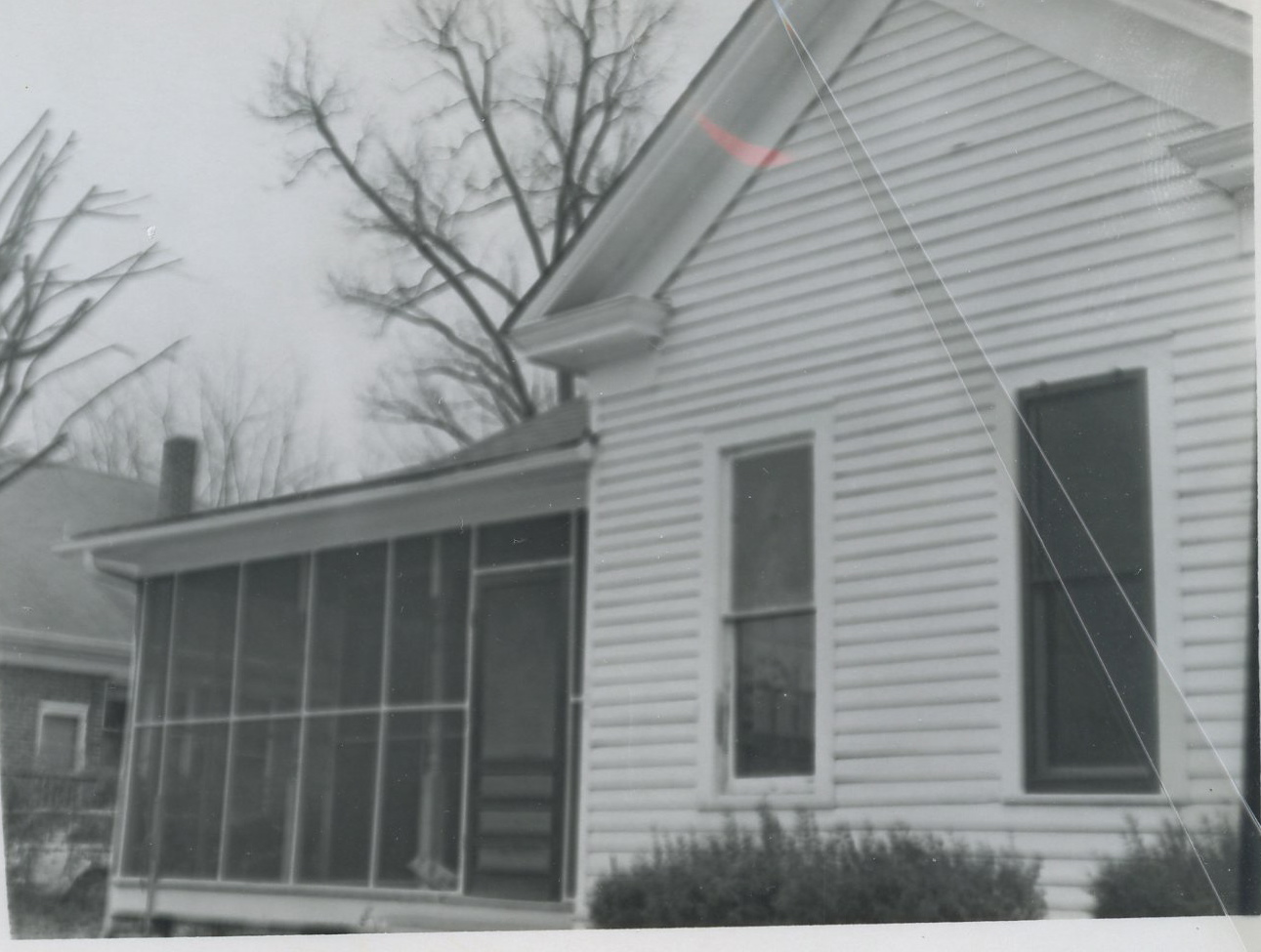
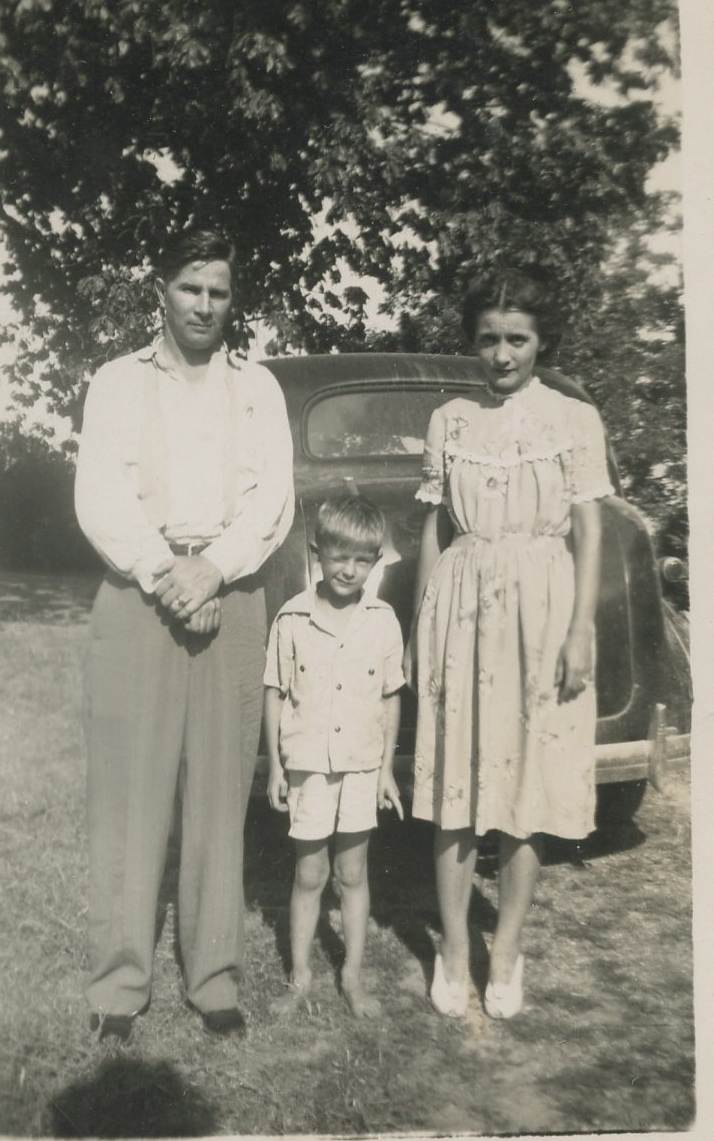
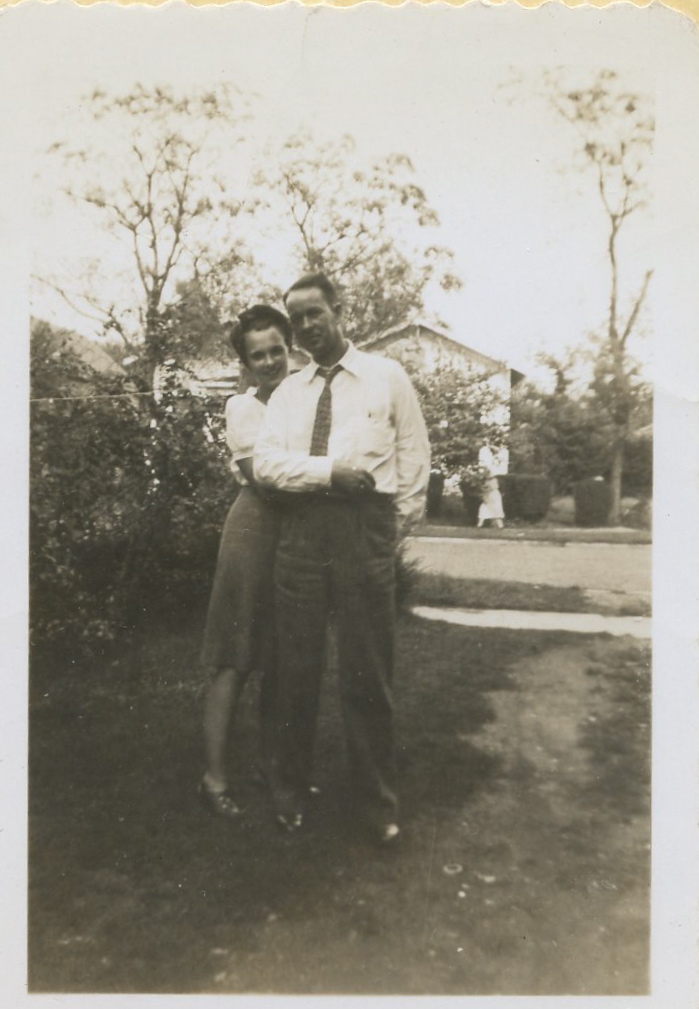
208 Walthall Street, with the Stott house in the background.

“The almost four years we lived in that little apartment at 208 Walthall Street were fun years, filled with dreams and plans for the future, a home of our own and children. We pored over house plan books but always with a reminder from Russell that he had lived through the Depression and a daily diet of black eyed peas and was never sure another one was not on the way. The Depression has stayed with him [1990] and influenced a lot of his thinking. He has never wanted to buy anything on credit unless you could pay it off at the end of the month and only agreed to finance purchases on big items when he knew that was the only way we could have them.

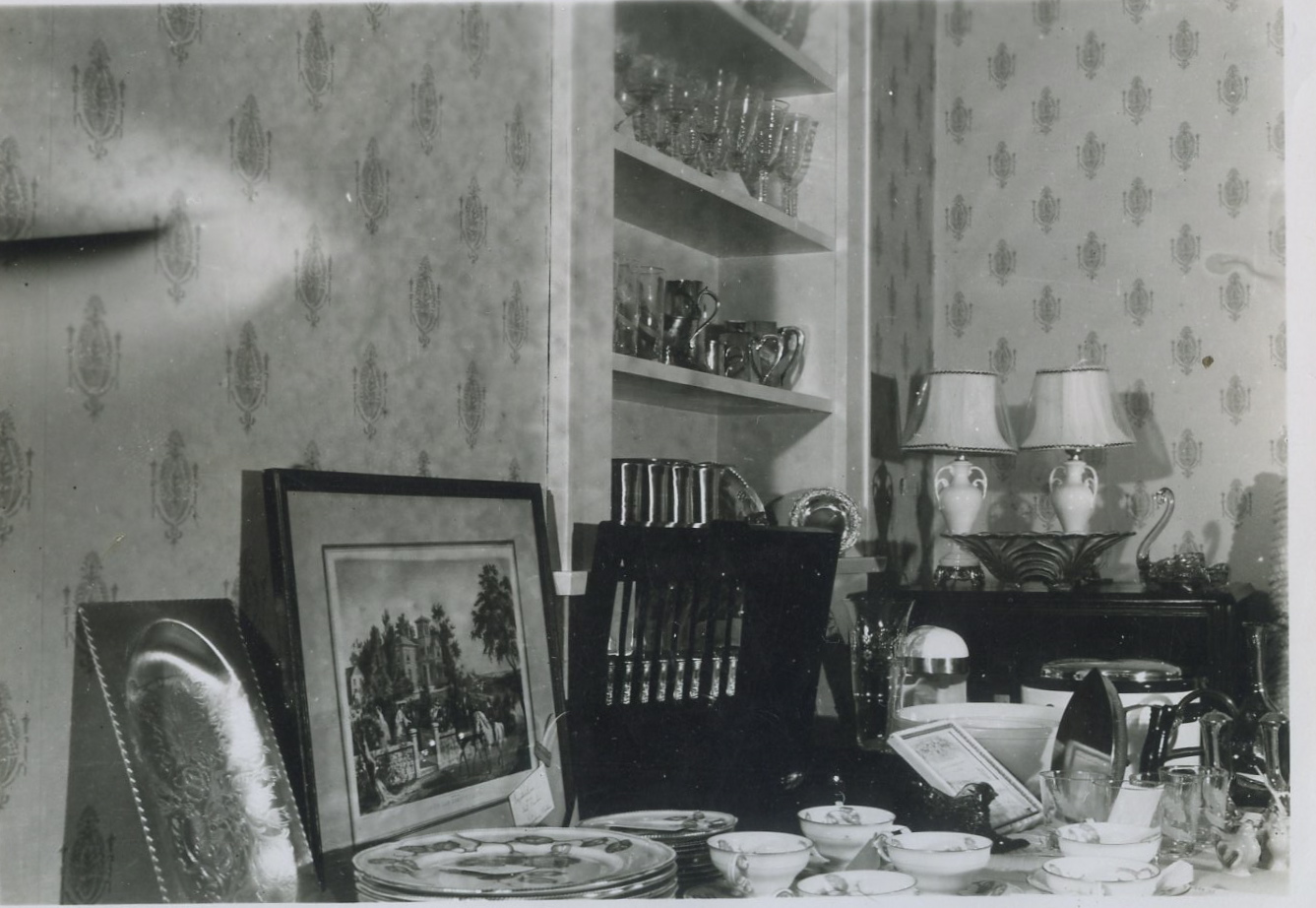
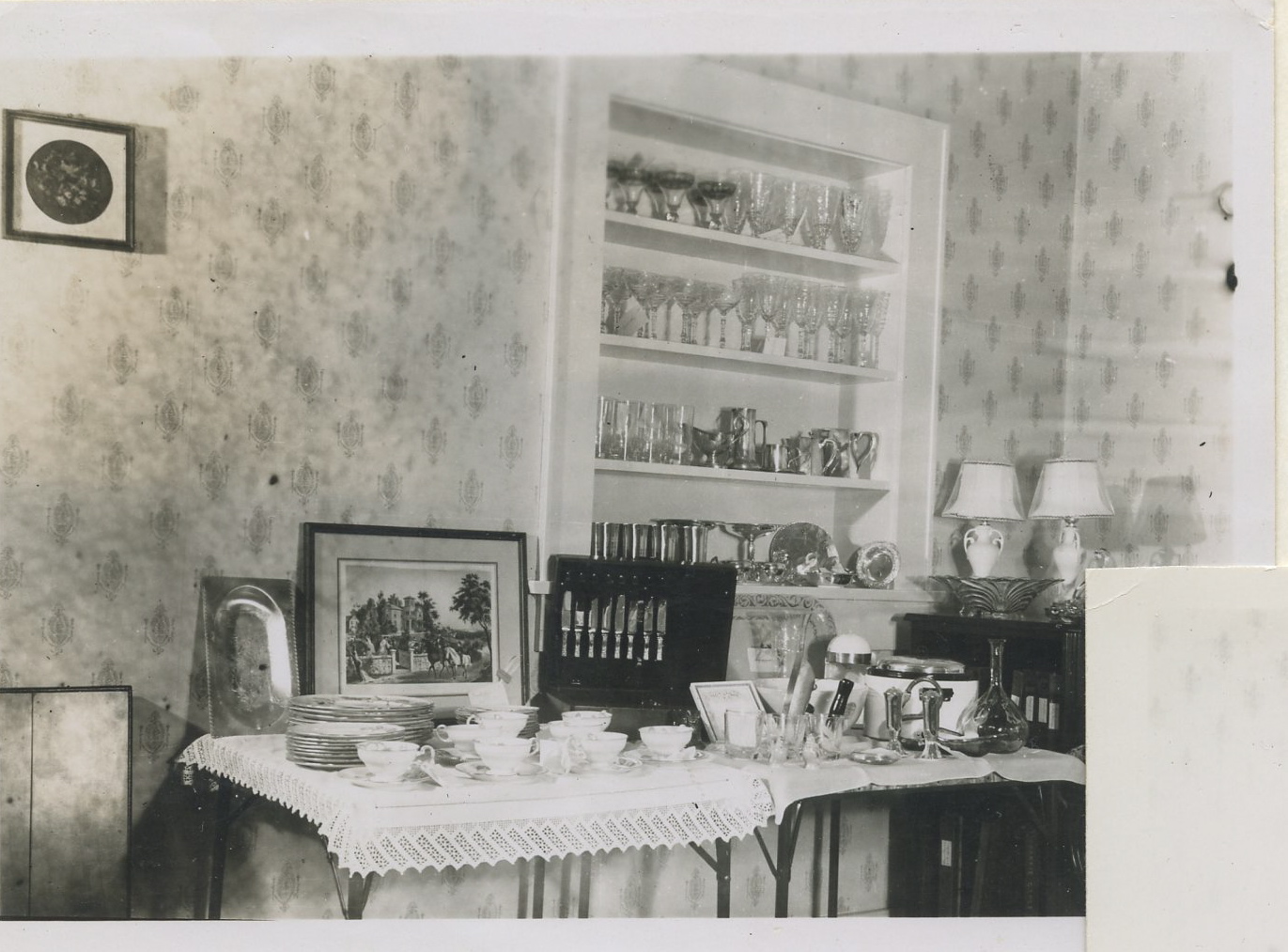
Wedding presents in the little Walthall living room.

“We had become friends with Joe and Eleanor Wynns in 1949. Joe worked for Gulf Oil Company and had a great personality. They too wanted a home and were living in an apartment on Market Street. It was Joe who talked Russell into buying the lot at 409 East Adams Avenue. A group of folks (Percy DeLoach, Louie Spencer, Art Eidman, Jesse Stigler, Elmer Gwin, Hite McLean and Sol Kantor) had gotten together and bought lots in this area, so it looked like a desirable neighborhood to be in, even though we were sure we could not afford to build as fine a home as most of them.

“Joe had bought the lot across the street at 501 East Adams, and he planned to build right away and did. We bought our lot for $2100 from Louie Spencer’s father. We paid a higher price than most of those around us because this was a high lot and on the corner. We could have bought one in the block beyond us for $1500.”

I’ve spent the past two days at Senator J. Z.George’s mansion, Cotesworth, out in Carroll County. Senator George once owned the land that later became North Greenwood in general and East Adams Avenue in particular. By the time Sara was dreaming her big dreams and Russell was reminding her that life can throw unexpected curves, George’s old cotton fields were giving way to asphalt and street names. I’m trying, in a very small way, to honor that man by showing off his grand home to visitors this weekend, and  perhaps a bit of that effort is payback for the acre of so of his land that wound up being a very, very, very happy home for my family. Isn’t life strange?

Posted in Uncategorized | Leave a comment

Beating the Bond Drum with Botts

Billy Blackstone and Douglas Lore helping Sara with the Bestform promotion campaign, 1948.

“Botts Blackstone loved to tell jokes and laughed harder at them than anyone else. He had performed as a blackface comedian in local minstrel shows and had sung with a quartet with the three Hinman brothers known as the Blackstone-Hinman quartet. He had a beautiful tenor voice and kept a running record of the number of funerals and weddings he sang for each year. He prided himself on the number of jobs he had as secretary of such organizations as the Delta Livestock Fair, the Rotary Club, the Travelers Club, etc., etc., and as correspondent for the Memphis newspaper, the Commercial Appeal.

“I would get mad because I had to type all of the copy he sent to the Commercial Appeal. We sent most of it by wire, but every week I had to go through the Commonwealth (the local paper) society items to send for a Sunday society column. Everything we sent was copied, word for word, from the local paper. He got paid for it, but all I got was a nice Christmas present every year. Looking back later though I was glad for having done it because it was through this association that I later got my job with the paper. I also had to help with his many other jobs.

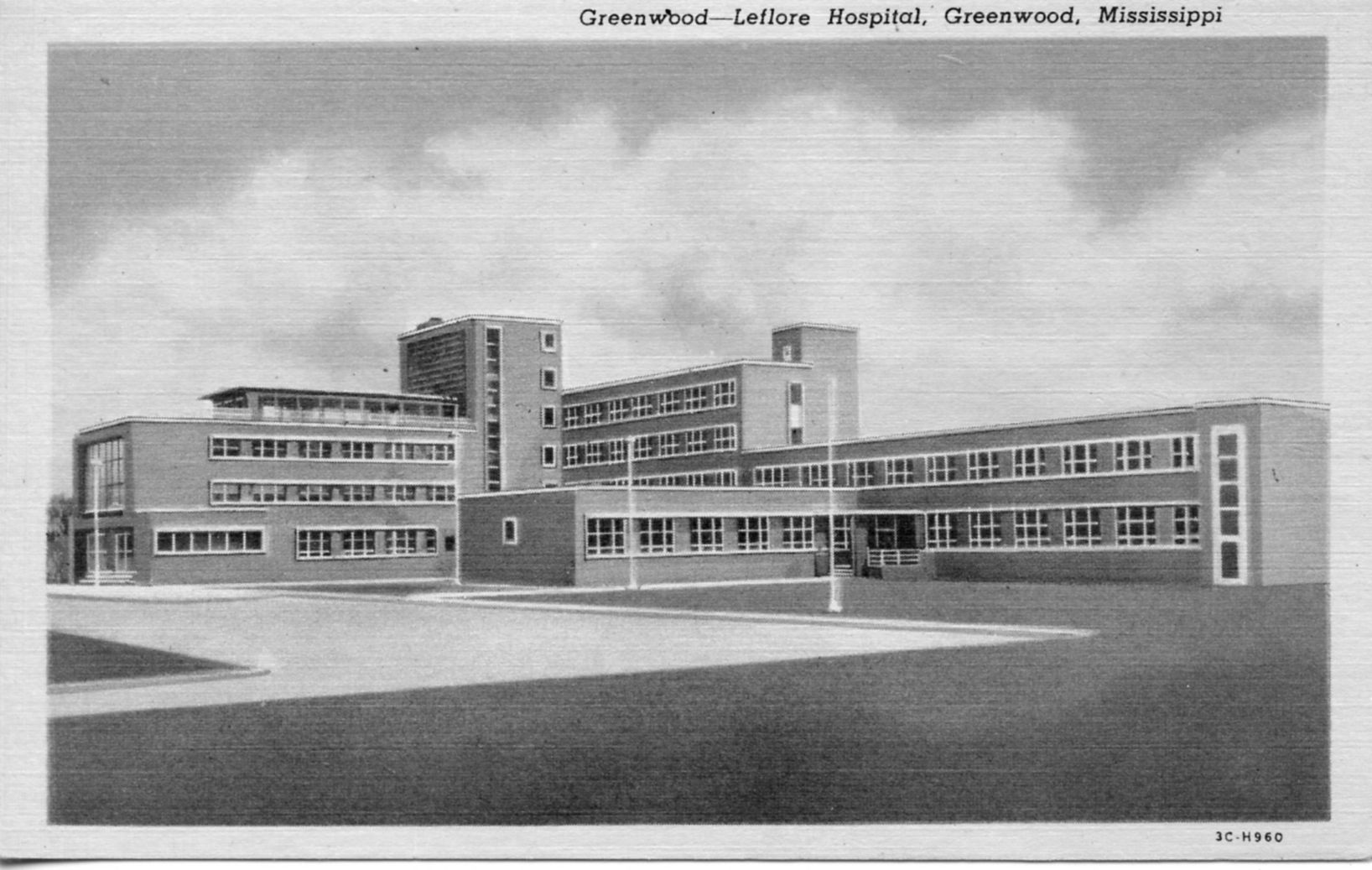
“I always felt that I was at the Chamber at the right time because it was a good place to be during the war years with our close association with the Air Base, and after the war there was so much progress being made and so many projects being promoted, and it made you feel good to be a part of it. We promoted a bond issue for the new hospital, a bond issue for Hinman Bridge, Bulldog Stadium, a new high school and other projects.

Greenwood Leflore Hospital, a 1952 success for Botts and Sara.

Our biggest disappointment came in 1948 when we promoted the first bond issue for a factory, the Bestform Foundation Company, and it was defeated by a small margin, setting Greenwood back ten years in their efforts to get indsutry. It was one of the first industries to decide to locate in the Delta, and we worked so hard to put it over, and a few selfish individuals defeated it. The cotton merchants fought it because they thought it might interfere with labor. Oscar Bledsoe, who was head of the Staple Cotton Association, wrote articles for the paper with the headline, ‘Mortgage Your Home for a Corset Factory.’ This was in 1948.

“One year I rode in the Winter Carnival parade with the Chamber of Commerce officers. We had to help Leonard Scruggs, who was playing Santa Claus, get dressed and we took him down to get in the parade lineup. I got a big kick out of seeing the little children along the way getting so excited when they saw us coming with Santa Claus, and I was amazed at the masses of people who lined the parade route for the Winter Carnival Parade. It was really a big thing for Greenwood and was held each year in connection with the Delta Band Festival.

One of many articles promoting Greenwood that Sara wrote for the Commercial Appeal. She made sure there was an article and at least one photograph from each year's Delta Band Festival.

“I have many fond memories of those years and have always been glad I stayed with that job even though the pay was less than I could have gotten at some other job. The more important benefits were getting to know nearly everyone in town, learning how to meet the public and being in on all the big things happening in Greenwood at that time.”

Posted in Uncategorized | Leave a comment

Chamber Chick

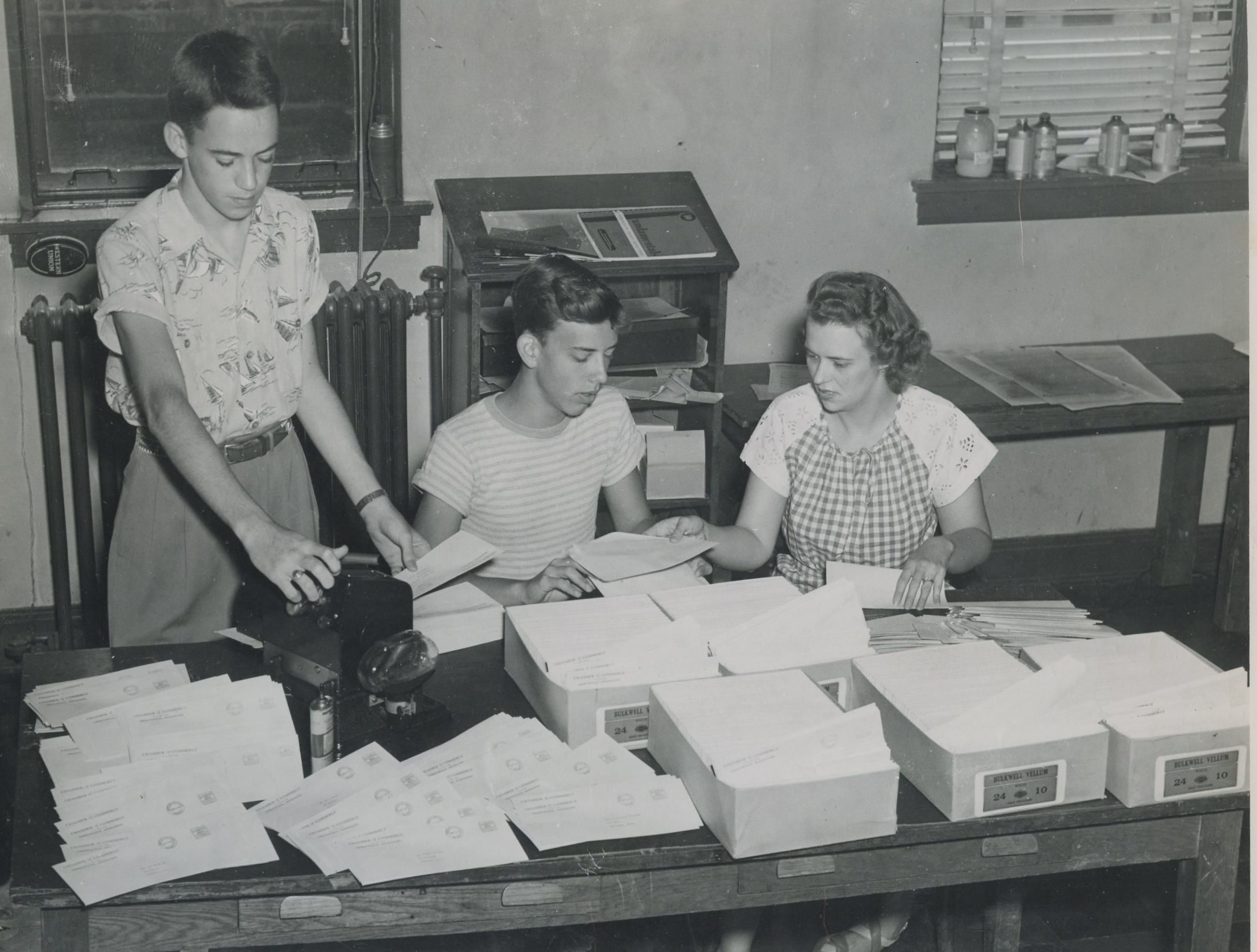
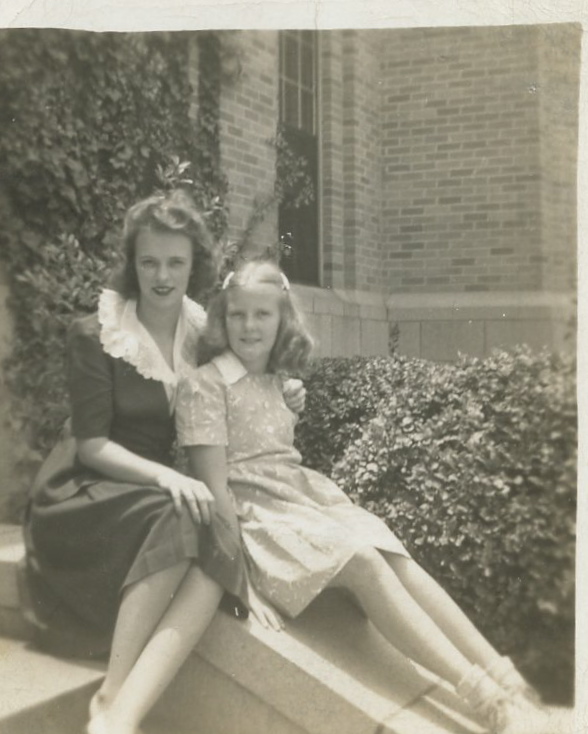
Sara and her assistant, Tricia, on the front steps of City Hall. Sara would pay her 50 cents to help put out newsletters.

“I enjoyed the eight years at the Chamber of Commerce. Our office was upstairs at the City Hall, and I got to know all the city personnel, the officials, the police and firemen and almost felt like I was working for the city and the Chamber of Commerce. There were only two of us in the office, me and my boss, E.H. ‘Botts’ Blackstone.

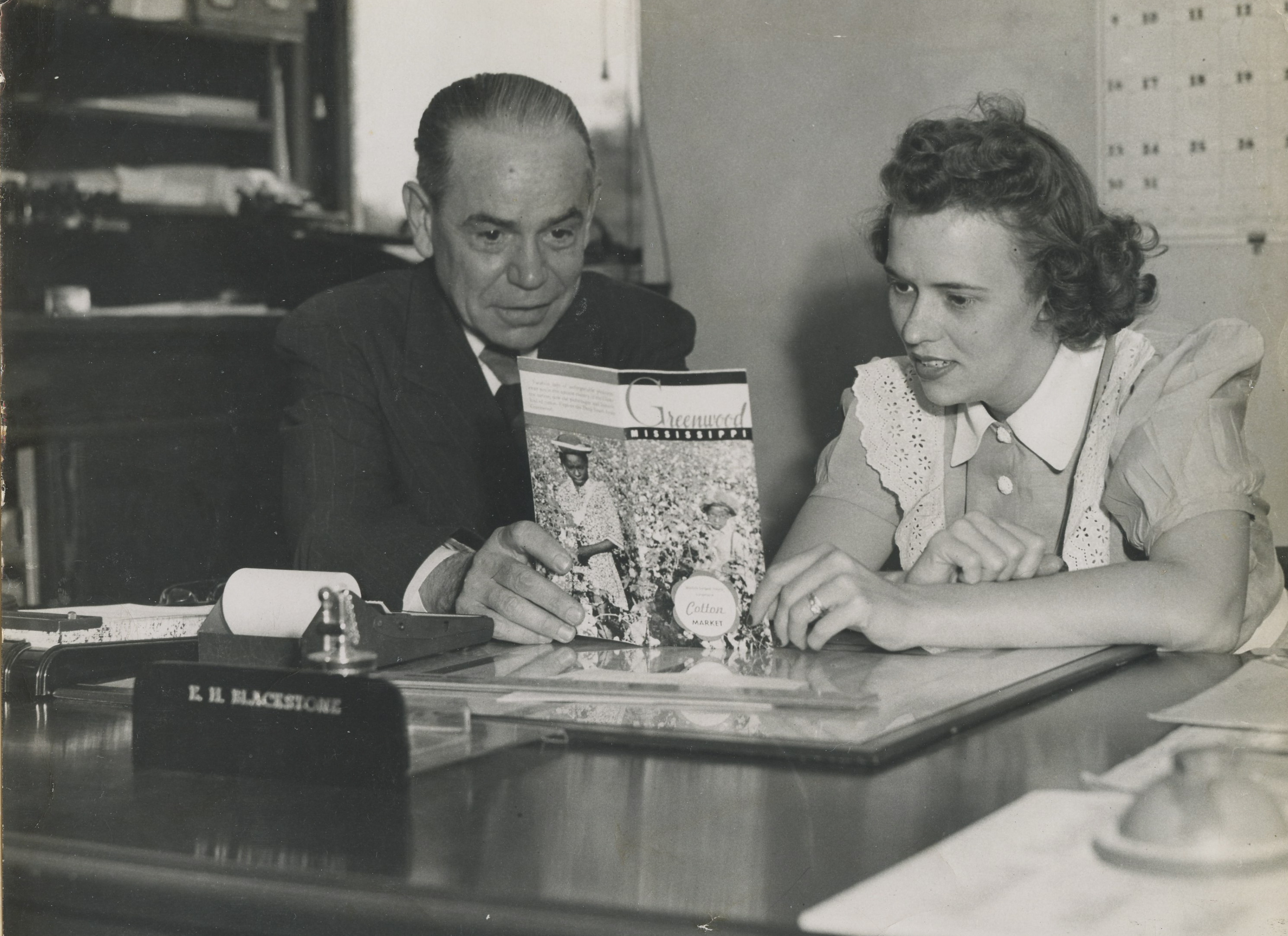
Botts Blackstone and Sara in the Chamber of Commerce office.

There was no air conditioning then and the windows opened out onto an asphalt roof. In the summer it would get so hot up there that you could feel the sweat rolling down your legs, and sometimes my clothes would be clinging to me when I left at five o’clock. Botts did not want to run the ceiling fan because he said it blew his papers.

“I walked to and from work, and in the years when Mama was at the Red Cross, she and I would go through town every day at noon to check the stores out. We always made it to Woolworth’s Ten Cents Store and to Belk Hudson Department Store. Sometimes we would meet Son and his high school friends who had come to Fountain’s Soda Room to eat. He would pretend he didn’t see us.

Tricia and Son (Howard Evans Jr.)

“While at the Chamber of Commerce, I got to know all of the business leaders in town and made many friends. Botts let me do mimeographing for the public to supplement my income so I made a lot of friends that way, too, though I think he got a little jealous of my picking up the extra money. We put out a monthly newsletter, ‘Chatter,’ which was a gruesome chore that I hated. We sent out 600 copies, and it had four pages, so that was quite a job, mimeographing them, assembling and addressing them on an old addressograph machine. Botts thought it was a super publication and always devoted one page to jokes (often corny ones) and to financial news of the local banks.”

One skill Sara learned at the Chamber of Commerce was Tom Sawyer Fence Whitewashing, i.e., conning young people into helping with her projects. Tricia stuffed thousands of envelopes for fifty cents and thought it was loads of fun. At least the first time. When the Commercial Appeal Friday night Football Hotline set up in our kitchen, Cathy and I would be corralled to fold letters, sign press passes and haul boxes of “press kits” to the mailbox, all for a pittance. And that old mimeograph machine wound up in our house as well, and I can still smell that strong purple ink as the copies rolled off the spindle. There was never a job too big for Sara, but no one around her was safe from being drafted.

The contacts she made at the Chamber of Commerce stood her in good stead as she moved on into newspaper work. I think her greatest strength as a woman operating in a man’s world was that she was not awed or intimidated by those men. She’d whip out that little fliptop steno pad, stare them in the eye and ask the questions they didn’t want to hear. More on that to come.

Posted in Uncategorized | 2 Comments

On the Road Again

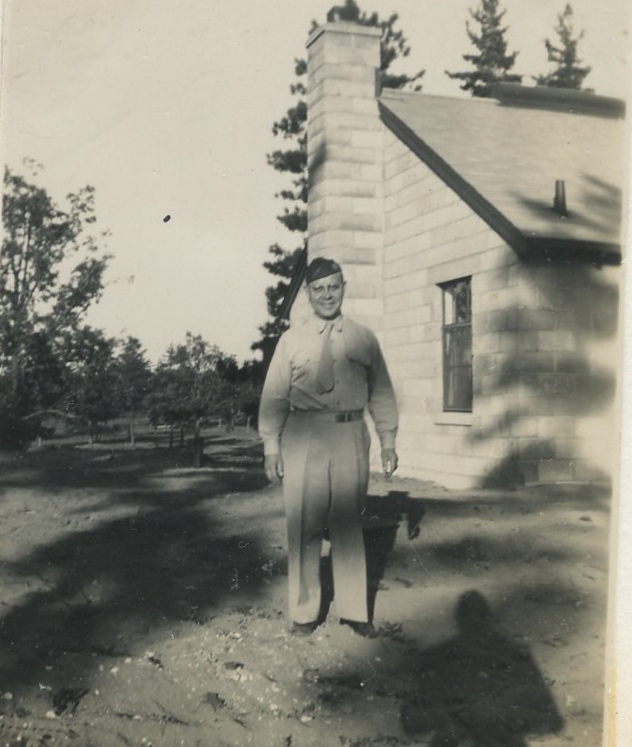
Joe Labello and Russell, 45th Division, somewhere in Italy.

“Russell’s army buddy, Joe Labello, who made tombstones and whose wife Bernice worked at the Mars Candy Factory, met us and showed us all around Chicago. We went to a striptease joint, where we really didn’t have any business being. They had never been to one either, so we were very naive. There were some tough-looking waiters who kept giving us dirty looks because we were only ordering beer and not much of that. We were glad to get out of the place.

“We left Chicago a day earlier than we had planned and drove to Warsaw, Indiana, to see Tricia, who was at a band camp there. Motels were almost non-existent then, and we found a small one near her camp and stopped, which was a bad mistake. It was nothing more than a tiny cabin with a horrible bed and one ragged towel. You had a bell to ring if you needed anything. We checked out the next day and went on to Findlay, Ohio, to see the Crosbys.

Captain Crosby and Russell

He had been Russell’s captain before Captain Chalstrom and was a doctor. Russell had been close to them and their children, George and Jane, and drove Lucille and the children from Fort Devens to Pine Camp. She and I had corresponded all during the war and did so until she died in 1979. Dr. Crosby had died a few years earlier.

Dr. Harold Crosby

Mary and Howard [Bartling] had married in June and were living in Columbus, Ohio, so we met them at Indian Lake and then went on to Columbus the next day. It was a tiring trip, and we were glad to get back home, but for $400 we really saw and did a lot. I really missed Mary when she left Greenwood, since she and I had always done a lot together and been very close. They married, like us, at Tiny’s house, and the next year their daughter Melanie was born. Tiny’s son, Billy, had been born in 1941 and Pamela Pleasants Roberson was Jessie’s first granddaughter, born in May, 1945.  I was jealous because by that time I was ready to start a family.”

Mamie (Mary Olive Evans Bartling), late 1940s.

Sara had learned to cook bacon and seen a striptease show in the big city, so naturally it was time to think motherhood. Something tells me that Jessie never heard about the entertainment options in Chicago.

Russell would tell me stories of his buddies, Joe Labello and Stoudemayer and Captain Crosby, all these scared young men from wildly different backgrounds and corners of America. He was devoted to little Joe, a tough, stubby city boy who made his living by carving tombstones. And Harold Crosby, a well-respected physician in the booming Ohio town of Findlay, which you may remember was devastated by floods just a few years ago. For all the tragedy of war, it does throw people together who would otherwise have never met. In Sara’s address books are the carefully updated addresses and telephone numbers of all these army acquaintances, most of whom they never saw again, but faithfully sent and received Christmas cards for decades.

Mamie and Howard were our exotic relatives, bravely living up there in faraway Ohio with all those Yankees. They would call long distance on an occasional Sunday night, and everyone in the house would scramble for a phone to pick up and listen in, as Mamie told us of her adventures in huge department stores and fancy tearooms and museums and all that a big city like Columbus had to offer. We could not have been more enchanted if the Bartlings had taken up residence in Paris or Monaco or the other side of the moon. Sara did miss Mamie, although they would manage to get mad at each other at least once every time there was a trip back to Greenwood. That’s just sisters being sisters. Sara named her firstborn Cathy Olivia, in honor of Mary Olive and Olive Stott, and I got the “Mary.” Challenging shoes to fill.

Posted in Uncategorized | Leave a comment

That Toddlin’ Town

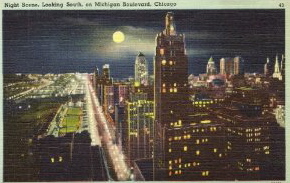
“We saved our money ($400) and made plans to take a trip to Chicago and other points in the summer of 1948. G. D. and Helen [Russell’s oldest brother and sister-in-law] were to be there for the furniture mart at the same time, so we all stayed at the Palmer House, which was considered one of the best hotels in the city. We drove up in July (no air conditioning in the car) and enjoyed seeing the countryside. It was my first experience in hotels and restaurants that were not totally segregated and it seemed strange seeing black people checking in at the same time we were.

G.D., Birch and Helen Criss, 1943.

“We thought we were smart enough to just follow highway signs into Chicago and straight on to downtown to the Palmer House. No one had told us to avoid the south side of Chicago, which was predominately black and not considered safe. So on a Sunday morning we were driving down the street when a carload of blacks spotted our Mississippi tag and puled up beside us and started calling us names I had never heard. I was scared to death because there was not a white face in sight, even all the police were black. I was afraid Russell would decide to say something back to them (they were in a convertible), so I told him to put the window up and get out of there as fast as he could. That was our introduction to Chicago. The Democratic Convention was going on in Pennsylvania at the same time, and the States Rights group from Mississippi had walked out, which did not help the way many of the northerners felt about us anyway.

Ad for the second Palmer House

“We lived it up and went to the Boulevard Room at the Stevens Hotel, the Aragon Ballroom and to the Chez Paree, where we saw Dick Haymes and Danny Thomas.

The Aragon ballroom dance floor

We tried all the good restaurants and went to museums and to the Trade Mart. We were there about five days and just about wore ourselves out. Then you did not dress comfortably when you went to a city but wore high heels, a hat and dress-up clothes. Walking the streets of Chicago in new green shoes with very high heels did not help make my vacation any more pleasant.

“G.D. got us into the huge Furniture Mart by telling them we were representing a Greenwood furniture store, since it was only open to authorized buyers. There were floors and floors of furniture of every description, and G.D. told us we could order anything we wanted at cost (half price) and have it shipped through a local store. We would never again have such an opportunity, but unfortunately our little apartment was full and we had spent all our money on the trip. We did order our coffee table which was different than any we had ever seen, with a built-in bar. Later they wrote that they had quiet making this model, but let us have the sample.”

The living room furniture they bought on that trip is still in the house on East Adams, where it belongs. My son and daughter-in-law have the intriguing little coffee table, complete with a secret bar that was just tailor-made for a child’s imagination. The glass top disappeared somewhere in their transition from Charleston to Madison. I just hope whoever has it (the president of Jackson State, maybe? She shared the moving van to Mississippi…..) appreciates all those faded moisture rings from 5 o’clock Scotch-and-waters.

$400? That might buy enough gas now to get you up through Tennessee and one night at the Motel 6, coming and going.

Ed. note: from the Palmer House site on Wikipedia:

There have been three Palmer House Hotels at the corner of State and Monroe Streets in Chicago.

The first (known as “The Palmer”) was built as a wedding present from Potter Palmer to his bride Bertha Honoré. It opened on September 26, 1871, but burned down just thirteen days later October 9, 1871 in the Great Chicago Fire. Palmer immediately set to work rebuilding, and with a $1.7 million signature loan (believed to be the largest individual loan ever secured at the time) constructed one of the fanciest hotels in post-fire Chicago.

Designed by architect John M. Van Osdel, the secondPalmer House Hotel was seven stories. Its amenities included oversized rooms, luxurious decor, and sumptuous meals served in grand style. The floor of its barber shop was reputedly tiled with silver dollars. Constructed mainly of iron and brick, the hotel was widely advertised as, “The World’s Only Fire Proof Hotel.”[1] Famous visitors included presidential hopefuls James GarfieldGrover ClevelandUlysses S. GrantWilliam Jennings Bryan and William McKinley; writers Mark TwainL. Frank Baum, and Oscar Wilde; and actresses Sarah Bernhardt andEleanora Duse.[citation needed] It was completed in 1875.

By the 1920s, the business in downtown Chicago could support a much larger facility and the Palmer Estate decided to erect a new 25-story hotel. They hired Holabird & Roche to design the building. Between 1923 and 1925, the hotel was rebuilt on the same site — in stages so not a single day of business was lost. At the time it was touted as the largest hotel in the world.[2]

In December 1945, Conrad Hilton bought the Palmer House for $20 million. In 2005 it was sold to Thor Equities, but it remains part of the Hilton chain.[3]

From 2007 to 2009 the hotel, now known as The Palmer House Hilton, was completely renovated and restored, at a cost of over $170 Million. [4] It has a total of 1,639 guest rooms in the hotel, making it the second largest hotel in the city after the Hyatt Regency Chicago.[
Posted in Uncategorized | Leave a comment

The Joy of Cooking, Walthall Style

Sara in the Walthall Street apartment.

“The first morning I got up to cook some bacon and asked Russell how much grease to put in the skillet, and he realized right then that I did not know how to cook. Since Mama was right next door she was available for instructions for cooking a few things like a roast or pork chops. Being a sweet lover, I soon learned how to make desserts and got to be a pretty good cake maker. We both got fat as pigs that first year, trying out my cooking and eating my desserts.

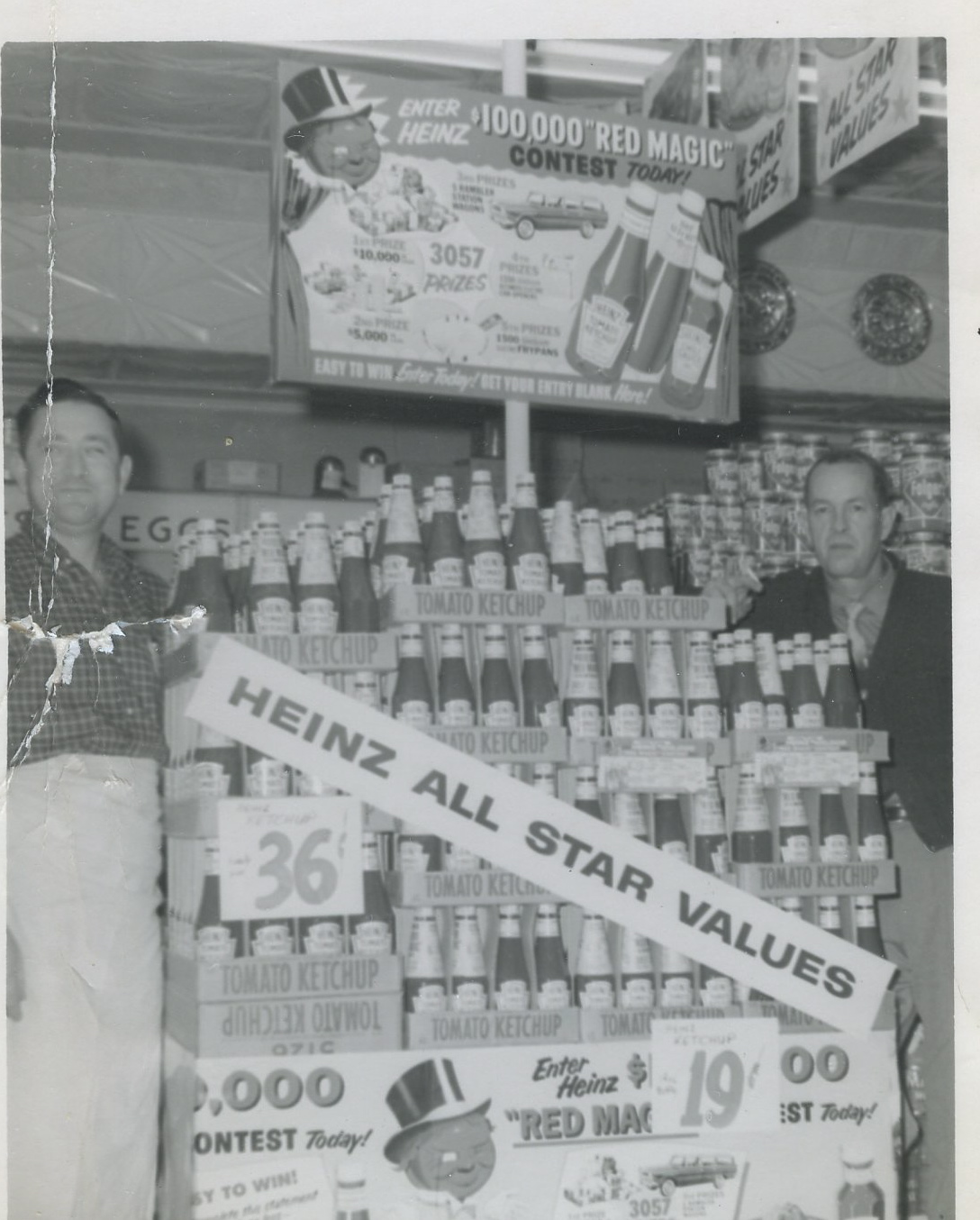
Russell with one of his Heinz displays.

“He would leave home about five o’clock every Monday morning and not get back until Saturday. I was working and slipping by and eating with Mama a lot and visiting at night with the two girls on the other side of the duplex, Lena Bruns and Hattie Frances Kelly. I would back cookies and cakes and test them out on them.

“Our little apartment had a small living room, a bedroom, bath and kitchen. There was a little screened in porch and a big backyard. To get from the living room to the bedroom you had to walk down a very narrow, dark hall through the bathroom. We adjusted very well to our meager accommodations though and did a lot of entertaining in the bedroom and kitchen since the living room was so inconveniently located. We would set up a card table in the bedroom to play cards or eat and even entertained one of Russell’s bosses, Mr. Ortmeyer, in the bedroom. He was a good friend and knew that we were married and since he despised Mr. Thompson, he got a kick out of knowing it when Thompson didn’t.

“Outdoor cooking was just getting popular then. I ordered a barbecue grill from Goldsmith’s in Memphis and we started having folks over for hamburgers in the backyard. We had bought our living room and bedroom furniture from G.D.’s place of employment, Jordan’s Furniture Store in Cleveland, and got it half-price, which was cost. We are still using the same furniture [1992].

“Mama was pleased that we were living so close by and especially since our apartment was in the house where she had once lived and had her first date with Daddy. The house has since been moved from that spot and where the house stood is a parking lot.

“About a year after we married Mr. Thompson found out that we were married and that Russell was maintaining his residence in Greenwood, not Clarksdale, and he transferred him to Greenwood and gave him a raise of $2.50 a week. Despite Mr. Thompson’s reputation and strict discipline I always felt he was a good friend to us and remained so until he died.”

Russell knew he was in trouble that first morning back on Walthall Street, and he still loved telling that story about Sara’s bacon debacle years later. I’m sure he had to learn to cook just to survive or at least to man the counter at Findlay’s Drugstore in Greenville. Sara, on the other hand, grew up in a house with three adult women, two older sisters and a female cousin, and one younger sister. She probably never got near the stove at the Stott house, so how in the world would she have known that bacon has a funny habit of producing its own grease?

The amazing line in these paragraphs is the modest comment that she became “a pretty good cake maker.” What an understatement. She would be up way before dawn most mornings, bustling about in the kitchen, whipping up the most amazing cakes and cookies, anything with sugar in it, filling the whole house with this incredible cloud of confectionary bliss. I will always believe my ticket to certain Girl Scout troops and clubs depended solely on other girls’ mothers envy of Sara’s cooking. Having a bake sale? Her stuff flew off the table, and if you had the good fortune to be in mine or Cathy’s class during one of her numerous Room Mother years, you were going to leave that grade a chubbier child than when you started. Her “cooking” was never anything other than mundane (largely because we had Georgia for that chore), but her “baking” has never been matched.

When I got my first apartment, Sara typed me up a little spiral-bound cookbook. I still have it, 36 years later. There are 2 or 3 recipes for real food and page after page of divinity and chocolate pinwheels and brownies and strawberry cakes and fudge pies. And when I cleaned our her East Adams pantry in 2009, I threw away 14 boxes of sugar, most of it hard enough to break your toes if you dropped it. Sweet lady, sweet tooth.

Posted in Uncategorized | 3 Comments

Truly

“As it turned out I was glad we had waited to marry until he had had a year back home to get adjusted after four and a half years in the army, with two of them overseas and in combat. Also he had time to get established in his job. So late that year [1946], we decided to marry on January 24 [1947].

Sara and Russell's first apartment, 208 Walthall Street.

“We, through Uncle Roy, were able to rent an apartment right behind the Stott house for $45 a month, and so we began making plans.

“Russell’s boss was C.A.Thompson, who was very strict and demanding, and we were afraid that if we told him we were planning to stay in Greenwood, even though his home base was supposed to be Clarksdale, that he would be fired. So we just did not tell him of our plans.

Wedding presents displayed in Walthall Street apartment.

“On January 24, 1947, at four p.m., we were married in Tiny’s living room at her home near Minter City. All of both families attended. G.D. and Mary  stood up with us, and Dr. Edward J. Caswell married us. Tricia and Roland Woodruff [Russell’s nephew] lit the candles. Tiny’s mother-in-law, Mrs. Roberson, insisted that we had to have music and put on a recording of ‘I Love You Truly’ in another room so we would at least have music in the background. Auntie [Russell’s stepmother] cried audibly throughout the ceremony. It had poured down rain all day, and Russell had stayed in the apartment miserable waiting until time to go to Minter City. There was so much water standing in Tiny’s yard, Russell had to pick me up and carry me to the car.

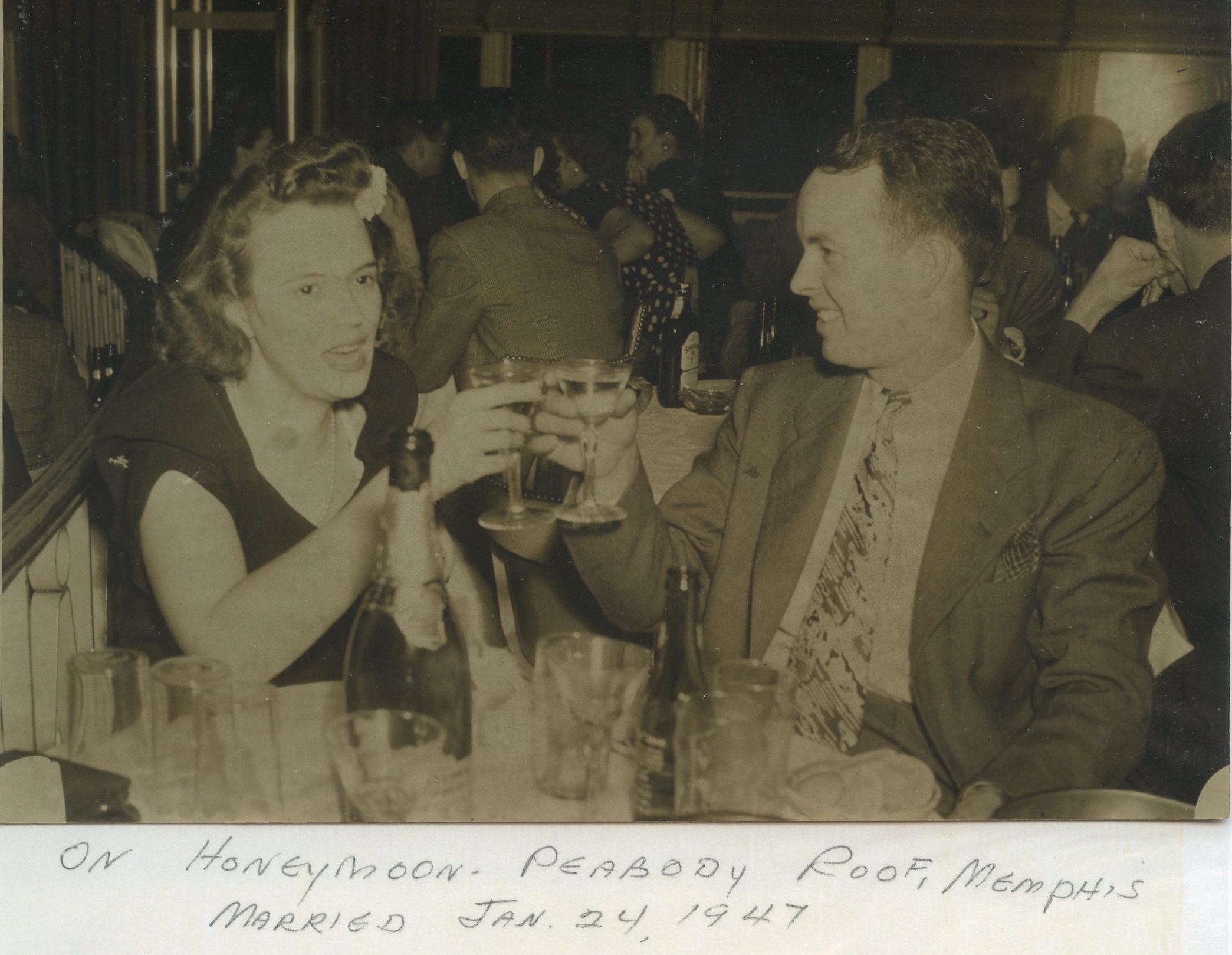
“After having cake and other refreshments we headed to Memphis and the Peabody Hotel, where we were to spend our two day honeymoon.

Peabody Roof, January 24, 1947.

“I was married in a tan gabardine suit from Fountain’s and wore a wide brim brown hat and had a corsage of talisman roses. We went to the Peabody Roof on Saturday night with Leota, my friend from Jackson, and her husband Bill. On Sunday afternoon we left for Oxford so that Russell could be back on the job Monday morning. Our honeymoon was not very glamorous as I followed him around on his sales route Monday and Tuesday before returning to Greenwood.”


In a box upstairs, I have that tan gabardine suit. And the brown hat. And the marriage license. And a faded Peabody Hotel receipt for two nights, January 24 and 25, $6.00 per night. Those are priceless. But nothing to compare with the example these two set for Cathy and me. If we’ve had long, happy marriages (and we have, 38 years for hers, 32 for mine), that’s in no small measure due to the standard Sara and Russell set for us. They were just as devoted to each other in 1992 as they were in those pictures above. Now there’s a gift.

Posted in Uncategorized | Leave a comment

The Best Years of Our Lives

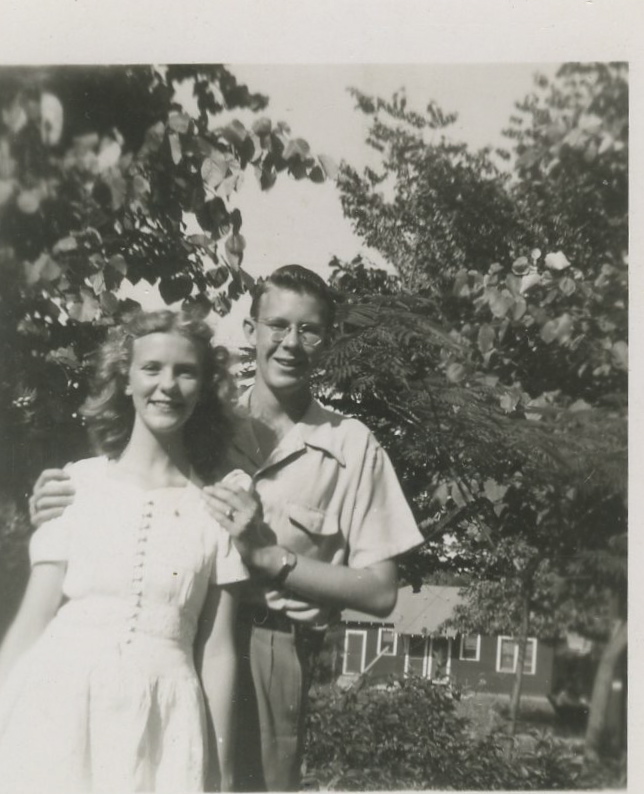
Sara and Russell, probably on the day he returned to Greenwood from the army.

“I met Russell in Jackson in September after he had been discharged at Camp Shelby, the same spot where he had been inducted. We came home on Sunday afternoon, and Mama and Big had fixed everything they thought he would like for his supper. He was almost in a daze over getting home at last and had a terrible headache.

“Pretty soon G.D. and Helen and Birch [Russell’s oldest brother and sister-in-law and their son] and Auntie (his stepmother) arrived. His Daddy had died earlier that year while he was in the thick of the fighting. He did not learn of his death until about a week later when he got a letter from Bailey [another of Russell’s brothers]. The cablegram which was sent never caught up with him. His father had a heart condition and died in Cleveland. Russell really had no home to go to since Auntie was teaching at a little country school near Cleveland and they had broken up housekeeping after his Daddy’s death, so he went to Cleveland and stayed with G.D. and Helen and spent a lot of time at our house.

“He began looking for a job, but with all the boys returning, jobs were pretty scarce at that time, so he helped G.D. in the furniture store where he worked while he looked. Finally, in December, he was offered a job with H.J.Heinz Company as a salesman working out of Clarksdale with a beginning salary of $50 a week.

A big part of life in the Criss family

He had bought a second-hand car but after going to work bought his first new car, a gray Plymouth. He had to work from Monday through Saturday morning, so I would only see him on the weekends. He wanted to marry and move me to Clarksdale, and we went so far as to find a room in a nice home, but the more I thought about it, I did not want to leave Greenwood and my job, at least until he was more settled.

“We had a good time on the weekends and even went to New Orleans to see his Captain, Harry Chalstrom and his wife, Rubye. She was a wonderful tour guide for us, and we saw things in New Orleans that we would have missed if they had not shown us around so.”

Ok, if you’ve been holding your breath since Sara turned down Russell’s 1942 marriage proposal at the drive-in, you can relax now. She waited for him. Despite an avalanche of cute, eligible, dashing young aviators who landed right on her Chamber of Commerce doorstep, she waited for him. Despite days and sometimes weeks with no word from him and no letter and no way to know if any of the 45th Division’s men would ever cross the Atlantic for home again, she waited for him. Because in spite of his limited job prospects and lack of a social pedigree, he was worth waiting for. During their brief months before the war took over their lives, she had seen something in Russell that was safe and dependable and solid. And he never changed, through all the years that followed. A good man is hard to find, but Sara did it. Lucky for her. Lucky for me. Lucky for the whole Evans family.

Ed. note: Sara’s memories of this time always bring to mind one of Hollywood’s best efforts, an often overlooked Academy Award winner, The Best Years of Our Lives. Myrna Loy should have walked off with the Best Actress statue that year, just for the scene where Frederic March walks in after years overseas, surprising her. It’s a jewel of a movie. 

Posted in Uncategorized | Leave a comment

Tomorrow, When the World is Free

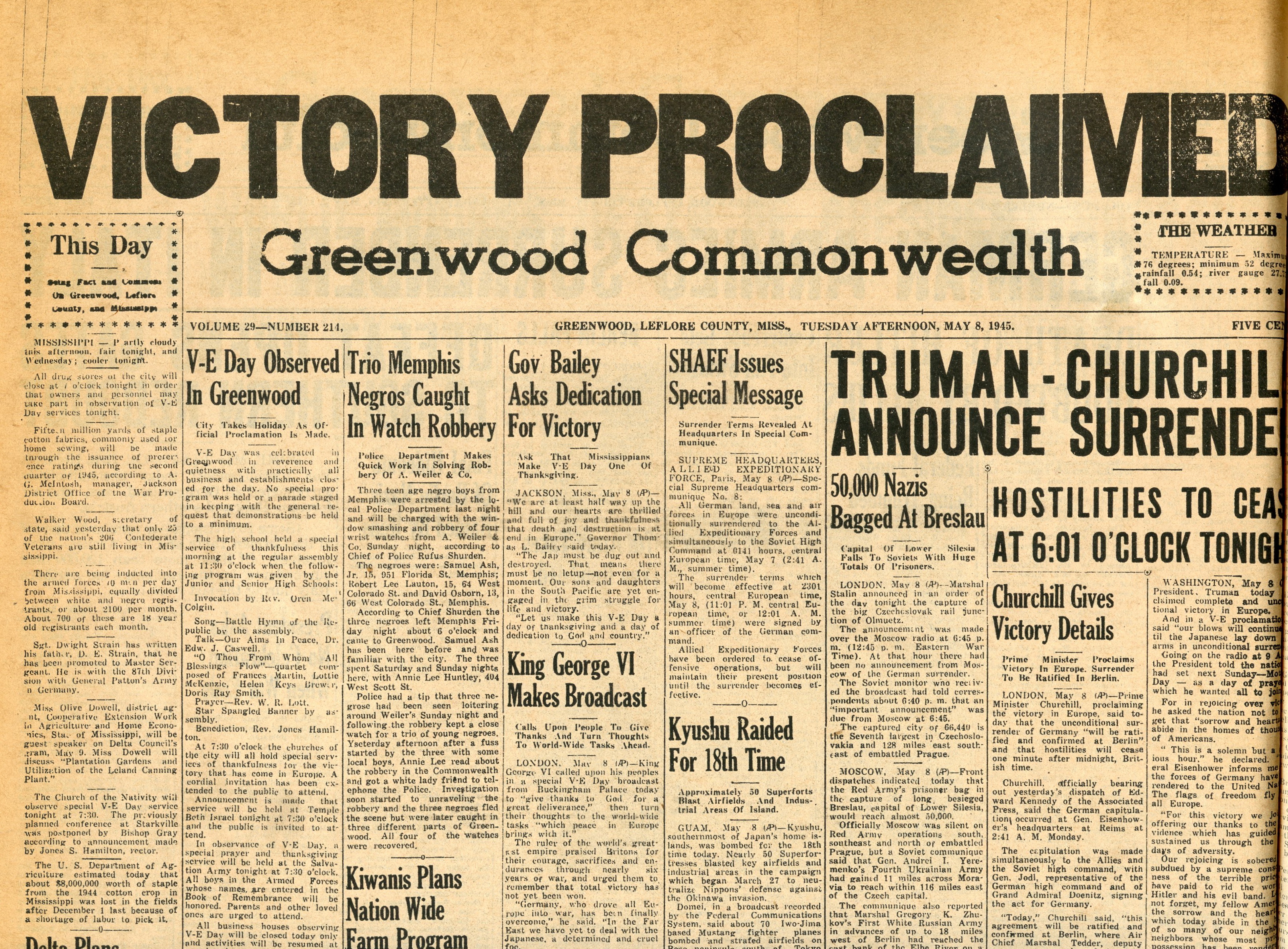
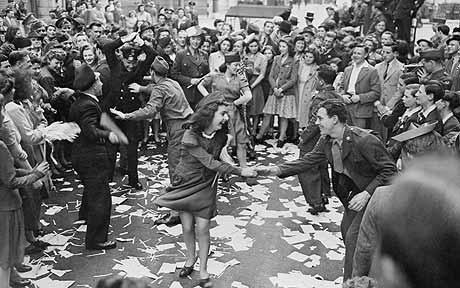
“The war in Europe was winding down and it looked like it would soon be over. On May 8, Victory in Europe was declared and we celebrated V-E Day. Botts [Blackstone], my boss, did not like to give holidays any time except the traditionally observed and did not see any reason for businesses to close or people to take off. The churches were having services that day and many places were closing, and I pouted until he finally told me to go on home.

“It was a joyous time and a sad time, as we thought of all the thousands who would not be coming home. Then there was the realization that the war in the Pacific was still going on, and no one knew how many of those coming home from Europe would be sent straight to the Pacific. We felt sure John [Stott] would since he had not been in Europe too long, and Russell kept hearing rumors that the 45th might go on to the Pacific. John did come home after the war in Europe was over and was sent on to the Pacific.

Sara on Easter, 1944

“Russell was counting his points which added up to a discharge and sweating it out in Europe waiting to come home, but the wait stretched out until September. Everyone at home was gearing up for the return of the boys and looking forward to peace time and hoping the Pacific war was also coming to an end. Then in August President Truman announced that the atomic bomb had been dropped on Hiroshima and Nagasaki and that the world was at peace. The Commercial Appeal ran huge black headlines, ‘World at Peace,’ and people everywhere went wild celebrating in the cities. It was still hard to believe that after hearing about war since it started in Europe in 1939 we could now say that it was all over.”

Posted in Uncategorized | Leave a comment

Leadership Lost

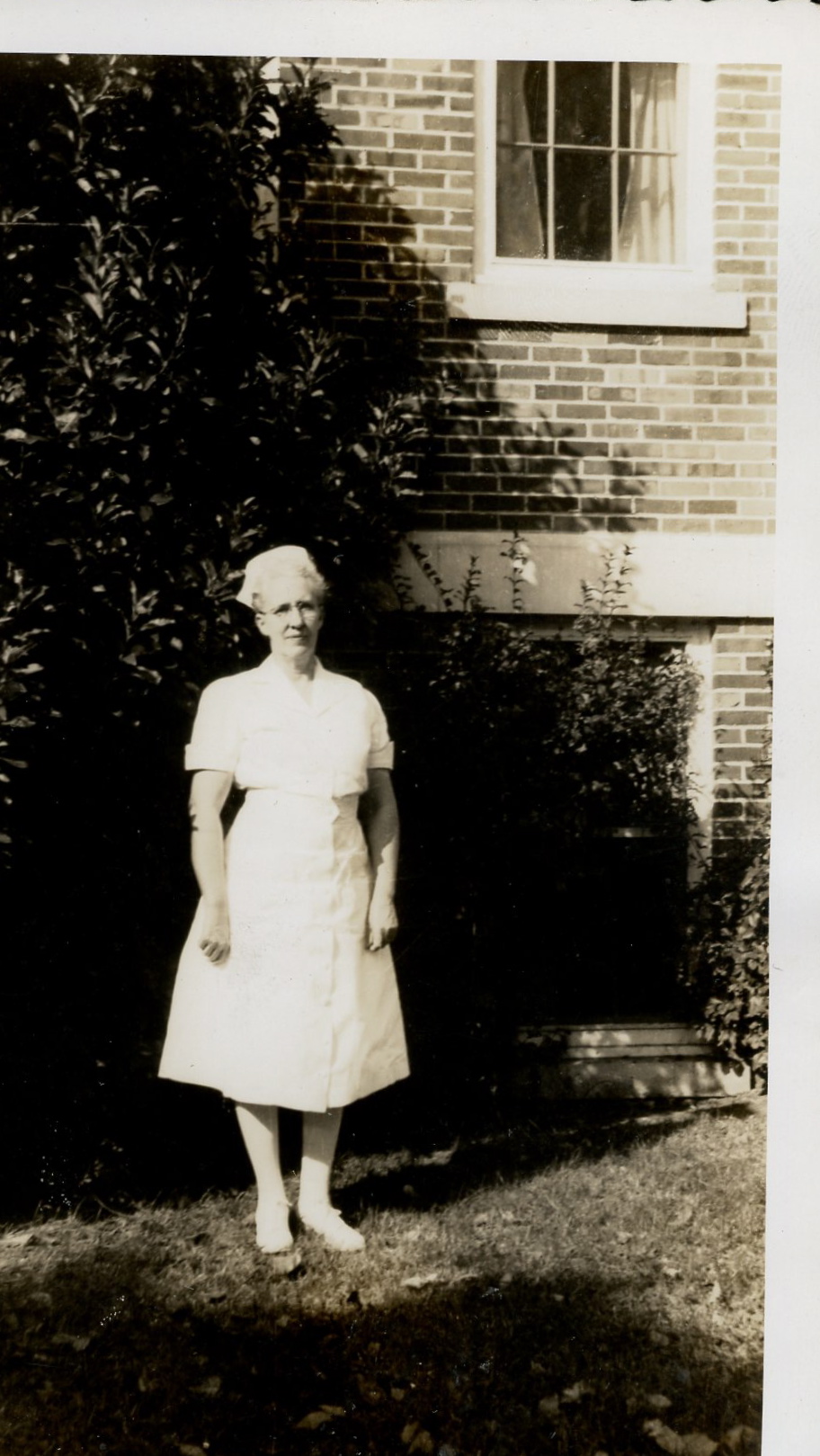
“Big, who had been a nurse before her children were born, went back to her profession when the war started and there was a shortage of nurses, since many had joined the Army Nurse Corps. She did volunteer work at the hospital and studied to bring herself up to date before she started to work for pay. Everyone said she was one of the best and most dedicated nurses at the hospital, and she was very much in demand as a private duty nurse. She nursed for a good many years after the war ended.

"Big" (Olive West Stott), in front of the old Greenwood Leflore Hospital, 1940s.

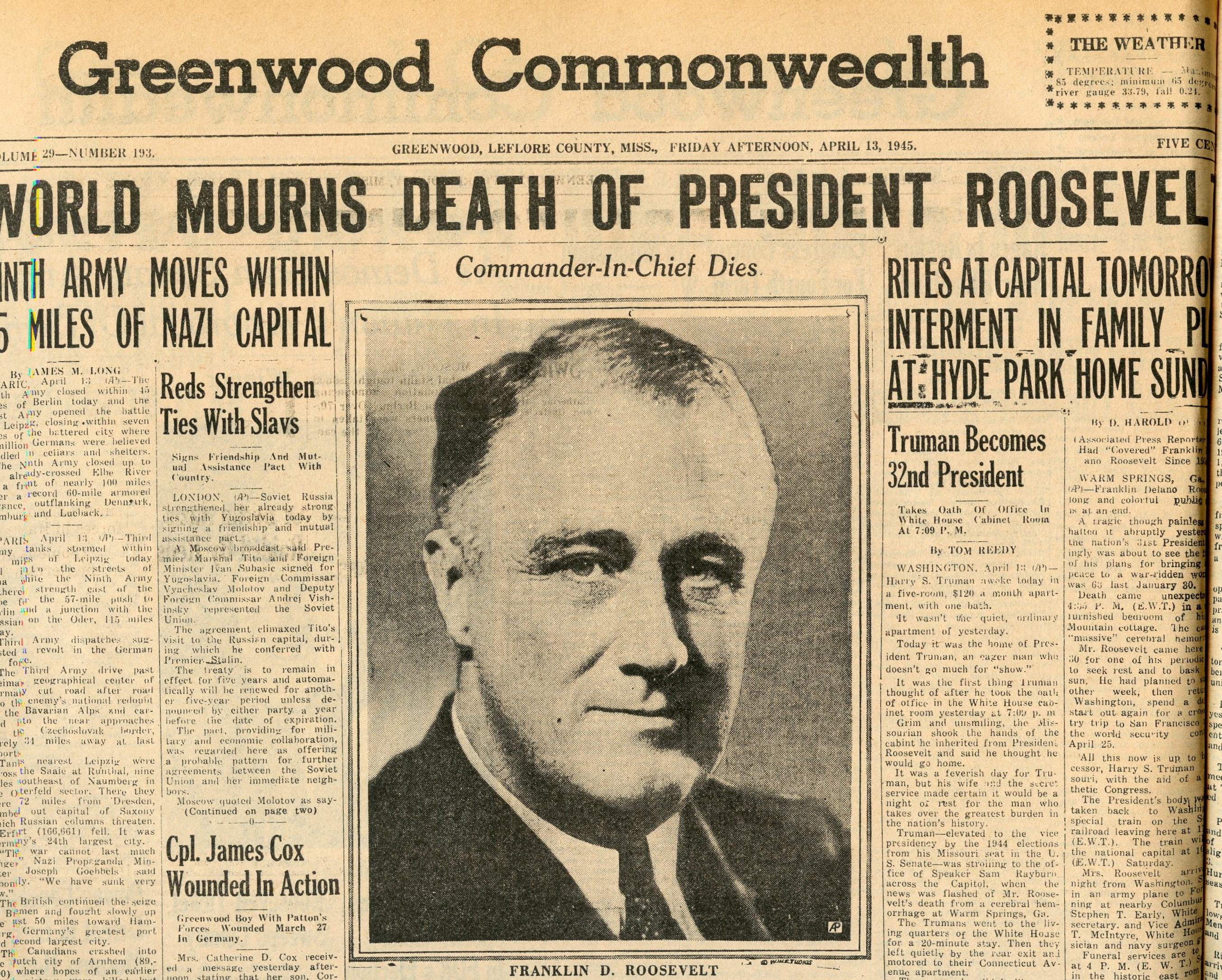
“On April 12, 1945, I left the Chamber of Commerce to go by the post office on my way home at five o’clock. I made several trips a day to the post office, which was right across the alley from City Hall and checked Box 575 to see if I had any mail from Russell. A lady at one of the windows in the post office asked me if I knew that President Roosevelt had just died in Warm Springs, Georgia. I had to wipe the tears from my eyes, and everyone else seemed to feel the same way. He was in his fourth term of office, and since he had been president since I was eleven years old, I could not imagine how the country could operate without him, especially since the war in both Europe and the Pacific was still going on.

Roosevelt Memorial, Washington D.C.

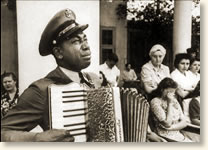
“We stayed close by the radio for several days as the commentators described the train going to Washington and then to Hyde Park, New York, with thousands of people lining the tracks all the way, and the blind accordion player playing ‘Going Home.'”

Graham Jackson, the blind accordion player in Warm Springs, Georgia

“I have never heard that song since that I have not thought of those sad days. As the years have passed we have come to question some of the things that he did while in office, but I will always think for those times he was the leader we needed.”


Sara loved politics and found politicians fascinating, if often disturbing. She followed most of the conservative South into the Republican camp during the 1960s, and I will always believe that the 2008 election accelerated her decline down a path into a world she no longer recognized. And when you look at those pictures of Franklin Delano Roosevelt and compare his demeanor and grit to the current crop of 2012 hopefuls, you can understand Sara’s concerns for her country.

Posted in Uncategorized | Leave a comment