Play Ball!

1938 Greenwood Bulldogs

“On September 13, 1936 I wrote in my diary, ‘Tiny left today for Ole Miss. It will be lonesome without her but will be starting to school tomorrow anyway.’ We began having a few dates that year and boys were our main concern. High school was a lot different from Junior High, and we especially liked sitting in the study hall with the football players. I had a crush on a different one every week. We went to our first football games on the old football field next to Davis School. Of course, I had no idea what the game was all about but it was fun getting with the crowd, and lots of boys from the little towns would come to the games.

“We walked to and from the games, just as we did to recitals and other events at the High School auditorium. It was considered perfectly safe on the street even at ten or eleven o’clock at night. The Paramount was the gathering place for everyone, and we went every time the show changed.
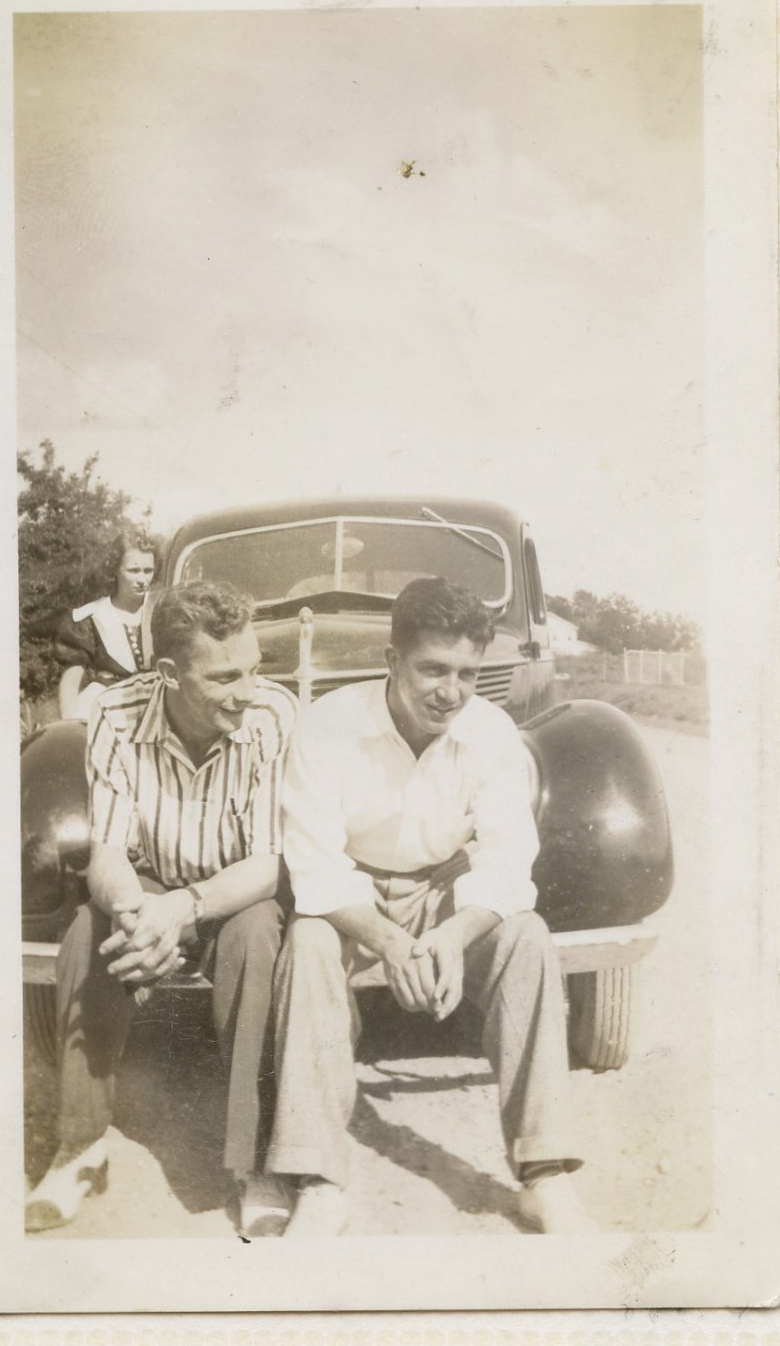
George Patton and Woody Combs, Greenwood Dodgers; Sara in the background.

“Every spring the baseball players would arrive in town. Greenwood’s team was in the Cotton States League and was a farm team for the Brooklyn Dodgers. Some of them went on to the big leagues from here. There were always some cute boys coming in, and a lot of them stayed down the street from us at Mrs. Bilello’s boarding house.
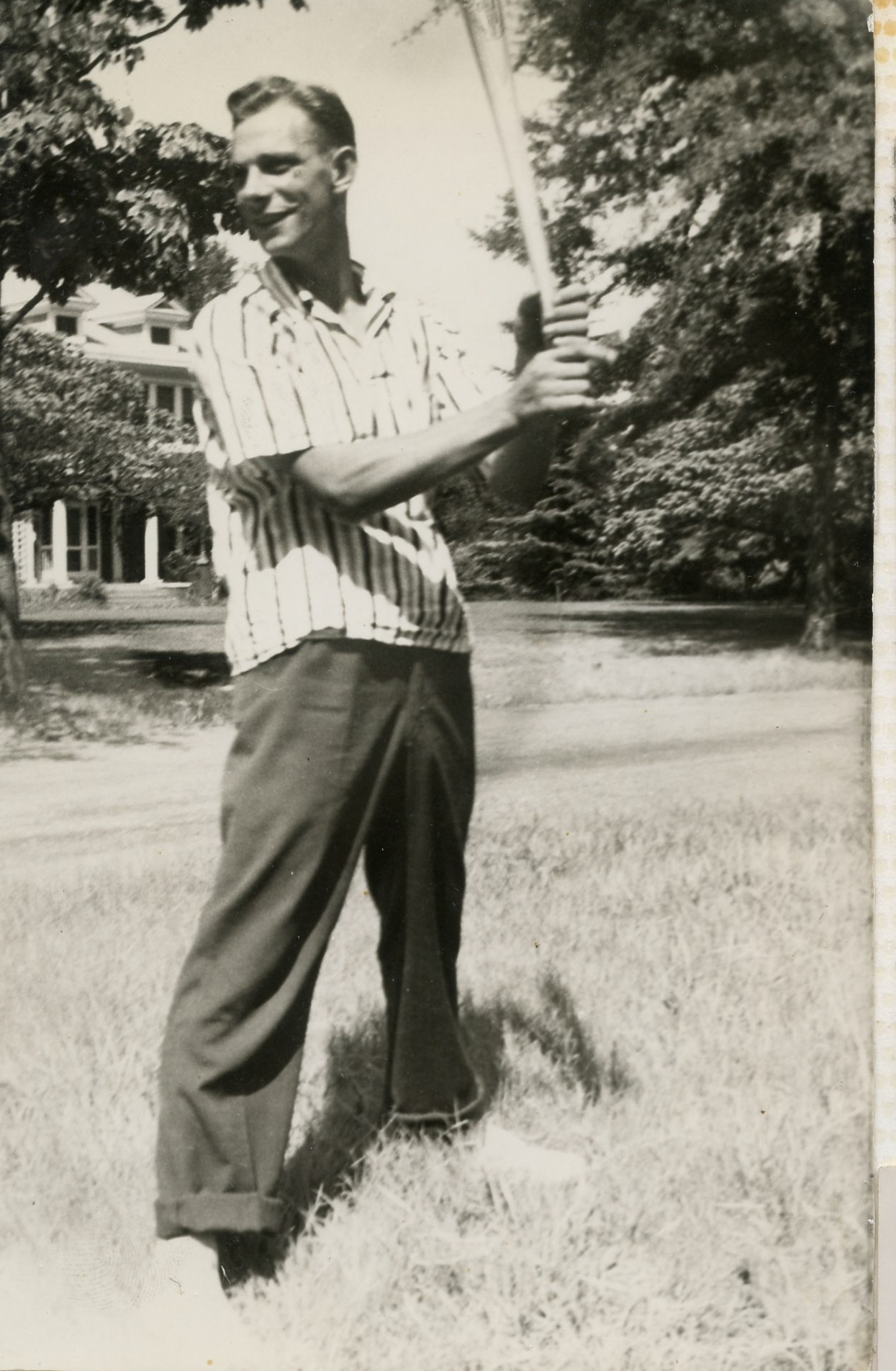
George Patton, catcher, who seems to have been Sara's favorite. I'm not sure she even knew what exactly it was that a catcher caught.

“My friend Toodles Schear (later married to Sol Kantor) and I had seen some of them hanging around on Howard Street, and we wanted to meet them even though we knew our mothers would not let us date them. We knew that some of them had rooms at Spot Pettey’s house, so we went there one night pretending to look for Spot. The two ballplayers, named Hubbell and Anderson, asked us to give them a ride to town in Toodles’ car. We did, but we made them lie down on the floor in the back so that no one would see us and tell our mothers. I’m sure they had a good laugh about silly little high school sophomores. We started going to the ballgames but it was another year before we were allowed to date any of them.”
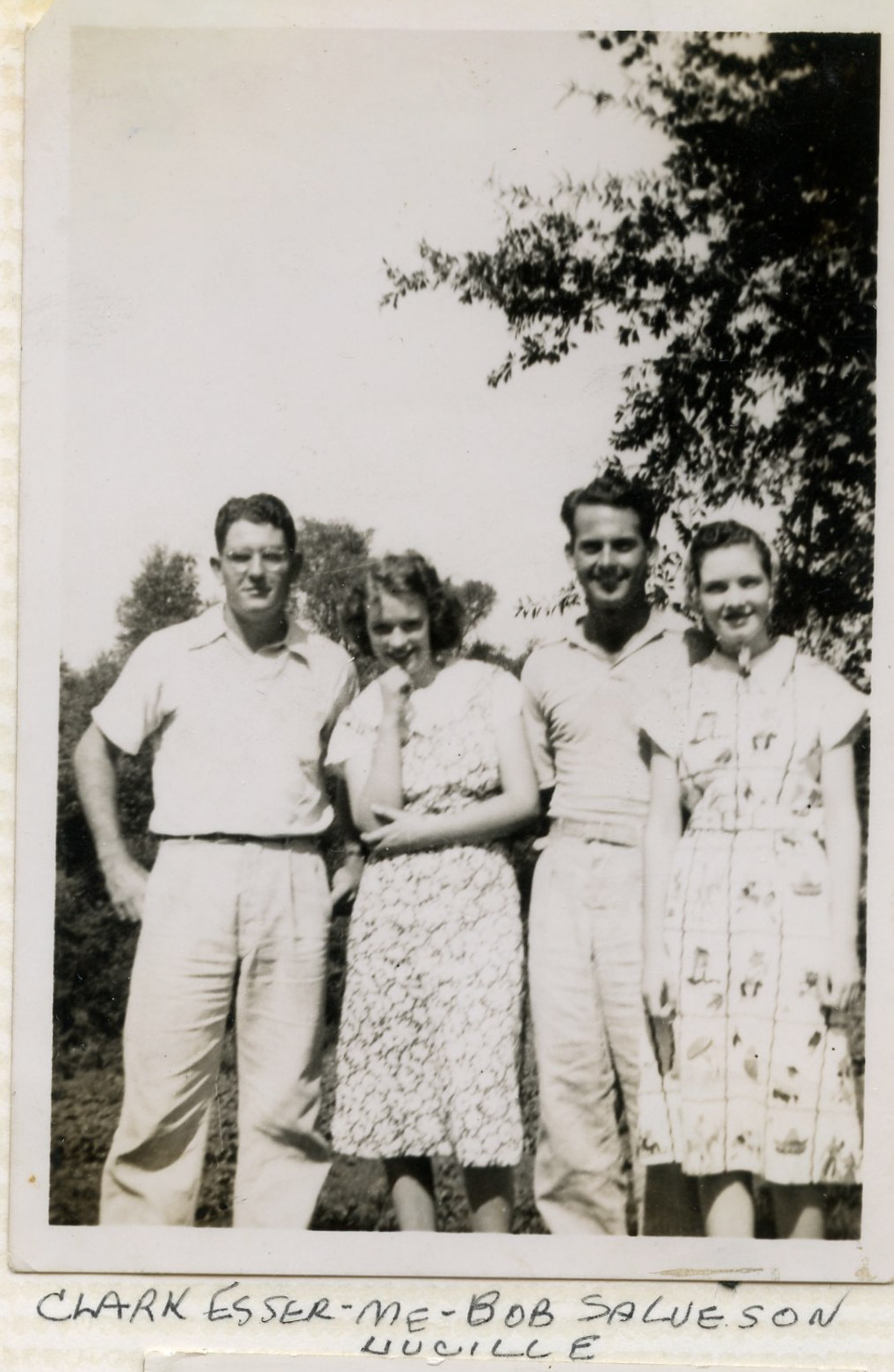
Clark Esser, Sara, Bob Salveson, Lucille McAlexander
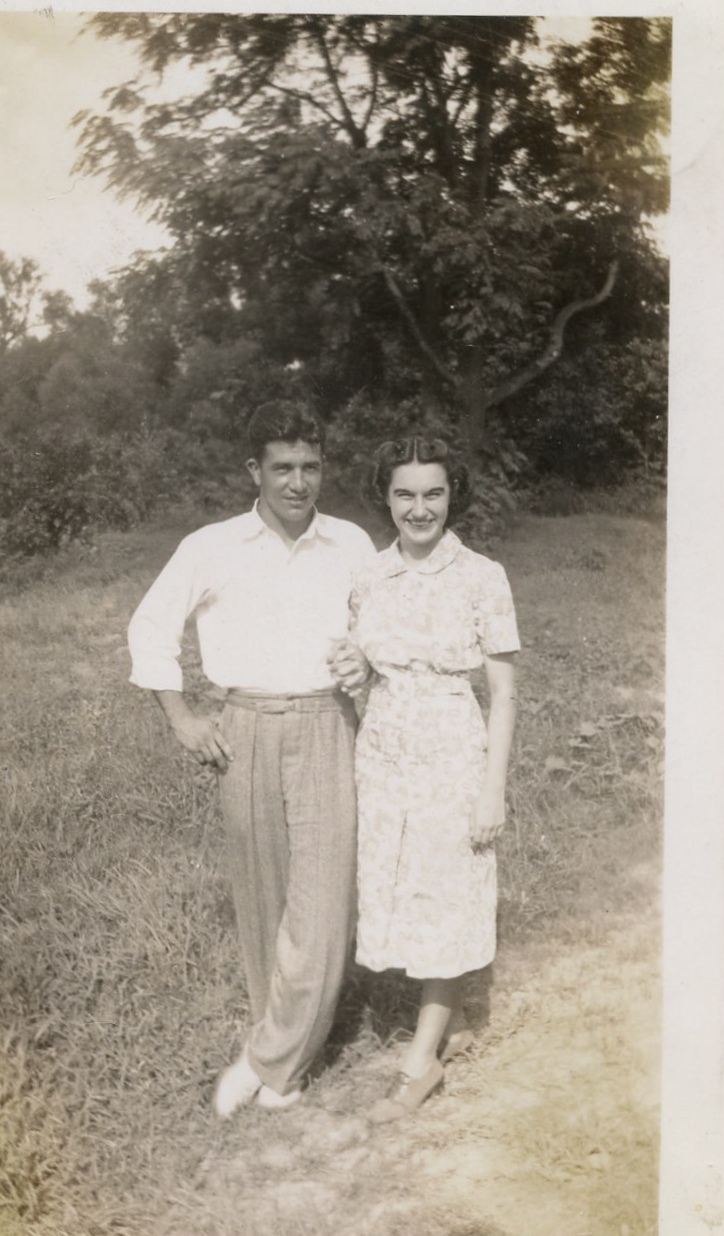
Marion ("Mack") Standifer with Woody Combs
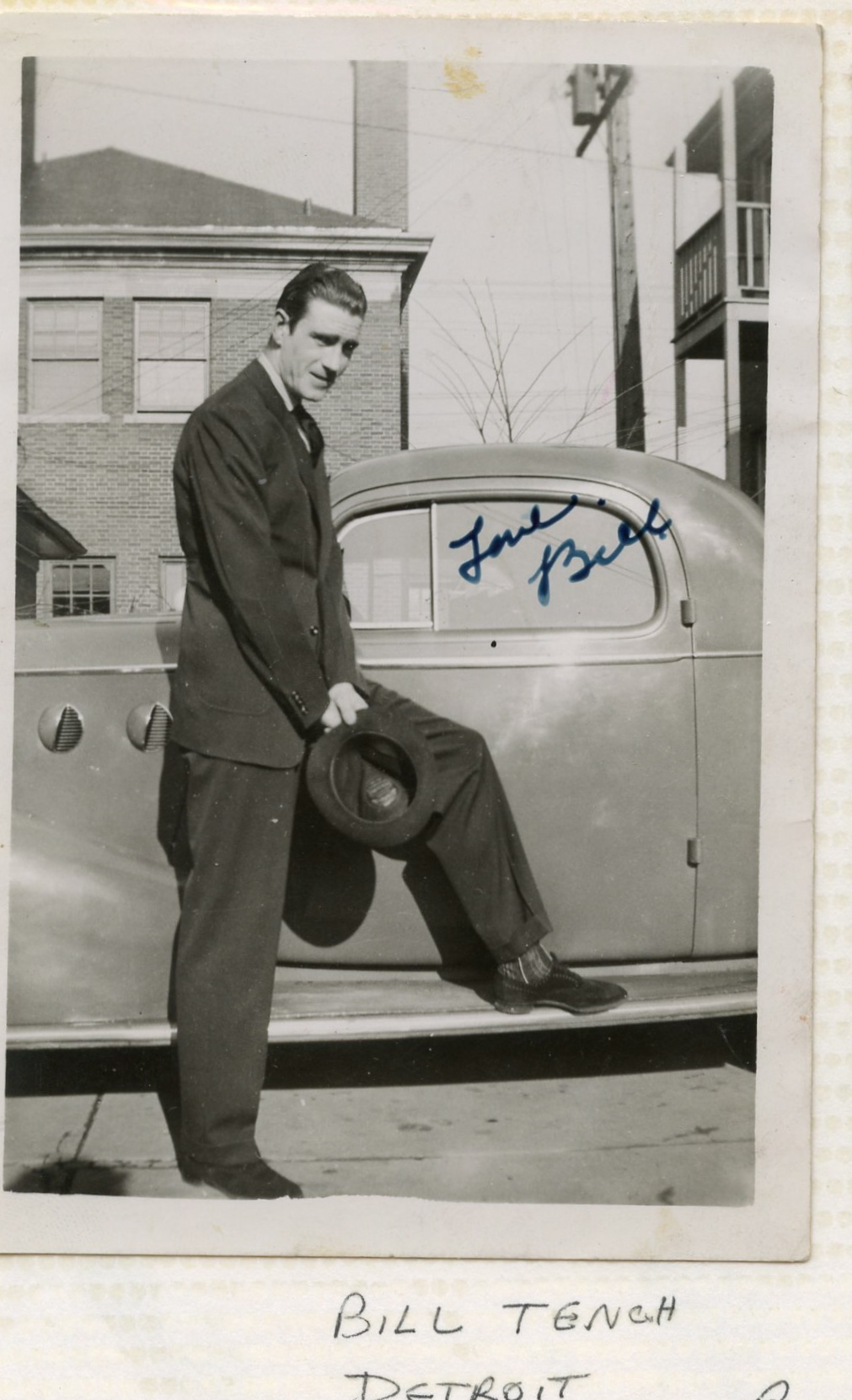
Bill Tench, pitcher for the Dodgers

Sara’s “Boys of Summer” have no plaques at Cooperstown, and I’ve only found note of one who even made it to the majors. Her friend George Patton played for the Philadelphia Athletics (later Kansas City and now Oakland) for two short months in the summer of 1935, batting .300 with 2 RBIs. So by the time he was squatting behind the plate for the Greenwood Dodgers, he was 26 years old and sliding back down the professional baseball ladder. But doesn’t he look like he’s still having fun, waving that bat in some Greenwood front yard? Maybe the hot summers in podunk Southern towns were just the ticket for this young man, and I like to think that he told his Pennsylvania grandchildren about that cute Sara Evans, the Mississippi high school girl he squired about in 1938 and never saw again.

Sara didn’t know a field goal from a sacrifice fly, but she was always a good sport (no pun intended) about the baseball and football obsessions that Daddy and I shared. One of her jobs with the Commercial Appeal was providing a call-in line for high school football scores each Fall Friday night, and those evenings where we all sat at the kitchen table, answering one phone call after another from Greenville and New Albany and New Hope and Duck Hill and a hundred other little towns remain in my memory as some of our best times. When my son, Jim, played for the Tupelo Golden Wave, her first question every Saturday morning was, “Did Jimbo score a touchdown?” I never quite got it across to her that centers don’t carry the ball and fullbacks mainly block, but she never lost hope. If she had seen the size of those South Panola boys he was up against, she would have had a stroke.

Ed. note: Thanks to the wonders of the internet, we can know a bit about the careers of those handsome young men pictures above. George Patton was born in 1912 in Cornwall, Pennsylvania, had just a few weeks in the majors and spent a few seasons bouncing around the minors; 1938 seems to have been his last go-round and he was traded to Anniston and Mobile that summer.

Bill Tench, a right-handed pitcher was born in 1908 (tell me he wasn’t dating high school girls!) and never made it out of the low minors. 1938 was his last season.

Woody Combs, a left-handed fielder, was born in 1915 and bounced around the minor leagues as a persistent .200s hitter from 1935 until 1939. He must have gone off to war and then returned for one more shot in 1947, when he had just 42 at-bats and batted .119. Guess it was time to go home then.

Clark Esser is the mystery man here. Baseballreference.com does not show him as ever playing for the Greenwood Dodgers. He was born in 1917 and played during the 1937 and 1938 seasons as a fielder, but no mention of Greenwood. Since his 1938 average at Kinston (?state) was .189, he may have just been on his way home and stopped by to visit some old teammates.

Bob Salveson was a gift from baseball to Greenwood. He was a California native, born in 1915, who arrived in Greenwood as a fielder for the Dodgers in 1938. He played for minor league teams in Greenville, Helena and Monroe, with (I presume) a military stint in between, before giving it up in 1946 at Leavenworth. Thank goodness, he married a Greenwood girl, Myrtie, and returned to the Delta, where he was Leflore County Tax Assessor and one of Sara’s dearest friends until his death in 2004.

Posted in Uncategorized | 8 Comments

Back to Jackson

Sara as the Statue of Liberty, Leota Taylor's front yard, Belhaven, 1936

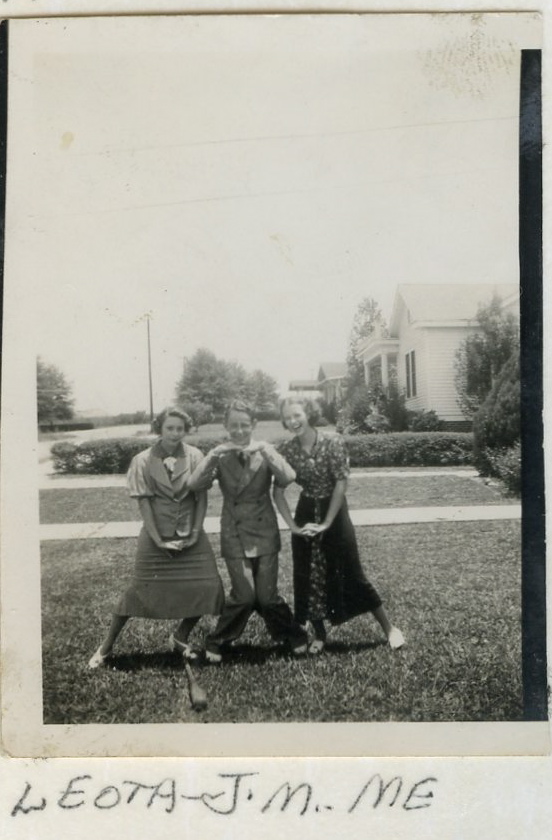
“Boys became a top priority that year [1936], and we soon learned that being a teenager could be both wonderful and terrible. Things seemed so important then and if you didn’t have a date on Friday night it was a disaster. The summer of 1936 I began to grow up. A friend I had known when I lived in Jackson, but really had not seen since that time, Leota, Taylor, invited me for a weekend in Jackson. I rode the Greyhound Bus on a Thursday and stayed until Monday and had one of the most fun times of my life. I was royally entertained with a dance (still couldn’t dance), a picnic, a luncheon and a picture show party.

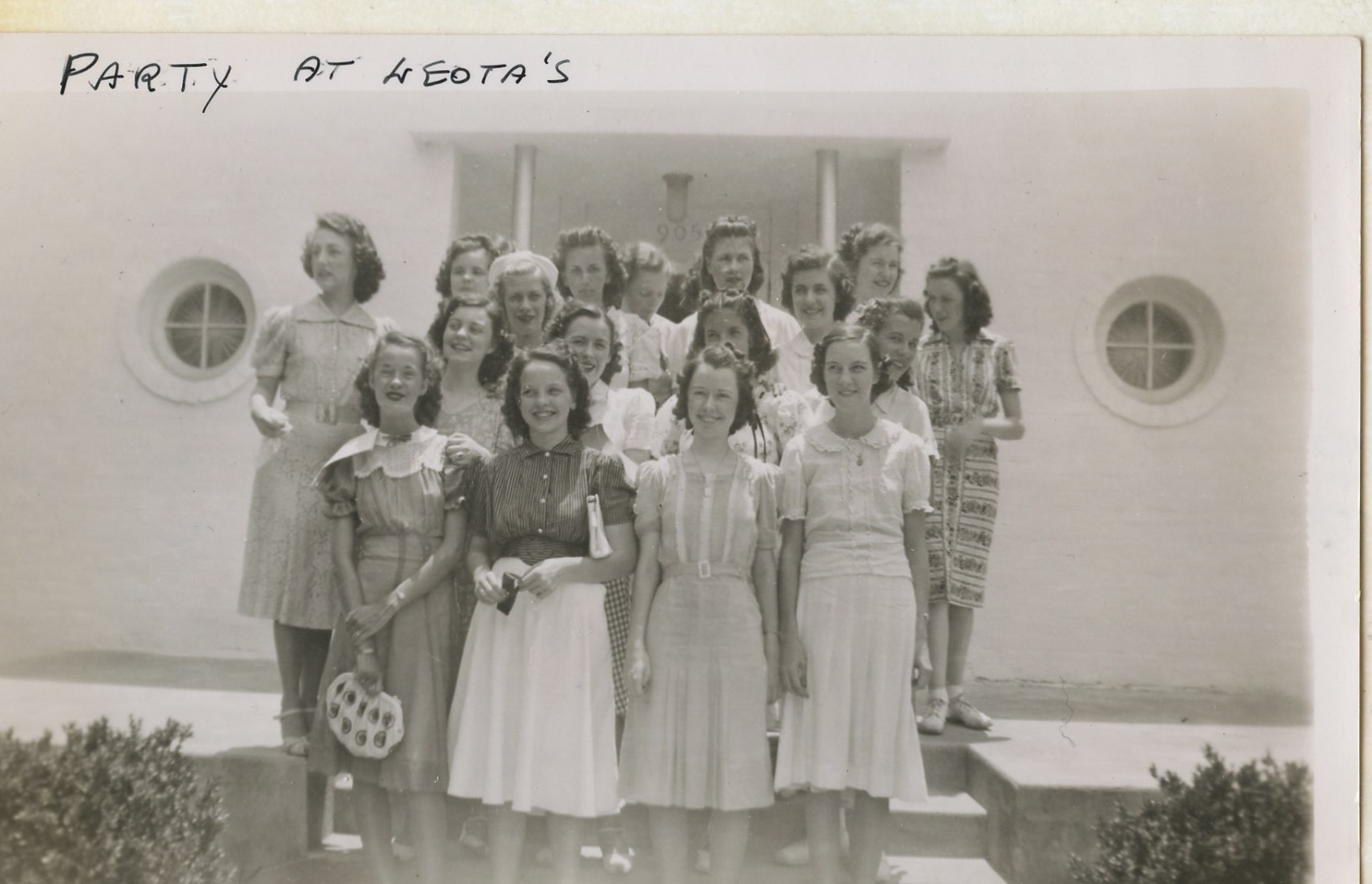
The party for Sara at Leota's house, 1936.

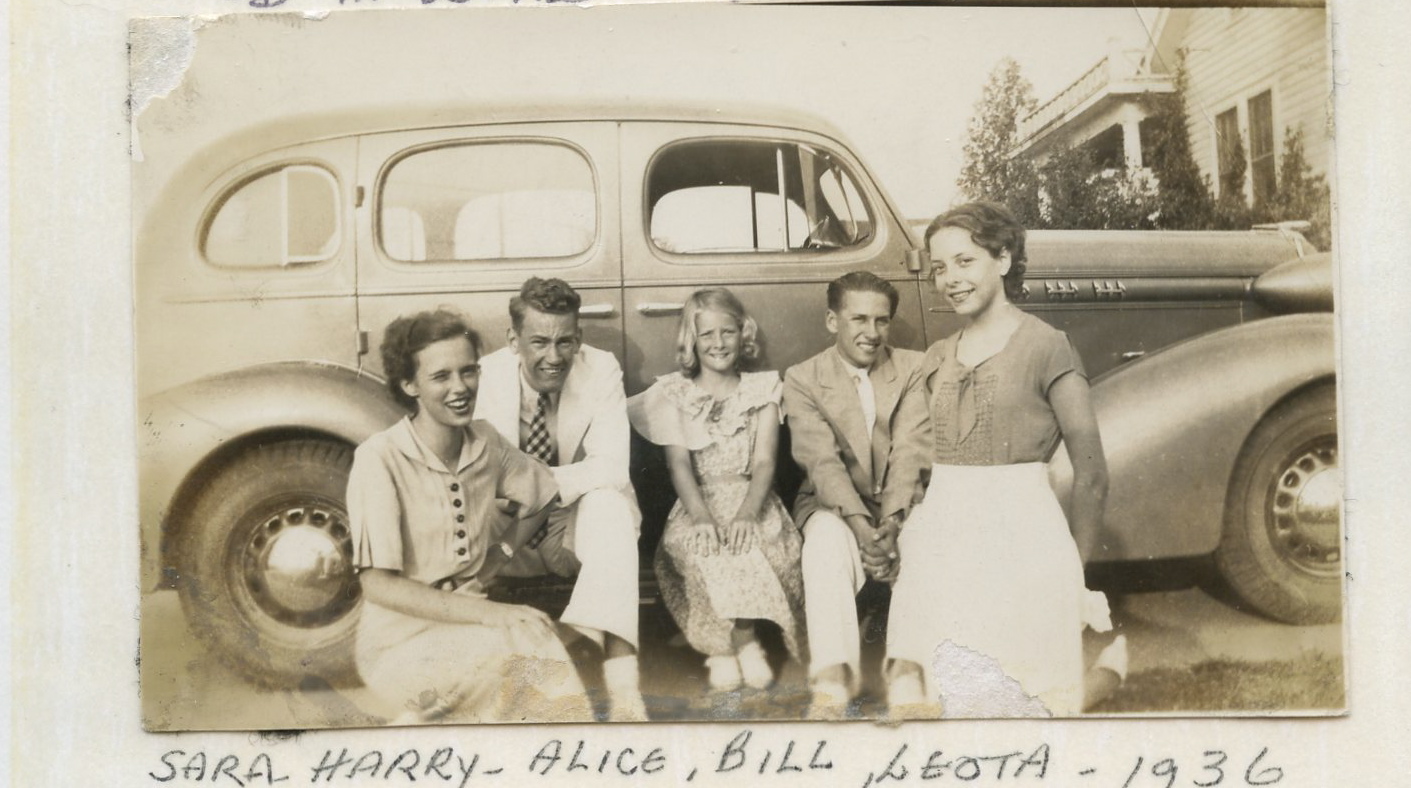
“I met two boys I really liked, both two years older than I, J.M.Weaver and Harry Holton. Leota had an older brother, Bill, and J.M. and Harry hung around the Taylor’s house a lot.

Leota Taylor, J.M.Weaver and Sara, 1936.

“A note from my diary reads: ‘June 13—another perfect day. Now it’s Harry Holton. All day picnic today. Harry was really nice to me. J.M. couldn’t come. Had date with J.M. tonite. We rode with Harry, Bill and Leota. We got to bed about 1 or 2 o’clock. After all that fun it was hard to come back home to a dull summer. J.M. and Harry were both killed in World War II.

Sara, Harry Holton, Alice Taylor, Bill Taylor, Leota Taylor

“In the fall when time for the state fair rolled around again I could hardly wait to go because all my Jackson friends said they would meet the train. There was a football game in Columbus and since most of my friends were in the band and would be going to Columbus I could not find anyone to go with me. That was a terrible disappointment. A little new girl in our class, Mary Chaney, really wanted to go  but I wouldn’t agree to that. Ironically, in later years, Mary met and married Ed Harness, an Air Force officer stationed at Greenwood Army Air Field, and who after the war became chairman of the board of Proctor and Gamble.”

Sara, Alice and J.M.

Sara’s little snapshots tell the story here better than I can. Just four years after her world was shattered in Jackson, an older, more outgoing and confident Sara sailed back into town for a weekend that she never forgot. Every fifteen-year-old should have such a time, when they feel like the belle of the ball and have exciting diary entries that they can treasure half-a-century later.

The house in the background with all the teenage girls has always fascinated me. I asked my son, Jim and his wife, Allison, to look for those odd portholes and slender columns when they might be driving around Belhaven. That very day Allison sent me an Iphone photo of Leota’s house, still standing on a quiet shaded street just off North State Street. Leota and Bill and Alice and probably most of the girls are long gone,  and one can only imagine the sorrow in that house when word came that J.M. and Harry were both lost in the war. They are so very alive and hopeful in these snapshots and, who knows, they might have left the future president of Proctor and Gamble in their dust. What a shame that they never got the chance.

Posted in Uncategorized | Leave a comment

Cruger Crushes

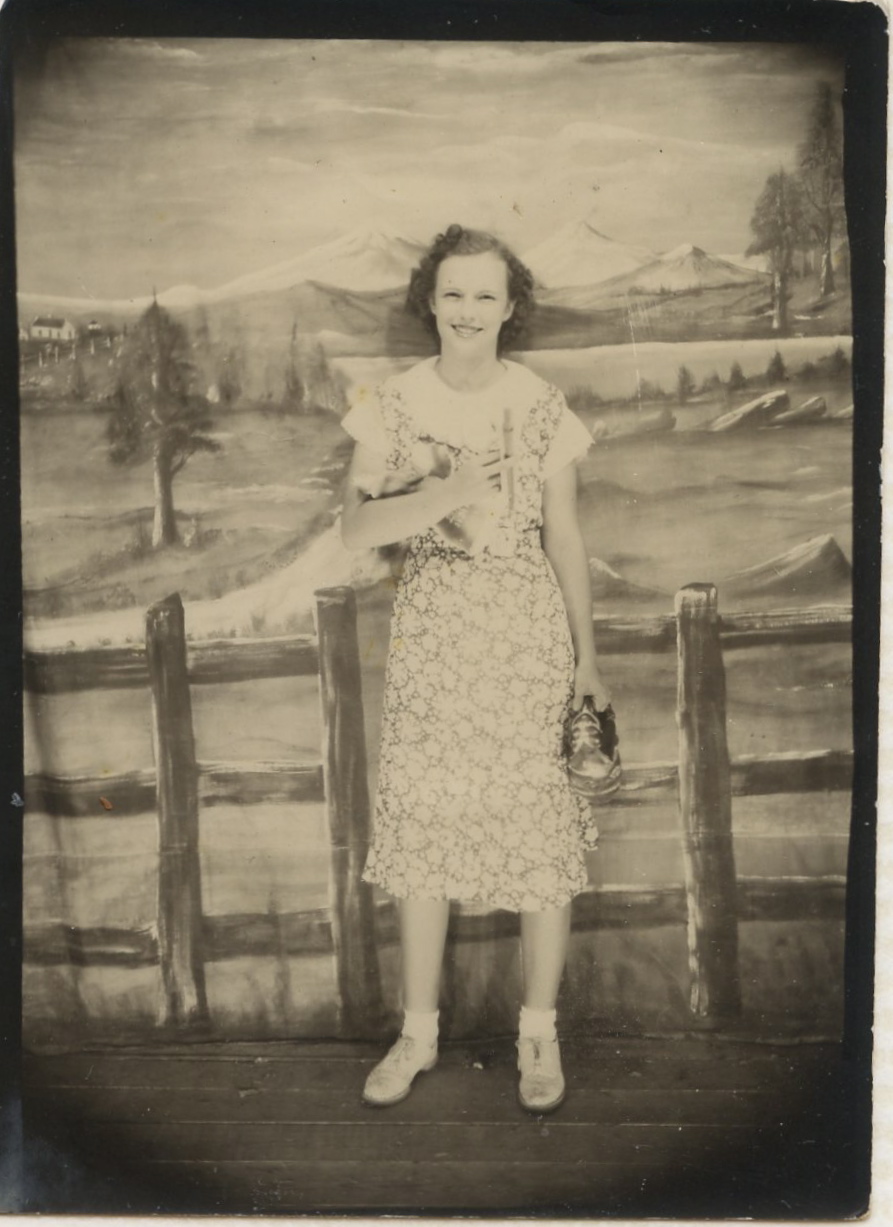
Sara at the State Fair, 1935.

“In the fall of 1935 some of my friends and I rode the train to Jackson to the state fair. You could make the round trip for $1.00 and at each little town along the way other boys and girls got on. We met some boys from Cruger, which is about fifteen miles from Greenwood. I began corresponding with a boy named Junior Griffin. He would call me long distance from Cruger, which was very exciting. In December he called and wanted to know if he and a friend, Shelby Parker, could come up to date me and a friend. I think I asked Lena White to date Shelby. That was my first real date and since Mama failed to tell me what time I had to be in, we just kept riding around until 12:30 a.m. She was frantic when I finally came in and from then on it was 11:00 on the dot.

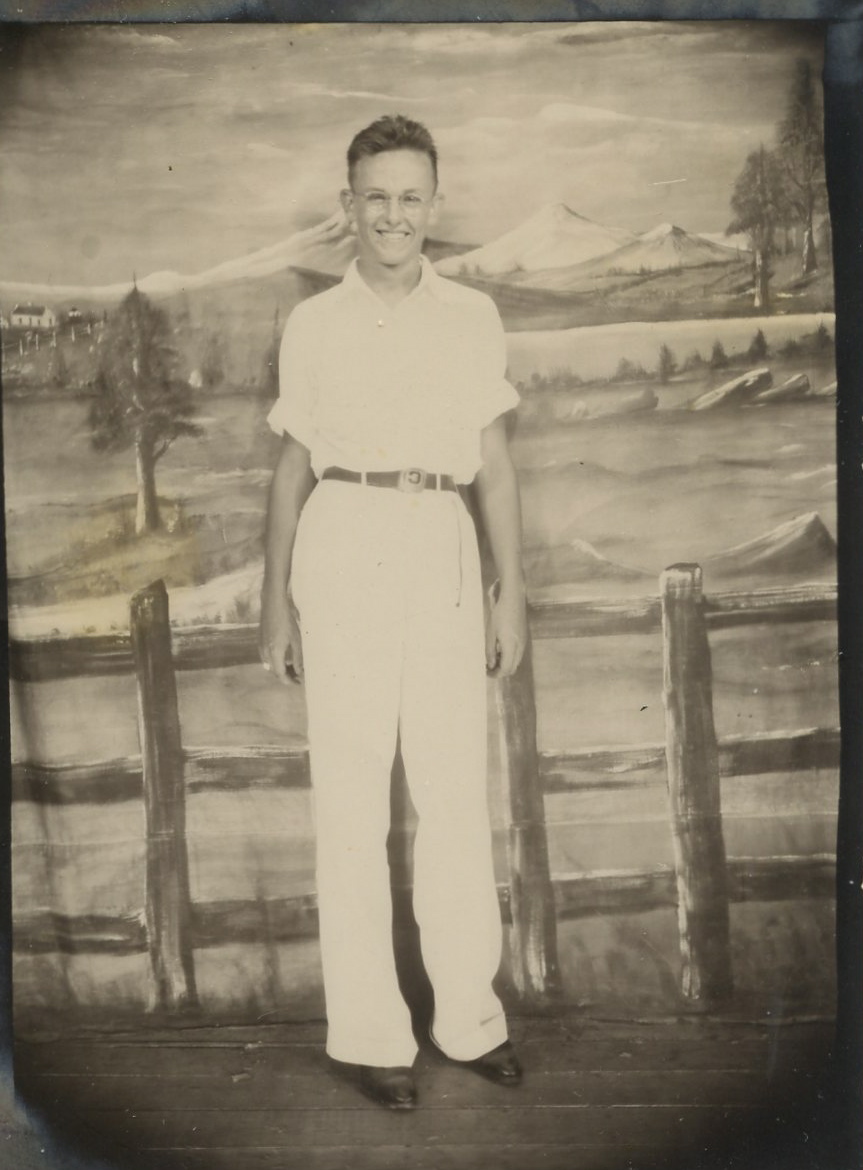
Junior Griffin at the State Fair, 1935.

“I dated Junior all that spring, we wrote regularly to each other, and he called a lot, and I thought I was really in love. Thinking back now on that skinny and not so handsome boy, I wonder why. He was a lot of fun though and always had plenty of money to spend and since his Daddy had the Chevrolet agency in Cruger he could always get a car and plenty of gas. He later married Hortense Spann, a friend of mine, and they lived down the block from us when we first built our house. He was later killed in an automobile accident.”

Personally, I think Junior was quite handsome in a fourteen-year-old sort of way. And who knew Cruger had a Chevrolet dealership? The wonders of Sara’s memoirs never cease.

Posted in Uncategorized | 2 Comments

Tiny

Tiny as a tot.

“It was different with Tiny. She was considered a beauty, and Mama I believe relived her own girlhood through Tiny. She was always so proud of Tiny being popular and going to all the dances and winning beauty contests. When Tiny graduated in 1936 and went to Ole Miss, Mama took her to Memphis to get a fur coat. She joined Chi Omega sorority and it was emphasized to us that this was certainly the best one on campus.

Tiny and Howard, circa 1919

“I was very proud of her and never thought about being jealous but in retrospect I realize that there was a great difference made in Tiny and the rest of us. Bama too showed a noticeable difference with Tiny. Mama really spoiled us all and loved us all very much, but still Tiny, her first born, was special.”

Tricia, Mamie, Sara, Jessie and Tiny, late 1940s.

Once the family moved in with the Stotts, there seem to be no photographs of Tiny. She would have been 14 and was probably beginning her social whirl around Greenwood. Then just four years later, she was gone, off to Ole Miss and marriage to B.J.Roberson. The images we do have show a woman of near-perfect beauty and grace, the ultimate Southern Belle of Minter City. I hope no one ever thought that was all there was to Tiny, though. She was, like all the Evans children, whip smart and deeply talented. And kind, if often a bit distant. Her paintings of scenes around Belle Chase Plantation should be hanging in a gallery somewhere, and her letters to her long-time penpal in England are an eloquent memorial to life in the Delta.

Sara says she was never jealous of her oldest sister, and then immediately qualifies that with the recognition that Jessie and Bama treated Tiny differently. Probably so and probably the norm for first-borns……There’s just something about the eldest. Tiny could still send Sara into a deep funk even when they were up in their ’80s, just by a little remark or an oversight of something totally inconsequential. But when Tiny slid into an irreversible dementia, Sara softened her criticisms and, I believe, realized what a gift this first girl had been to all the Evanses. We all miss her so much.

Posted in Uncategorized | Leave a comment

The Light Fantastic

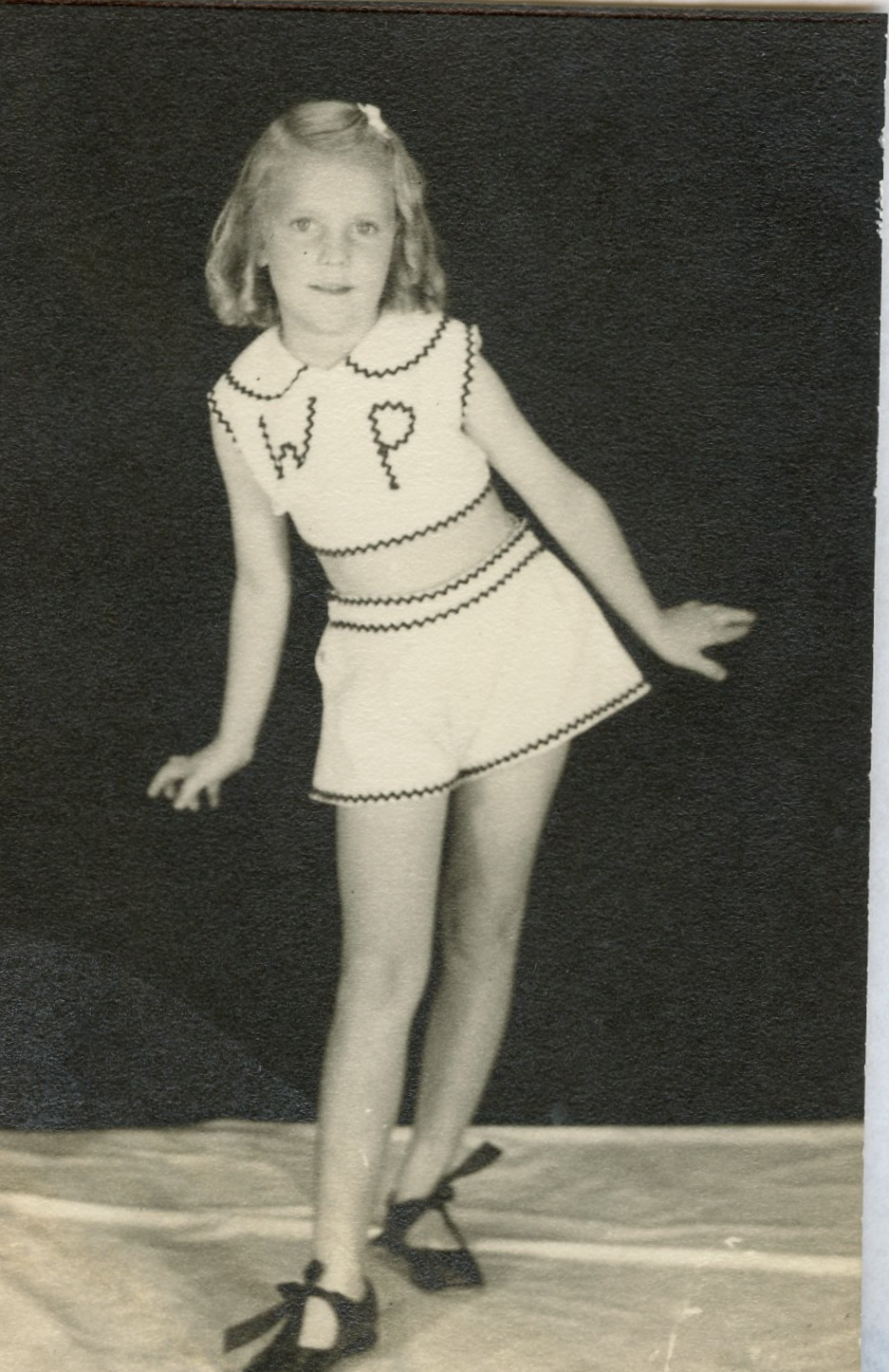
Tricia in her Whitford Price practice outfit.

“Tricia provided a lot of pleasure to both of our families during those years. When she was six years old she started taking dancing lessons from Whitford Price, a big blonde woman who turned out many dancers who later became well known such as John Butler, a noted choreographer. Whitford almost immediately decided that Tricia had talent and she danced on the stage for the first time in a recital at the Paramount Theatre, wearing a little black and white costume. From then on Mama became interested in Tricia’s dancing and made her many costumes for performances which were attended by the whole family.

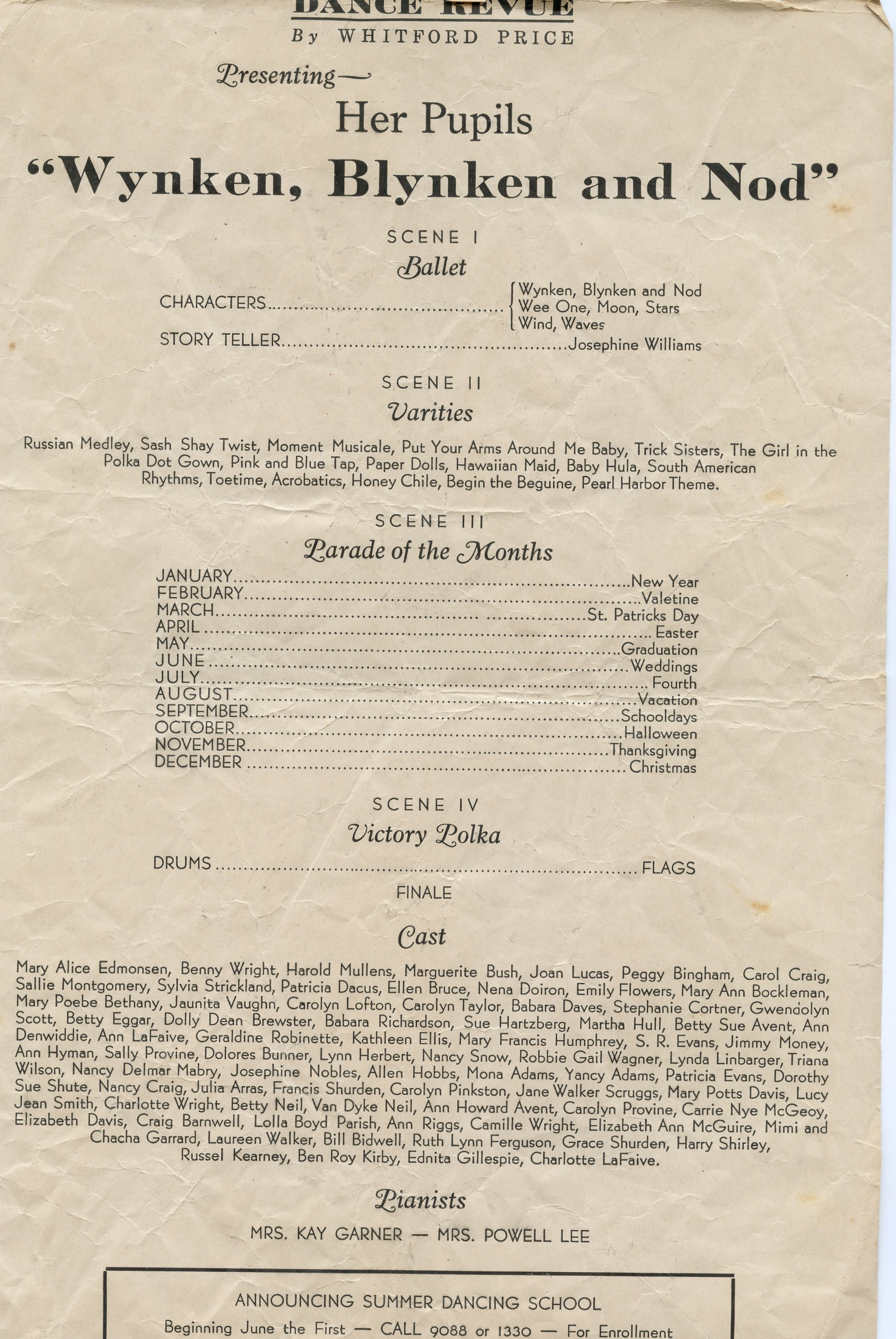
Whitford Price dance recital program. Lots of familiar names in small print.

“I, along with Mary and some of my friends, took ballroom dancing lessons from Whitford Price the year I was in ninth grade. John Butler was one of our partners but he didn’t do much for me. Most of my friends had started taking dancing lessons in the sixth grade before we moved back to Greenwood, because they started earlier here than they did in Jackson. Consequently, I always felt awkward even though I am sure they didn’t really know how to dance either. Mama was not the type to give you much encouragement that you could do things as well as anyone else. In fact, she tended to discourage you from learning to swim or dance or play tennis because she would say that the others already knew how.

“I remember wanting to go to a dance at the Country Club in eighth grade and she told me the others would know how to dance and I wouldn’t, so I didn’t go. I later regretted very much not having the courage to just go ahead like everyone else and try all of those things.”

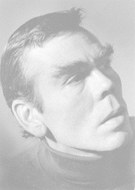
John Butler, who "didn't do much" for Sara as a dance partner.

It’s reassuring to know that there was some talent in our family that required coordination, as the Evanses are simply not noted for athletic ability or lightfootedness. And I’m certain John Butler was no more impressed with Sara than she was with him.

Ed. note: The following is taken from the Oxford Dictionary of Dance. John Butler was, in his time, a very big deal, and to think that it all started with Whitford Price.

Butler, John (b Greenwood, Miss., 29 Sept. 1918, d New York, 11 Sept. 1993). US dancer, choreographer, and ballet director. He studied at the Graham School and at the School of American Ballet. He danced with the Martha Graham company (1945-55), where he inherited some of Merce Cunningham’s roles, and appeared in musicals and on television. In 1944 he appeared on Broadway dancing the lead role of Dream Curly in Agnes de Mille’s Oklahoma! ballet. He founded his own company in 1955 (later renamed American Dance Theater), which toured Europe; it disbanded in 1961. He was best known as a choreographer, both prolific and well-travelled, and enjoyed a higher reputation in Europe than in the US. He was one of the first dancemakers to marry classical ballet and modern dance. He choreographed for Broadway, New York City Opera, Alvin Ailey American Dance Theater, Australian Ballet, American Ballet Theatre, Batsheva Dance Company, Harkness Ballet, Metropolitan Opera, New York City Ballet, Netherlands Dance Theatre, Paris Opera Ballet, Pennsylvania Ballet, and the Royal Winnipeg Ballet. He choreographed the world premiere of Menotti’s The Unicorn, the Gorgon and the Manticore (1956), later taken into the repertoire of New York City Ballet, and frequently collaborated with Menotti. He made Carmina Burana for New York City Opera in 1959, staging it for Netherlands Dance Theatre in 1962, and for Pennsylvania Ballet in 1966. Carmina Burana became his most popular work, produced by more than 30 companies. After Eden (mus. Lee Hoiby, 1967), a pas de deux created for the Harkness Ballet, also achieved widespread success. Portrait of Billie, based on the life of the blues singer Billie Holiday, was choreographed for Carmen de Lavallade and himself in 1960 and premiered at the Newport Jazz Festival. It was taken into the repertoire of the Ailey company in 1974. At the Spoleto Festival in 1975 he choreographed Medea for Fracci and Baryshnikov, the first new work created for the Russian following his defection to the West; Medea was taken into the ABT repertoire in 1976. He was dance director for Menotti’s annual Spoleto festival, and choreographed Menotti’s television opera, Amahl and the Night Visitors, in 1951. He also choreographed for television and for ice shows. A noted teacher, he counted Lar Lubovitch and Glen Tetley among his pupils. 

Read more: http://www.answers.com/topic/john-butler#ixzz1V9e4TJmM

Posted in Uncategorized | Leave a comment

Dangerous Doctors

Physicians and Surgeons Building, West Washington Street. Photo courtesy of Mary Rose Carter.

“In about 1934 there was a famous murder trial in Greenwood which made all the newspaper and tabloids as well as the detective magazines. A woman pediatrician, Dr. Ruth Dean, was charged with poisoning a prominent physician, Dr. Preston Kennedy, after he had jilted her. She was supposed to have lured him down to the Physicians and Surgeons Building which he had built a few years before. They charged her with giving him a drink into which she had put bichloride of mercury. The event took place around midnight. He and his wife were separated, and he had been having an affair with Dr. Dean.

Dr. Preston Kennedy.

“He took her home on Carrollton Avenue near the intersection of Avenue I, and witnesses reported he got out of his car and vomited. The next day while operating on a local boy, Leslie Rogers, he fainted and was rushed to Jackson, where he died several days later. Before he died he told his brother, Dr. Henry Kennedy, a Greenwood dentist, that she [Dr. Dean] had poisoned him.

Dr. Ruth Dean

“The trial went on for days, and women would go early every morning to the Court House, taking their lunch and their knitting so that they would not have to miss a word of the testimony. Mama took us one morning so that we could see what a trial was like. Dr. Dickens was testifying that day, and I am sure we were just an excuse. Dr. Dean was sentenced to life in prison but shortly afterwards was pardoned by the governor and came back to Greenwood.”

Sara was a sucker for juicy gossip and true scandal, and she remained fascinated by this tragedy all her days. She would drag the sordid details out again whenever we went to the Physicians and Surgeons Building to visit our pediatrician, Dr. Carl Bernet. Imagine for us the prospect of Dr. Bernet’s ubiquitous shot needles overlaid with images of a Mad Poisoner loose in that very building. It’s a wonder we ever admitted to feeling bad.

For the complete Greenwood Commonwealth coverage of the Kennedy-Dean episode, go to Donny Whitehead’s page at http://www.aboutgreenwoodms.com/postcards/dean-kennedy.html.

Posted in Uncategorized | Leave a comment

Perms and Penmanship

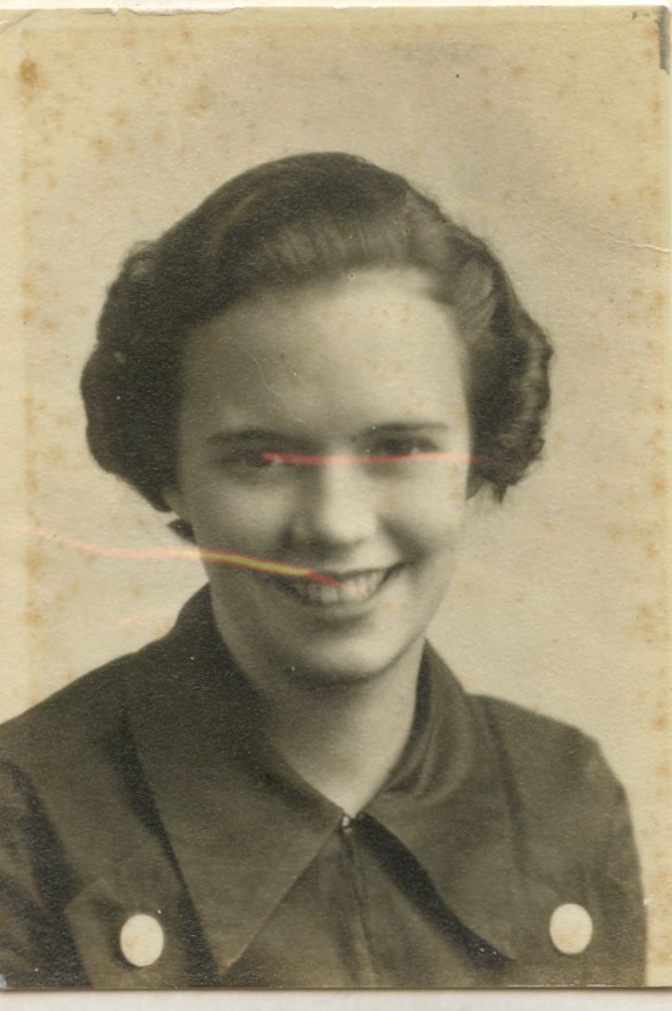
Sara at age 15, unpermed.

“I got my first permanent wave in the eighth grade and was so proud of it after all those years of straight hair and bangs. Getting a permanent was a real ordeal in those days and they really burned your hair and made it very frizzy. When I got to school my English teacher, Lizzette Sandifer, greeted me with ‘Ha, ha, look at the frizzy hair.’ That did it and I was glad when some of the frizz left. Sometimes Mama would let us go across the street and get Mrs. McDaniel, a neighbor, to set it in waves. She would charge us twenty five cents to fix it.

A beauty-parlor permanent wave machine from the 1930s.

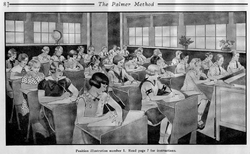
“Our study hall teacher was Miss Gertie Toler. She was a big fat redheaded woman and very strict. She also taught writing and would stand in front of the class repeating, ‘Push, pull, oval, oval,’ but we did at least learn proper penmanship from Miss Gertie.

A Palmer Penmanship classroom

“I wasn’t in the study hall but some of the other kids who were never stopped talking of the day when Miss Toler went to the restroom and came out with her skirt tucked in her long pink bloomers and everyone started snickering. How embarrassed she must have been!

“Every day Miss Gertie would let us line up by the door to be ready to leave when the lunch bell rang. One day when I was at the head of the line someone dared me to lead them out before the bell rang, which I promptly did. We got out all right but when I returned after lunch I was called in and told that I would have to stay after school every afternoon for a week as punishment.”

This escapade was about as rowdy as Sara got, at least to hear her tell it. She had wispy hair that refused to cooperate all her life, and as it grayed it just got more unmanageable. She had a little rusted Sucrets box full of old-time bobby pins, and each morning she would sit on the bed with a makeup mirror and work her hair into pincurls. After she died, I somehow let that Sucrets box disappear, and my niece Jenny has yet to forgive me for that oversight.

Occasionally, her frustration with her own efforts would reach a crisis point and I would get a phone call, “I have to go to Bertine and get something done with this hair, right now.” Bertine Shaw, God bless her, has run the Beauty Den on Howard Street forever and is a miracle worker of the first degree. When Sara moved to Indywood, one of her favorite perks was having an in-house beauty parlor. Unfortunately, she thought this was a free service and was scooting down there on a daily basis. I just paid the bills each month and never told her otherwise.

Posted in Uncategorized | 2 Comments

Kind Cousin

Cudn Ern

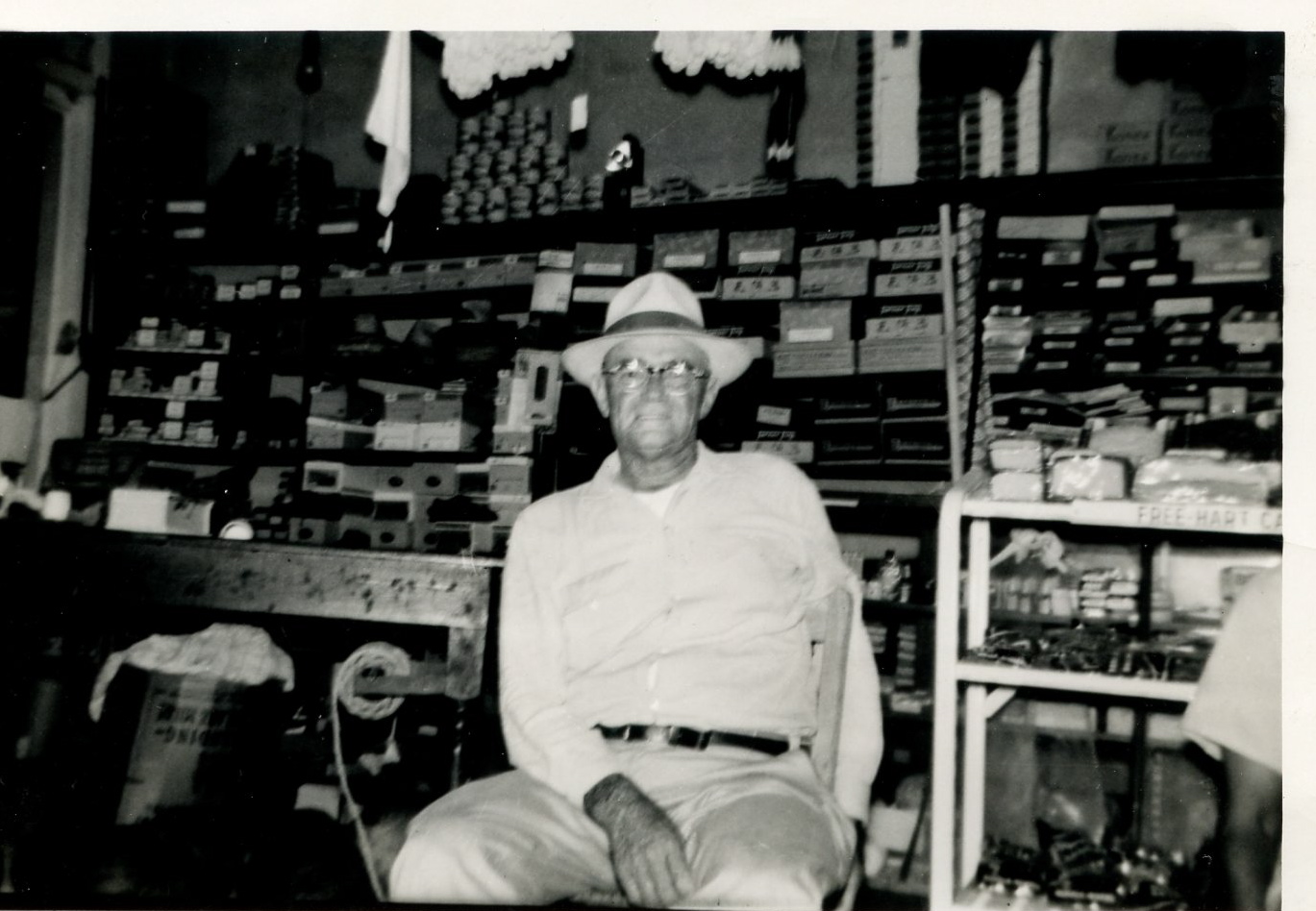
“Cudn Ern, a familiar figure around the Stott house, was Ernest Stewart, a cousin of Uncle Roy’s who worked at the light plant. He had followed Uncle Roy from Tennessee to Greenwood to work. He was an old bachelor, rough as he could be, but very lovable. He could cuss like a sailor. He had been renting a room at the Stott’s before we moved in and then he fixed himself up a room at the Light plant.

“He liked to fish and had a cabin on Six Mile Lake. He had been in the Navy during World War I. He loved children and every Saturday night he would come by the house and before he left he would lay out stacks of 3 nickels each for all of us and the Stott children and a candy bar for each. He was always generous. When he retired in later years he moved up on the lake. I think the last time we saw him was when he came to the hospital when Cathy was born [1951] and brought $10 to start her a savings account. A new bridge was being built across the Tallahatchie River and he had to take a detour to get to his cabin and wrecked his car one night and died.”

Ernest Stewart, front row right, with his fishing buddies

Sometimes we have to be reminded that it’s not always the rich and powerful and socially elite who leave a lasting impression on us. Ernest Stewart, a rough-around-the-edges farmboy from Tennessee, wandered into Greenwood, Mississippi and left his legacy of generosity and affection for all the Stott and Evans children. And Sara remembered him by including him in her memoirs, which fuel this blog, which will send Ern out into the world via technology he could have never imagined. His old cabin is still up on Six Mile Lake, cared for by Sara’s nephew, Trey Evans.

Posted in Uncategorized | Leave a comment

Close Call

“We had a big electric heater in the living room at the Stott house. Big would get up early sometimes and turn it on to warm the house until the big heater in the front hall warmed up. One morning Mary and I were sleeping upstairs and heard this terrible commotion downstairs. John had come in the afternoon before and thrown his jacket down across the heater. Big turned it on in the dark and did not notice the jacket. In a few minutes the jacket caught fire and firecrackers which were in the pocket began to go off. Big started screaming and trying to put the fire out. There was no major damage to anything but the jacket and the living room rug which Big prized highly because Dr. Henderson at the Bank of Commerce had given it to them when they remodeled the house. Anyway, it was insured and the rug later found a place in the middle bedroom where the burned place did not show and it stayed there for many years.”

Posted in Uncategorized | Leave a comment

One Big Happy Family

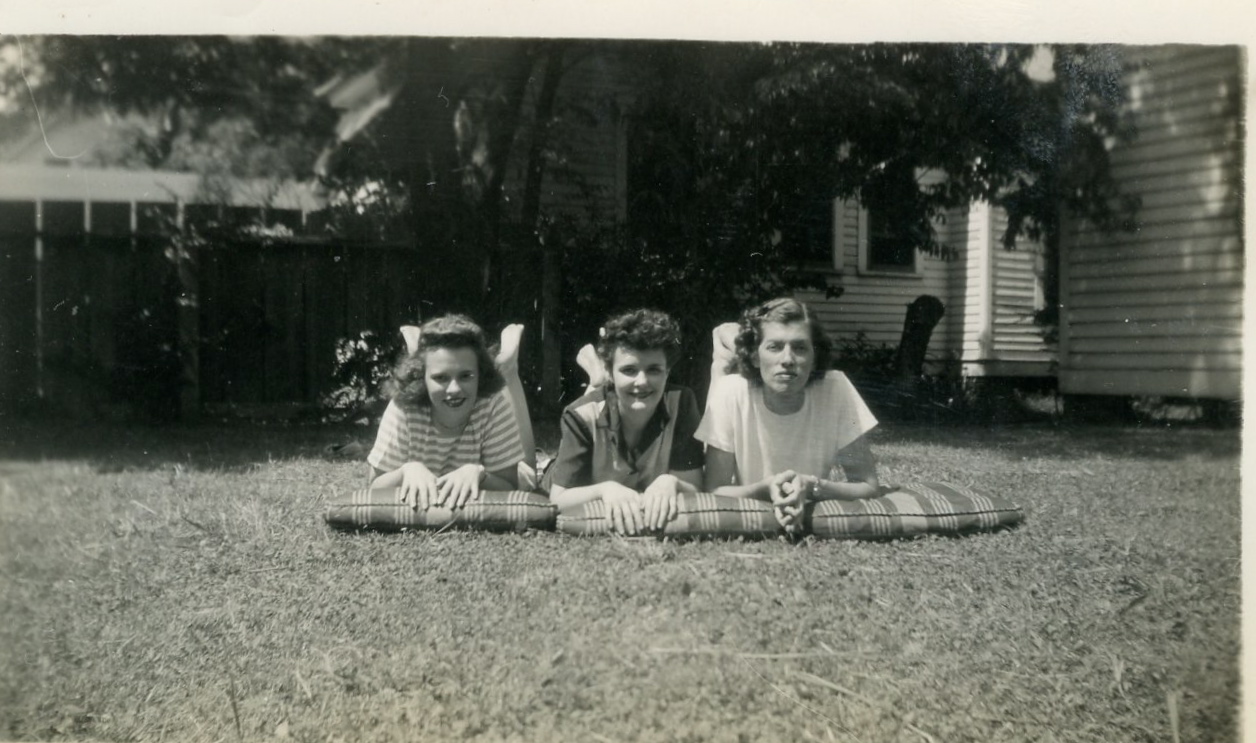
Sara, Mamie and Rawa, late 1930s.

“In 1933 Rawa left for Delta State Teachers College in Cleveland, Mississippi. In 1935, Buddy went to Mississippi State and in 1936 Tiny to Ole Miss so for at least part of the year we were not so crowded, and Mary and I slept upstairs some. Big was always having trouble with John. He didn’t ever want to take a bath and would finally go in the bathroom after much nagging, sit down in the empty tub and get out and tell Big he was clean. Sometimes she would send him back and we would all be giggling.

Buddy, John, Roy and Rena (Rawa) Stott, around 1930.

“He didn’t like to go to school and had a habit of telling Big he was sick, so one morning she kept him home and made him lie flat on his back all day and do nothing. I was home sick and getting a kick out of the whole episode. He called for his crayons and she told him he was too sick to color. I think that day broke him from playing sick any more. He did not like doctors, and one time when Dr. Gillespie, who was very dignified, was called when he was sick, and John tried to kick him, which embarrassed Big something awful, but not so much as the time when he was to have his tonsils taken out. The date was set and with much protesting they left the house. I believe they were going to take them out at the Medical Building instead of the hospital. Anyway, they got him there and were preparing for surgery when he balked and absolutely refused to have it done. Big was humiliated, especially since she was a nurse, and was back home with him shortly, telling him to ‘go upstairs and stay there.’

John, Tricia and Son, all dressed up for some reason.

“Another time he threw such a fit to stay home and listen to the World Series on the radio that Big asked that he be excused for a day or two to listen. Somehow they pulled it off and John stayed home.”

Posted in Uncategorized | Leave a comment