Custard, Cussing and Convicts

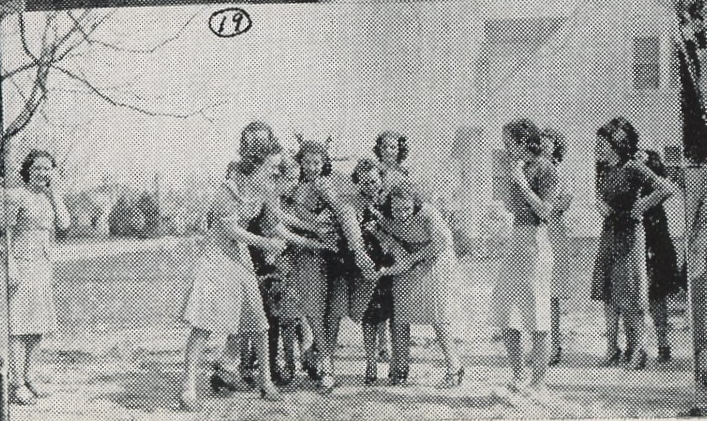
Snapshot from 1939 Deltonian, captioned "Hen Party." I'm almost sure that's Sara on the right side of the scrum. Maybe they had had too much custard.

“There were always a lot of people walking past the house and stopping to chat with any of us who happened to be on the porch or in the front yard. Most everyone who worked up town walked to work, including all of the men, and since all of the offices were downtown we were right in the center of everything. There was a service station up on the next corner where a lot of the boys hung out, and when we first moved back to Greenwood there was a frozen custard stand (these had sprung up everywhere in the early ’30s) on the corner where the Presbyterian Education Building now stands. Later, that too was a service station.

This custard stand was in Wichita, not downtown Greenwood, but you get the idea.

“Mrs. Julie Cobbs and her boy James Terrell, who was my age, lived next door to the Blumenthal house in a long ugly old house with a front porch. Miss Julie usually had relatives or other boarders staying there, and sometimes there was loud talking over there. Mama and Big and Bama like Miss Julie but did not approve of her ‘cursing,’ which usually amounted to something like ‘Good God Amighty.’ They said only common or ordinary folks talked like that. Despite their attitudes, Miss Julie’s boy James Terrell turned out very well and had many friends.

“In later years Mrs. Avent lived across the street from us, and she rented rooms. She was a very nice lady, but some of the roomers were a bit unsavory.

Tricia, Spot Pettey, and Sara, with the Coburn house visible in the background, probably around 1939. The Avent's house was just to the rear of the Coburn's, facing Washington.

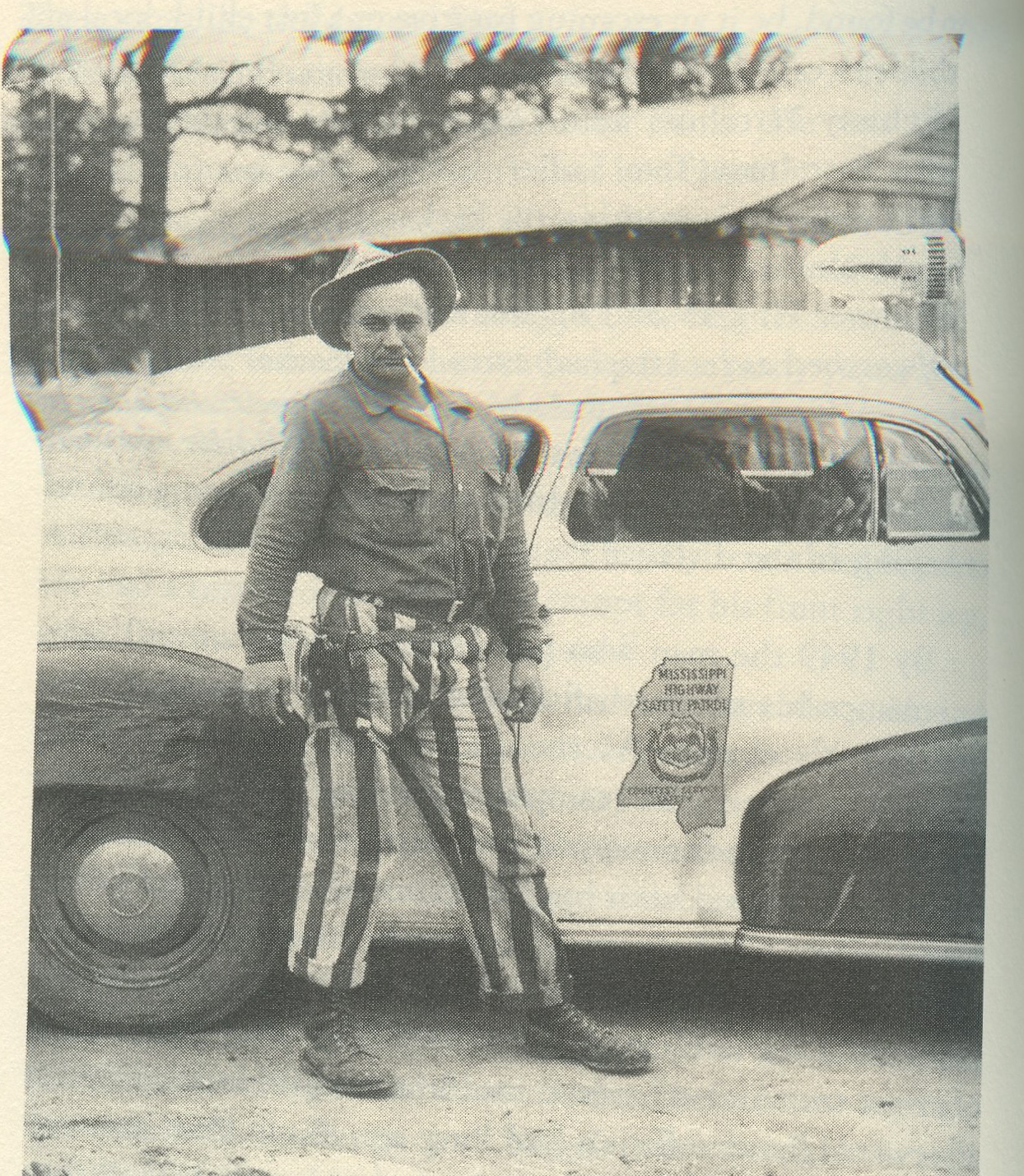
Big was always taking up with folks who were down on their luck and trying to help them and in the process made some strange acquaintances. She would get up sometimes at three o’clock in the morning and go outside to work in the yard since the corner was pretty brightly lit. Mrs. Avent was renting a room to a fellow who was known only as ‘Hogjaw.’ Since he was often up and out early, too, he and Big struck up a friendship. So when Big and Uncle Roy took a trip to Tennessee to see Uncle Roy’s relatives, Big asked Hogjaw to look after the house since only Mama would be there while they were gone. The police chief, Curtis Lary, told me that his men were keeping an eye on the house while they were gone, and I told him that Big had asked Hogjaw to look out for things. Curtis was horrified, saying that Hogjaw had not long before been released from Parchman, the state penitentiary, where he had been sent for burglary charges. When Big and Uncle Roy returned and I told her about Hogjaw’s background, she immediately began checking the garage to see if anything was missing.”

Big's friend Hogjaw Mullen

Ed. note: See Stokes McMillan’s One Night of Madness for the full story of Hogjaw Mullen, Big’s housesitter.

Posted in Uncategorized | Leave a comment

The Dark Side

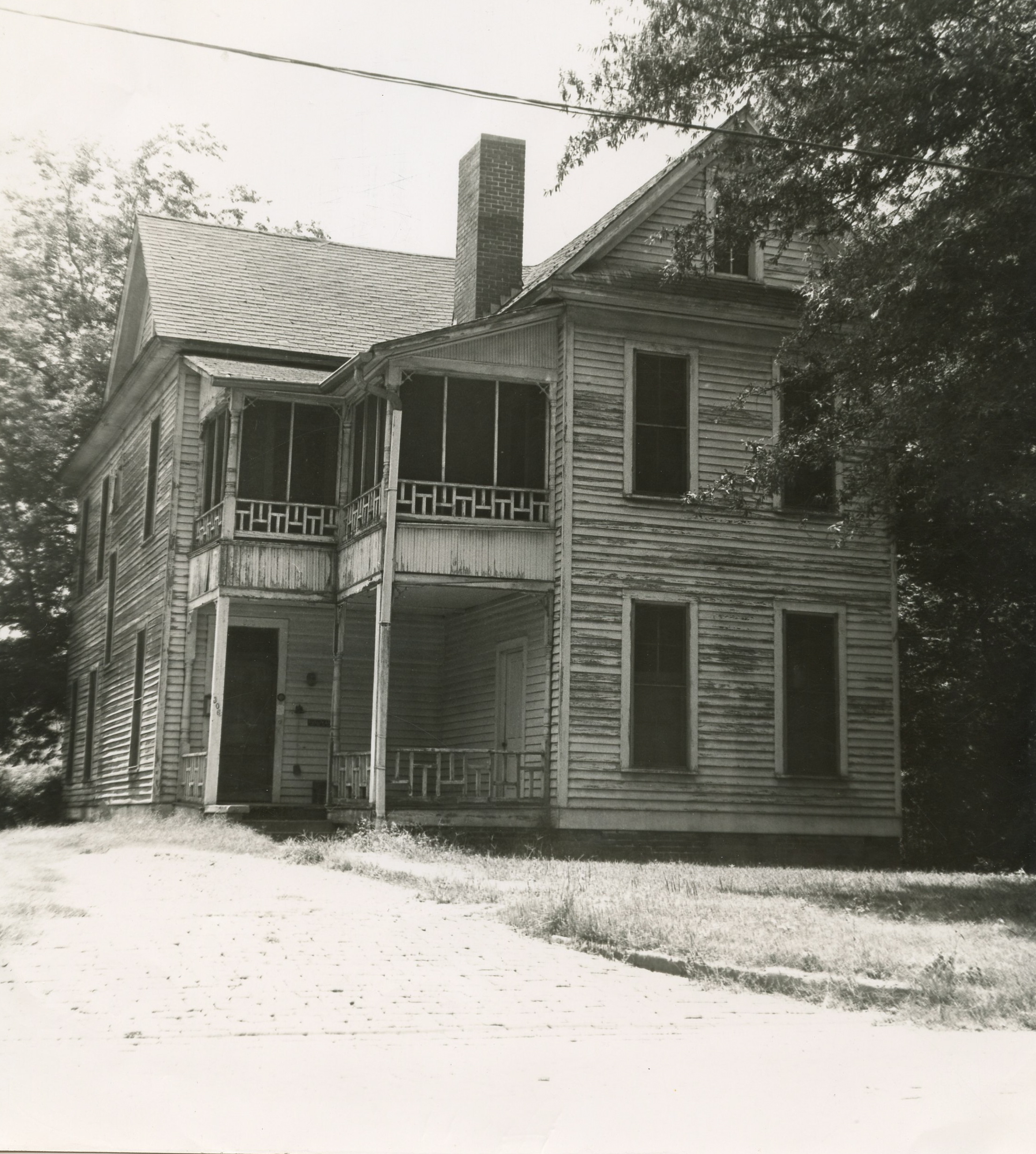
The Yerger House, George Street, Greenwood, shortly before it was torn down. This is one of Sara's photos which was picked up by the wire services and went all over the world.

“Next door to the Freemans on George Street was the Yerger house, a big two-story house where De La Beckwith lived with his uncle Willie, who wasn’t very bright, and his cousin Yerger Moorhead. Mama and Big and Mrs. Freeman were always sorry for De La because his mother had died when he was a little boy and his father had been dead since he was a small child. Later when De La was accused of murdering the civil rights leader, Medgar Evers, in Jackson, Mama donated five dollars to his legal defense fund, raised by the Citizens Council. because she remembered that poor little orphan boy.

“When the Federal Building was constructed and the Yerger house sold, De La, whose Uncle Willie had died and whose cousin Yerger had married and moved out, opened up the house and sold a lot of the contents. There were rooms full of old newspapers and bank statements and all sorts of weird things. Some of the rooms were filled to the ceiling, and they had to back big trucks up under the windows and push the stuff out. Uncle Willie had bought dozens of Confederate caps and balloons and all sorts of dishes, such as 12 dishes to hold stuffed eggs, and all sorts of 10-cent-store junk. There were boxes of pencils and toys, just an indescribable amount of junk.

“Among the trash was china which had belonged to Jefferson Davis, who had been a close friend of De La’s grandmother. She [his grandmother] was a relative of the Kimbrough family and like all of the clan De La was still fighting the Civil War. They always said Willie was crazy but kind, and sometimes he would stop by the house with a bouquet of wild flowers.”

What is there to say? When an unbalanced mind is saturated with prejudice and hatred, nothing good comes of it, and sometimes the town that nurtured that mind unfairly bears the blame for generations. Sara would occasionally receive a phone call or letter from De La, who always played on the neighborhood angle to stay in her good graces. She felt him to be a dangerous man with great potential for more trouble until he died. I remember walking through the Yerger house with her not long before it was demolished; I was probably 10 or 11 years old. I had never in my life seen such a rat’s nest of moldy newspapers, receipts, crumbling books and dirt, and I recall holding my arms close to my sides so that nothing would rub against me. There is an invisible line between what children find comical and intriguing and what they find disturbing and evil, and we had crossed that line that day in the Yerger House. I’ve been in a few other homes like that during my years of exploring Mississippi, and each seems to have been indelibly marked by a sense of despair and aberrant behavior. Those houses are best left to the elements, as they can never be reclaimed.

This is NOT the Yerger House, but it demonstrates the sort of clutter we found there in the '60s. And, yes, that is a peacock.


Ed. note: This is a reprint from a 1963 Time Magazine article

Byron De La Beckwith fancied himself a real Southern gentleman. He dressed with casual care, always bowed deeply from the waist when passing friends, punctuated his drawl with soft “suhs.” It therefore came as a consider able shock to some of his Greenwood. Miss., acquaintances when “Delay” (after his middle names) Beckwith, 42, was charged last week with the slaying of N.A.A.C.P. Leader Medgar Evers. Said Greenwood’s Mayor Charles E. Sampson: “We are just stunned. I don’t think he’s the type. He would always greet you with a smile.”

Yet others, who knew Beckwith better, were less surprised. To them, that gracious smile was merely the facade of a twisted, troubled personality.

The Family Tree. Family was everything to Beckwith. He never wearied of noting that a great-grandfather, Judge Hunter Holmes Southworth, owned vast spreads of rich Delta cotton land in pre-Civil War days. The judge’s daughter, Mrs. Susie Southworth Yerger, moved in the highest social circles of the Confederacy, was a close friend of Jefferson Davis’ wife Varina.

Beckwith’s paternal grandfather helped develop Lodi, Calif., south of Sacramento, where he served as the first postmaster. Beckwith’s mother, one of Greenwood’s prettiest, most popular girls, went to California to visit an aunt, married Beckwith’s father, a real estate agent. “Delay” Beckwith was born in California.*

When Beckwith was five, his father died of what the death certificate termed “pneumonia and alcoholism.” The widow returned to Greenwood with her son, was hospitalized several times for mental ailments, died of cancer at 47. The boy was then twelve. He was thereafter reared by an eccentric uncle, William Green Yerger, who dabbled at farming his family’s remaining cotton acres. Mostly, the uncle liked to catch catfish. Sometimes he just stuffed the fish into a dresser drawer at home and left them there to rot.

The family home rotted too. Says a Greenwood merchant: “Beckwith was reared in the sort of place white people ought not to live in.” Yet the premises were cluttered with mementos of the family’s better days: a letter to Beckwith’s grandmother from Jeff Davis: pieces of china from Beauvoir, the Davis mansion near Biloxi. To Beckwith, these must have suggested lush plantations, colonnaded mansions—and white supremacy.

Read more: http://www.time.com/time/magazine/article/0,9171,875008,00.html#ixzz1TbKpkcht

Posted in Uncategorized | Leave a comment

Washington and Walthall, Part II

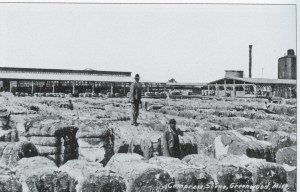
Greenwood cotton in the early-to-mid 1900s, some of which was likely ginned at Freeman's Electric Gin on Carrollton Avenue.

“Around on George Street where the Post Office now stands lived the Freemans. Miss Willie Freeman was strictly Old South, a very outspoken and staunch segregationist. She was ten years older than her husband, J.H.Freeman, and they had one son, John Howard, who had a chauffeur to drive him to out of town dances. Miss Willie was quite entertaining and she helped run the cotton gin during ginning season. One time when some Negroes got on the elevator at Fountain’s Store after she had entered it, she promptly chewed them out and said, ‘What do you mean getting on the elevator with a white lady?’ It didn’t take them long to exit the elevator and keep on going. She delighted in telling how she handled the situation.

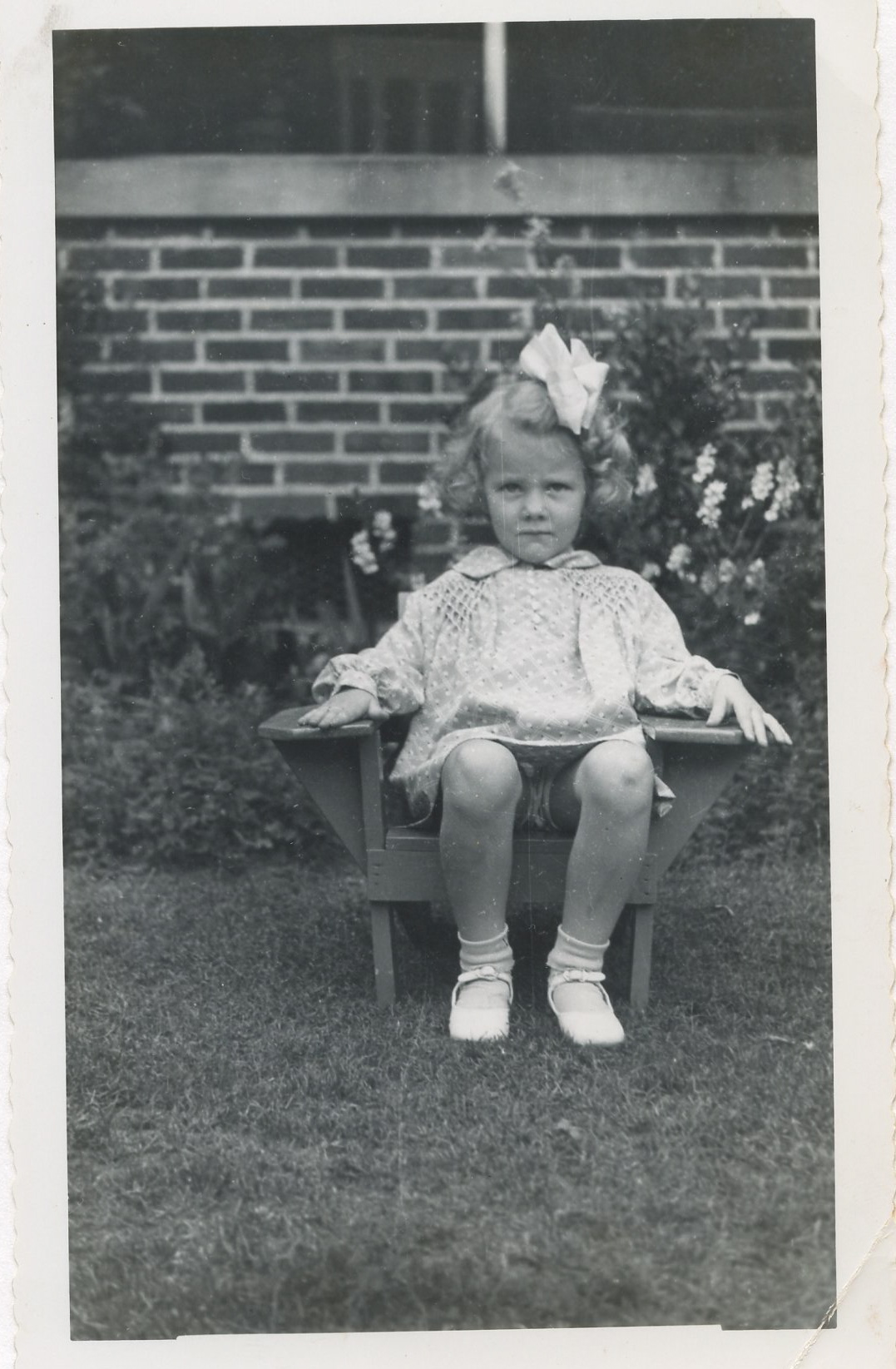
Tricia in a little Adirondack chair made for her by John Howard Freeman, Jr.

“Then there was Captain Marcy Johnson and his wife, Miss Annie, who lived in a tiny little house across the street on Washington which was later a beauty shop. He was a retired steamboat captain who later took up tickets at the Paramount. We called them ‘Cap’n and Miss Annie.’ She was a dainty little lady with snow white curls, and she wore dresses to her ankles. She could tell interesting tales of the days when she was young in New Orleans and attended the opera. She gave Mary a lace dress that she had worn to the opera. At Christmas time, they would always tell us to come over for a gift, which was usually an assortment of stale Woolworth’s candy, dried out fruitcake, and always there were candied fruit peels which were most often too hard to eat. They apparently didn’t have much to live on.
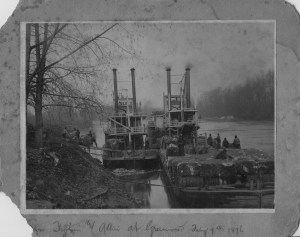
Steamboats on the Yazoo River, 1896; perhaps one of Cap'n Johnson's boats? Photo from the collection of Imogene Lewis.

“Around the corner on Main Street lived a Jewish family, the Gilberts. Mr. Gilbert was a funny old man who was in the cotton business. One time he decided that since the Greyhound Bus Station was right next door, he would open up a hamburger stand in his front yard so he could get business from the bus passengers. So he just screened in his whole front yard, including a tree, and set up a hamburger business. As I recall it didn’t last too long.

Greyhound Bus Station, corner of Church and Main. Photo courtesy of Mary Rose Carter.

They had a son called Aggie who was an alcoholic. One summer afternoon when we were all on the porch, we looked across the street and here came Uncle Roy and Mr. Wilson from the funeral home, both of whom never took a drink, holding up Aggie in between them and taking him home, and I am sure giving him a good lecture on the evils of drinking all the way.”

Regretably, I couldn’t find photos of any of these houses, although Miss Willie’s still stands where it was moved to Poplar Street in the 1960s. I have fuzzy memories of it being hauled in sections across the new bridge, and I suppose if the Keesler Bridge with its superstructure had been the only option, it never would have made it, nor would the Whittington house on Money Road or the old Wilson&Knight funeral home just off of Money Road. One can only wish that someone, anyone, maybe even Sara, had thrown a dramatic and effective tantrum when the decision was made to mow down almost an entire block of downtown homes to build an atrociously out-of-place Federal Building, which now sits almost totally empty. If it were to vanish tomorrow, no one would lament its loss, but we can never reclaim the character and charm of those houses that disappeared in the name of progress. There’s a lesson there somewhere.

Ed. note: Jane Biggers interviewed Miss Willie Freeman in 1971 for a special edition of the Commonwealth. Her fiesty nature, even in her ’90s, is evident:

 “‘Let’s see now,” she began. ‘I was about nine years old when I first came here from Preston Plantation, that was my home. We came down on the old Y&MV Railroad which used to go as far as a little place above Holcomb, and then had to back into Greenwood where the turn track was. The river was the hub of most of the activity, there was just Howell’s Ferry, just below where the courthouse is now. That was the only way you ever got to the other side,’ she laughed.

‘There was Dr. Henry’s house on River Road and Will Peteet kept his six mule team about where the First National Bank was. The water in those days was awful too. You could place water in the wash stands, that’s what we used then, and by morning it would have a thin film of scum on it, but we drank it anyway and I guess none was worse for it.

“Mrs. Freeman, whose uncle was J.K.Vardaman, former governor, talked about her school days. ‘There was I think about five of us who went to Mr. James Barnes’ School. Now Mr. Barnes was a Presbyterian minister and came here for that purpose, but he had a small private school and there was Bill Pillow, Will Garrard, Will Peteet and one other.’ The curriculum included bookkeeping and Latin, Mrs. Freeman recalled and the other typical courses of school.

“Mrs. Freeman talked about the landmarks around town. There was Henderson Baird in the location of Staple Cotton and the Magnolia Bank and, ‘I’m told,’ she laughed, ’20 saloons.’ In the location where the Commonwealth is now was the Austin Store. Charles Austin was ‘Miss Willie”s first husband. In the Carrollton Avenue area on George and Lamar Street there was the Dahmer Block. ‘I remember Mr. Dahmer had lots of candy and I think he sold bread too.’

“She vividly remembered what used to take place in the form of entertainment. ‘We really had good times, like boat rides and there were special shows that came to town on the stage at the City Hall, which was on the corner of Main Street and Market.’ She laughed about the fun ‘during the overflow. When we knew the river was going to get high, everything was made ready to move into the courthouse. We would dry fruit and preserves and take enough food supplies. In the evening we would get in boats and ride up and down the streets singing songs. When a young man wanted a date in those days he wrote notes, and when you were to go on a boatride you were asked by way of a note first,’ she smiled.

“She talked about the clothes in those days. ‘We had very few places to shop here and a trip to Memphis would take quite a ride, so Louisville, Kentucky, was a favorite shopping place. There was a firm there, I can’t recall the name, where they would send samples and they would make the dresses and send them back. The dresses then had little trains, which we held up when we walked, and high collars that came up to the chin.

“‘Other landmarks around town was the Craigstore, which was across from the courthouse and was operated by Lorraine Craig’s father. There was Charles Wright’s soda pop place. He had the real pop to his bottle, too, when you opened it, it did pop and there was a cork of some kind you put back in and it popped again.’

“‘The first public school was across from the Methodist Church. Mr. A.F. Gardner, who was also a lawyer, was also one of the teachers there, along with Sam Holloway.

“Mr. Freeman came to Greenwood from Lexington, Virginia. His grandfather was a doctor and lived near the Natural Bridge. ‘In those days, it was nothing thought much about crossing back and forth in a buggy, but today it is quite an attraction.’ Mr. Freeman first came here to work at Henderson Baird. The home Miss Willie lives in now was once on the ground where the Post Office is today but was moved three years ago to its present location on Poplar Street. Mr. and Mrs. Freeman have helped to create many landmarks around town. The old Freeman gin is located on Carrollton Avenue. The new one is on Humphrey Highway, where his son, John Howard, Jr. runs the operation. There is the Freeman Building on the corner of Market and Fulton. Miss Willie’s home in the early days was the setting for many festive parties. She had the first bathtub in town, and as the story goes, one of her neighbors was not feeling up to par and Miss Willied thought a tub bath would be helpful, so she was invited to partake. When the guest came from the bathroom, she remarked, ‘That will be a fine contraption someday, when they learn how to keep the water in.’

“For special events, Mrs. Freeman had food sent up from New Orleans. But she liked to remember best about the ‘overflow’ days. ‘They came each year, but we had fun, as I mentioned, but I should tell you about the cattle. We always sent them to the hills when the high water came.’

“She looked back over the years, to the time when the first telephone came here and the offices were located upstairs over the Episcopal Church. To Mr. McDonald who came here as a banker and gave the land for the present site of the Episcopal Church. To the Bank of Commerce, she is the only living original stockholder. To the slow but steady growth of the community, ‘I look back across town, where I once lived and then around here now, and see the new subdivisions, the beautiful homes.’

“She wouldn’t allow us to take her picture. ‘I called the Commonwealth years ago and said that Howard and I never wanted our names mentioned. But I guess this time, you can use my name, but no picture.’ When Miss Willie says ‘no’ it is a firm commitment.”
Posted in Uncategorized | Leave a comment

Just South of Washington and Walthall

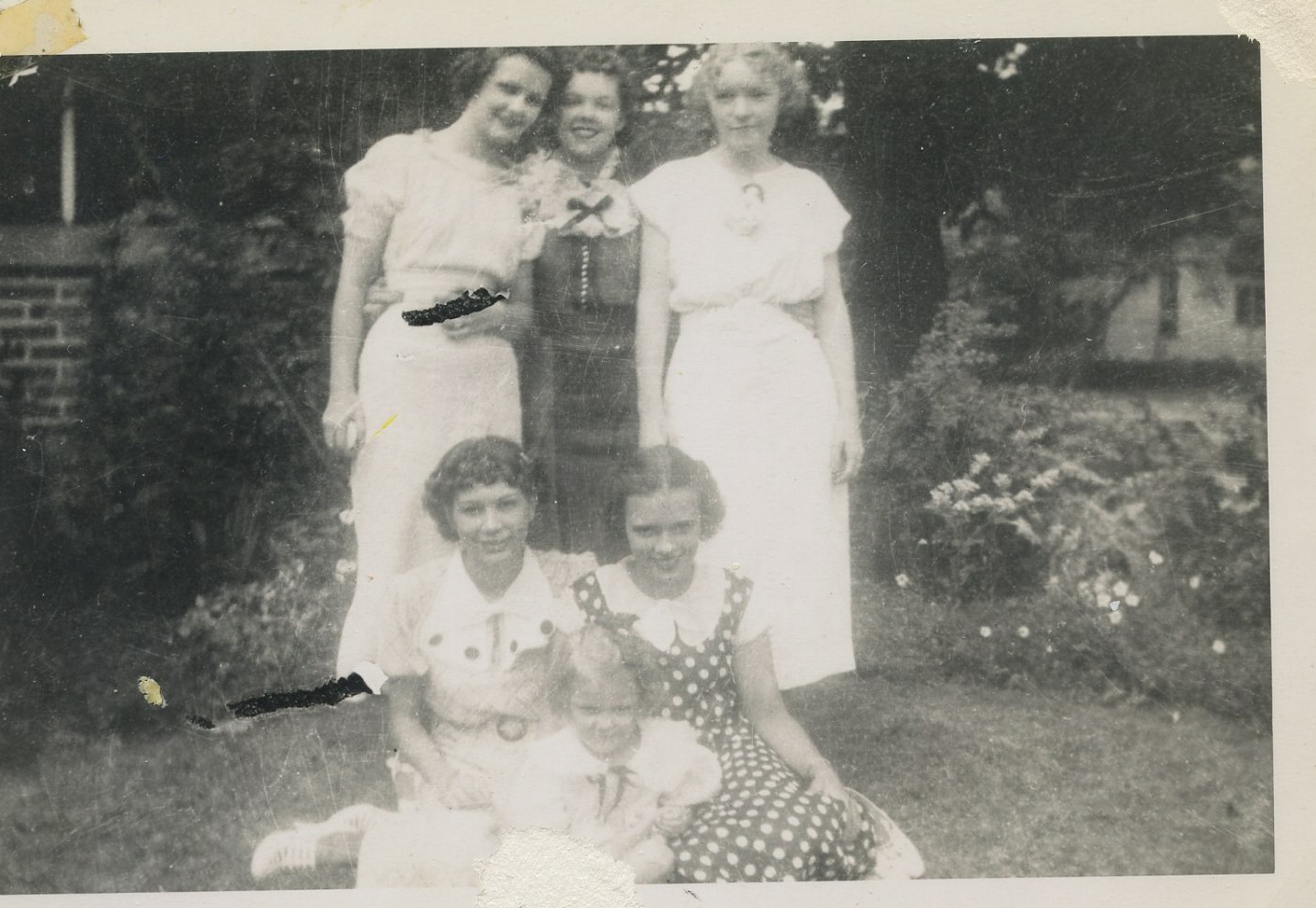
Standing: Mamie, Nell Upshur's cousin, Mary Torrey Saffold. Seated: Nell Upshur, Tricia, Sara. Probably 1936 or 1937.

“On down Walthall lived the Saffolds and Joneses. Mrs. Saffold and Mrs. Jones were sisters, who had inherited money from their father but lived in the same old houses until Mrs. Jones died and Mrs. Saffold went to the nursing home. Finally when the houses were sold after Mrs. Saffold died, they took a bulldozer and tore them down for a used car lot. Mr. Saffold had a drugstore and was also mayor for about 12 years.

“They always had a lot company and a lot of fun. Mary Torrey, the Saffold’s daughter, was very shy. She and Mary were good friends. She was afraid of boys until she met Jack Hughes, whom she later married. When she had her first date with him and they walked down Walthall and Washington to the Paramount Theater, the neighbors started calling each other and saying, ‘Look out the window, Mary Torrey has a boyfriend.’ Then Jack was called up with the National Guard in 1940 and later sent overseas and they could hear her screaming.

“The Balls lived on Walthall Street and were close friends of the Saffolds and Joneses. One night when Mrs. Jones and Mrs. Saffold (Rite and Torrey) were out walking, we heard them as they passed by the Ball house call out, ‘Yoo hoo, Jabie (Mr. Ball), we see you in your pajamas.’ When Henry, the black postman, would get near the house the neighbors would hear Mrs. Saffold shouting, ‘Yoo hoo, Henry, here I am!’ She was trying to get the mail so Mr. Saffold would not see all the bills. After they inherited their father’s money, they went to the World’s Fair in Chicago and stayed for a month.

Chicago Worlds' Fair, 1934

They also enjoyed watching folks going in the Weiner Hotel across the street, and were horrified when they saw the same lawyer who tried to assault our Negro seamstress, Delia, standing in the window of his hotel room with no clothes on.

“Charley Jones, who was a vice-president of the Bank of Greenwood, lived with his parents, and later, after his father died, with his mother and sister Stig. He had a pet monkey named Susie who also lived there. When everyone started building bomb shelters, Charley started one in the backyard but it was never finished. In later years when both of the houses became so run down, Mrs. Saffold noticed one day that something had leaked in the ceiling of one of the rooms. She could hear noises in the attic at night and finally, after much searching, a possum was discovered in the attic.

Botts Blackstone, Sara and Mayor Allen Saffold, posing for "G.I. Jabber" in 1945

“Mary Carol was in the same carpool as Torrey Hughes, and Mary Torrey and I alternated taking them to school. Once, Mary Torrey picked them up at the high school and told them that Mrs. Saffold had had a terrible tragedy befall her. It seems she had gone out on Carrollton Avenue to get some liquor from the Likker Legger store and a Negro man grabbed her purse, containing about $900. She never did get her money back, so that was expensive ‘likker.'”

In old towns like Greenwood, there are families who dangle on the periphery of your awareness, just there and accepted but never truly relevant to your well-being. Sort of like the folks in Mayberry who only appear on one episode. And then there are families like the Saffolds, whose generations overlap your own and who are so deeply endearing across those generations that you realize your family wouldn’t be the same without their proximity. They are the next-door neighbors to Aunt Bea, the continuing characters who add spice and flavor and hilarity and dependability to this place where we live. Sara and Mary Torrey were daily chatters for decades and they leaned a lot on each other as Torrey and I navigated childhood and teen years. The broader Saffold and Jones families were chock full of eccentric but deeply kind and thoughtful personalities, and Greenwood is a less charming place without them. I never drive down Walthall toward Carrollton Avenue without thinking of those two grand old white houses with their precious little ladies and happy memories.

Posted in Uncategorized | Leave a comment

Washington and Walthall

Mamie and Sara on their corner, 1943.

“We had a lot of funny neighbors who would come to visit on our porch. Mimi McGehee was a tiny little lady who was deaf as a post and reminded you of a little chicken or bird. She was a distant relative, I think, and she never shut up and couldn’t hear anything that was said. One time Bama got tired of shouting at her and behind her back said, ‘Oh, shut your mouth and go on, Mimi,’ and we were all laughing, but poor Mimi did not know why.

“Mrs. Telfair (we called her Bert) lived a block down the street on Walthall Street. She would come to see us pretty often, and they told us that the reason she talked like she did was that she was a Yankee.

The Telfair House,Walthall and Church Street, now Bella Flora.

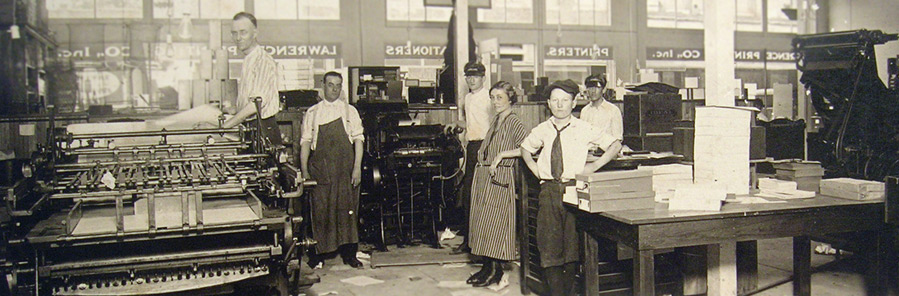
“Then there were the Carters, who also lived on Walthall. Tulliah was a secretary at Lawrence Printing Company and she always came to see us at night and usually knew all the current gossip. One night when we were on the porch and had seen a local gentleman pick up his lady friend, who had parked in front of the house, Tulliah suggested that we put a note in the car, letting them know that we had seen them. Then we sat there giggling waiting for them to return.

Lawrence Printing Company, when it was located on Market Street. Could that be the mischievious Tulliah Carter? Photo courtesy of Lawrence Printing, with thanks to George Ellis.

“Linnie Carter was a maiden lady who worked at Colvard’s Bakery. Mr. Colvard, a small man, had his eye on her and dressed up one night in a Boy Scout uniform and came down to her house to spy on her.”

When stories like these pop up in the memoir, I could just kick myself for not pestering Sara for the endings. What happened when the “gentleman” returned with his “lady friend?” Were the Evans girls and Tulliah peeking from behind the vines, doubled up with laughter? Did he ever figure out who placed the note? Did he mend his wicked ways? Good grief, Sara, what happened? You have left us hanging forever. And the little baker in his Boy Scout uniform? What was that all about? So many questions, not many answers, but always entertaining Greenwood lore. Do other towns have quirky characters like these, or is the genetic mix here just conducive to loopiness? You’ll meet many more of the downtown neighbers over the next few days, so hang on.

Ed. note: Colvard’s Bakery was located in the 400 block of Howard Street, where Fred’s was for many years and the Russell Thomas Antiques Annex is now. Lynnie (census spelling) Carter and Tulliah Carter were sisters, listed in the Holmes County 1920 census as aged 25 and 12, respectively, which means Lynnie would have been in her late ’30s at this time, and Tulliah in her late 20s. I have found a Tulliah Carter in the marriage listings for Tuscaloosa, Alabama in 1945, so perhaps she moved on to a long, happy life in that state.

Lawrence Printing Company, at the time of this story, was located in the 200 block of Market Street, so Tulliah likely walked to work each day. They have a fascinating website at http://www.laprico.net with archival photos of the old locations.

Posted in Uncategorized | Leave a comment

Funerals as a Spectator Sport

Tootie and Tricia in the Stott yard, circa 1939

“There was always a lot going on in our neighborhood since we were so close to the downtown area. One Saturday night we heard a lot of commotion up the street. Some Negroes had come out of the Paramount Theatre, which was in the next block, and one had snatched someone’s purse, and the police were chasing him down the street and shooting. A bullet or two went through the wall at Wilson Funeral Home across the street where the Post Office now stands. It was very exciting, and I don’t think anyone was hurt.

Wilson Funeral Home, southeast corner of Walthall and Washington streets. Photo courtesy of Delta Electric Power Association and provided by Donny Whitehead.

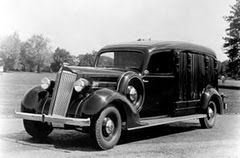
“The funeral home provided much conversation about who had died, how large a funeral they had, how upset the survivors were, etc. When the hearse would pull out we would start trying to find out who had died. Since Tricia was a friend of Betty Sue ‘Tootie’ Dudney, Mr. Wilson’s granddaughter, she had an inside track, and we would send her over to find out who had passed on. Bama always had her front row seat on the porch during a funeral and would count the cars in the procession, which seemed to denote how well you stood in the community. One time when a lady walked into the Yazoo River and drowned, Tootie came over to invite us to come see her clothes, which were by that time hanging on the Wilson’s clothesline to dry.”

The only arrangement for Sara that might have been more exciting than living across from the funeral home was to live in the police station. She was a newshound and a naturally nosy sort from Day One, and we chased ambulances and firetrucks all over Greenwood, always in the cause of good journalism, of course. One of her neighbors (who shall remain unnamed) somehow got hold of a police scanner, and she would feed breaking news to Sara, which often led to “Get in the car, quick, I’ll tell you what’s going on on the way!” And off we’d go, whizzing down the Boulevard or across the bridge in search of commotion.

I remember when the pawn shop on Carrollton Avenue caught fire in July, 2009, and the flames spread through several buildings and even into the old Midway Hotel. I called Sara at Indywood, describing what I was seeing, and she toddled outside to look at the billowing black smoke rising above downtown. “Oh, I wish I was there,” was her response, and I knew that was a whisper of an intense longing to be in the midst of whatever big news was breaking. Once a reporter, always a reporter.

Posted in Uncategorized | Leave a comment

Gliding Through the Depression

Uncle Roy and Big in front of their home, 115 East Washington. The much-loved porch is on the right side of the house. Note Big's lovely yard and the brick streets.

“In the summer we would all sit around in slips and housecoats on the front porch trying to stay cool. Big always had vines covering the porch, and no one could see in, although we could always see out. Bama always got up early, powdered her face, dressed properly in her Nelly Don dresses from Fountain’s, and headed to the porch where she sat in a rocker right near the door, ready to greet anyone who happened to stop by. One day, as she sat in her usual spot, Mr. Burford, the director of Campy Ki-Y, dropped by to see us. The porch was full of half-dressed females, and we all made a mad dash through the French doors leading into the living room and on back to the kitchen. There Bama sat with the glider swinging and every rocker moving. She was terribly embarrassed and let us know about it after he left.

John Stott on the famous front porch, with the phantom glider and rocking chairs, 1944

“No one had a lot of clothes during those Depression years. Mama hired a seamstress to make some of our dresses, and we bought our Sunday dresses at the Fashion Shop on Howard Street, with the top price we paid being six or seven dollars. We had saddle oxfords from Arenson’s Shoe Store for school and then we would have one pair of dress shoes.

“The Depression did not affect us like it did a lot of people because Mama had a set income from Daddy’s insurance and actually fared better than she would have if prices had been inflated. We would hear the grownups talking about the families who were having such a hard time and some were having to get help from the Red Cross. There were some suicides. I remember how excited Lena White was when her Daddy got a job as chief of police after being unemployed for some time.”

The Stott front porch, now enclosed and vine-free, was a miracle of one-way vision. You simply could not see through that dark mesh screen, but the ladies of 115 East Washington could certainly see out. Over the next few blogs, all of 1930s and 1940s Greenwood will parade by, under the watchful eyes of Bama, Jessie, Big, Rawa, Tiny, Mamie, Sara and Tricia. The old photos show that this was a neighborhood, not just a sterile corner, and everyone who lived further east had to walk by to reach downtown. And they did walk, for business and entertainment and church and school. Some stopped by to visit with the Stotts and the Evanses, and some of my first memories are of scooting around on the cool floor of that porch with toy cars and little soldiers, barely aware of the lively conversations going on between the adults in all those rockers and the one wonderful glider at the far end. It was a magic room, like a front row seat for our family looking out on the everyday stageshow that was Greenwood. Sara was a nut for screen porches and had Daddy add the best one in North Greenwood on the north side of 409 East Adams. But it was never the same as the Stott porch, with its always-changing diorama of life in the old neighborhood.

Ed. note: “Nelly Don” dresses were the creation of Ellen Quinlan Donnelly Reed, who started a small seamstress business in Missouri that grew into a huge industry. From 1916 to 1978, Nelly Don produced 75 million dresses, including World War II uniforms for military women and those who stayed behind to work in the factories.

Nelly Don herself

Posted in Uncategorized | Leave a comment

Movies and Measles

Paramount Theater, East Washington Street.

“Mama would sometimes let me invite a couple of friends to go on Saturday to the Paramount Inn, next door to the theater, to eat lunch and then go to the show. For fifteen cents we could get a hamburger, a drink, and a candy bar, and the movie on Saturday afternoon only cost six cents. They usually had a western movie on and always a serial such as Buck Rogers, who introduced us to our first taste of space exploration. Of course, then we scoffed at the idea that any such thing would ever become a reality.

“Flash Gordon and Tarzan were also favorite serials, and we loved the ‘Our Gang’ comedies. Before every movie there was a comedy, with cartoons just beginning to be shown. Then there would be the Pathe news, which showed scenes of world events which had taken place in the past week or so. That was the only time we saw the news in action, since there was no television.

“In 1934 I had the measles and passed them on to the rest. There were no antibiotics then or shots to prevent diseases like measles and whooping cough, and children were usually quite sick with these diseases. We had a regular hospital going with Mama and Big staying up most of the night nursing us. I was out of school for a month. Mama and Big always got upset because they remembered children who had died from these diseases.

“Tuberculosis was a real threat in those days, and anyone who was found to have it was sent to the Sanatorium in Magee, Mississippi for treatment. Mama didn’t want us around anyone who had it in their family. There was a Preventatorium in connection with the Sanatorium, and children who had someone with T.B. in the family or who were undernourished or sickly were sometimes sent down there to stay until they were fattened up. One time Tricia’s friend, Tootie, spent the summer there.”

Ed. note: “Buster” Crabbe and “Larry” Crabbe were one and the same actor, who also starred in one Tarzan movie. Versatile fellow. The Paramount Theater was built in 1912 by P.D. Montjoy and P.E.Schilling as the Greenwood Theater, featuring live performances as well as movies (see blog post May 17 2011, “The Evans Girls are Ready for their Closeup, Mr. DeMille.”). It burned in the 1970s. I am unsure of whether the Paramount Inn was in the same building.

The Preventatorium was news to me. It shared the campus in Sanatorium, Mississippi, now the Boswell Mental Health Center near Magee. The Preventatorium (who came up with that name?) functioned from 1929 to the early ’70s. How strange.

Posted in Uncategorized | Leave a comment

Growing Up

Sara in 1935

“At night our crowd would meet at someone’s house. We played boy-girl games such as ‘Post Office’ and ‘Clap in and Clap out’ and changed boy friends every week. I liked one of the boys, Billy Mallette, a lot, but after about two or three weeks he started liking someone else. One night when Tiny and her boyfriend B.J. were on the front porch, Billy stayed after the others went home, and we sat in Big’s front yard together. He was the first boy I ever kissed, that night in the swing. At fourteen, it was easy to fall in and out of love every day.

The amorous Billy Mallette

“I can remember when they passed the law that you would have to have license to drive and I went with Lena White to the Court House to get hers. Prior to that kids from twelve on up were driving, and in the summer of 1935 we would pile in any car that was available and our main thrill was to go fast (probably about 25 miles an hour) over the railroad track near Williams and Lord Funeral Home which we called ‘Pollard’s Dump’ (the track, not the funeral home) and we would all bounce and hit the top of the car. That was our idea of doing something that we knew we shouldn’t be doing.

“My real love in the eighth grade was my math teacher, Howard Lewis. He was about ten years older than me and knew that I had a crush on him. I even had Mama make some divinity so that I could take it to him. He was made principal of the Junior High School the next year after Mrs. Stinson died, and asked me to help him in the office toward the end of school. I turned up with a bad case of malaria, so had to miss the end of school and was crushed that I could not do it. When we went on to high school he was named high school principal. My senior year of high school, I skipped school every Friday afternoon, and when we were ready to graduate he threatened to give me a book of excuse blanks because he had signed so many of them for me. We have remained good friends to this day [1990], though it was many years before I could say ‘Howard’ instead of ‘Mr. Lewis.’

I suppose we all assume our parents had no life before we were born, and it’s always a bit of a jolt to find out that boys existed before your dad and girls existed before your mom. I do know that Sara admired Howard Lewis all her days, for good reason, and Greenwood was fortunate to have him as a citizen.


Posted in Uncategorized | 5 Comments

Camp Capers and Dead Ducks

The 1934 Camp Ki-Y picture. Sara is second row, second from left, then Mary Charlotte Clarke, Lena White Miller and Mary Hayes Crow. Rawa is in center on the back row. I think Tiny is in fifth row, just left of center.

“In the summer of 1934 I went to Campy Ki-Y in Hot Springs, Arkansas, with most of my friends. Rawa was our counselor and Tiny went, too. I stayed for ten days. It was my first time away from home, and I was homesick some of the time, but had a good time too. Mama had told me that one of the stipulations to my going was that I would not get in the swimming pool. The camp had a wonderful record of teaching kids to swim, and that would have been my opportunity, but I didn’t dare try it.

“The camp was pretty rustic. We had to go up a hill to the toilet, which was a board with two holes in it. When we took a shower, we had to use a room with no stalls or anything. Consequently, being very modest as I had been thoroughly taught to be, I bathed as little as possible and went to the bathroom as seldom as I could get by with.

“I made friends with a girl named Betty Sue Neves from Greenville, who was two years older than me, and I fell in love with one of the men counselors, at least seven or eight years older than me, Buster Smythe from Greenville also. He got a kick out of my crush and wrote me postcards after I got home.

Betty Sue Neves and Sara at camp, 1934

“We spent the night in the YMCA building in Greenville, on the floor, and caught a bus the next morning. We had to cross the Mississippi River on a ferry because there was no bridge at Greenville at that time. I wanted to go back the next summer, but Mama said we could not afford it. As I recall, it cost $11 for the ten days, but that was a lot of money in 1934.

“The city opened up the municipal swimming pool next to the high school in the early ’30s. I talked Mama into letting me go to Whittington Dry Goods Company, where they had good prices on bathing suits, so that I could go there with my friends. The summer of 1935 was one of my happiest. Every day we met at the pool and spent most of the day there.”

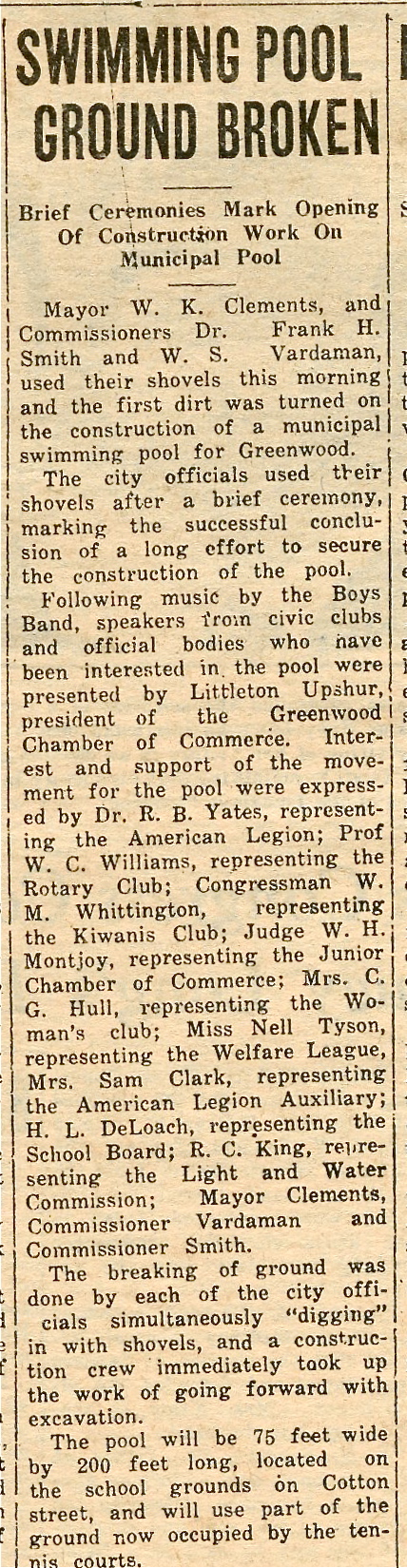
Greenwood Municipal Swimming Pool

Article from July 23, 1934 Commonwealth. Think it was hot that day, exactly 77 years ago?

Sara never did learn to swim and I don’t believe she ever encountered an outhouse again, unless it was a plastic replica at Disney World. She made sure Cathy and I had swimming lessons in that wonderful municipal pool just as soon as we were old enough, and we all spent many steaming summer afternoons bobbing around in the shallow end of that structure. I can still smell the chlorine in the bathhouse and feel that cold spray of water as you would exit onto the concrete sidewalks around the pool, and the peanuts from the Tom’s machine were somehow much tastier than those from anywhere else in town. After the pool closed in the mid-60s, Sara would drive me all the way out to the VFW on Highway 82 East to swim; it was usually just her and me, no lifeguard, and I have no idea what she would have done if I had needed rescuing. There was one memorable episode when I was in Junior High and we had gone to a Heinz convention in Hot Springs (yep, home of Camp Ki-Y). Sara, one of her friends and I took a duck boat ride on some large lake, which was just fine until the duck boat died in the middle of the lake. It was the only time I ever saw Sara panic over a water situation. It took several hours for another duck boat to get out there and “rescue” us, and she was fighting back true fear the entire time. The transfer from one bobbing boat to another was tricky as well, and for the first time I felt responsible for her rather than the opposite. The whole incident would have been funny had she not been so shaken up. Jessie, you should have taught them all to swim. You never know when you’ll have to abandon a sinking duck.

Ed.note: The Greenwood Municipal Pool was first proposed in the 1920s, and the old 1890s city jail was torn down to make way for it. The Depression derailed those plans until 1934, when federal money came in for a 200×75 foot concrete pool and bathhouse. The summer of 1935 was its first full season, and it was later used as water training for pilots at the Greenwood Army Air Base. Racial tensions led to its closing in the 1960s, but the bathhouse still stands.

Posted in Uncategorized | 7 Comments