And Baby Makes Five

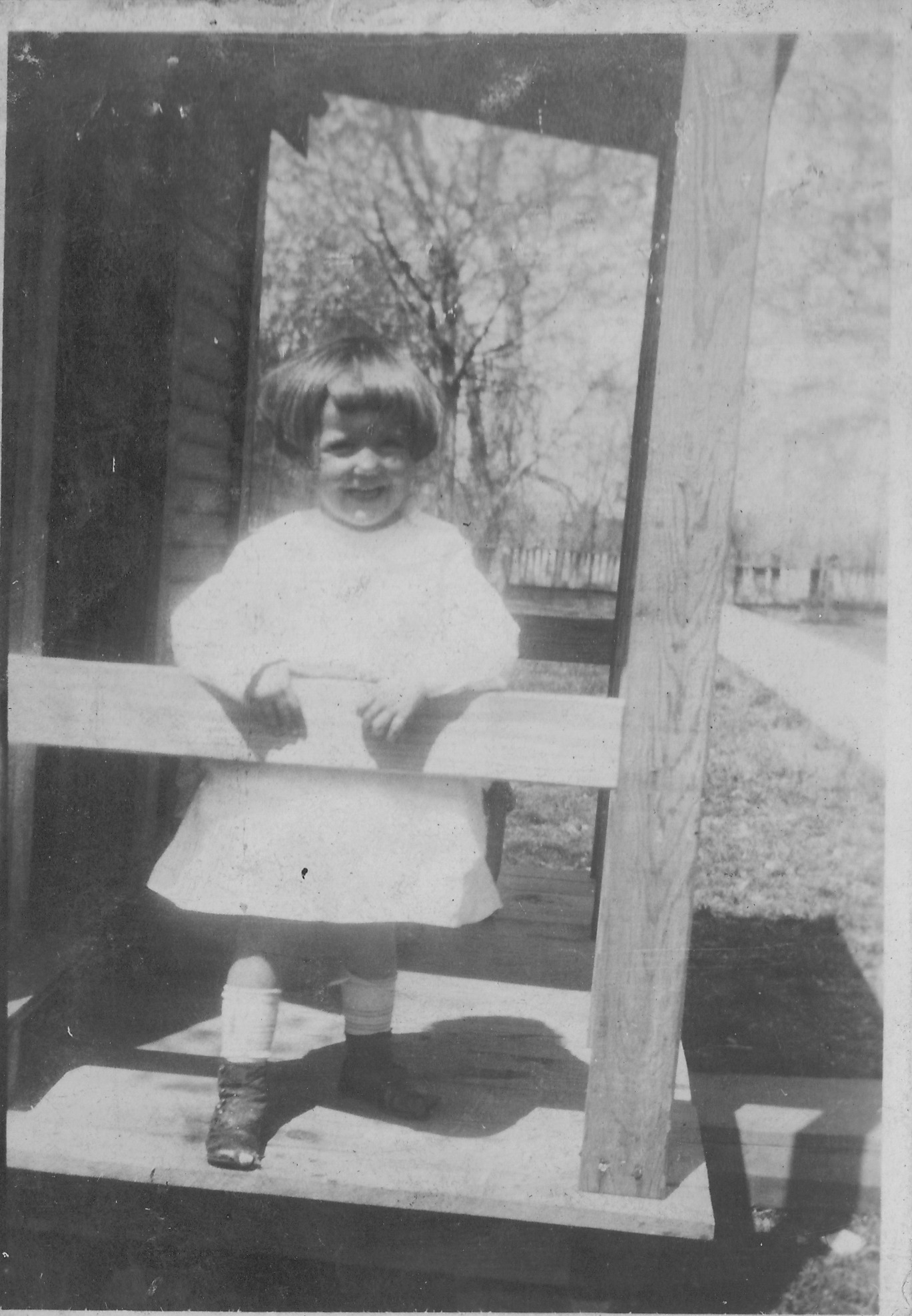
Sara's baby sister, Patricia Ann Evans

“Things changed at home during that last year in Jackson. Daddy was gone an awful lot. Mama was not well, and Bama had her usual ailments. Mama had gained even more weight and was having trouble with high blood pressure and having to go to the doctor a lot. She would have dizzy spells, and Bama would scream for us to run get the bottle of ammonia for her to sniff. In her last years we realized that when she would have trouble breathing, she was usually upset about something and hyperventilating. I wonder if maybe this was part of the problem that year.

“In June, 1932, Mama called us into her room one night and told us that she was expecting another baby in just two weeks. Again, we were totally shocked as were some of the neighbors. We were all excited and started making plans for the arrival. It is now hard to believe that I was eleven, Mary twelve and Tiny fourteen, and we didn’t even know she was pregnant.
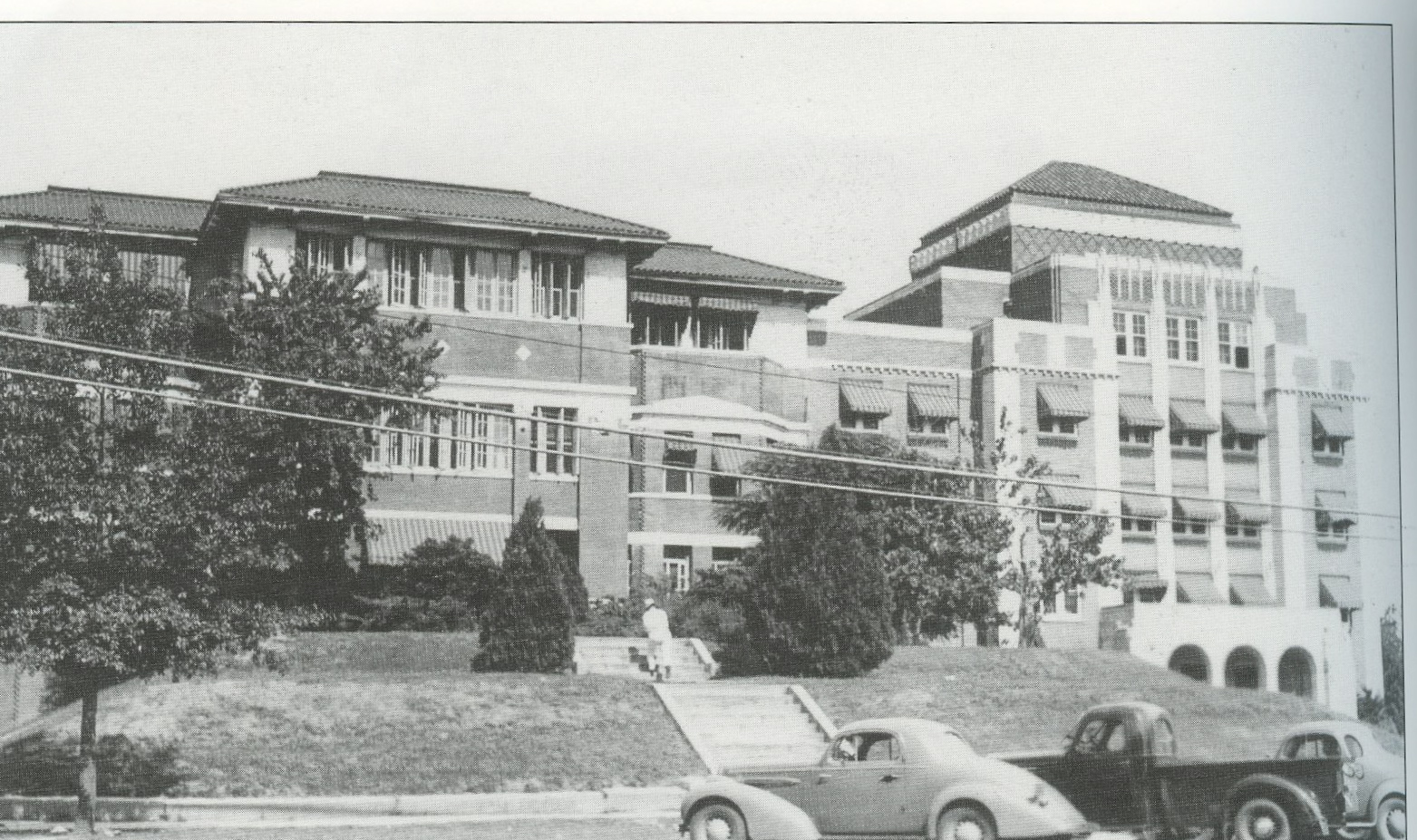
Old Baptist Hospital, North State Street, early 1930s.

“On a Sunday morning, June 19, Mama went to Baptist Hospital to have Tricia. It was a hot day, and we took Son to the zoo that morning to keep him entertained. That afternoon Daddy took him over to a little store by the oil mill to get a candy bar. Late in the afternoon a thunderstorm came up. It was a long day. Then the news came that we had a baby sister, named Patricia Ann by Tiny since so many of the movie stars of that period were naming their children Patricia.

“They were concerned about Mama because of her high blood pressure, weight, etc. Big came down to help us, and she and Bama were upset, and Mary overheard them saying Mama might die, promptly relaying that word to the rest of us. Daddy took us to the hospital sometime during the next day or two, and we could hardly wait to get her home, and when we did she had three big sister nurses. We gave bottles and changed diapers and fussed over who was going to hold her. She was pretty frail, and soon after Mama brought her home, Daddy gave blood for her to have a transfusion. We were frightened that something might happen to her.”

You have to give Jessie credit for subtlety. It’s understandable that Tiny and Mamie would have found nothing unusual in Baby # 3 (Sara) suddenly showing up, as they were barely more than infants themselves. But to be awakened in their Strong Avenue bungalow with the altogether unanticipated news that a brother had popped up in the night, seemingly out of nowhere? When they were, let’s see, aged 6, almost 8, and 9? And now yet another baby on the way, not with the normal 9 month waiting game, but just a few days. Good heavens, what must those girls have thought? They were 11, 12 and 14, and Son almost 5, and they knew their mother had been “under the weather” more than usual, but this revelation of Tricia’s imminent arrival surely left them with suspicious minds all their days. This is simply not how these things are done, but maybe you could get away with it in those long-lost simpler times. Regardless, that hot June day that seemed to be never-ending for Sara (and I’m certain for poor Jessie as well, as she seems to have been unceremoniously deposited at creepy old Baptist Hospital while her brood escaped to the zoo) finally reached its climax with the arrival of the family’s concluding act, tiny Patricia Ann. And her three sisters and her big brother adored her with no reservations whatsoever all their days. Sara could find fault with Tiny or Mamie for merely existing at any given moment, but Son and Tricia were her favorite dolls come to life, companions and confidantes and cherished friends through childhood and into their adult years.

And given that Tiny was assigned the responsibility of naming Evans Number Five, I suppose we should all be grateful that Hollywood’s finest weren’t naming their daughters something dreadful, like Jezebel or Minerva or Hepzibah. I still would have named my first child after Sara’s baby sister, but I suspect Hepzibah Emily Miller would have given me quite a bit of grief about that.
Posted in Uncategorized | Leave a comment

Tour de Jackson

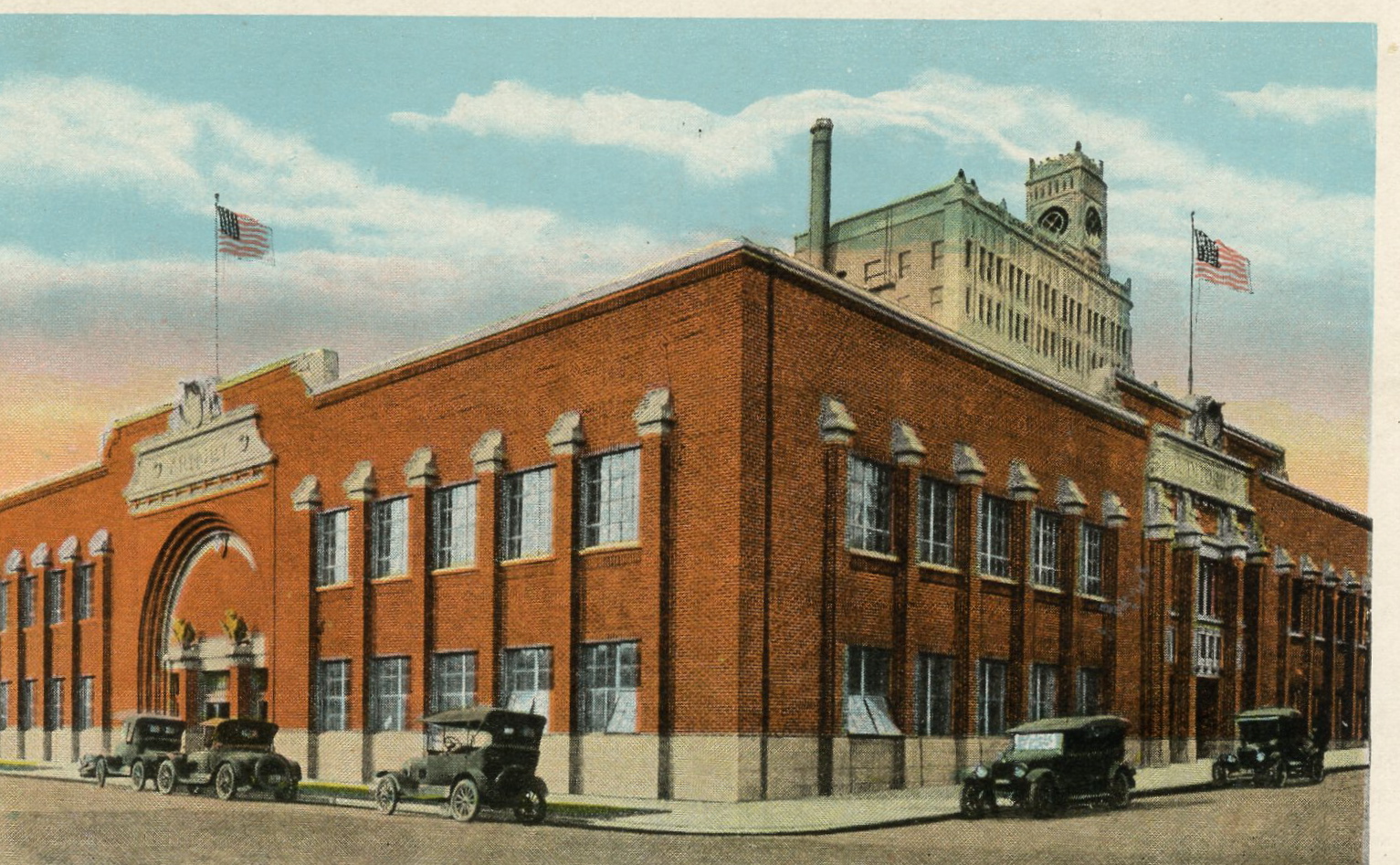
Old Jackson City Auditorium; Lamar Life Tower in the background

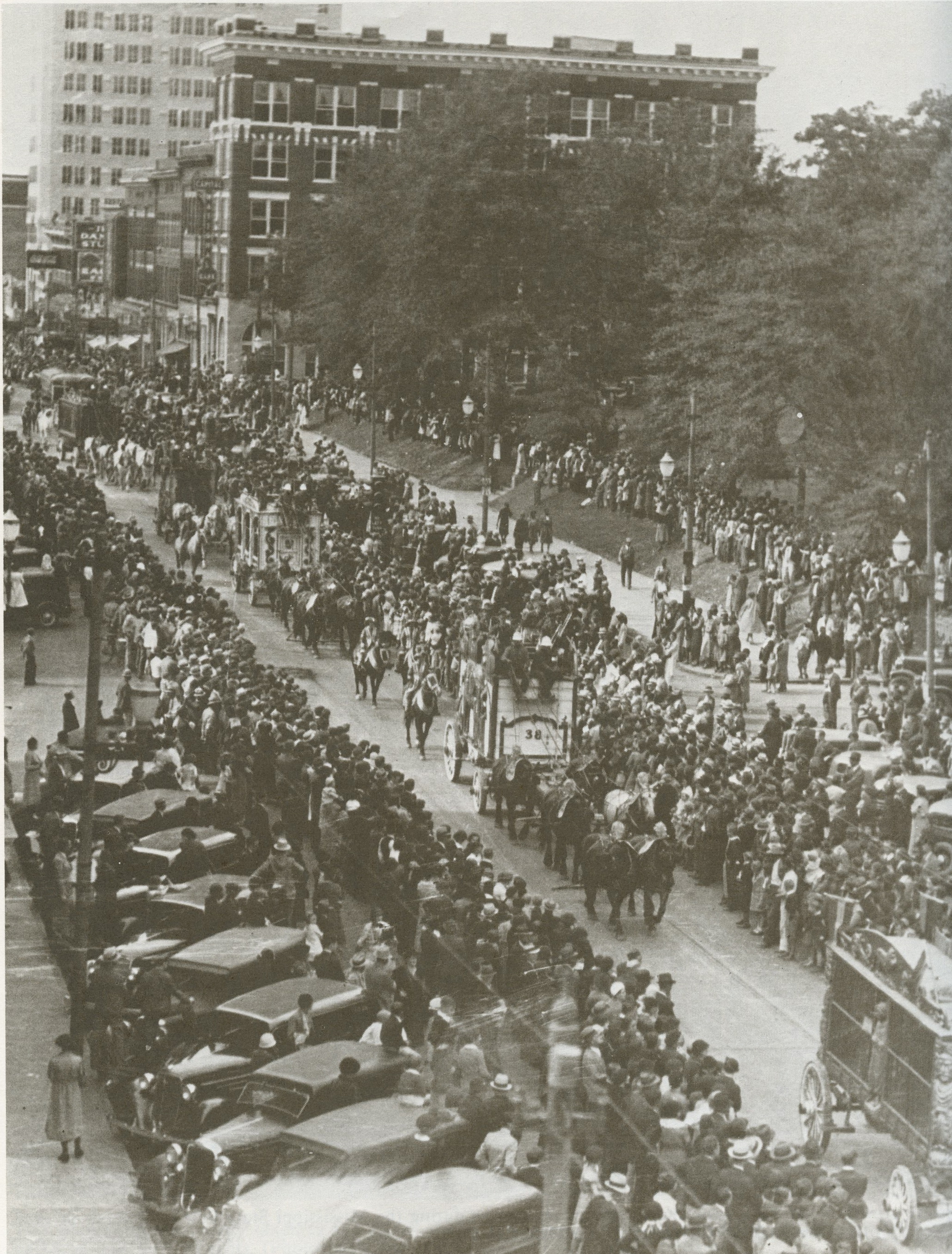
“One advantage that Jackson had over Greenwood was the various shows and productions which came to the Auditorium. Mama took us to hear John Philip Sousa’s band and to the Passion Play and other performances. There were some big parades, and when I was in third grade my teacher chose me to ride in one of them. I don’t even remeber what kind of parade it was. I was just excited about getting to ride down Capitol Street in a parade.

A circus parade (definitely not Sara's parade) down Capitol Street; Governor's Mansion would be on the right, and old First National Bank and Deposit Guaranty buildings are seen in the distance.

“Tiny had gotten a bicycle before we moved to Jackson, and it was painted and handed down to me. I learned to ride and immediately headed down the sidewalk and up a hill to try out my skill. I started down the hill and gained momentum as I went. I panicked when I realized that I did not know how to put the brakes on fast enough on that steep hill. There in front of me lay Robinson Street. I didn’t stop until I landed at the foot of the Matthews’ hill across the street, very thankful that no cars had been coming. That episode was used several times when we had to write stories about exciting experiences we had had since I really didn’t have too many exciting experiences.”Sara was never noted for coordination, and I am grateful, as she was, that a teen-driven roadster wasn’t buzzing down Robinson Road as she careened across to Matthews’ Hill. She got another bike in her 50’s and rode it around North Greenwood for exercise, until Daddy decided it was dangerous and made her park it. One of my favorite photos from that time is of Sara on her bike, in her usual dress, tooling up the driveway with her great-niece Beth. She looks like she’s having a blast, and I’m assuming she finally learned how to put on the brakes.

Sara and a later bike, 1941.

Posted in Uncategorized | Leave a comment

Christmas Memories

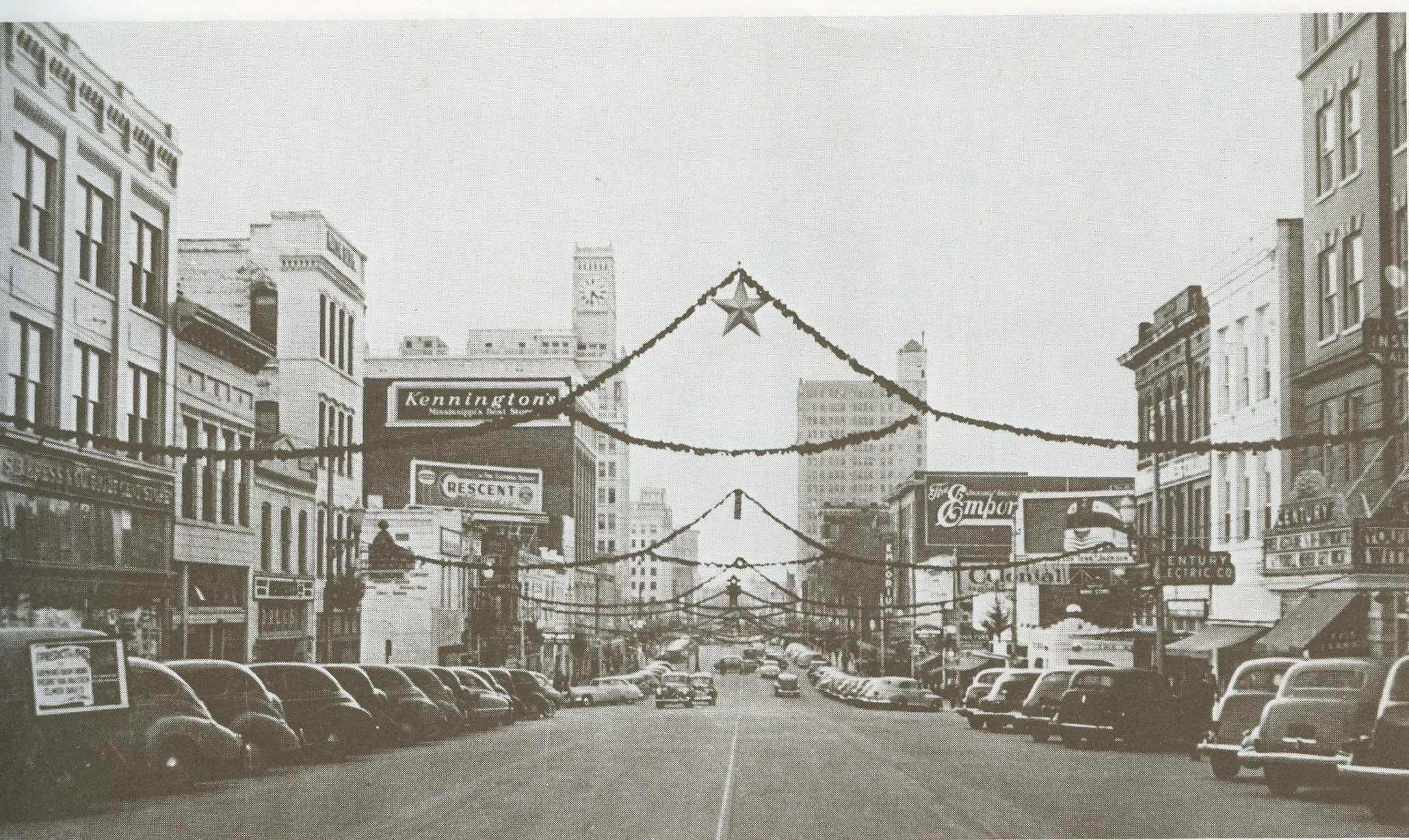
Christmas on Capitol Street, Jackson, 1930s

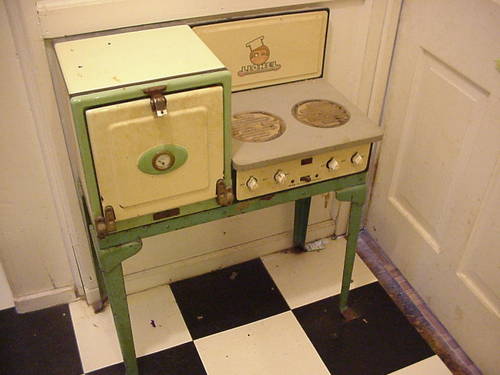
“Our Christmases in Jackson were still a lot of fun, but never quite the same as those we had had in Greenwood because we were getting older. Tiny was embarrassed because Mary and I still believed in Santa Claus in 1929, but one of the old maids on the hill fixed that when she asked in front of us if we still believed. One year Daddy bought a cute little electric stove for us. I still wanted a doll every year and got one until I was eleven. I still have one of the last baby dolls I got.

A toy electric stove from the early 1930s; most were sold for scrap during WW II.

“Daddy would always buy fireworks and on Christmas night we would shoot Roman candles and sparklers. That was just a part of Christmas, just like getting mixed nuts and oranges along with the other things in our stockings.”

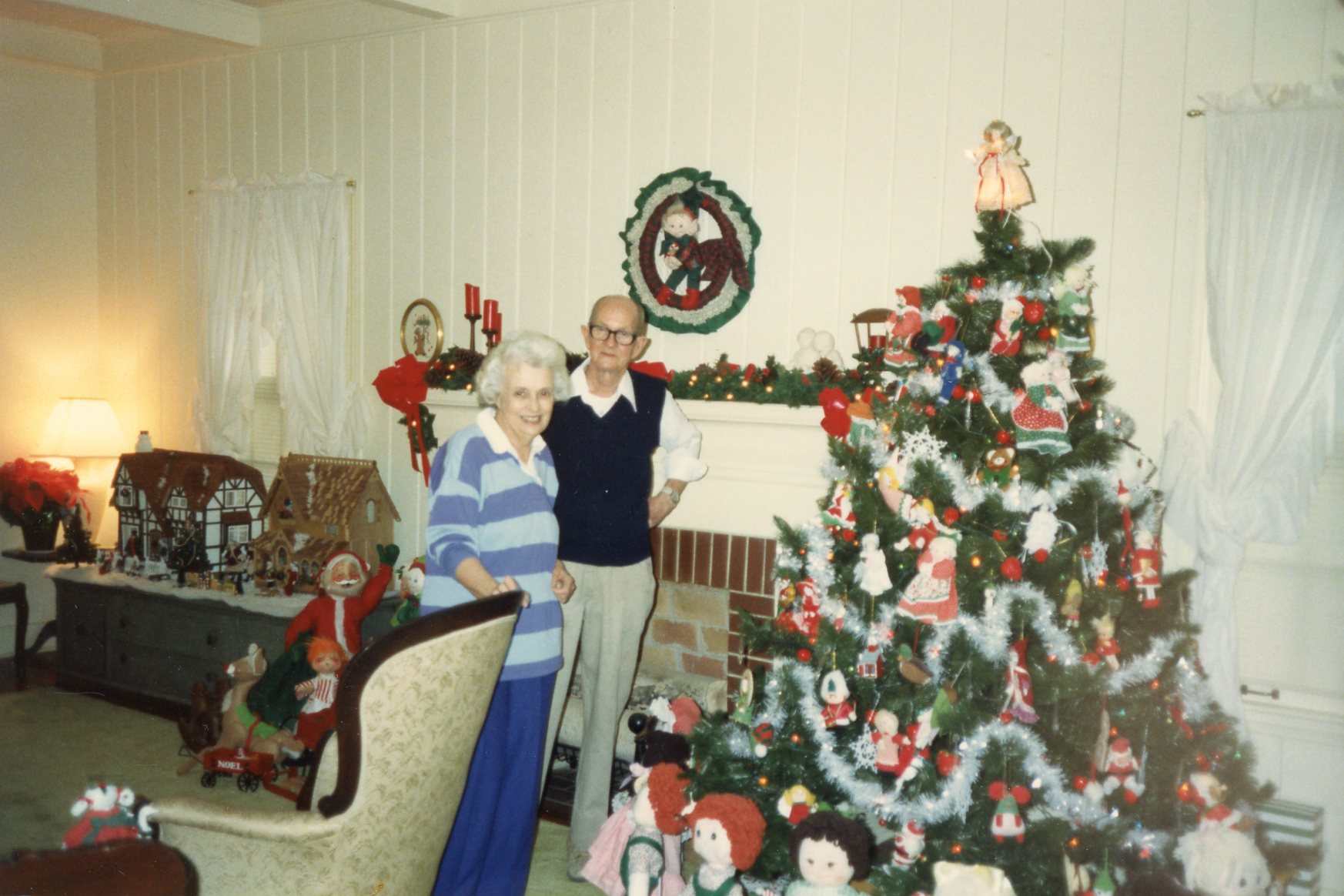
Sara and Russell, mid-1980s, in the midst of Sara's favorite season.

There will be much more to come in these posts about Sara and Christmas, but for now be assured that the season consumed her. And all of us around her. I’ve never known anyone who got a bigger charge out of Christmas preparation and the actual day than Sara Criss, and her enthusiasm made it a treat for the rest of us. Each year, from the November evening the Christmas tree truck rolled into Kroger’s parking lot (and Sara all but unloaded the trees herself, looking for just the perfect one) through the famous Evans Christmas Eve Party (at its peak, 40 or more guests) to the climactic revelation of two little girls’  living room Toyland on the 25th, it was an annual roller coaster of fun. She set a standard that was impossible for anyone to match, and it all started with those happy holidays on Strong Avenue and Robinson Road.

Posted in Uncategorized | 2 Comments

Toys, Treats and Teenagers

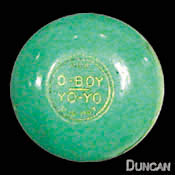
A 1930 Duncan YoYo

“Soon after we moved to Jackson the stores began advertising yoyos, and everyone had to have one. Daddy took us to Patterson’s Drugstore in the Lamar Life Building where Mama ordered all her drugs, and each of us got one.

Lamar Life Building, Capitol Street.

There was even a yoyo contest at one of the theaters. I don’t know whether they had just been invented or whether they had just hit Jackson, but they were a big item that year. It was about that time too that popsicles came out, and as soon as Daddy would come home we were waiting to go to get a popsicle.

“Tiny had become a teenager and was running around with a crowd of boys and girls who were at Enochs Junior High School with her. They would gather at our house or down the street at the Vest’s, who had a tennis court. Tiny did not want me and Mary to come anywhere around when they would show up at our house, and of course we would spy on them and giggle and she would tell Mama, ‘Please make Mary and Sara go away.’ Mary was at Enochs, too, and I was still at Whitfield.”

YoYos came back with a bang in the early ’60s, but I don’t recall Sara being very adept with one. She did take me and Frank McCormick down to Crosstown for a demonstration by The World’s Greatest YoYoer (or somesuch title), and of course Frank instantly mastered all of the tricks and I decided my dexterity lay elsewhere. And Popsicles? Just a part of growing up, always with a towel in the back seat of the Plymouth to protect the upholstery. Some things just endure forever. There was one summer that Sara and I went on a self-imposed banana popsicle diet that lasted a few weeks. We both lost weight but I’ve never felt the same way about banana popsicles since then, and I don’t think she ever had another one.

Tricia adds a funny note to Tiny’s distress at having Mamie and Sara around: While living in Jackson, Tiny began referring to her sisters as “the children” when introducing them to her friends. I’m sure that went over well.

Ed. note: YoYos are supposedly the second oldest toy, known to Egyptians and predated only by dolls. A Filipino busboy in Santa Monica had a sideline business carving and demonstrating them in the 1920s, and Donald Duncan took the idea and ran with it. Thus was born the Duncan YoYo, still rolling today. Popsicles were an accidental discovery by an 11-year-old boy in 1905; he left powdered soda mix, water and a stirring stick out on a very cold night and found a treat the next morning. It took twenty years for the concept to catch on, but it’s never waned.

Posted in Uncategorized | Leave a comment

White Lies and White Knuckles

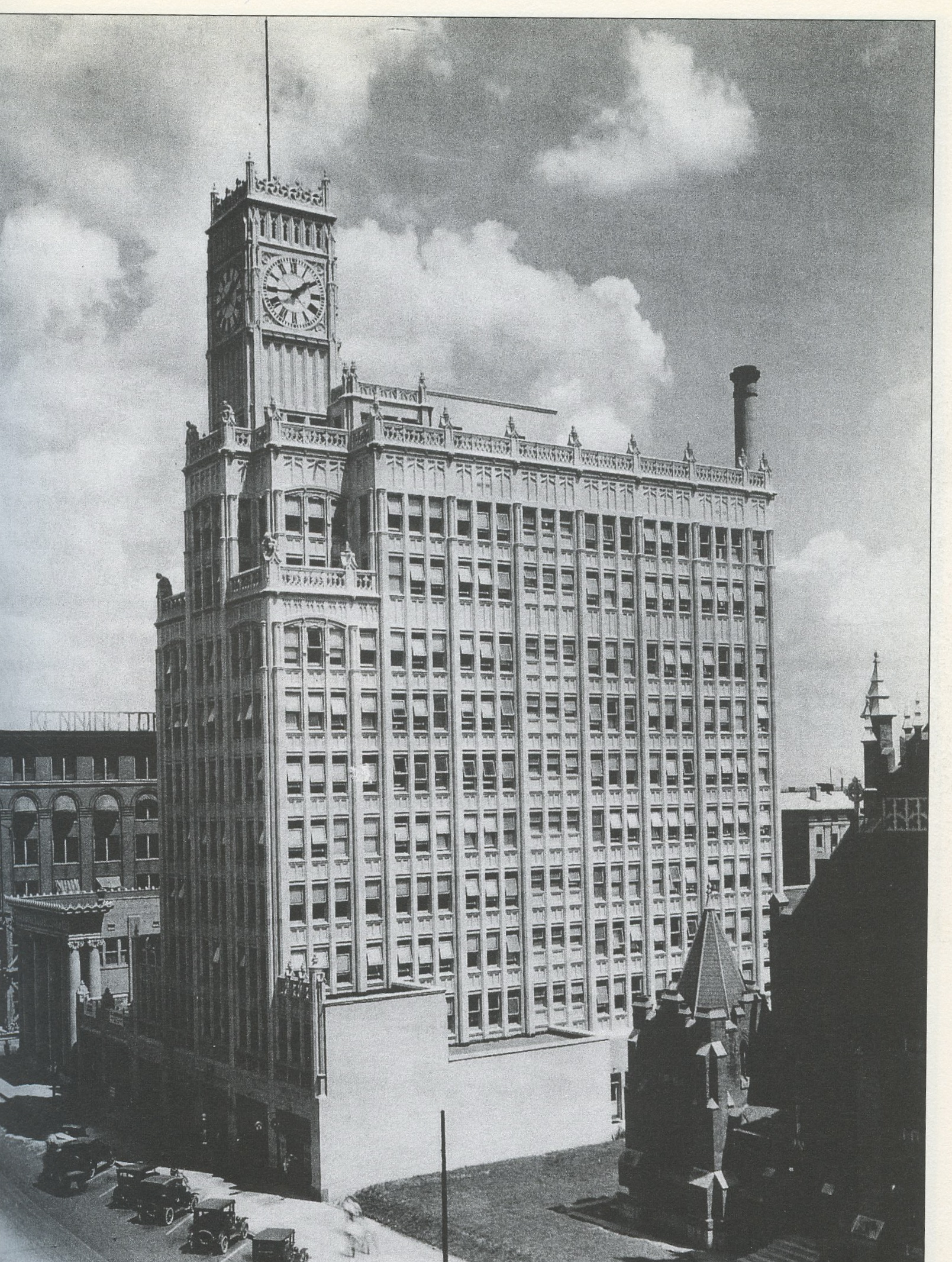
Jackson's skyline around 1930, with the Tower Building (later Standard Life) the white building on the left side.

“I took piano lessons for three years, and the only piece I remember was ‘Drifting,’ which I played in my first recital at the teacher’s apartment on North State Street. That teacher had a nervous breakdown (I probably gave it to her) so I started taking from Mrs. McLean. She was very strict, especially about practicing. I didn’t like to practice, and the rest of the family didn’t like to hear me practice and then I would get a lecture from her when I went for my lesson.

“So that I wouldn’t get upset and want to quit, Mama suggested that I just tell a little white lie and say that I had practiced an hour every day. I was terribly guilty feeling when recital time came and we played on the roof of the Robert E. Lee hotel and I received one of the medals for having practiced so faithfully. I was already upset because the recital was being held on the roof since I was scared of elevators. When we would go up there to practice I would walk up the steps (eleven floors) rather than ride the elevators. This fear had developed after we were in Kennington’s Store one day when the elevator fell. No one was hurt, but from then on I was afraid to get on one. The tallest building in Jackson was the Tower Building, and our dentist had an office there. I dreaded the elevator more than I did having the dentist hurt me. There were no elevators which you operated yourself. They all had operators. I still don’t like elevators.”

View of the Tower Building taken from the roof of the Robert E. Lee Hotel in 1930.

I had no clue that Sara ever took piano lessons. Cathy and I escaped that fate as children, gladly, as so many of our little friends were trapped indoors, banging away in futility on nice afternoons while we scooted off to Woolworth’s or a movie. Sara did buy a small electric organ at someone’s garage sale and place it prominently in the living room, and I remember my dismal performances of “On Top of Old Smoky” which she would applaud and declare the sure indication of deep musical talent. Right. Another organ came along in the ’90s, courtesy of a St. Andrew’s Episcopal School garage sale, and that one was a source of great delight for her grandchildren through the years. Sara was probably right about the piano teacher’s nervous breakdown being an Evans-initiated tragedy: This branch of the family just doesn’t have those genes, and woe be unto any poor music teacher who takes us on.

And the elevators? Sara never got over that fear, which may have been one reason she never left Greenwood much after she moved back in 1932. Look at that skyline picture of Jackson: Elevators were just part of your life, unless you were in very good shape, which Sara likely was at age 9. But you can only climb 11 or 12 flights of steps every day for so long. When we would get on elevators as we traveled, she would generally huddle in the back corner, with a wild look in her eyes, and then all but knock folks down getting off when the doors opened. But escalators weren’t much better. We rode them on our trips to Goldsmith’s and every time, every time, we would get a preliminary warning lecture about children losing their toes in the machinery if they didn’t pay attention. It’s a wonder we could function at all. And we still can’t play the piano.

Ed. note: The Robert E. Lee Hotel, on North Lamar at Griffith Street, was completed in 1930, so it would have been the showplace of Jackson when Sara had her dishonest piano recital there. Its “modern conveniences” included private baths, telephones and individual radios in 300 rooms. The twelfth floor featured a convention hall and roof gardens, which was undoubtedly where the recital was held.

The Tower Building, on South Roach Street just off Capitol, later came to be known as the Standard Life Tower. It was finished in 1929 by the Enochs family, who also owned the King Edward Hotel. At 19 stories, it towered over everything else in downtown Jackson and was completed, start to finish, in five and a half months. Unfortunately, as with New York’s Empire State Building, it opened just as the Depression hit and wound up in receivership. Despite years of abandonment, it still stands and is being converted into condominiums.

Posted in Uncategorized | Leave a comment

Vicksburg on the 4th

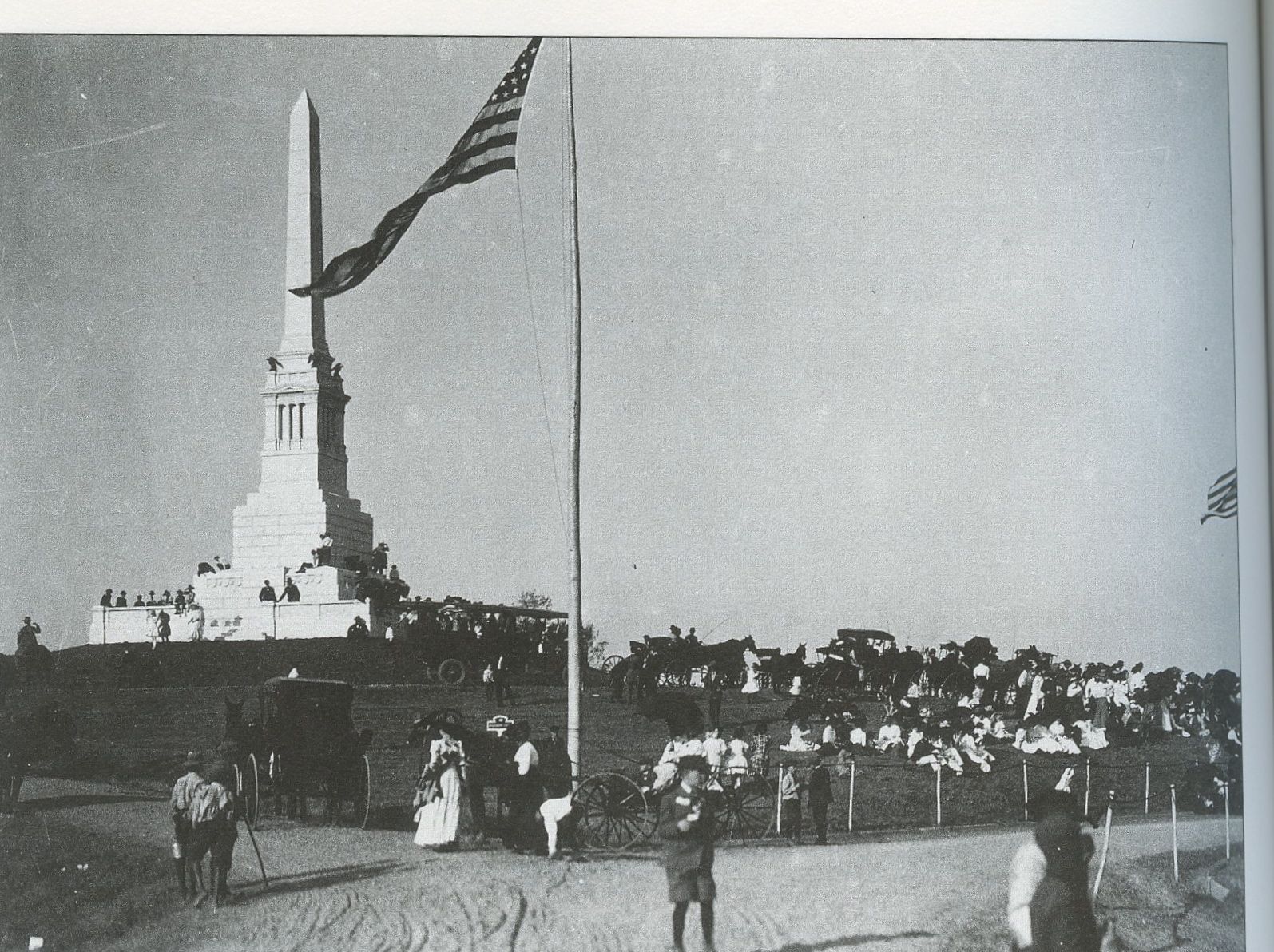
Dedication of the Mississippi Monument, Vicksburg Military Park, Nov.13 1909.


“One summer when Rawa was visiting us, Amos drove us over to Vicksburg to see the Civil War military park. Bama and Mama spent most of the day screaming at Amos to be careful driving around all the steep hills in the park. I believe it was on the Fourth of July and one of the hottest days on record. We drove on across the Mississippi River to Tallulah, Louisiana, where they were having a big celebration on the Court House lawn. Some country woman was sitting on a bench nursing a baby and Mama was horrified that she would do this in public and told us not to look.”

And it’s still hot in Vicksburg on the 4th of July, as I’m sure it was in the 1863 summer that Bigma’s brother died there, and the day Amos careened around the park with a load of Evanses, and the day that Sara and Russell first took me there as a small child, and the 4th of July, 1986, when Sara welcomed her fourth and last grandchild, James Evans Miller, into the world. Happy 25th Birthday, Jim Dandy, and Happy Birthday, America!

Posted in Uncategorized | Leave a comment

Marathon Mania

Not the Livingston Park marathon, but you get the idea.

“During the ’30s the craze was endurance contests where people would see if they could set a record for doing something longer than anyone else. They sat on flagpoles for days at a time, or danced for twenty four hours without stopping, or skated, just anything to try to outdo anyone else. A boy who lived on a little street off West Capitol Street decided to see how long he could sit in a tree. After a number of days living in the tree he was honored with a parade down Capitol Street. A tree had been placed on a truck, and he rode down the street sitting in the tree. I can’t remember whether or not there were some other boys who also stayed in the tree. There was almost a traffic jam on his street sometimes as people rode by the house to see if he was still in the tree.

People all over the country were getting into the act. In Greenwood, Billy West Bell tried swinging on a little airplane swing on his porch on Henry Street. It really was funny the things people were doing to get attention. We went over to Livingston Park to see couples who had been either skating or dancing. I can’t remember which, but they had been at it for a number or hours and some looked as if they were going to pass out.”

I find it hard to believe that Sara, Mamie and Son didn’t at least try some sort of marathon stunt (Tiny would have been too far beyond their schemes by this time), but perhaps not. If it would have earned Sara a parade down Capitol Street, she would have stood on her head for a week.

Ed. note: I couldn’t find anything on the Jackson boy who earned a parade by perching in a tree for several days, but this came out of a Waco, Texas newspaper:

“In July 1930, the Waco News-Tribune carried headlines about “Every Tree now Potential Bean Stalk for Jack” and “Police Officers out on the Limbs” seeking to remove from trees kids in such towns as Fort Worth and El Paso who hoped to set the tree-sitting record.

They had been inspired by Jack Richards of Kansas City, who endured 156 hours — or more than six days — in a tree before he called it quits.

At 1 p.m. July 16, 1930, Frank Kellner Jr., 12, climbed the cottonwood tree in the backyard of his home, 2324 Homan Ave. — launching the craze in Waco.

The News-Tribune reported that the youngster, a 94-pound Boy Scout who looked like he was “out to try anything for glory,” had a support team made up of pals Sidney Carlisle, Keith Burns and Maynard G. Darden. The trio sent up three meals a day, made by Frank’s enthusiastic mother, in a basket on a rope. Some even climbed up to his quilt-lined and book-laden platform to play a board game to help him while away the hours.

Frank’s father told reporters that he’d offered his son a $1 per day incentive for each day past the record Frank could make it.

A day later, two female rivals took to the branches. Frances Coates, 11, and Mildred Fraser, 13, with a black and white kitten for company, climbed a tree at 502 Dallas St. and nestled among blankets and pillows stuffed in the crotches of a box elder. Their support team was composed of friends Mildred Yarbrough and Marie Stewart.

And what did law enforcement make of all this?

Waco Police Chief Hollis Barron told the News-Tribune, “If they’ve got that little sense, let ’em do it.”

After Frank surpassed his Kansas City rival and logged his first 200 hours, the newspaper noted he had others aspiring to his throne: Wilbur Johnson at 2601 Fort St.; Obie Lewis at 1702 Columbus Ave.; Mary Souza at 1708 Webster Ave.; and duo Clover Lewis and Mary Louise Thomas (address not noted).

At hour 231, some 15 hours after securing the newest national record, the “volunteer Tarzan” — as Frank had been dubbed by the press — tumbled out of the tree at about 4 a.m. July 26, 1930. He broke his arm — and lost out on his father’s promised $1 reward by nine hours.

Posted in Uncategorized | Leave a comment

High Water and Hijinks

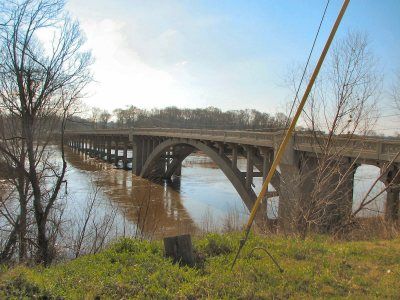
Old Woodrow Wilson Bridge (1925), which led from downtown Jackson to the Gold Coast

“On Sunday afternoons Daddy would take us for a ride, usually on some dusty gravel road which led to Van Winkle or Pocahontas or some other nearby spot. We always got ice cream or a drink, and sometimes he would ride us out in Rankin County past the Gold Coast. This was a strip of joints which sold whiskey and where a lot of gambling went on. It was not legal to sell whiskey in the state at that time, but there were bootleggers on almost every corner who sold it, and the sheriffs got rich with payoffs. The job of sheriff was one of the most sought after of any of the county political jobs.

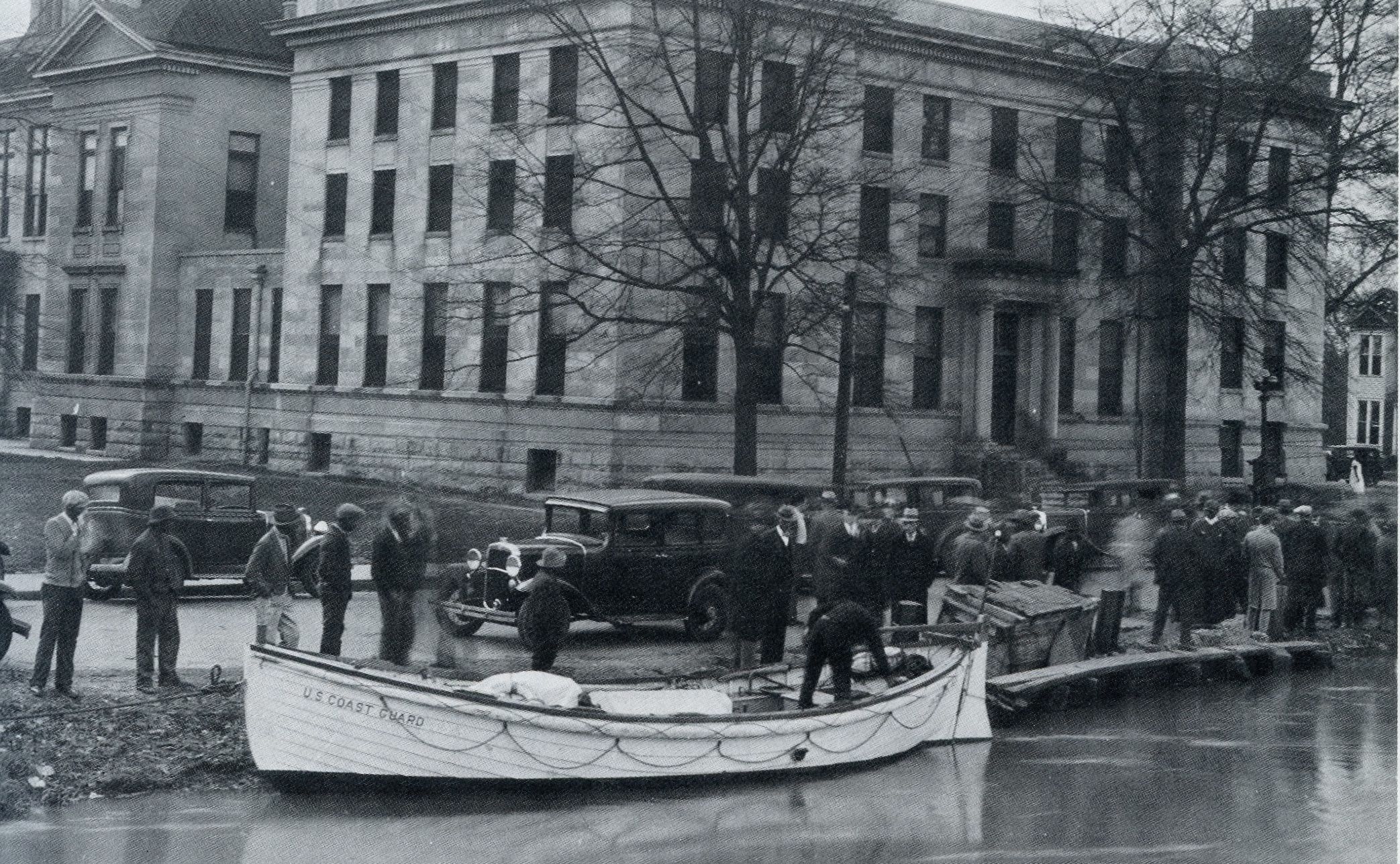
“Rawa [Rena Stott] and Buddy [Roy Stott, Jr.] came to visit us, and Big brought John down several times. [Big was Sara’s aunt, John her cousin and Rena and Buddy’s little brother]. There was a terrible flood in Greenwood in 1932, and the Stotts came to stay with us while Uncle Roy stayed behind to help fight the flood which they were afraid might even affect their house.

River Road and Leflore County Courthouse during 1932 flood.

All of North Greenwood was under water, with both the Yazoo and Tallahatchie Rivers overflowing. The only way you could go down Grand Boulevard was by boat. The Coast Guard was sent in to help.

Grand Boulevard, looking north from Keesler Bridge, during 1932 flood. The house on the right stood where Dr. Bill Jones' office is now.

“While they were there Mike Conner was inaugurated as governor. Daddy had been a big supporter of his. Daddy was always interested in politics, and in nearly every race was working for one candidate or another.

Governor Mike Conner

“Mama always said she hated politics, and it would make her mad because he got so involved. One time he took us up the street to Poindexter Park to hear Bilbo speak, when he was running for governor. Bilbo was a strong segregationist and was advocating that we send all the Negroes back to Africa.

Theodore G. Bilbo, in his usual form

“He always got the ‘redneck vote.’ Daddy would never have voted for him but just wanted to see what he was going to say. He was a small man who always wore a red tie and made fiery speeches. He was governor for one term and later served as a U.S. Senator and brought a lot of negative publicity to the state.”

Sara witnessed a lot of Mississippi history in her 88 years. The infamous Gold Coast, floods, and political shenanigans: All a part of our textbooks now, but a very vital and real memory in her lifetime. She found politics fascinating, if maddening, and just abhorred windbags who made Greenwood or Mississippi look bad. Even as a child, she knew Bilbo was a disgrace. Ross Barnett and Cliff Finch and a host of local politicians were on her black list for public nonsense and unfortunate decisions. She wasn’t much of one for sending money to those running for office, but if you had her trust, she would burn up the phone lines for your cause. I miss her input during this state election year.

Ed. note: Theodore G. Bilbo was, frighteningly enough, elected Governor of Mississippi twice. The little peckerwood (sorry, there’s no word any kinder than that) from Pearl River County was a Vanderbilt dropout who rose to prominence in the hotly contested 1910 fight over a Senate seat between LeRoy Percy and Greenwood’s James K. Vardaman. Bilbo, as a state senator, accepted a bribe to vote for Percy and was reprimanded by the Senate, which called him “unfit to sit with honest, upright men in a respectable legislative body.” Sadly, the voters disagreed. He was elected Lt. Governor (after a rival broke a cane over his head), then Governor (1916-1920). He was elected Governor yet again in 1928, the term when he famously fired the presidents of Ole Miss, MSU, MSCW and the Ole Miss Medical School, replacing them with a real estate agent, a press agent, a recent college graduate and someone who had taken a course in dentistry. All the schools and USM were disaccredited. He was later elected to the U.S. Senate, where his mischief continued. Why is there not a book about this character?

Martin (“Mike”) Conner was the anti-Bilbo, elected Governor in 1932. The 41-year-old Yale law graduate took over after Bilbo’s disastrous reign,  with a bankrupt state treasury and $13 million in debt. He rescued the colleges and sealed his own political doom by promoting and having the legislature pass a state sales tax law. Two later gubernatorial bids were unsuccessful and he later served as commissioner of the Southeastern Conference. A remarkable man in many ways, and one that Sara always admired.

Posted in Uncategorized | Leave a comment

Just As I Am

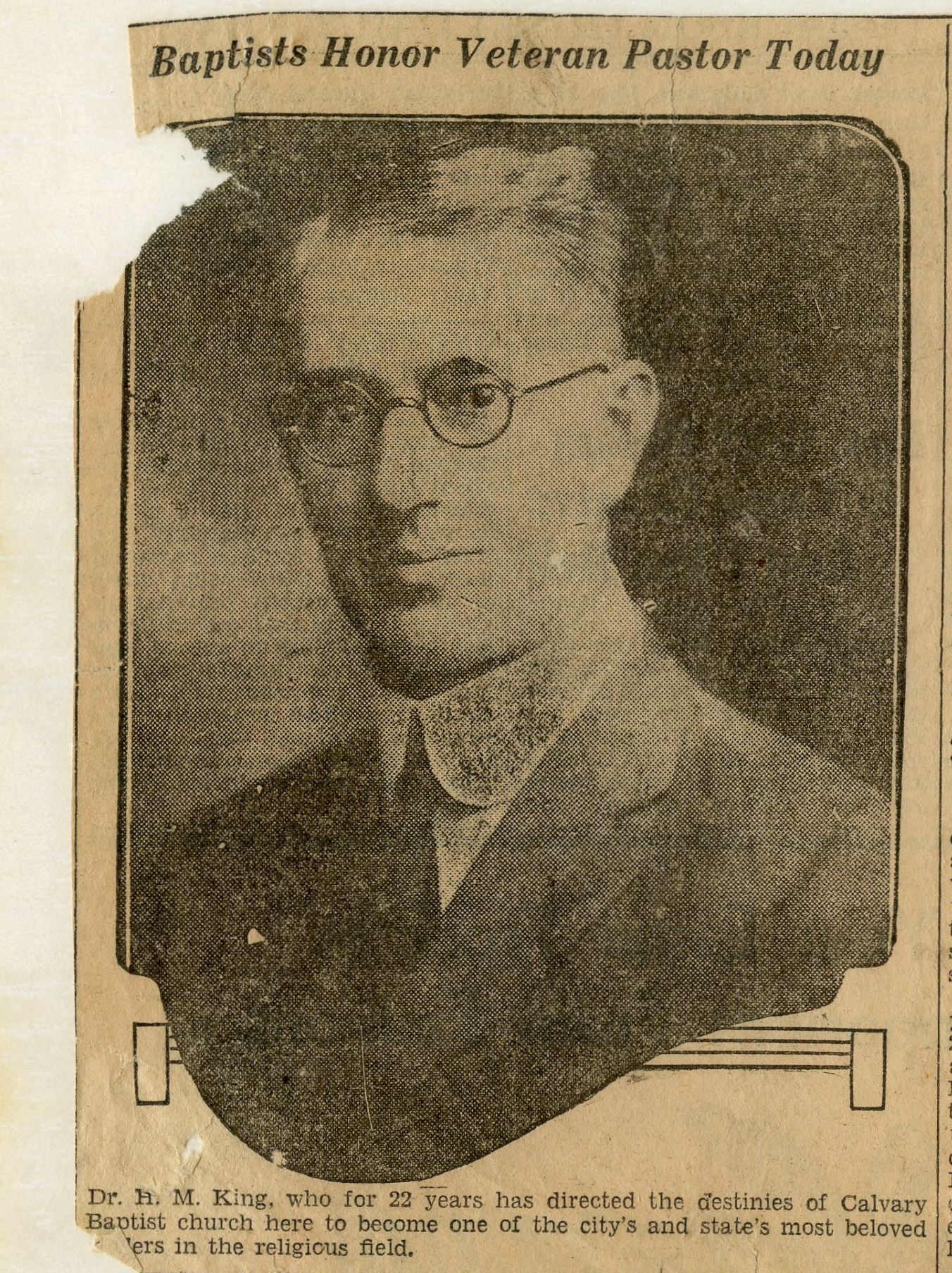
Calvary Baptist Church, West Capitol Street, Jackson. This must have been a newspaper illustration which Sara cut out and saved.

“We went to Calvary Baptist Church in Jackson. When I was nine Mary and I were at church one Sunday when they had an evangelist trying to get more people to join the church. He convinced us that we were going to hell if we didn’t come right down and join. So we nudged each other and down we went to the front of the church.

“After we got home and realized what we had done we were scared to death, especially since we were going to have to be dunked under the water. By that time we had had the fear of water thoroughly instilled in us. Mama got together white dresses though and we made it through all right and became full fledged Baptists, which Mama had ordained that we should be. She never forgave any of us for later leaving the Baptist Church, something which all of us did except Son.”

Dr. H.M.King, pastor of Calvary Baptist when Sara and Mamie took the plunge. The intimidating fellow with the stiff collar is Dr. H.M.King, pastor of Calvary Baptist Jackson from 1912 until who knows when. He was in charge when Sara and Mamie skittered down the aisle, fearing for their young souls, and made their commitment, undoubtedly to the strains of “Just As I Am,” the multi-multi-verse Baptist invitational hymn which can go on practically forever.

Jessie was bereft when all of her children except one married into alternate (and, in her mind, questionable) denominations. Sara and Russell dropped me off at St. John’s Methodist every Sunday morning until the North Greenwood Baptist youth minister moved in across the street on East Adams. He had four boisterous children and that was all it took. The Baptists had GA’s, Training Union, donuts and the ultimate goal of all ten-year-old girls, missionary work in darkest Africa. I was hooked. Jessie was beside herself. Mamie found it the funniest conversion in the history of organized religion and made a huge commotion out of presenting me with a copy of Jesus Was His Friend, a child’s biography of Simon Peter. She then took to calling me “Simon,” and never called me by my real name again. I still have that book, and I still miss my zany Aunt Mamie. And  I do have my doubts as to whether she or Sara, either one, was dunked deep enough in 1930.

Mamie, before she got saved.

Posted in Uncategorized | Leave a comment

Moon over the Mountain

Sara and Son, probably 1930

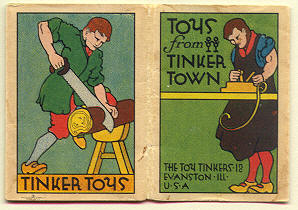
“Son was such a cute little boy with blonde curls. Daddy finally decided it was time for him to get a haircut, and Mama carried him to Kennington’s where he got a Buster Brown cut with bangs. Every day when I got home from school, he and I would get in the back hall and play Sunday School or school. Then we would get his blocks and build a pig stand (the drive-ins of those days) and we would use all of his little cars and trucks for the customers. He got a Tinker Toy set, and he and I built elaborate contraptions in the living room.

“Sometimes he would upset me and Mary, though, when he would tear up our paper dolls and especially the day when we had made a swing out of cardboard and he promptly destroyed it. Mama didn’t often punish him, but the one time I remember she did was on a Sunday afternoon when he decided to grab a heavy ceramic type top from the jewelry box on Mama’s dresser and threw it at me, hitting me in the head. I think that did bring on a spanking out in the garage where he happened to be when I told on him.

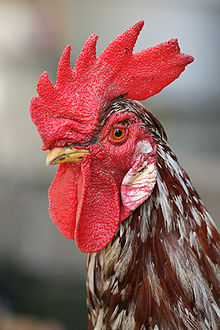
“There was a hatchery on the street near us, and one day one of the chickens, a little rooster, wandered into our backyard. We immediately decided to make a pet of him and named him Peter Pan. He turned out to be a mean little rooster who liked to chase us and peck our legs.

This was never meant to be a pet.

“One day Mary and I were having a tea party under a tree on the side of the house, and Peter Pan broke it up. It would tickle Son when he got after us, so he would bring him out to chase us. Mama thought he was just being cute to do that.

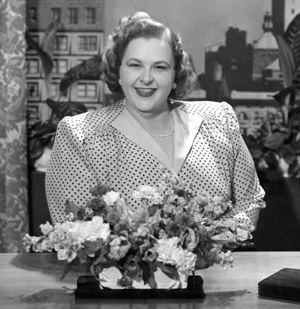
“We had brought the Victrola from Greenwood when we moved, and Mama bought records by Kate Smith, who had just gotten popular as a singer. Her favorites were ‘Tiptoe Through the Tulips’ and ‘When the Moon Comes Over the Mountain.’ Another popular song was ‘It’s Only a Shanty in an Old Shanty Town.'”

Kate Smith in her prime.

When the moon comes over the mountain
Every beam brings a dream, dear, of you
Once again we’ll stroll ‘neath the mountain
Through that rose-covered valley we knew

Each day is grey and dreary
But the night is bright and cheery
When the moon comes over the mountain
I’ll be alone with my memories of you

Son and Sara maintained that close relationship throughout their lives, and he was a source of unlimited support, both emotional and practical, after she was widowed in 1992. He was a rock for the whole family and never seemed to mind too much that having four sisters could be a burden as well as a blessing. Sara clipped out every newspaper article and award writeup for Son (and there were many) and put them all carefully into a scrapbook, I guess so her own grandchildren would know how special her little brother was. One assumes that she forgave him for unleashing that rabid rooster and decimating her paper dolls.

And what more is there to say about Kate Smith, the Patron Saint of Plus-Size Ladies? If you have no other means of inspiration over this 4th of July weekend, grab a hanky and pull up her scene on YouTube from This is the Army (1942), where she introduces Irving Berlin’s God Bless America. That should do it.

Posted in Uncategorized | 2 Comments