Walkin’ in Memphis

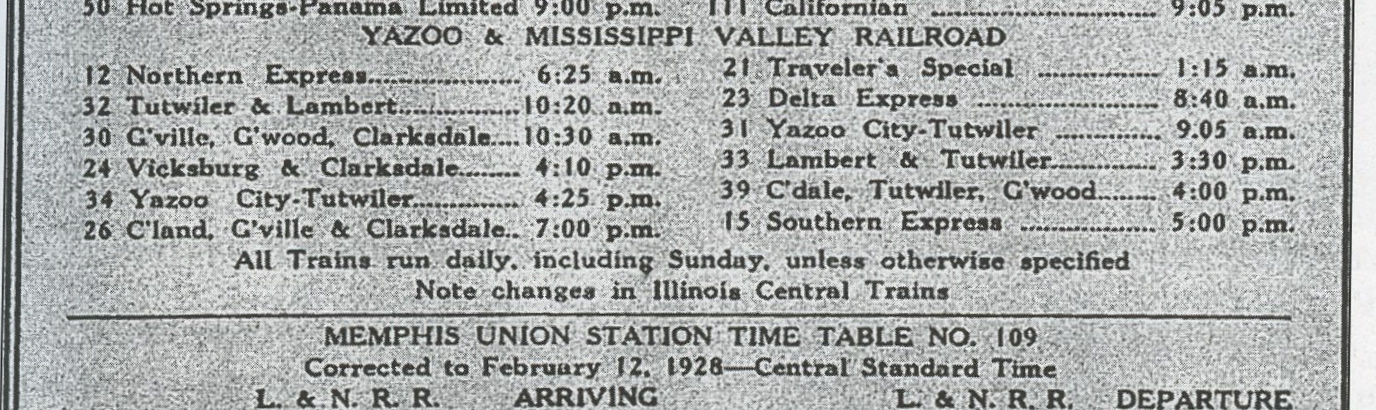
Railroad timetable, Greenwood to Memphis, 1928

“We went to Memphis on the train in May, 1927, and stayed at the Peabody Hotel, which was just two years old and the most wonderful place I had ever been in. Getting off the train and going into the big train station and then getting a Yellow Cab to the hotel really impressed us. The huge ornately decorated lobby of the Peabody with the fountain in the middle with gold fish (that was before the ducks) left us speechless. I tried to imagine what it would be like to live in a place like that (like some of the kids in one of our story books.)

Peabody Hotel, circa 1925

“We would go to the coffee shop every morning, and the Negro waiters in their white coats would take your order. I remember the white tablecloth and napkins and Mama and Daddy trying to teach us proper table manners. We rode a streetcar for the first time, and I loved the cabs because they had little pull down seats in the back. We went to the zoo and to Court Square in downtown Memphis to feed the pigeons and squirrels, and to the biggest Woolworth’s I had ever seen.

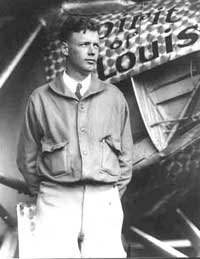
“The newsboys on the street with the Commercial Appeal were shouting, ‘Extra, Extra, Read all about it! Lindbergh lands in Paris!’ I had heard the grownups talking about Lindbergh making the first solo flight from New York to Paris, but at age six failed to attach much importance to the news. With no television, and radio just beginning, the newspapers would put out an extra edition of the paper whenever any big news story broke.

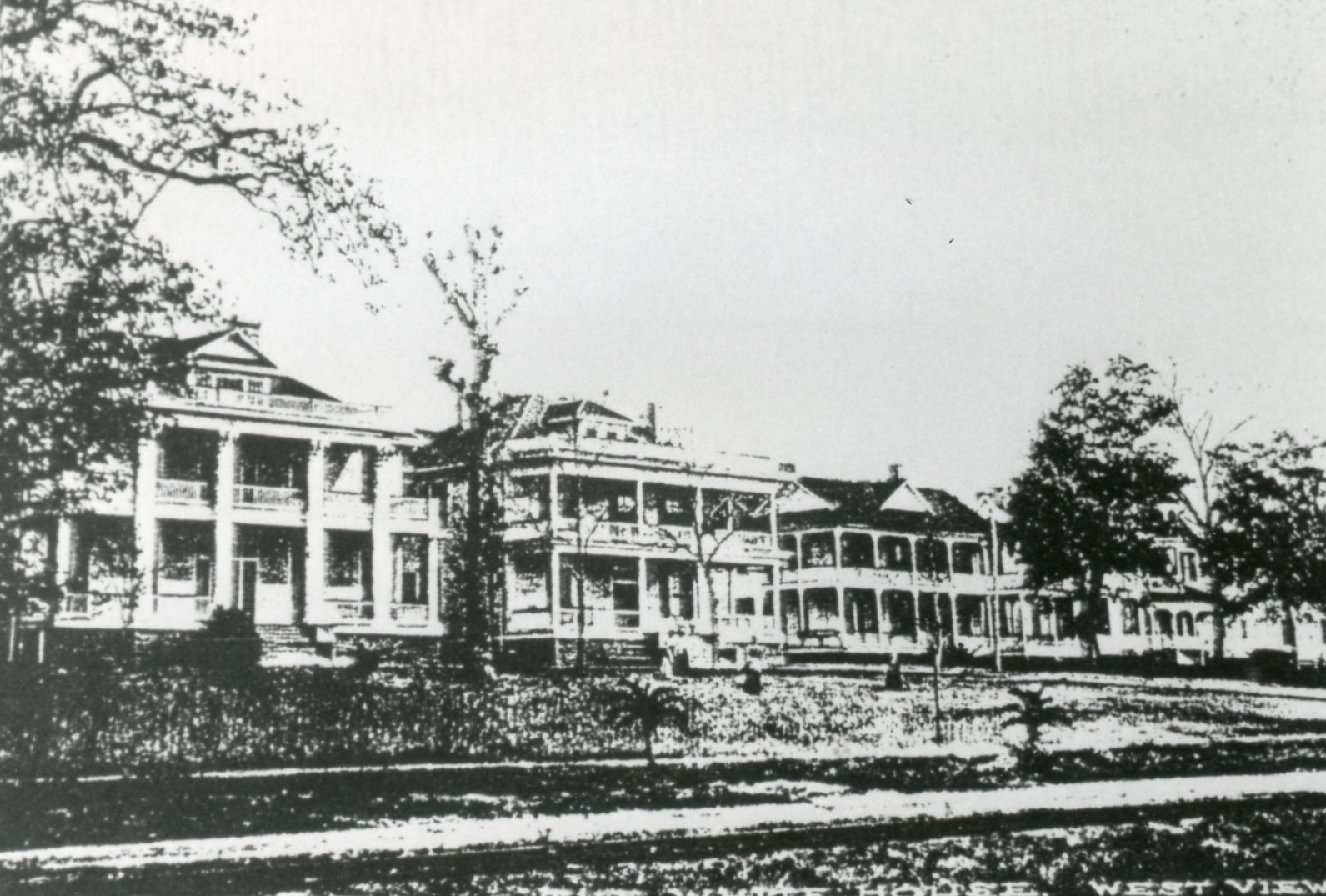
“Our trip to the Coast was fun, too, our only exposure to the beach with the exception of Big Sand Creek in Carroll County where we had waded and pretended that we had been to the beach. It was such a long trip that we had to spend the night in Hattiesburg en route. We stayed at The White House, a big old hotel facing the beach. There too I was impressed with the big dining room. Daddy took us down on the piers and let us wade in the Gulf and hunt for shells, and we walked with Mama and explored very old cemeteries. Mama always had a fascination for old cemeteries. We stopped at the ten cent store on the way home and got something for each of us and something for Mable Petty.”

White House Hotel, Biloxi

Sara was fascinated with big cities, and I don’t think she ever got to travel as much as she would have liked. Mind you, now, she had no desire to live in those cities, because the sun rose and set with Greenwood, Mississippi squarely in the center of the universe. But she loved to dress up and go to downtown Memphis, gripping mine and Cathy’s hands so tightly that the circulation in our little fingers would vanish. Daddy would always drop us off at Goldsmith’s, where we would explore every floor before heading off to Kress’ and Lowenstein’s and Woolworth’s and pigeon-feeding sessions in Court Square. We’d swing through the lobby of the Peabody and watch the ducks while she wistfully pointed out the white-tablecloth restaurants, unchanged from that magical trip in 1927. I was desperate to stay overnight there, but that wasn’t in the Criss budget. The Chisca Plaza was just fine, thank you.

Downtown Memphis has seen some dark days since Sara’s trip in the ’20s and ours in the ’50s and ’60s. The Peabody was shuttered for years, and just the mention of that tragedy would send her into a funk. Somewhere in these boxes of her souvenirs I have the receipt for the two nights that she and Daddy spent at the Peabody in January, 1947, as newlyweds. More on that in a later blog; we’ve got twenty more years to go.

January 24, 1947, Peabody Ballroom

Posted in Uncategorized | Leave a comment

Orange Crush and Outhouses

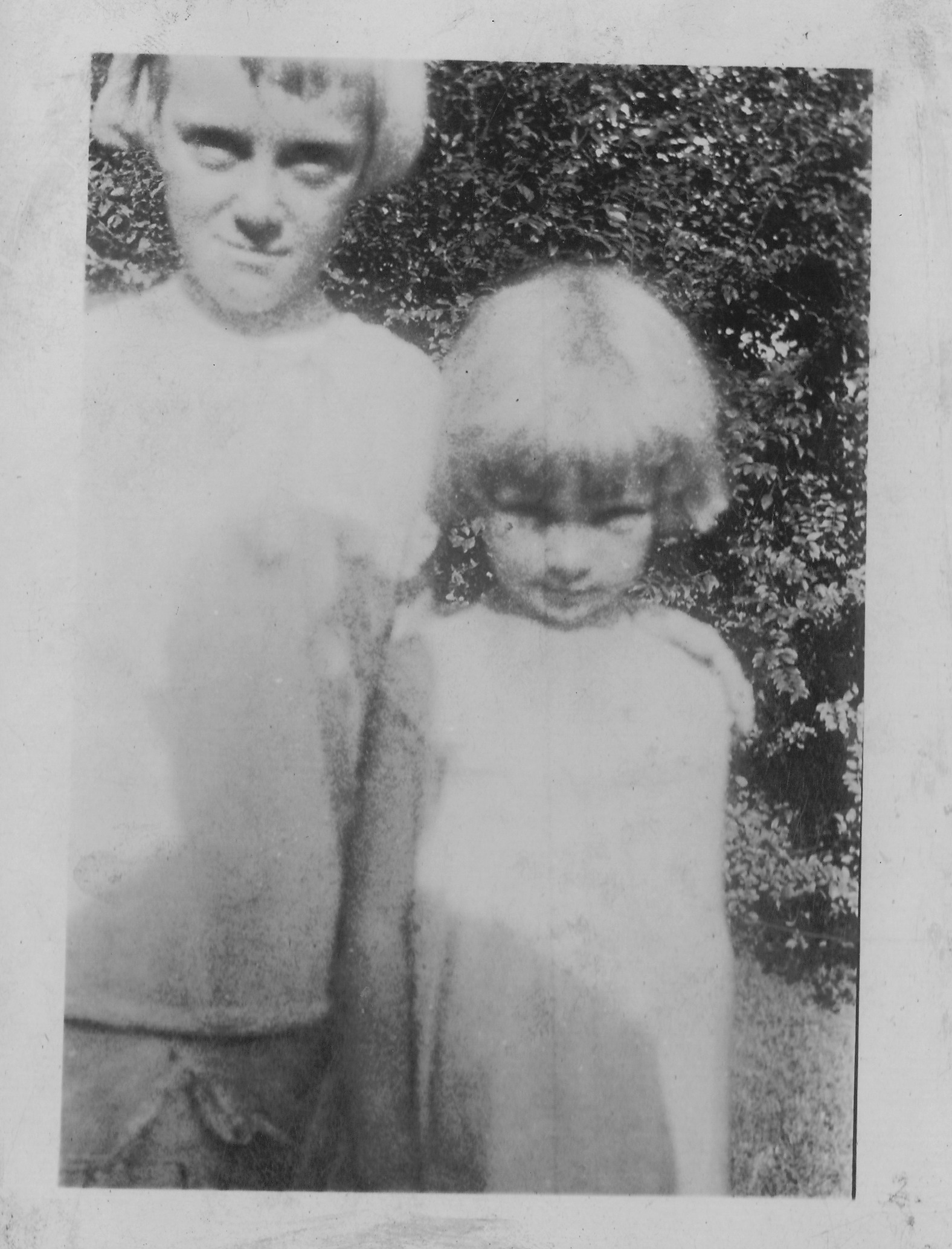
Tiny, Mamie and Sara, perhaps in Sledge. Sara's worried question: "What's a privy?"

“In the spring of 1927 there was a terrible flood on the Mississippi River at Greenville, and thousands of people had to flee their homes. Much of the Delta was under water. They put up large tents down the street from us toward the Buckeye and moved the refugees into them. They would walk past our house every day going to town, and we seized the opportunity to set up a lemonade stand. I don’t recall how good business was, but I don’t imagine folks who had had to leave their homes under water were willing to spend even a nickel on lemonade.

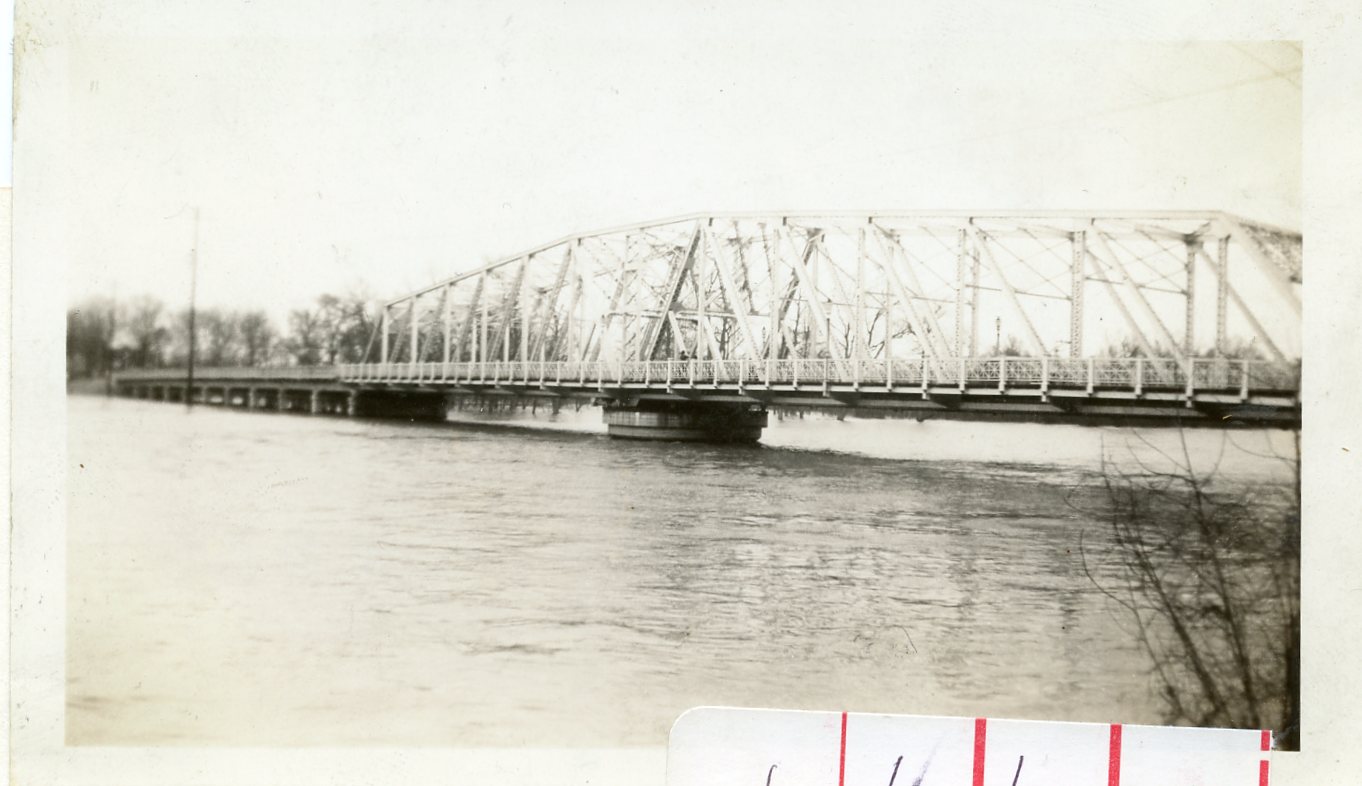
Yazoo River at Greenwood, 1939

“We did not see much of Daddy’s relatives as we did Mama’s because they did not live in Greenwood, and traveling in the 1920s was not easy. His sister, Aunt Bonnie, lived in Sledge…..we made one trip up there in the car, and it took all day going and coming though it probably wasn’t more than 75 miles from Greenwood.

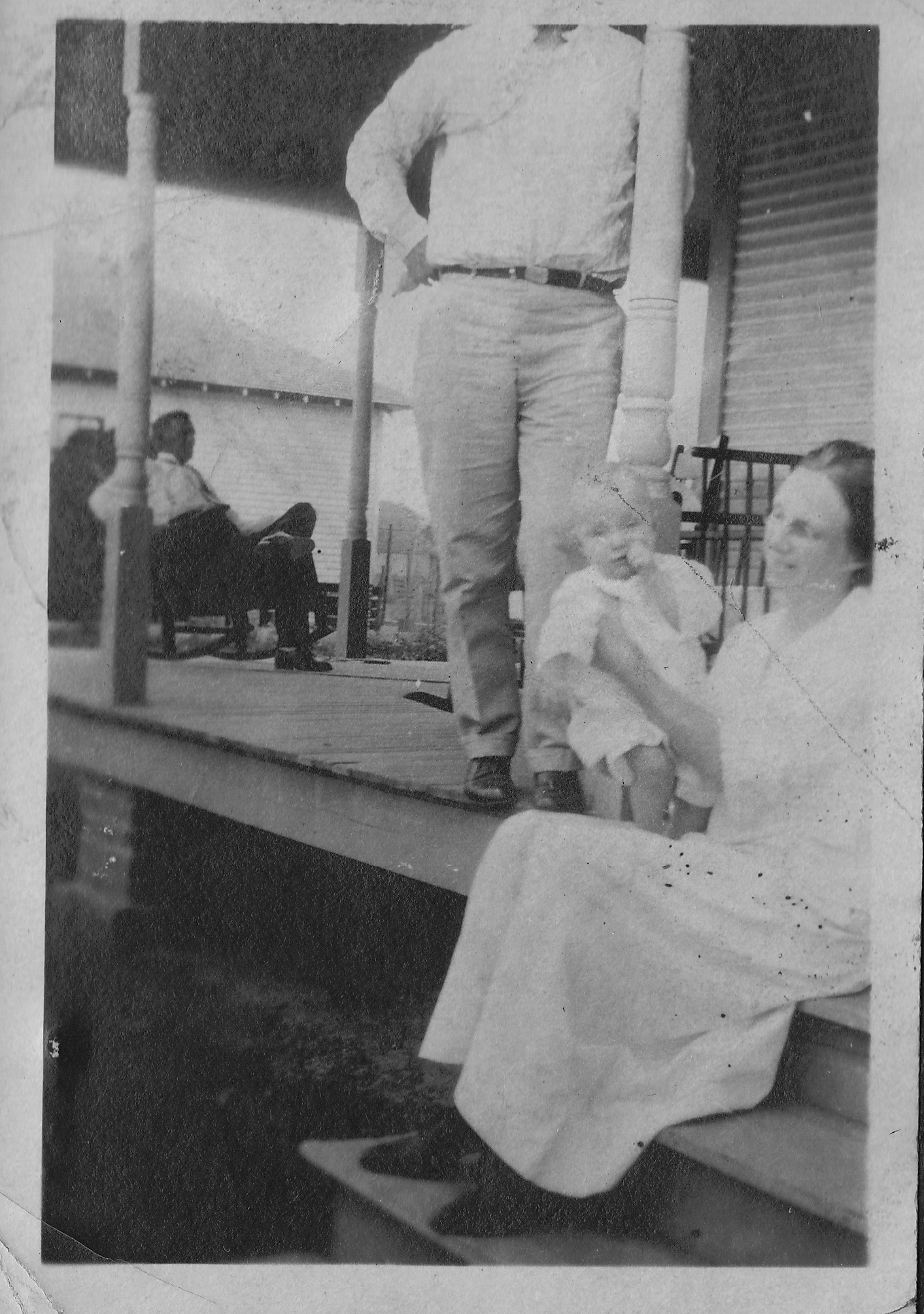
Aunt Bonnie, ? with one of her five girls

Two of Aunt Bonnie's five daughters, Sledge MS

The old cars didn’t have windows, and you had big sheets of celluloid, something like plastic, which you snapped on the sides to try to shut out the wind and the dust. The roads were dirt and gravel, and the dust was horrible. You would be filthy when you arrived at your destination. You could count on at least one and probably more than one flat tire on any trip, and Daddy would have to get out and fix it. There were very few service stations (we called them filling station since that was where you filled up with gas). We would find a country store somewhere along the way and stop for a soda pop, usually a strawberry or orange crush.

” I

” “I was impressed on that visit to the little village of Sledge that no one had indoor plumbing and we had to go outside to the privy to use the bathroom. Since traveling was so hard we had few vacations and those we  had stand out in my memories. I wrote about our trip to the Gulf Coast and to Memphis for at least six years in school when we were told to write a story about our summer vacation.”

Isn’t it odd how one side of your family (usually the maternal side, at least in our family) comes to dominate your memories and remain in your life forever? All of our lives, we’ve heard tales of Jessie’s family: Bigma, Bama, Big and Uncle Roy, the Stott cousins, etc. Howard’s family is like a shadow, flitting along the corner of Sara’s awareness and now lost for good. Until I read this part of her memoirs, I had no clue that she had five first cousins in Sledge. Where in the world did they go? And where was the house pictured above? The Evans girls certainly look as if they had endured a harrowing road trip and Sara seems downright dyspeptic, probably because Jessie had lined them up for Syrup of Pepsin the night before and the facilities in Sledge were not up to the standards of Strong Avenue.

Posted in Uncategorized | 2 Comments

Fun with the Funny Papers

Tiny, Rawa, Mamie and Buddy read the funnies.

“Since there was no television the comics (funny papers we called them) were the nearest thing we had to cartoons. On Sunday morning we would fight over that section of the Commercial Appeal.

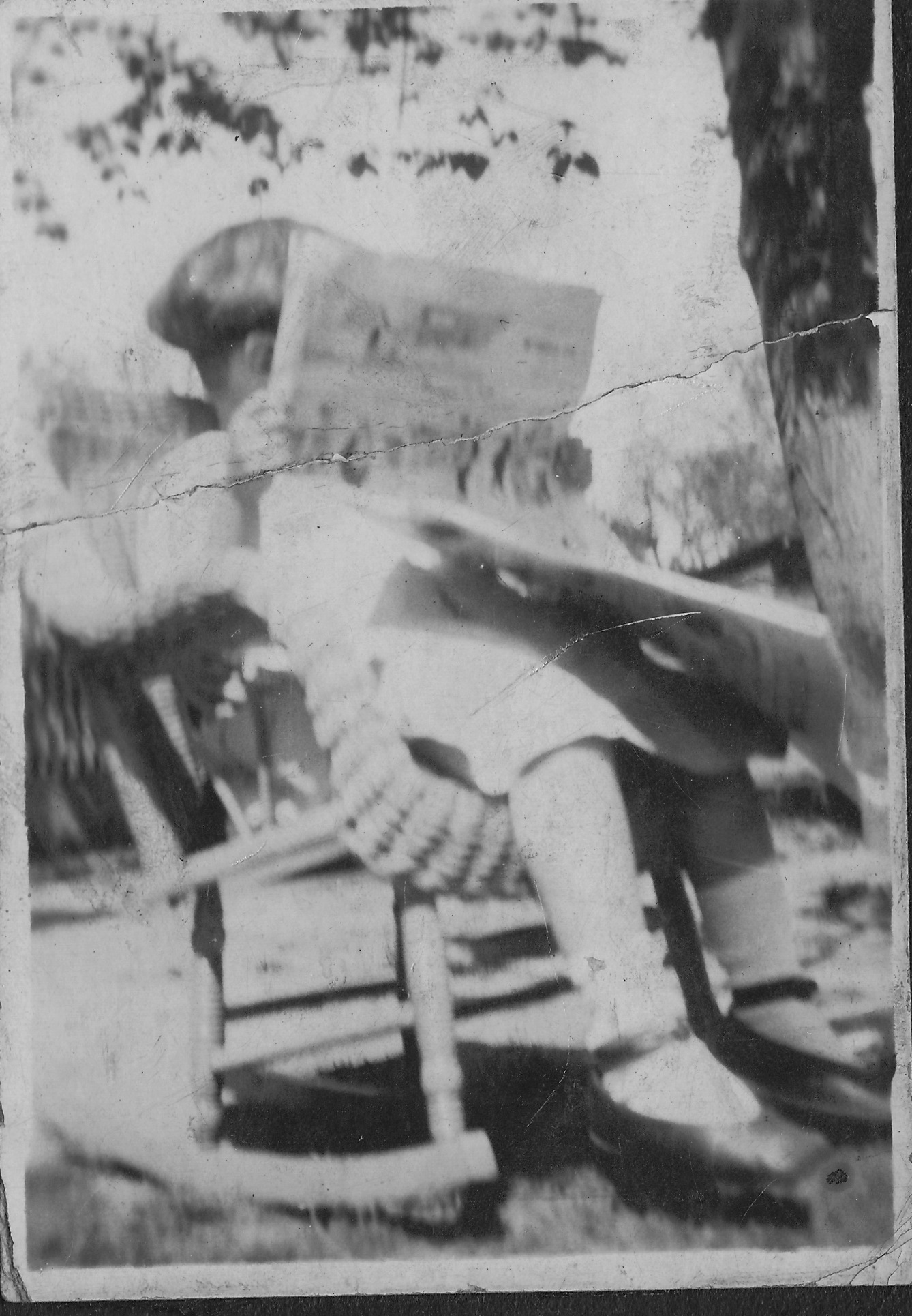
Tiny with the Sunday paper

“We would sit in Daddy’s lap, and it was his job to read them to us before we learned to read ourselves. Some of our favorites were The Gumps, Katzenjammer Kids, Mutt and Jeff, Gasoline Alley, Maggie and Jiggs, and Little Orphan Annie. I especially liked Gasoline Alley, which featured a boy named Skeesix who had been left on the doorstep when he was a baby.

Skeesix and friends

Back then it was not too unusual to hear of babies being abandoned on a doorstep, and in some cases the grownups whispered their suspicions that the person on whose doorstep the baby was left might have been the real father. Years later they would point out the resemblance.”

Mamie's turn with the funny papers

Irony upon irony. Sara’s first reading memories are from the Memphis Commercial Appeal, where her byline would appear over and over again for almost thirty years. The rhythms of that newspaper, its deadlines and its arrival each day, dominated my childhood like a metronome, and I, too, remember Sunday morning laps and “the funnies.” Sara read Gasoline Alley to us, along with Peanuts (loved it), Little Orphan Annie (despised that one) and Prince Valiant (the absolute worst). As I was learning to read, Sara would hand me her torn-off teletype sheets and tell me to “proofread” them; it seemed the most natural thing in the world that her words on those yellow tearoffs would be in black-and-white for all the Midsouth to read the very next morning.

She told me the tales of abandoned doorstep babies and even named names, but I will keep her counsel on those scandalous days. And, just so you’ll know, a “Skeesix” is a cowboy term for a motherless calf.

Posted in Uncategorized | 2 Comments

The Evans Girls are Ready for Their Closeup, Mr. DeMille

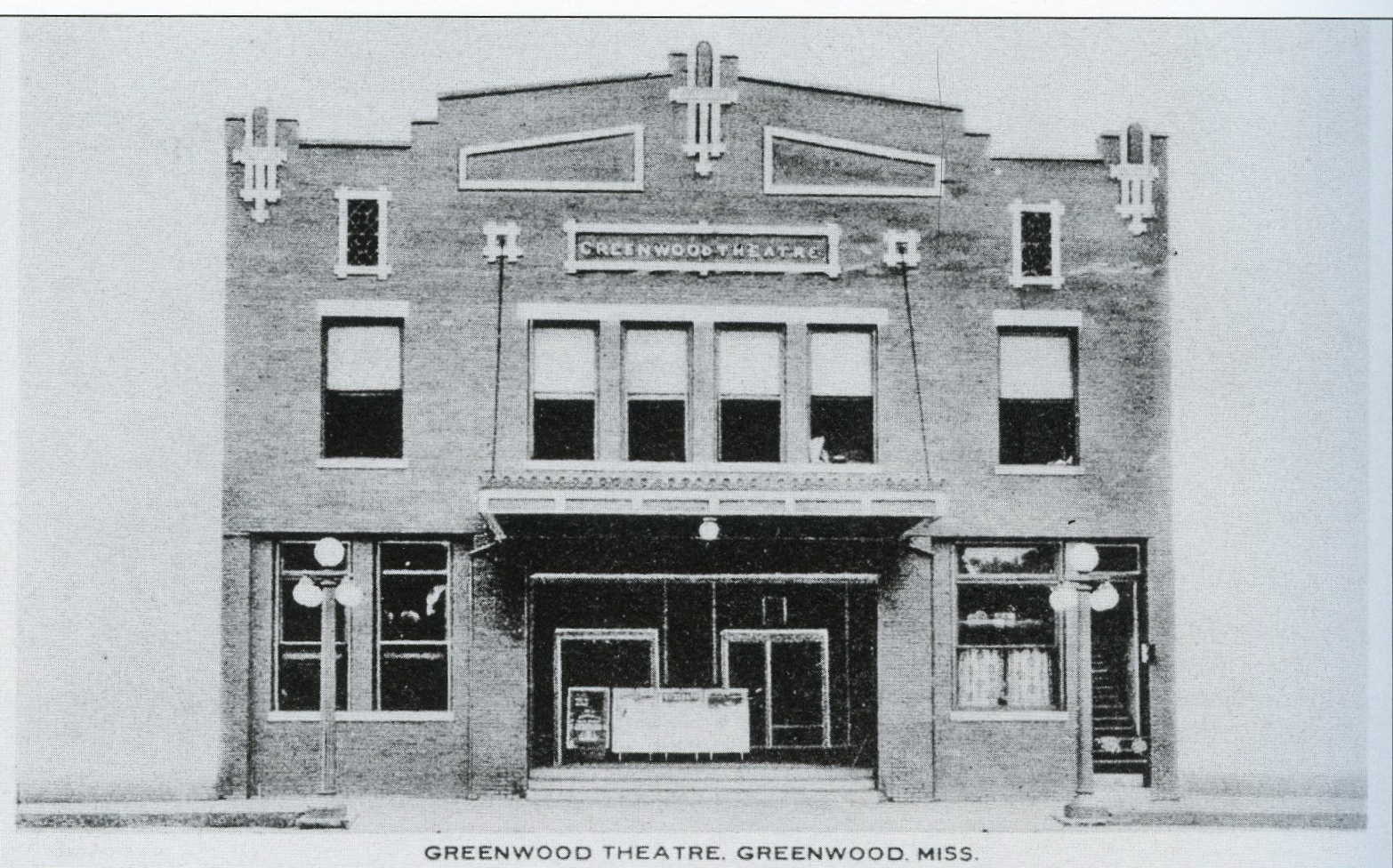
Paramount Theatre

“The old Paramount Theatre on Washington Street, which burned a few years ago, was one of the favorite spots in town during all of our growing up years and even after we were grown. It had opened around 1910 [ed.note: actually 1913], and Mama told us that she went there on dates. During the 1920s and ’30s movies were really in their heyday. We didn’t call them movies but picture shows, and we did not say we were going to the theatre but to the picture show.

“The Paramount had a stage and at one time had box seats like in big theaters on both sides of the stage. I don’t ever remember anyone sitting in them, but I’m sure on occasions they did. There were stairs at one side of the front of the building leading to a section of the balcony where the Negroes sat. They even had a different ticket seller than the whites, and the balcony was divided by a wall which separated whites and blacks. Before the movie started they would have someone down in front playing organ music.

“Mama took us to a few shows when we were little, but until 1927 they were silent with the words of the actors and actresses running across the bottom of the screen. It was hard for the adults to read the words out loud to the little ones who could not read without disturbing everyone around them, so I spent most of the time walking up and down the aisles. Tiny says she remembers putting on Mama’s fur piece and walking down the aisle pretending she was a movie star.

“Sometimes they would have a vaudeville show following the movie. This was a stage show with musicians, magicians and comedians performing on the stage. A lot of performers got their start doing vaudeville. I think Gene Autry was here one time. There was a huge shade with advertisements on it that they pulled down before the performance. I remember particularly the fish advertising Giardina’s Restaurant and an old Ford automobile advertising Myrick’s Ford Company. They had dressing rooms under the stage. They also used the Paramount for beauty revues, dance recitals and other things.

Greenwood's first talkie

“The first talking movie came in 1927 or 1928 with Al Jolson in black face in The Jazz Singer. Mama got us out of school early to go see it. One time some movie outfit came to town and advertised for all children to come down to the Paramount to be in a hometown movie which was being made here. So we were appropriately dressed in our Sunday best and marched down to the Paramount to take part. We lined up by the Elks Club on the corner and were told to march down to Barrett’s Drugstore on the next corner when the cameras rolled. When it was announced later that the movie would be shown at the Paramount, all the children and their mothers went down to see the future stars. The fast, jerky movement of the film showed us racing past the camera, and you could not recognize anyone. We were sorely disappointed, and I am sure a few ambitious mamas were even more disappointed that their precious little ones were not destined for Hollywood, where young movie stars like Jackie Coogan were becoming famous.”

Jackie Coogan when he was still cute

Wouldn’t you love to find those old movie reels? Or the piano that sat down at the front of the Paramount? Perhaps the technology exists now to slow that jerky film down and we could spot Tiny, Mamie and Sara scooting by, on their way, not to Barrett’s, but to Hollywood, three little starlets just waiting for their big break.

I watched a lot of Dean Jones and Hayley Mills movies in that old theatre, usually with Sara in the next seat, munching buttered popcorn and laughing at the ugly dachsunds, talking Volkswagens and nutty professors. She had her limits, though: No Elvis movies and nothing where dogs died. Musicals were a special treat, often seen again and again if we liked the songs. She would whisper stories about the dressing rooms underneath the stage, and I was convinced that every star in Hollywood had begun their career on the planks of Greenwood’s Paramount. It was a sad night when Sara called and told me that the old theatre had collapsed in flames, taking all those memories and buckets of popcorn grease with it.

Ed.note: The Paramount was built as the Greenwood Opera House (replacing the original on Front Street, now Viking headquarters) in 1912, for $7000. Original owners were P.D. Montjoy and P.E.Schilling, who advertised it as “an up-to-date moving picture house and modern combination theatre.”

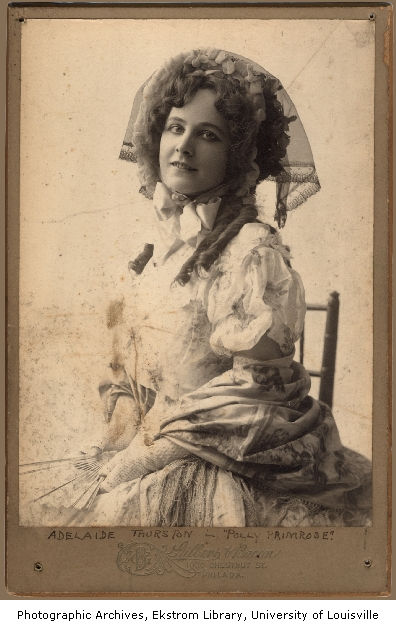
Adelaide Thurston. Was she in Greenwood in 1913?

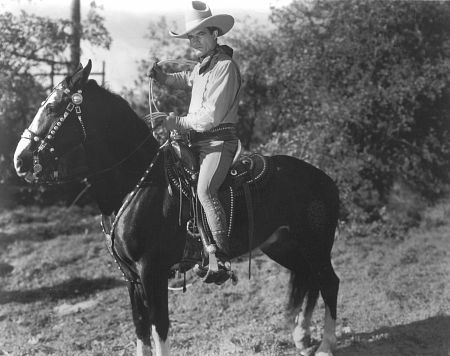
It opened with “The Love Affair,” starring Adelaide Thurston (movie? play? opera? Who knows?) in January, 1913, just about the time that Jessie West landed in Greenwood. Live stars included Tom Mix and Moro, the Human Icicle.

This is Tom. No photo available of Moro, the Human Icicle.

Posted in Uncategorized | Leave a comment

Memories in Marble

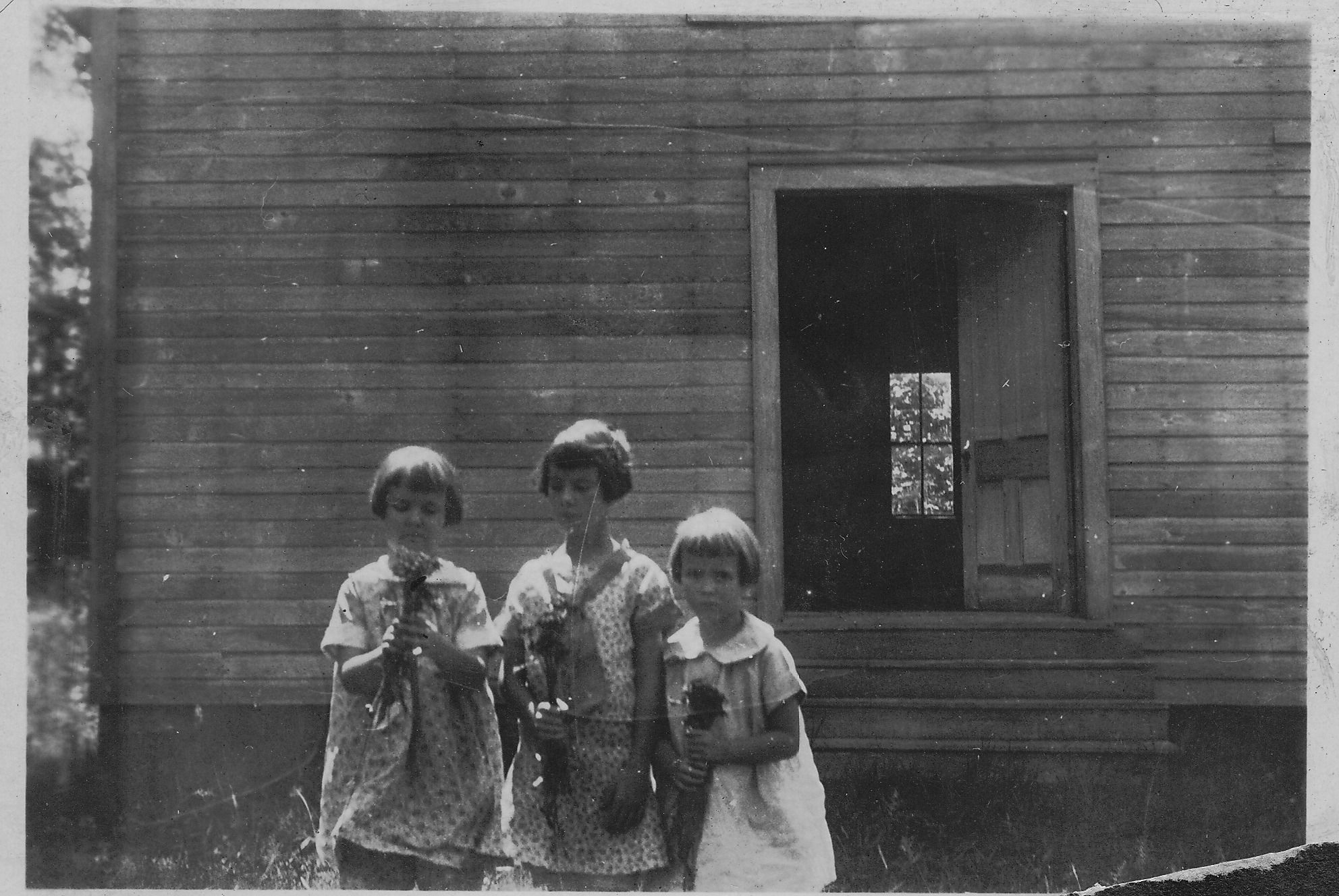
Sara with flowers, circa 1923

“We always had a lot of flowers which Mama and Bama planted—zinnias, roses, marigolds and four o’clocks, which only opened up at four o’clock in the afternoon. We also had nasturtiums and sunflowers and hollyhocks. Bama had a garden which she enjoyed working in and she kept a cow behind the backyard in a space which was supposed to have been an alley but was not, so we got milk and she made butter in a big wooden churn in the kitchen. On each side of our yard we had high hedges which gave us some privacy from Miss Pearl and from the Nurses Home on the other side. These hedges were put to another use by Mama when she realized what good switches they made to use when we were bad. I don’t ever remember Mama spanking us with her hand, but she probably did.

“Those switches, though, would sure put red stripes on your legs. Then if the marks didn’t go right away she would worry that she had switched us too hard. Out came the bottle of mercurochrome which really made them stand out and we were embarrassed to go out because we knew that everybody would know that we had gotten a switching.
To add insult to injury, she sometimes sent Tiny out to get the switches, and Tiny said she always stripped the ones for me and Mary and left the leaves on her own so that it wouldn’t hurt as much.

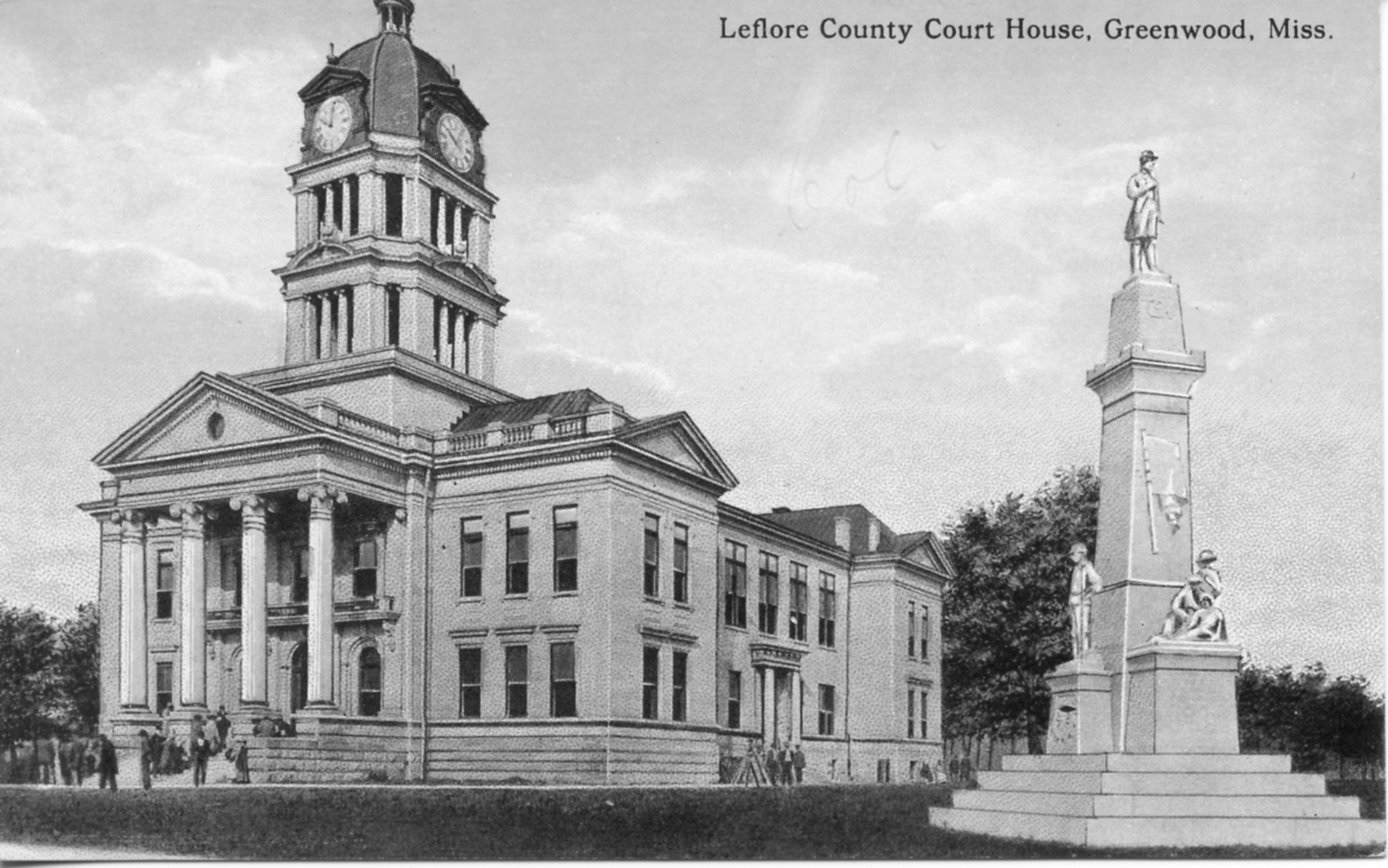
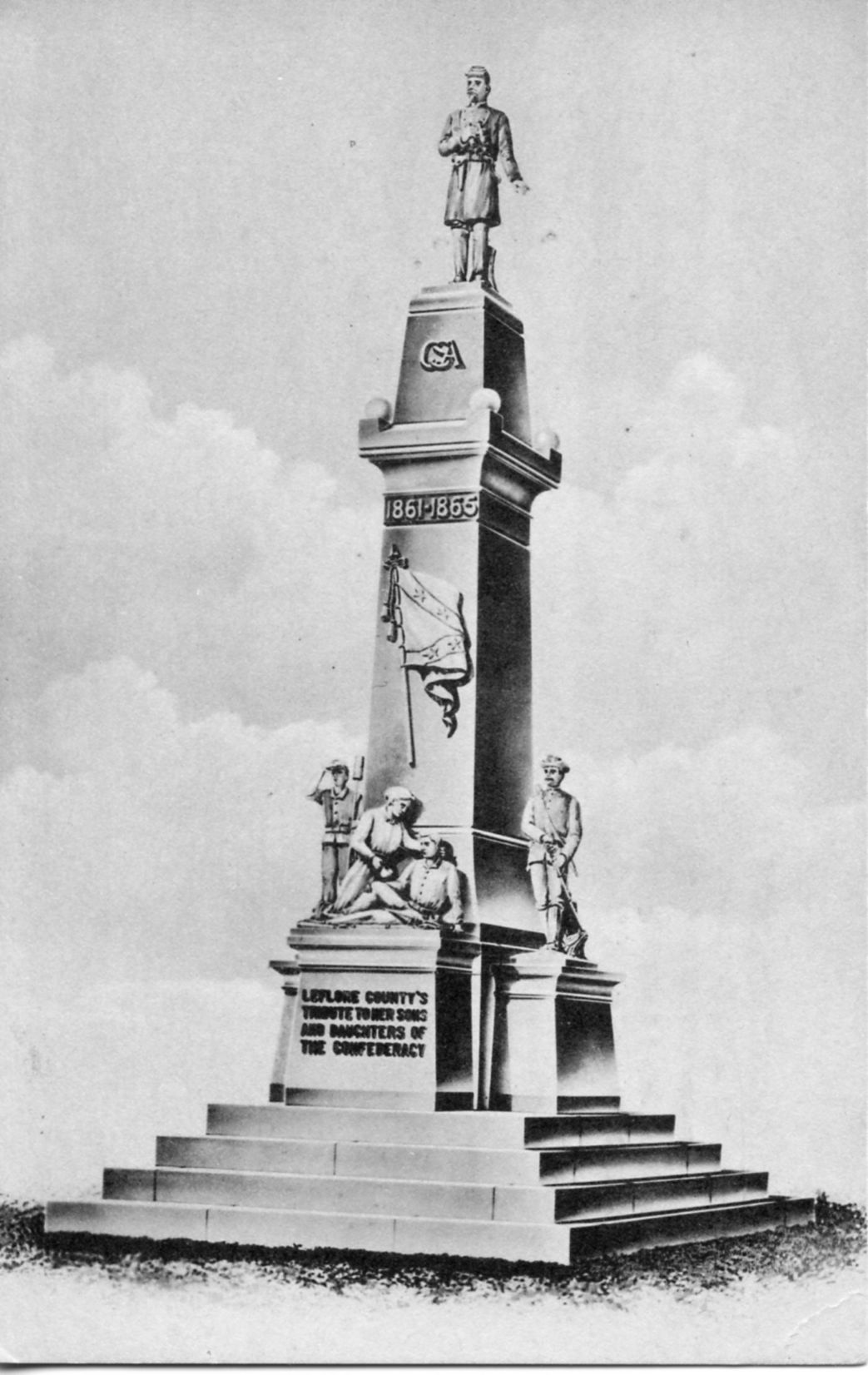
“The summers were so hot that nearly all recreation was planned for outdoors. There were band concerts on the Court House lawn in the gazebo which now stands in the City Park, and everyone would go on the hot summer evenings. While the grownups listened to the music of the hometown band, we romped on the Court House lawn and drank water from the big stone fountain which once stood on the river side of the Court House. We played hide and seek in the bushes and especially liked to climb on the Confederate Monument and gaze at the statues.

1913 dedication of Confederate Monument; Jessie West somewhere in the crowd.

Mama told us that the Kimbrough family, who prided themselves on their Confederate background, had posed for the figures. She said that Mrs. Sally Clements (the lady who reported our dolls in the street and who was a Kimbrough) had posed for the one of a woman helping a wounded soldier. Mama told us about attending the dedication of the monument soon after she came to Greenwood in 1913 when Miss Bonner Dugan, who served as city clerk for many years, was queen of the celebration.”

Leflore County Court House, before 1927 and 1952 additions

Flowers. Sara was an obligatory member of the Four Seasons Garden Club for many years, but the only active gardening effort I remember was a long, L-shaped row of daffodil bulbs that she planted in the back yard on East Adams. They actually bloomed, and she was so excited and proud. Daddy kept his counsel until the grass began to get high, and then he Snappered them into eternity. There were always ferns hanging on the back porch and pots of this and that along the carport, but I do believe that Criss’ Great Daffodil Massacre took all the horticultural spunk out of Sara’s psyche.

Switches. Jessie had hedges on West Claiborne, just as she had on Strong Avenue, or maybe they belonged to the Markel family next door. Regardless, it is utterly inconceivable to any of her grandchildren that she would have been capable of switching, paddling, spanking or whatever euphemism you might suggest. Jessie, our Granny, was blessed with perfect grandchildren. All 8 of us, without flaw or need for correction. Isn’t that amazing? But Sara knew better, and I have a clear memory of Cathy being sent down Granny’s driveway to secure one of the dreaded hedge switches when I had pulled something unacceptable. Shades of Tiny, it was like a live oak limb (or so it lives in my memory. Cathy may differ.) Sara was sparing in her physical punishment but an advocate for justice, followed by her guilt, so a spanking generally meant a trip to Woolworth’s later. Not a bad deal, all in all.

Sara also was a lifelong believer in the power of Mercurochrome. I don’t know if you can still even buy that vile concoction, but she would dash to the bathroom for the bottle every time there was a scratch or a scrape. It had a little plastic wand built into the cap and the reddish-orange gunk would never stay put. It slid down your leg or your arm, leaving a snaking trail of shame for all to see. And if the leak hit your socks, it was all over. No amount of washing was going to remove that pinky-orange ring on the elastic. The chemical name for Mercurochrome (brace yourself) is Dibromohydroxymercurifluorescein Sodium. Much more lethal than Syrup of Pepsin or Calomel and hopefully banned now.

Sara was downright wistful when talking about those hot summer nights on the Court House lawn. Imagine: That great building, just twenty years or so old in the mid-1920s and still its original size, must have seemed like the Taj Mahal to a little girl who had never been beyond the bounds of Greenwood. The gazebo stood on the southwest corner of the grounds and was later moved to the northeast corner of City Park. That’s where my memories of it begin. Octagonal (or maybe hexagonal), with wide stairs leading up to a wood floor, surrounded by a white railing. There was a little trap door in the ceiling, and I recall many days at City Park when I would stare up at that door and wonder what was hidden there. In one of the worst cases of civic neglect possible, the old bandstand was allowed to rot and was finally demolished a few years ago.

And the Confederate Monument. Sara loved that odd collection of statues and would let me climb on it after one of our trips to the Supervisor’s meeting or the jail in the Court House (Yes, the jail…..when you’re the reporter’s kid, you go everywhere. I never thought it was odd until I realized that everyone didn’t grow up with a steno pad and a Yashicamat.) She would tell me about the Star of the West and Sally Clements posing for the statue and Jessie, her mother, being in the 1913 crowd as the monument was unveiled. To her, those stone figures were as much a part of her childhood as Miss Pearl, Mable Petty and Bama. In later years, as she covered the Civil Rights marches, she was usually reasonably calm about the events roiling our little world, unless the demonstrators climbed the Confederate monument. That transgression would send her into a tizzy, as if they had marched into her own home and spit on the kitchen floor. Someday, I’m afraid, the Political Correctness Police will take the statues away, and I’m glad Sara will never see that.

One blistering hot day last summer, I guided the Columbus Marble Company workers to Sara’s gravesite in Odd Fellows Cemetery. They carefully unloaded the marker and placed it next to Russell Criss’s. The same marble works that created Sara’s beloved Confederate monument carved the epitaph into her tombstone, a quote from her buddy Allan Hammons: “She was Greenwood.” How true.

Ed. note: The Leflore County Courthouse’s original section was completed in 1906 and replaced the first courthouse, which stood on the northwest corner of the lot and was demolished in the early 1900s. Chattanooga architect R.H. Hunt designed the building (as well as First Methodist, Davis School and the Elks Club.) Two houses were torn down and one moved to another location to make room for the new courthouse, which was completed in just 15 months’ time. Five thousand people attended a barbecue and political rally at the dedication. In 1927, Frank McGeoy designed an extension for the north side of the courthouse, which probably eliminated the stone water fountain that Sara describes. In 1952, east and west wings were added to the original south facade.

The Confederate Monument was a UDC project spearheaded by Lizzie George Henderson, who donated the Westminster Chimes for the Court House tower in 1934.[ As of this past weekend, they were actually working.] Columbus Marble Works, which crafted thousands of Confederate soldiers for monuments around the state and the South, was awarded the contract. Stipulations included four male figures and two female, including a “sure enough woman” for the praying figure. No angels or mythic figures for this bunch of UDC matrons. The photo above shows a circle of veteran’s grandchildren unwinding the ribbons and onlookers crowded onto every inch of the Court House lawn and even standing on nearby roofs. The Whittington Building is seen behind the monument, having recently been converted from the post office into businesses. The steeple of the Episcopal Church is visible in the background, and the house on the right side of the photo was torn down for the building that now houses Dawkins Office Supply and Abraham and Rideout Law Firm. Notice, too, the bandstand and musicians in the foreground. My wish is that we could zoom in enough on these faces to spot a young and thrilled Jessie West, fresh off the farm and maybe even “sparking” with that cute Howard Evans. Wouldn’t that be something?
Posted in Uncategorized | 4 Comments

Local on the 8s

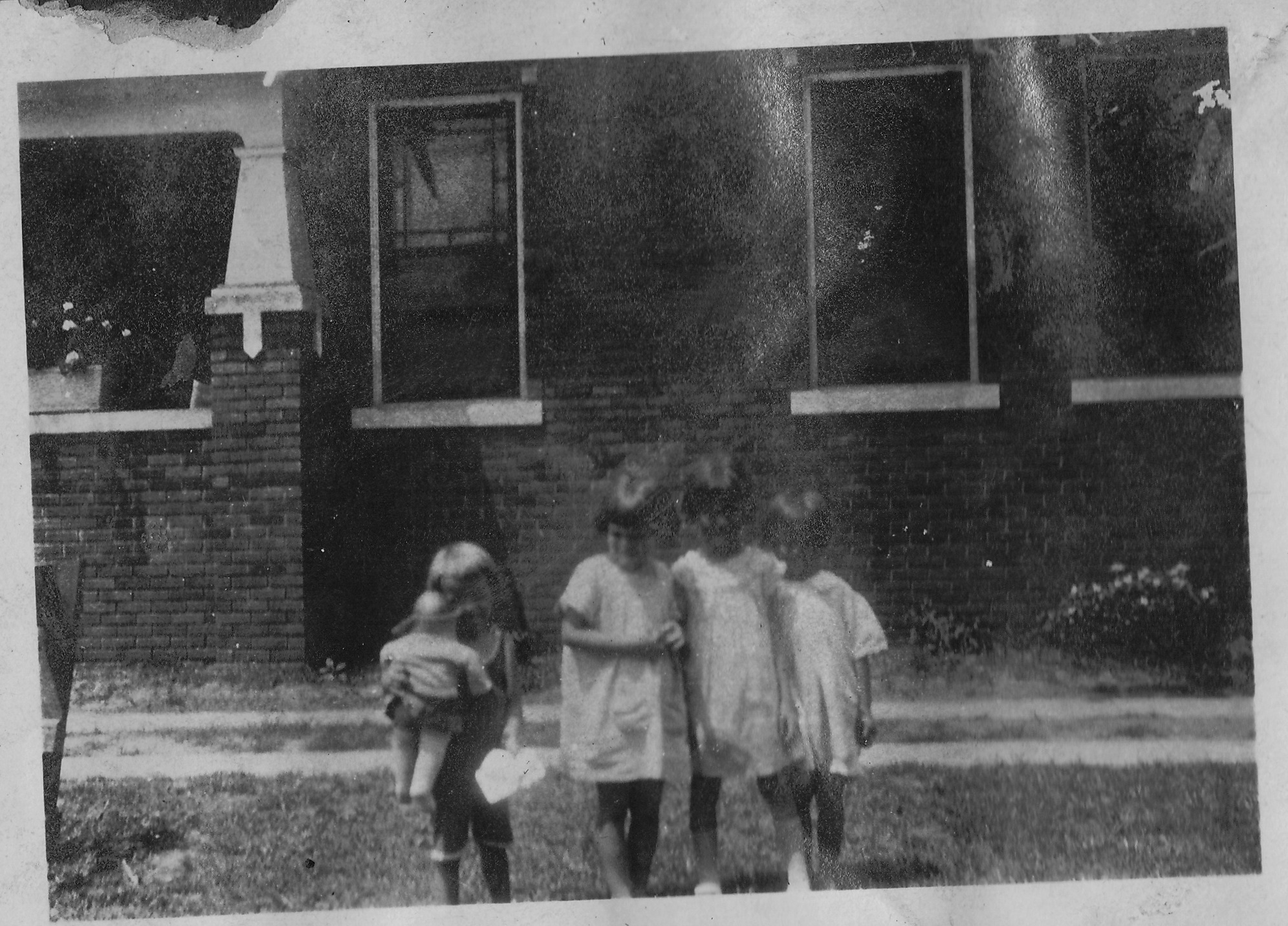
Sara, Mable Petty, Tiny and Mamie

“Mrs. Petty from across the street was deathly afraid of storms. Every time a cloud turned a little dark she came running over to our house with Mable because our house was brick and theirs was frame, and she figured ours could withstand a strong wind better than theirs. Of course, she did not get much consolation at our house because Mama and Bama were almost as afraid as she was.

Bama with Sara and unidentified child at Greenwood Leflore Library

“Bama always told us to get away from the windows and made us huddle in a hallway. Every time there was a streak of lightning or a loud clap of thunder she would let out a blood curdling scream. To top it all off, Mama had received a shock one time while talking to Big on the phone during a storm with the result that we were never allowed to pick up a phone if it even looked like it was going to storm. I am sure living through those episodes warped us all, and I am still a great respecter of storms.

“One day when Mrs. Petty and Mable had sought shelter from a storm, we were all crowded into the bedroom away from the windows. Mrs. Petty was terrified, but there was something else she was afraid of and that was cats, of which we usually had many. On that occasion, between the claps of thunder and Bama’s screams, we heard strange sounds coming from the closet, and Mama knew the old mama cat was getting ready to have kittens. She was afraid Mrs. Petty would hear the loud meows and get even more upset so she kept hoping the thunder would continue and drown out the sounds in the closet. Sure enough, the kittens were born in the closet, and I presume the storm subsided enough for Mama to get Mrs. Petty and Mable out of the house and across the street before she realized what had happened. ”

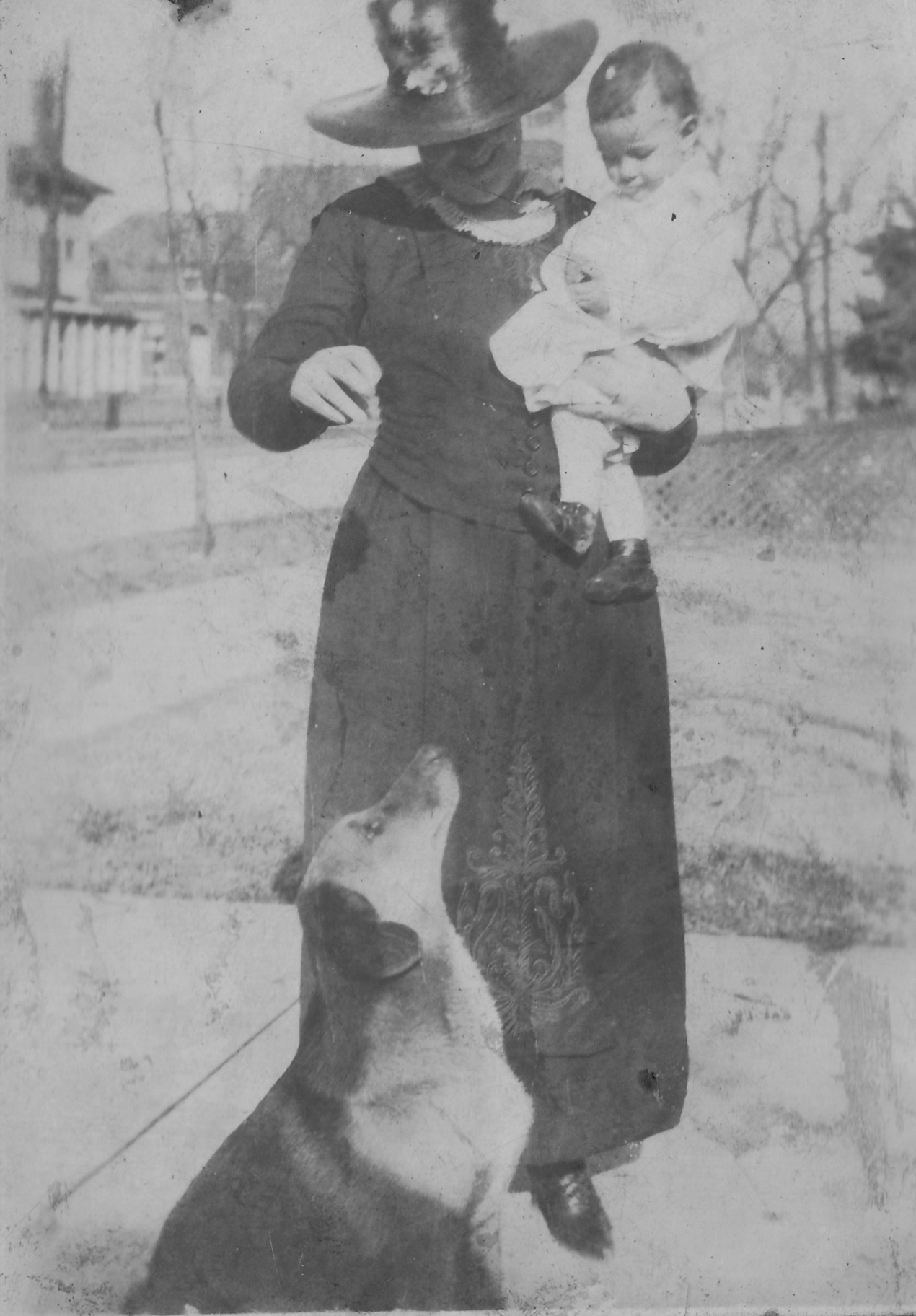
There are no pictures of the infamous Evans cats. Here's Jessie with Tiny and an unidentified dog on West Washington Street, ca. 1919.

There were apparently always cats around the Evans households, of the kind allowed to have kittens in the closet and the kind that just hung out at the back door, waiting for a handout and a rub. Jessie would later cohabitate with the notorious ‘Miss Kitty,’ Tricia and Gray’s cat who lived for about a hundred years. Miss Kitty lived to grab Jessie’s sneaker-clad feet under the bed, much to the delight of all the grandchildren. We gave her a wide berth (the cat, that is, not the grandmother).

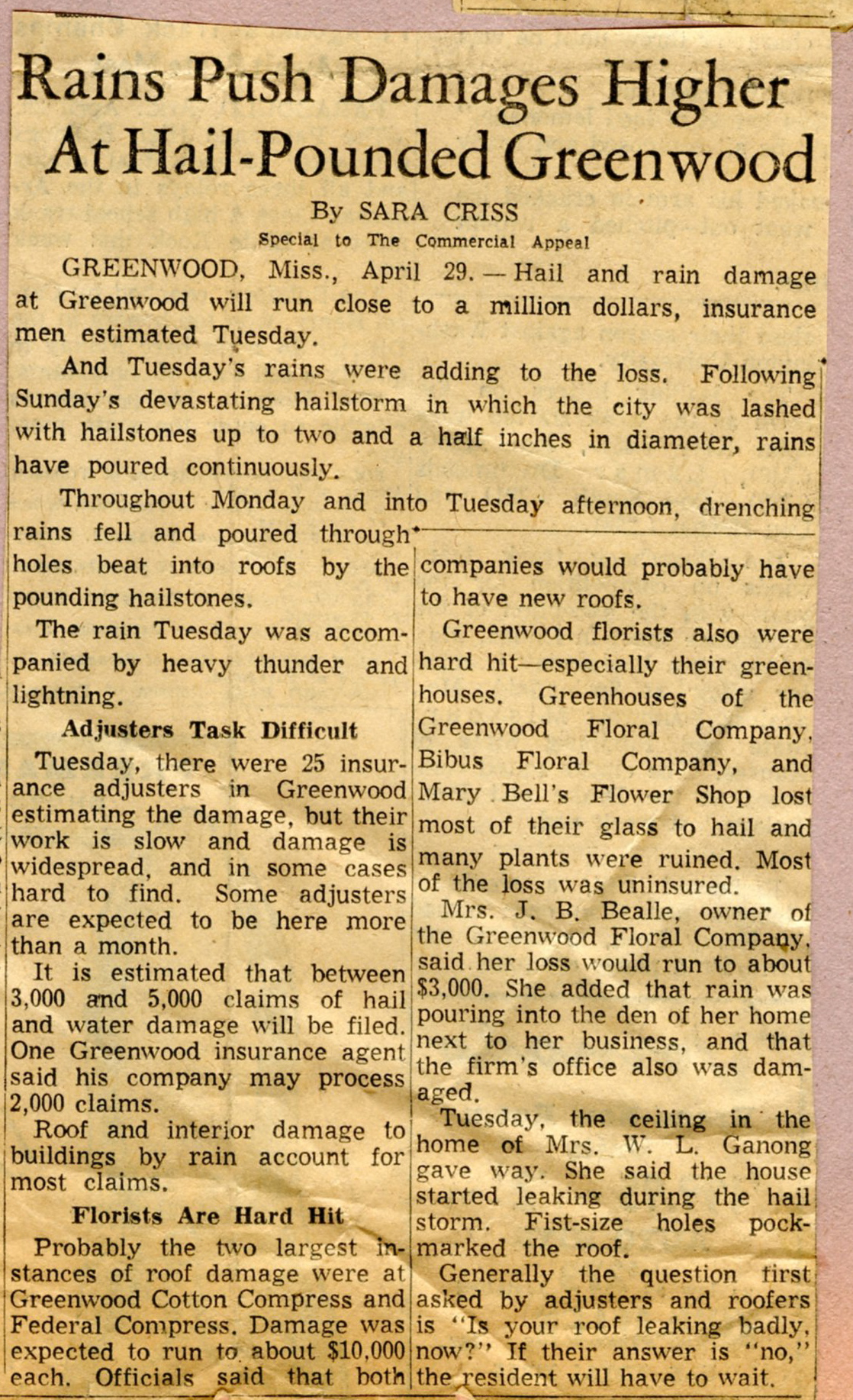
Storms fascinated Sara and she was a healthy observer of Mother Nature’s potential, but she really wasn’t frightened of them. Inclement weather brought out the newshound in her, even at an advanced age, and she was prone to calling at 3 or 4 a.m. with warnings of impending doom by tornado. These calls were always followed by a stern warning to the recipient to stay off the phone, because “You know, Mama got shocked once talking to Big during a storm. Just blew the phone right off the wall!” That particular phone call was the most famous in Evans lore, and I never could quite figure out why she wasn’t in any danger when she called to tell us to stay off the telephone. Logic wasn’t her strong suit.

One of Sara's photos and article from 1958

Posted in Uncategorized | 4 Comments

Crackerjacks and Cotton Sacks

Tiny, Sara, Mamie in front, Rena and Buddy Stott behind

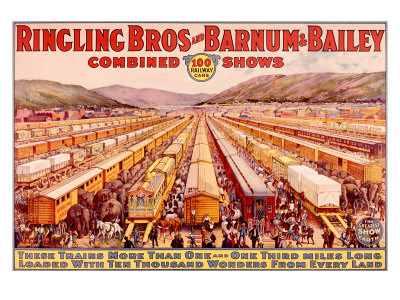
“Life was quiet and simple then, and a circus or carnival coming to town were really big events. Daddy always took off from work, and they would take us to the afternoon performance of the circus, which was always held in a huge tent. Bama would always go too. We would go to bed early when the circus was coming so that we could get up around four in the morning to go down to the Y&MV Railroad Depot to watch them unload. It was so exciting seeing the animals being unloaded, and then we would ride out to see the laborers, or roustabouts as they were called, putting up the huge tent. About eleven o’clock there would be a parade in downtown Greenwood with all of the horses and pretty girls and the calliope, which played music, and the clowns and cowboys. School would be let out for circus day.

“We would go into the sideshow first where they had ‘freaks’ of all kinds. There would be a fat lady, a rubber man, midgets, a sword swallower, a man who ate fire, etc. You had to pay extra to see them. After the main performance you could pay some more and stay for the Wild West Show. We took it all in, and then on the way out poor Daddy had to buy souvenirs for all of us. There were birds made of paper on sticks which looked like they were flying when you twirled them around, and dolls dressed in pink and blue feathers, and always there were Cracker Jacks, which we didn’t even like but always had to have because of the prize inside.

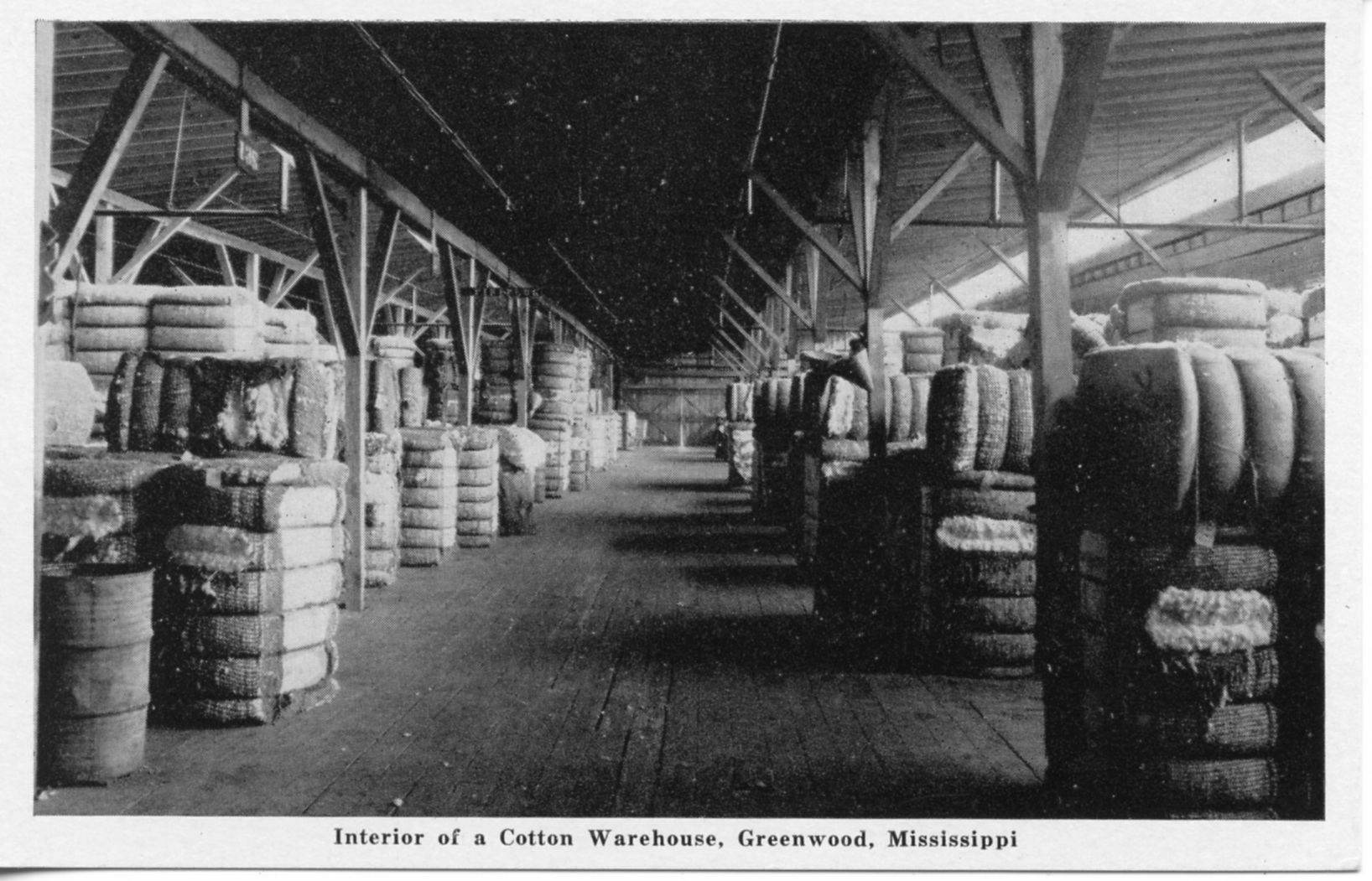
“The circuses and carnivals usually came in the fall because that was cotton picking season, and there was more money circulating then. At that time Greenwood depended on farmers for the town’s economy. All of the cotton was picked by hand, and that was the only time of year that the Negroes, who were sharecroppers, had any money. They lived in little shacks on the plantations and received a small share of the money when the cotton was sold. Cotton was the only crop grown in the Delta then, and Mama and Daddy would get excited every year when the oil mill began operating for another season. Years later when she would hear an oil mill whistle blow, Mama would say ‘That makes me so lonesome.’ She would be remembering those happy years when she and Daddy were young and he was managing the Buckeye Mill.

Howard's men at the Buckeye Oil Mill

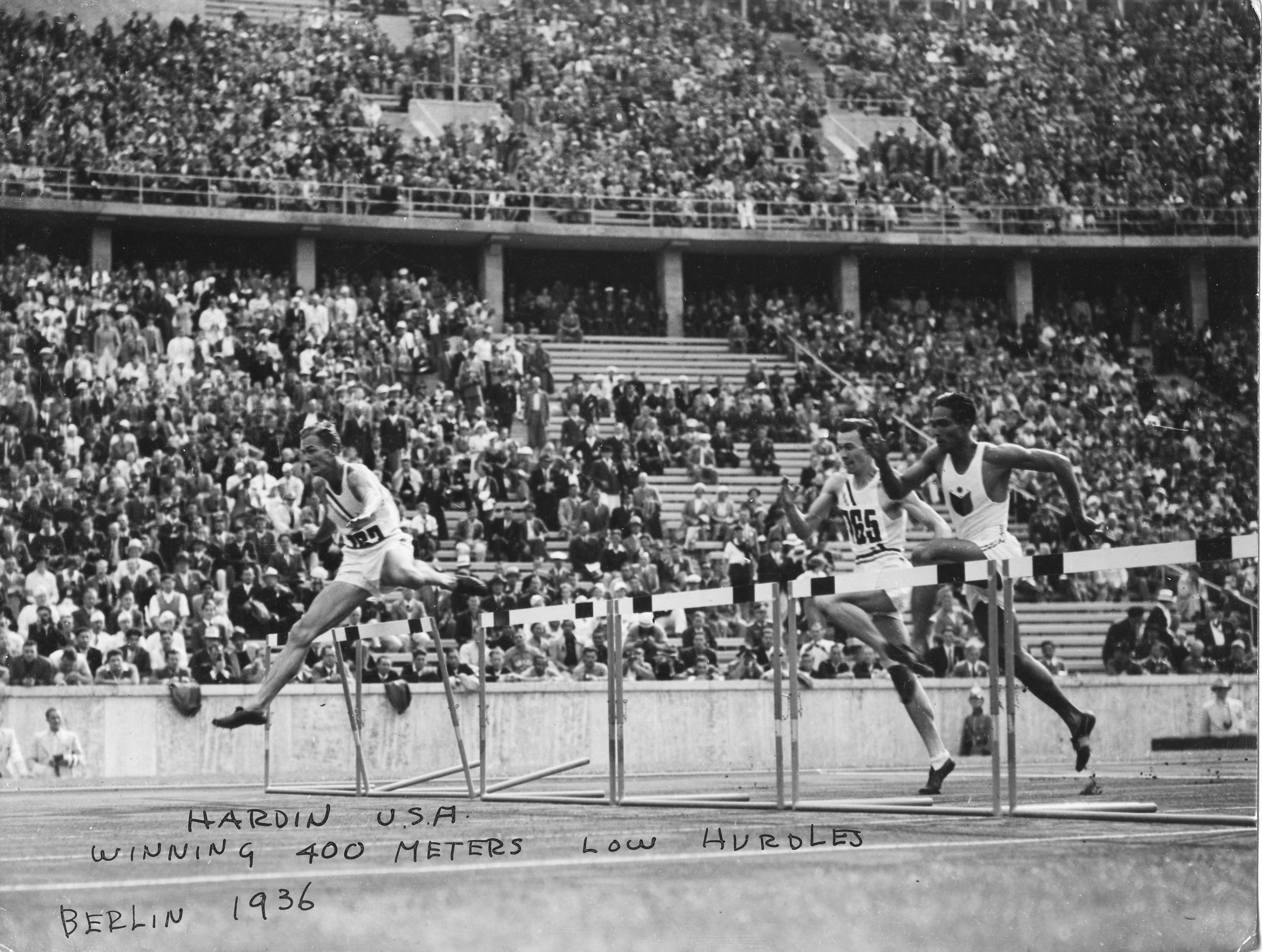
“There was a cotton field right down the street from us, and one time Mama made each of us a long cotton sack out of fabric and let us go with Rawa and Buddy and their friend John Howard Freeman to pick cotton for Mr. Hardin, who had planted it. I was too small to do much picking, but I did find a baby watermelon, and that made my day worthwhile. It was about the size of an orange and, of course, not fit to eat. At the end of the day, Mr. Hardin, who was the father of Olympic track star Slats Hardin, weighed the cotton and paid us for it just like he did with the Negro pickers.

Slats Hardin at the 1936 Olympics, Berlin

“Poor white families also made money picking cotton. It was hard work, and you would see fields of the white cotton with hundreds of pickers pulling their sacks over their shoulders and filling them with cotton. They would sing and talk and laugh while they picked.”

Greenwood Compress

It just couldn’t have possibly have been so rosy a world as Sara described. Greenwood and the Mississippi Delta, in the 1920s, was a harsh and brutal place for many of its inhabitants, white and black, but the Evans girls were so nurtured and adored in their brick bungalow family that all of that faded away. For Sara, looking back from 1990 to her childhood, Greenwood was a magical town, set squarely in the center of the universe, and peopled by kind and quirky characters whose lives were enriched by the arrival of circuses, showboats and carnivals.

She loved a spectacle. As I’ve mentioned in previous blogs, Sara would anticipate the arrival of the circus trains (or, later, the trucks) as eagerly at 40 as she did at 4. When the huge colorful posters went up downtown, announcing the imminent arrival of Ringling Brothers or somesuch, she would pull us over to soak in every detail, and by circus day it was as if the Queen of England and her court were headed for the Delta. Sara would bustle into our bedroom in the predawn dark, urging us in and out of the bathroom and into our clothes. I can still feel the dew around my Keds as we stood in a field out near Greenwood High School, sun barely over the horizon, the stink of animal dung hanging thick in the air, watching those elephants marching away from the tent center with ropes attached to their collars. It was an amazing sight to see that canvas rising from the dirt, the Big Top taking shape right in front of our sleepy eyes. Sara would scoot around with her flip-top steno pad, cornering a roustabout or ringmaster for a quick interview. Then it was back home to wait for the real show, and we never left without geegaws and souvenirs, which always thrilled her more than us.

Of course, there wasn’t a circus very often in Greenwood. But there were parades, and I don’t believe we ever missed one. Besides the thrill of Band Festival (a story for another day), there were patriotic parades and welcome-home parades and the apex, the ultimate: Friday afternoons when Greenwood High School’s band took over Howard Street, complete with cheerleaders, floats and pep rallies on Barrett’s corner. Sara was a Bulldog to the core and loved the tradition and hometown hoopla of those days.

One of Sara's parade photos for Commercial Appeal

She took Cathy and me out on a few cottonpicking expeditions, probably just so we could say we’d done it, or maybe in search of another baby watermelon.

Posted in Uncategorized | Leave a comment

Big Busy Days

Fountain's Big Busy Store

“Mama would order her groceries from Fant’s Store, which was then out on Carrollton Avenue. There were no super markets then and no self service grocery stores. I think she called in an order nearly every morning and they would be delivered. We would always beg her to order cookies for us, and she usually did. All of the stores, except for a few neighborhood grocery stores, were in the downtown area. There were no shopping centers or malls, and there were no chain stores until Woolworth’s and Penney’s came in.

“Fountain’s Big Busy Store, which was what they called it, was located on the corner of Washington and Howard Street and was built in 1914. It had thirty different departments and drew customers from all over the Delta. It had three stories and sold clothes for the whole family, piece goods, gifts, toys, household furnishings, shoes and many other things. There was a millinery department, where all the ladies bought hats, and a corset department. There was a big stairway in the center of the back of the store which led to the mezzanine where you could rest or go to the restroom. They had style shows and the models would come down from the mezzanine.

“Fountain’s was the only store in Greenwood with an elevator, and it was quite a treat to get on the elevator with Lena Leflore, the light-skinned black woman who Mama always said it was rumored Greenwood Leflore’s granddaughter. Leflore was the Indian chief for whom Greenwood and Leflore County were named.

“In the store they had big baskets, and when you purchased something the sales clerk would pull down the basket, put your purchase and sales slip in, pull a cord and send the basket flying to the office where they put your change in a little cup and sent them flying back down. There was also a soda fountain downstairs and a tearoom upstairs. In the shoe department they had tall ladders on wheels, and the shoe boxes were stacked all the way to the ceiling. The shoe clerk, usually a man, would have to climb the ladder to reach your size. We wore mostly little brown oxfords for school and little black patent leather shoes called ‘Mary Janes’ for Sunday.

“Mary and I were always envious of the little girls who wore Roman sandals to Sunday School and birthday parties. These were high top shoes with many little straps that buttoned with a shoe buttoner, a small tool with a hook on the end which people used to button shoes. When I finally talked Mama into getting me a pair they turned out to be too small and I hardly got to wear them.

“Fountain’s would have big dollar day promotions and give away money and sometimes a car. Mama said one time they had one of the big front windows filled with babies with nurses and a sign in the window, ‘Adopt a Baby.’ The babies were little orphans brought from the orphanages in Jackson and they were hoping that people would adopt them.”

Baby Sara in the "Kiddie Koop," definitely not for adoption.

The sidewalks in front of the old Fountain’s building have just been dug up and bricked, and I wonder what bits of treasure might have been unearthed by the brickmasons. All of Howard Street is undergoing this upgrade, and I’ve looked in a lot of holes over the past few weeks in search of some tidbit of Greenwood’s past. When Fountain’s ground floor was being remodeled into Turnrow Books, I went upstairs a few times to the second and third floors. I don’t think I took any pictures, and now I wish I had, as those vast spaces have since been carved into luxury apartments. But when they were empty, and they’d been empty for decades, they were inspiring. The windows are huge, much bigger than they appear to be from the street, and dust-streaked light poured into the cavernous floorspace, lighting up the dark wood floors and the square columns. This was the domain of Billy Fountain and his electric trains and Miss Zip Cain and her fabrics and Lena Leflore with her creaky elevator that only went up three floors, down three floors. There had even been two weddings in that building, and one of them was Sara’s granddaughter’s ceremony in 2006.

Sara never got over Fountain’s closing. It opened with so much fanfare, seven years before she was born, and it fulfilled every dream that she had as a little girl, a teenager, a career woman and a wife and mother. When the key turned in the lock for the last time, that just broke her heart. She went to Turnrow Books on occasion, although it was almost impossible for her to climb the steps to the balcony and cafe, but you could always see that far-away look in her eyes. She wasn’t seeing the shelves and books of Turnrow. In her mind’s eye, it was 1928 all over again, with white-gloved matrons in the tearoom and Billy Fountain pulling back the curtains on Toyland and Jessie chatting with Zip Cain. I think it made her sad to be in that space and she finally just refused to go. I couldn’t blame her.

We need to start right now planning a celebration for Fountain’s in 2014, a grand birthday party for a downtown anchor that has served so many generations so well. Old friends deserve to be honored.

Posted in Uncategorized | 2 Comments

Stone Angels and Water Wings

Mamie, Tiny and Sara with flowers

“We went to Odd Fellow Cemetery a lot with Bama and Mama, who took flowers out of the yard to put on Mama’s brother T.C.’s grave. T. C. had drowned in Moon Lake near Clarksdale when he was only nineteen and on a Sunday School outing before I was born. We were told never to mention his name since it would upset Bama so much. It seems she had almost lost her mind when he drowned and would get upset even going across the bridge.

“We would put the flowers on his grave and empty the water (which smelled awful) from the ones previously brought. We were told to walk carefully and not to dare step on a grave. I was just sure someone would come up out of the grave if I carelessly stepped on one so we very carefully tipped around them. Mama and Bama were always telling us sad stories about little children dying, and they would point out their little graves with the little stone angels adorning them. Close by T.C.’s grave were those of little Elizabeth Stigler, Jesse’s little sister, who lived a few doors down from us and who had died when she was five or six, and then there was one of Mary’s little classmates, a Lary twin, who had died just before Easter and who had an Easter basket on her grave. I still don’t like to go to cemeteries and I sometimes find myself looking around to see where those little graves were.

“After T.C. had drowned Mama was terribly afraid of water and just knew that we would all drown if we went into water deep enough to learn to swim. We didn’t have many pools at that time. There was one at the Country Club, and we went out there several times and waded. Then they opened up a ‘beach’ down on the Tallahatchie River bank at the end of what is now Riverside Drive and roped it off so that we could wade in it. I am sure the water was contaminated and that there were dangerous holes in it, but we spent most of our time on the bank. They finally closed off the swimming hole after a boy stepped in a hole and drowned. For a brief time someone operated some type of little pool near an old brick plant on Old Highway 7 past the Planters Oil Mill, and I recall us going out there a few times. That was our only exposure to water when we were little except for our trip to the coast when we were allowed to wade out a few feet, holding Daddy’s hand tightly. Tiny, Mary and I never learned to swim, one of the things I have regretted in my life.”

Sara stayed true to her cemetery aversion for the rest of her life, unless it was a historic trek through the Old Greenwood Cemetery or a trip deep into Holmes County. Various Wests and Sproles burial grounds were scattered out near Castalian Springs and I recall a few treks to find some tombstone or another, always involving  mumbling on my father’s part as we got loster and loster on those twisting gravel roads. Don’t die in rural Holmes County if you want to be remembered. And don’t count on the Saras of the world to come place flowers on your grave.

Ed. note: This is the only reference I have ever found to a beach off Riverside Drive. Knowing the treacherous currents of the Tallahatchie and the Yazoo, that seems like one of the all-time bad ideas, but I suppose this was a different time. In 1928, the Old Jail (ca. 1876), just across Cotton Street from Greenwood Utilities, was demolished and plans laid for a municipal swimming pool. The debris from the jail was used to fill in low spots around town. The pool scheme fell through and was not realized until the Depression, when FERA money was used to build a very large concrete pool, complete with bathhouse and tennis courts, just south of the old Greenwood High School. The pool was packed with kids every summer until the late 1960s, when it was filled in for a parking lot. The bathhouse still stands, now used for municipal storage.

Posted in Uncategorized | Leave a comment

In Our Merry Hupmobile

Tiny and friend

“The last Christmas we were in Greenwood before moving to Jackson, Mary and I….got little girl dolls that year with heavy celluloid heads. They were very pretty, and I don’t remember ever seeing any others like them. Daddy had brought home electric Christmas tree lights that year, and we were so excited.

“We played paper dolls a lot, something which today’s children seem to have missed. We could hardly wait for the Sears catalog to come out so that we could start cutting them out. That was about our only source of men paper dolls. We could find plenty of ladies and children in magazines like Pictorial Review, Delineator and Ladies Home Journal, but we were always needing more men and boys. Mary and I would fight over the ‘snow babies,’ which were the babies in little knit snow suits. They were our favorites. We would file away our paper dolls in old magazines with the pages folded over to protect them. We tied strings on shoe boxes for cars and pulled them around. We made all sorts of furniture out of the cardboard which came in Daddy’s shirts from the laundry.

“We were just wild when Miss Zip Cain, Mama’s good friend in the piece goods department at Fountain’s, gave us one of the big pattern books with hundreds of paper dolls in it. I still cannot imagine a little girl growing up without the wonderful imaginary world of paper dolls. Mama had obviously loved them too because we still have some of the ones she cut out when she was a little girl in the 1890s.

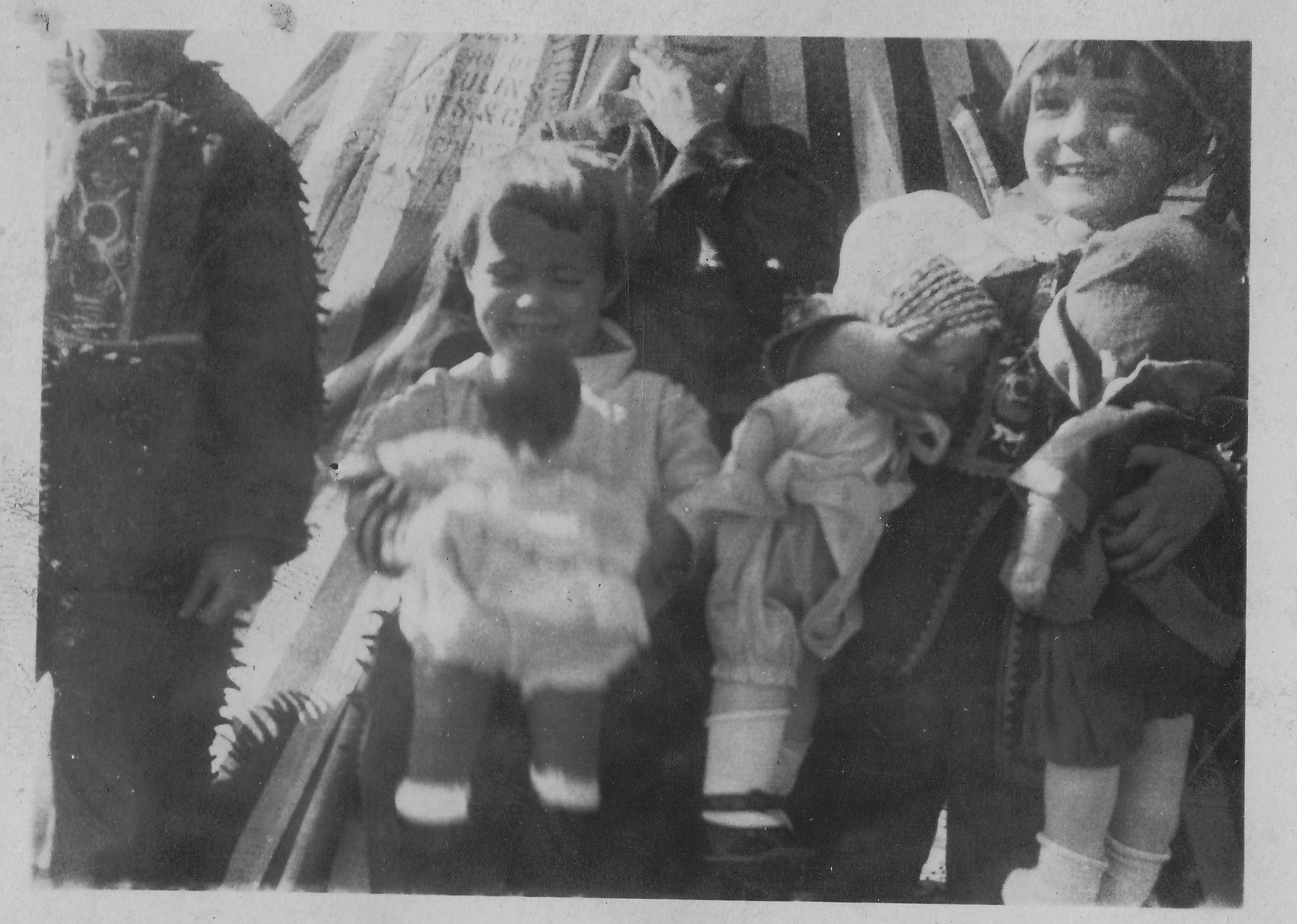
“We played with dolls a lot too, especially Mary and I. We had all sorts of cute little doll furniture. My favorite was a doll named Sue, who still sits in a little rocker in our front room. Mama had found Sue and her two girls (smaller versions) at Hoffman’s Ten Cent Store. We would seat them in little wicker doll chairs and on a little wicker sofa. We have read recently that they are called Alabama Babies and were made by a lady in Alabama. They have become very collectible and if in good condition (which ours are not) have sold for as much as $800.

Sara and Mamie with dolls; striped teepee in background

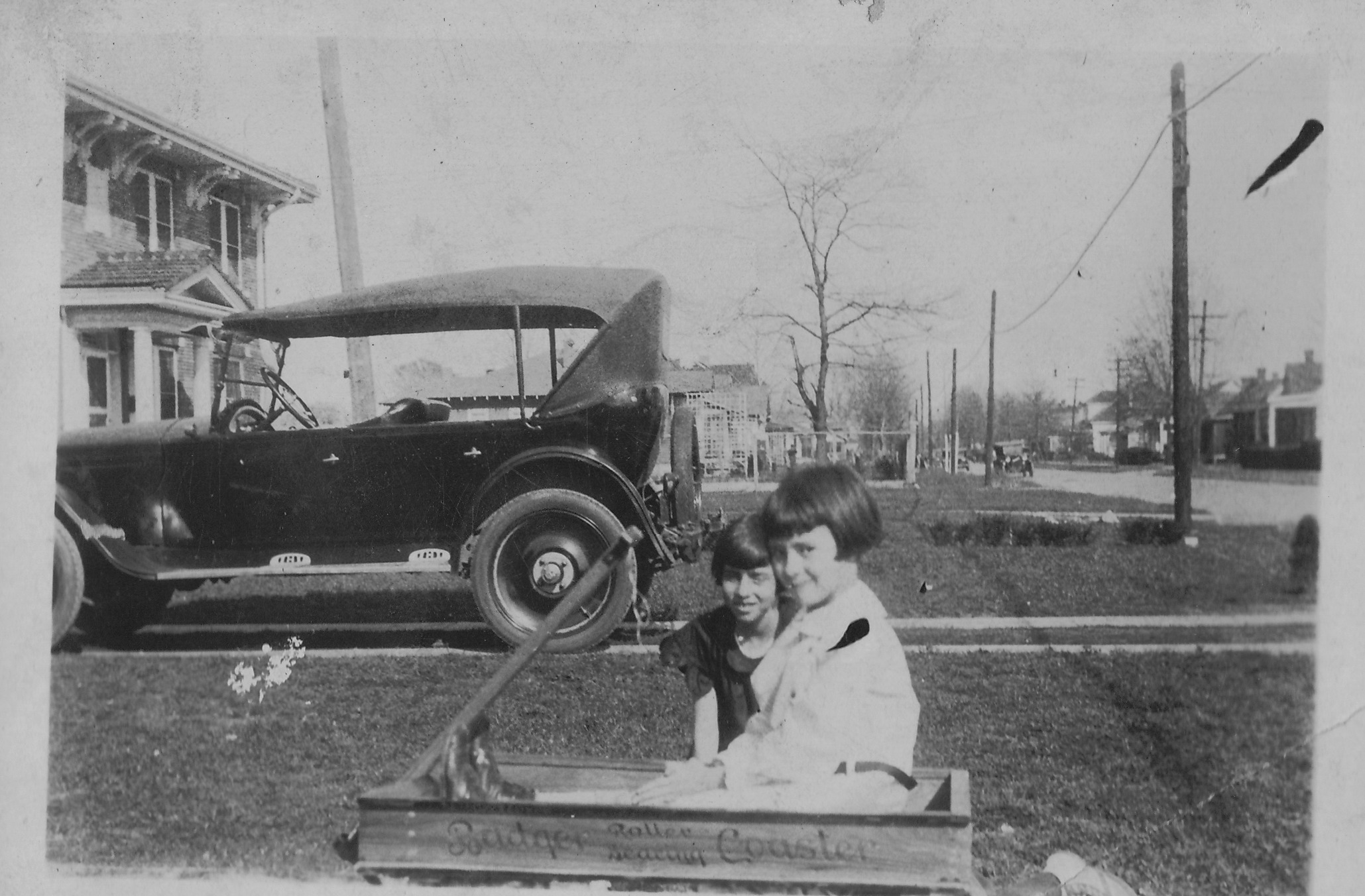
“One Sunday afternoon while Mama and Daddy were resting and reading the paper, we decided to take all of our dolls outside to play. Daddy had a long old car called a Hupmobile. At that tim all the cars had running boards which you stepped onto climb in since cars were high off the ground. We rowed all our dolls out on the running board side of the car. A little while later Daddy decided to go to the Elks Club for a little while and off he drove, dolls and all. Soon Mama got a call from Mrs. Sally Clements, who lived down the street, saying that Mr. Evans had passed her house and that when he turned the corner by the old cemetery dolls started falling off the running board and were scattered all over the street. They were rescued, but Daddy was a little embarrassed by the whole affair.”

Rena and Mamie with Hupmobile in the background

The story about the tumbling dolls was one of our favorites as children. I never heard the details of the outcome, whether Jessie went galloping up Strong Avenue with her little Indians to retrieve the dolls or Howard got a frantic phone call at the Elks Club. I think of this episode often when going by the Old Greenwood Cemetery, with its scattered, leaning monuments and ancient cedars. Sara was fascinated by that cemetery and lamented the rough treatment it received by WPA workers in the 1930s. She described how they knocked over countless monuments, heaping them up in piles to be hauled away. What she didn’t lament, but which bothered me to no end, was the fact that our City Park was built over a black graveyard. The entire burial field, black and white was once one large plot, before Leflore Avenue sliced through it. So during our days of penny carnivals and Girl Scout meetings and frolicking in the shallow wading pool and end-of-school picnics, we were “dancing on graves.” Literally.

When we cleared out Sara’s house on East Adams, the hardest part was not the packed-t0-the-rafters attics or the pantry with enough bags and boxes of sugar to feed a third-world country for months. It was the “front room,” once mine and Cathy’s bedroom but for many years the “doll room.” All of the dolls that Sara mentions in her memoirs, for the most part, had taken their rest in that little bedroom, along with her own doll creations, and it was that space that brought her the most comfort as she aged. It was a magical place, a sanctuary for one whose imagination imbued each of them with personalities and life stories and love. What a treasure.

Ed. note: Hupmobiles were manufactured from 1908 to 1940, and Greenwood’s dealership was actually in the Whittington Building, on the southeast corner of Market and Fulton streets. That building was originally the Greenwood Post Office and was converted into office space after the new Post Office opened in 1911. Magnolia Motor Company carried Studebakers and Hupmobiles, and Howard Evans most likely bought his car there. In the photo above, it sits in the driveway which separated the Evans home from the Lois Aron Nurses’ Home. Notice how small the trees are, stretching up Strong Avenue. More on the Nurses’ Home later.

Mrs. Sally Clements was the model for the kneeling woman on the Confederate Monument; I’ll have to check to see which house she lived in on Strong Avenue. She earned a place in Evans lore the day the dolls sailed off the Hupmobile.

Leflore County Confederate Monument; Sally Clements on front pedestal

Posted in Uncategorized | 2 Comments