The Circle Unbroken

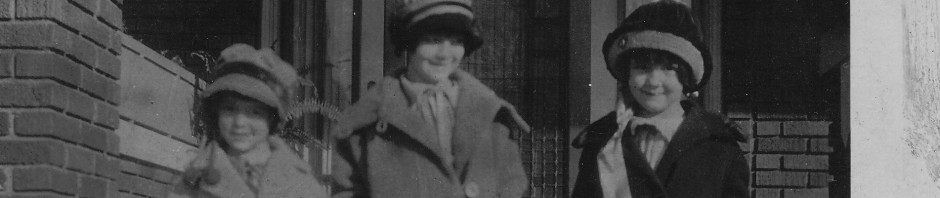
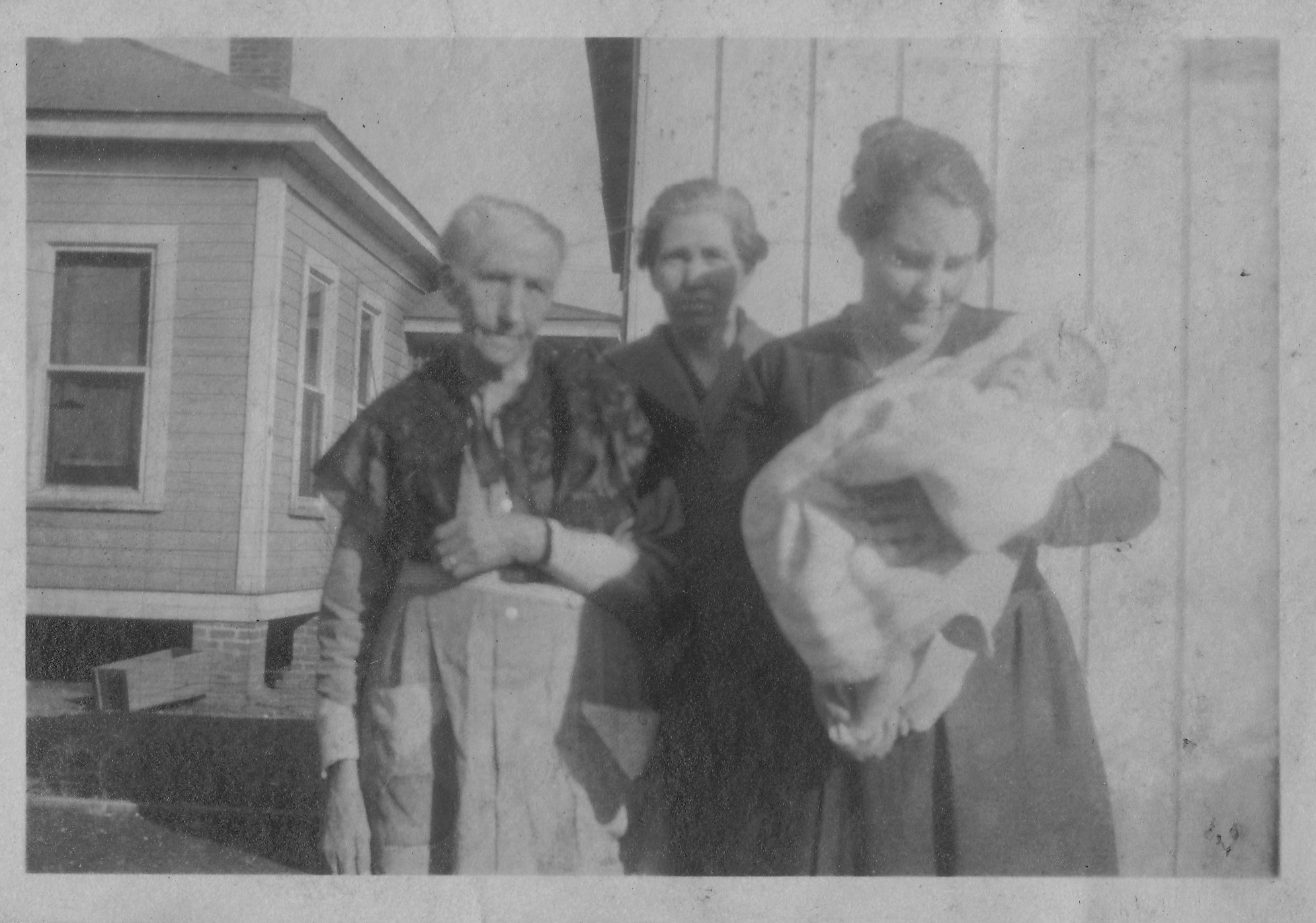
Bigma, Bama, Jessie and Sara, circa 1921.

“In April [1942] a tornado hit near Itta Bena and Greenwood. A friend who was working at the Farm Security office in Greenville and I rode over to look at the damage. We spent the night at home, and when we got up the next morning Bama was not feeling well. That was the last time I saw her conscious since she got progressively worse that week and died the next Sunday morning in her little back room. I don’t think they ever knew what she died of. Dr. Gillespie had come to the house, and they just seemed to accept the fact that she wasn’t going to make it. I am sure today she would have been put in the hospital and all sorts of tests made, and she might have lived.
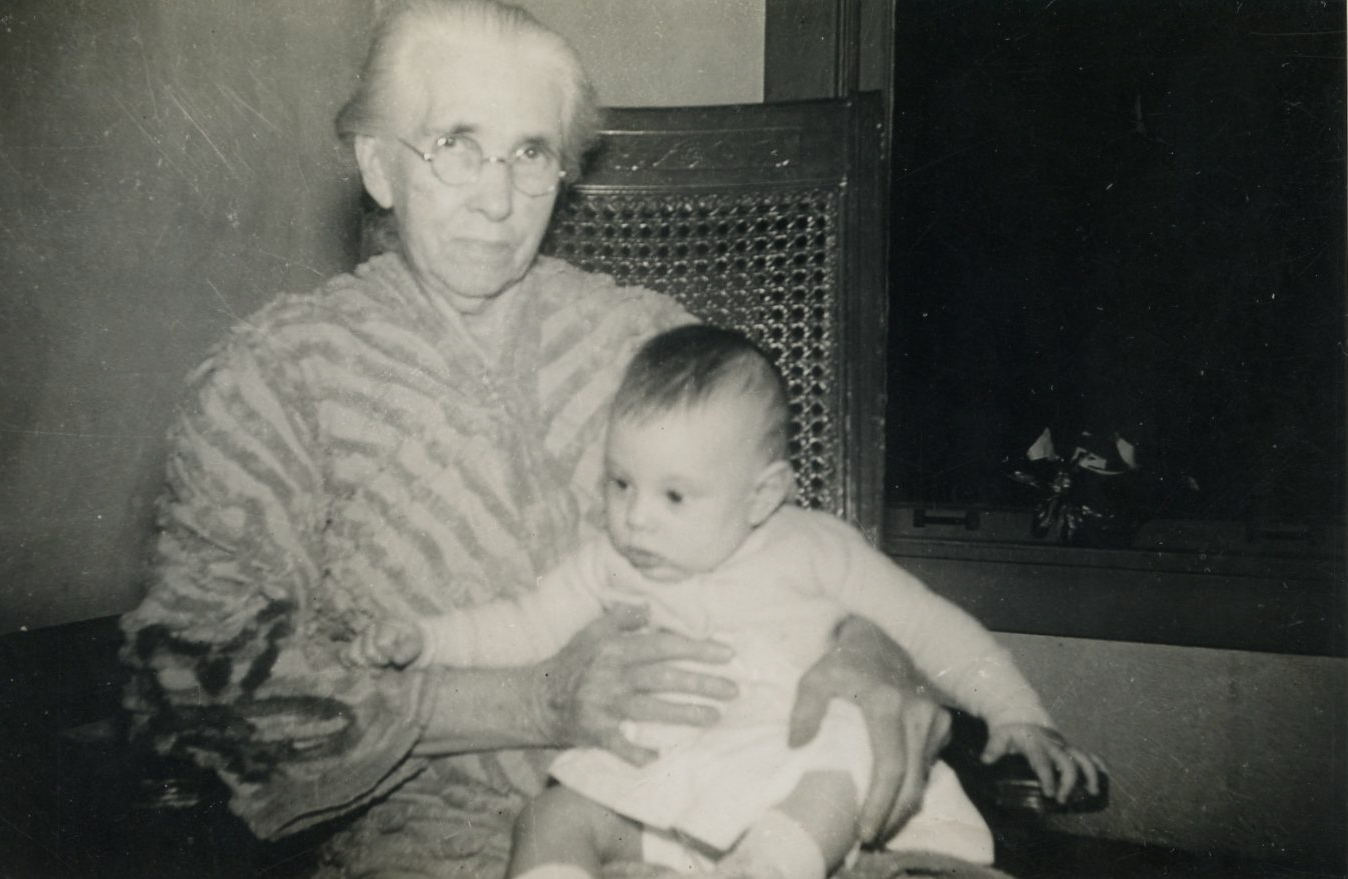
Bama with her first great-grandchild, Bill Roberson, 1941.

“She had apparently not been feeling well because she had made Mama get out a dress she wanted to be buried in. We had the funeral in the living and dining rooms with a few friends attending and her half-brother Bud from Grenada, whom we had only seen a few times. The casket was placed in front of the living room windows. She was buried on the lot with T.C. and Bigma.”

Theodorene Sproles West, 1868-1942.

And so another link to this family’s past fades into the scrapbooks and old photo albums. If you’ve followed this blog from the beginning, you may remember that “Bama,” Theodorene Sproles West, was a Confederate widow who followed her children to Greenwood in the early 1900s. She lived with Jessie’s family and then with the extended family at the Stott house on East Washington, never having her own place after about 1913. Sara rarely mentions her after they moved back to Greenwood in 1932, and I suspect that was simply because young people are busy and having fun and find the presence of prior generations vaguely disquieting if not inconvenient. She described her grandmother as quiet and emotionally distant, unlike Jessie. Still, I’m sure there was a lonely gap after Bama died, and I think of her often as we go now to our cabin in Holmes County. The sense of place is very, very strong there, and I am grateful, as was Sara, for those pioneer genes that we inherited from our Holmes County ancestors.
Posted in Uncategorized | Leave a comment

Never Forget

Sara Evans Criss, April 1, 1921-September 11, 2009.

On this day of national remembrance and reflection, daughterofthedelta also pauses to remember Sara, who would have never left this world on a slow news day. -30-

Posted in Uncategorized | 2 Comments

The Home Front

Russell on maneuvers, probably in Texas

“I got a letter from Russell written that Sunday [December 7, 1941]. He was very discouraged and down knowing that the year he signed up for would stretch into no telling how many years and that he would probably be going into combat and might never get back. He had written home for some of his civilian clothes so he could cross over from El Paso, where he was stationed, into Mexico, which was just across the border, because you were not allowed to go over in uniform. His clothes got there the day after war was declared and then you could not be out of uniform, so he never got to Mexico, at least not until many  years later.

Mamie, Tricia and Sara, 1942. The old Attlesey house is visible in the background.

“By 1942 there were not many boys left in town. Those who had not been drafted had signed up in the Air Corps, Navy, Army or Marines. In late 1941 the Farm Security had transferred me back to Greenville. Miss Annie did not have a vacant room so I found one at Miss Hazel Wheatley’s home, which was also near downtown. There I had to share the bath with about six other girls, and it wasn’t as much fun as staying at Miss Annie’s. However, I was just glad to be back in Greenville after they had farmed me out for a week in Charleston and two weeks in Lexington. In Lexington I had to stay in a big boarding house. There was a pot-bellied stove in my bedroom, and Mr. Ginn came in early every morning to light the fire. I would pretend I was asleep since I was embarrassed to have him coming in my bedroom.

“Some girls I had met while I was in Greenville before asked me to share an apartment with them, and I would have been much happier I am sure, but Mama just did not believe in young girls living in apartments with no chaperones.”

Posted in Uncategorized | Leave a comment

Gone for a Soldier

“It was very hot and dusty in Oklahoma and they were having to make long hikes with a lot of equipment on their backs, and he [Russell] was pretty miserable. He started writing as soon as he left Greenville, and I wondered sometimes if things had been different and there had not been a war he might have remained indifferent as he had sometimes been when we were in Greenville. The war had a way of making us all feel different. The future was so indefinite and things were changing so, and I think most of the boys were trying to cling to some sort of security back home.

Joe Labello and Russell, 1942.

“He went on to maneuvers in Louisiana and then was put in the medical department of the 160th Field Artillery of the 45th Division, and sent to Fort Bliss in El Paso to train at William Beaumont Hospital.

45th Infantry Thunderbird.

He got a few furloughs home but was always more unhappy when he had to go back and never knew when they would be going overseas. They trained for all kinds of climates and rumors ran wild as to where they would be going overseas. On one of his furloughs we were sitting at a drive-in restaurant when he proposed and decided we should get married before he went back. I was only 20 and could not see getting married and not knowing when he might leave or how long he might be gone.

Russell with Tricia and Sara, just before being sent overseas

“From Camp Barkley, Texas, the division moved by train to Fort Devens, Massachusetts in 1942. It was while they were receiving intensive training for overseas duty. They tried to teach those who could not swim to swim at Cape Cod, but there was one major and Russell who never learned. He still didn’t get out of making amphibious landings in water up to neck though.

“From Fort Devens, they were sent to Pine Camp, New York, where the temperature went to 42 degrees below 0.

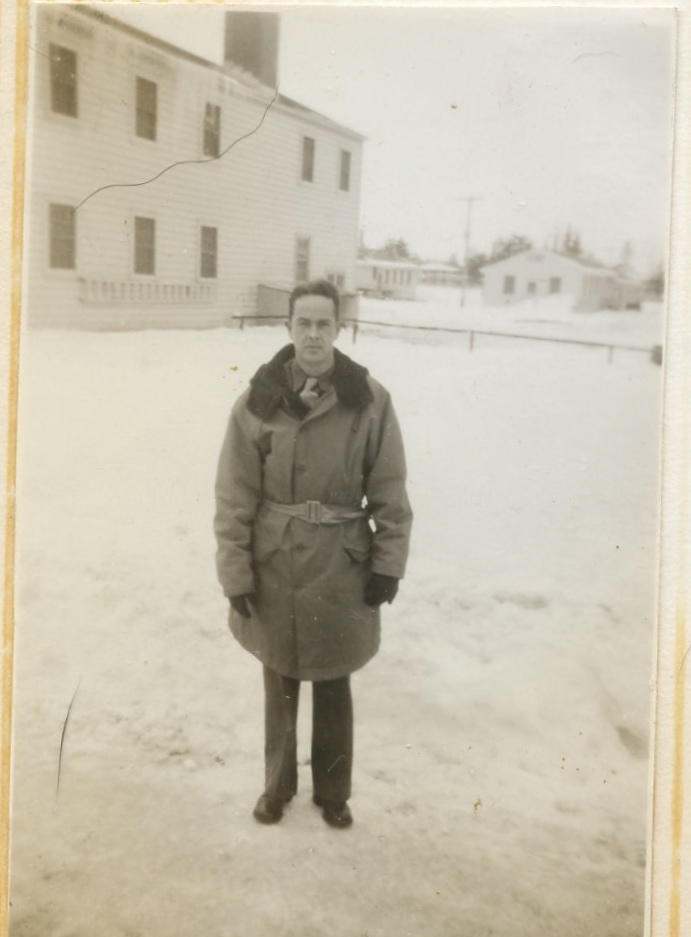
Russell on Christmas Day, 1942, at Pine Camp, NY. This is not natural for a Mississippi Delta boy.

They spent Christmas there in 1942 and moved to Camp Pickett, Virginia, in the spring to prepare to embark for Europe. On June 5, they sailed from Norfolk, Virginia to Africa and on to the invasion of Sicily in August.

“He was terribly homesick and hated the army and wrote nearly every day. His division had 511 days of combat, the most of any division in the European theatre. They made the invasions of Sicily, Salerno, Anzio, Southern France and on into Germany.”

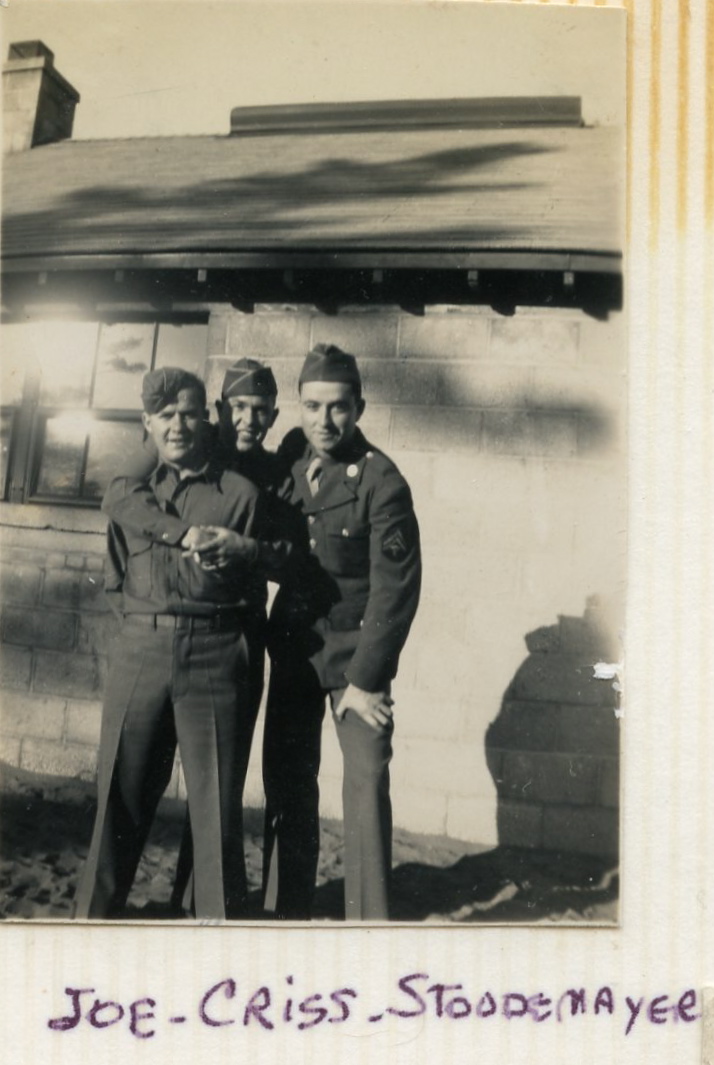
Joe Labello, Russell Criss and Carlton Stoudemayer

I think Sara made the right decision in not accepting Russell’s proposal at that drive-in in 1941. After all, she had known him for only a few months and he might never make it back from the war. But can you imagine how forlorn he was as he climbed back on that bus for the long ride to Texas? He was leaving behind a very attractive, vivacious young lady who had plenty of opportunities for companionship, and who knew how long she would wait? But she did wait, through four long years of terrifying headlines and uncertainty and fear. I simply can’t read the letters that this kind, gentle man wrote to Sara from North Africa, Italy and Germany as his 45th Division suffered through 511 days of combat hell. He was my emotional rock all my life, and I can’t yet deal with the despair and loneliness that radiates off those pages. Someday I will turn from Sara’s life story to Russell’s, but for now I’m just grateful that this tale has a happy ending, even if that sad soldier couldn’t see it coming.

Posted in Uncategorized | 9 Comments

Infamy

“I was riding around with Son McMillan and a boy named Joe Ross from Minter City on Sunday afternoon, December 7, 1941, when I first heard about Pearl Harbor being bombed. We had been hearing so much war news and rumblings of war that somehow it did not make that big of an impression on me as to the horror of it and that by the next day we could be in two wars, one in Europe and one in the Pacific.

“Ramon Harris, Mrs. Barron and I left the Farm Security office and rode around so we could listen to President Roosevelt on the radio declaring war. It is hard to express the feelings you had, and there was no way that we could fully comprehend what was to come.”

Posted in Uncategorized | Leave a comment

Ramon and Russell

Ramon Harris, Sara's boss and sometimes date.

“My job in Greenwood was much more pleasant. There were three of us in the office, Mrs. Lillian Barron, home economist, Ramon Harris, the supervisor and thirty-seven-year-old bachelor, and myself. We all went to a district party together, and Ramon and I started dating. Of course he was too old for me, but older men had always appealed to me from the time I fell in love with my teacher, Howard Lewis, in the eighth grade. Looking back, maybe I was looking for a father figure since I had missed my Daddy so. Anyway, an age difference never bothered me.

“Meantime Russell had left the drugstore in Greenville and was selling Bruce’s Juices. He stopped by the house one day when I was at work so I did not see him, but got plenty of teasing from Mary about having a boy friend who sold Bruce’s Juices. By this time she was teaching in Itta Bena and coming home a lot on weekends.

Russell at Camp Barkley, Texas. Sara's notation says this was his "first tailor made suit and last time in civilian clothes," so it must have been late 1941. He was 24 years old.

“Since his draft number was coming up soon he decided to go on and enlist, thinking all the time that a knee he had injured playing high school football would keep him out. Instead they grabbed him up and made him the leader of a group of selective service draftees leaving Greenville in June for Camp Shelby in Hattiesburg. I had not seen him since leaving Greenville in April and we had not stayed in contact. He had enlisted for what was supposed to be a period of one year, making $21 a month. From Camp Shelby he went to Fort Oglethorpe, Georgia and on to Fort Sill, Oklahoma.”

Posted in Uncategorized | Leave a comment

The One

Russell Criss and Frankie Hitt in Findlay's Drug Store, 1941.

“Two men had rooms in the other side of the house, but they had a separate entrance and their own bath.

Leroy Hammett, one of the male boarders at Miss Annie's.

There was a boarding house, Mrs. Sharkey’s, where I could eat my meals if I wanted to, across the street, but I more often stopped by Finlay’s Drugstore to eat. I could eat three meals a day at the boarding house for $30 a month. When I ate at Finlay’s I could get a pimiento cheese sandwich, a Coke, and a wonderful piece of pecan pie for twenty five cents.”

Butch Nabors, Russell's roommate, on Main Street, Greenville.

“One reason I liked eating at the drugstore was everyone in there was so friendly, including Russell Criss, who was in charge of the soda fountain. He very quickly conned me into typing the stencils for his menus each day and finally, on New Year’s Day, 1941, borrowed one of the pharmacist’s cars and invited me to go get a sandwich. He lived just a few doors down from Miss Annie’s house in a rented room. We began having a few dates but were not going steady or anything. He had to work a lot at night since the drugstore stayed open until ten, and he did not have a car.

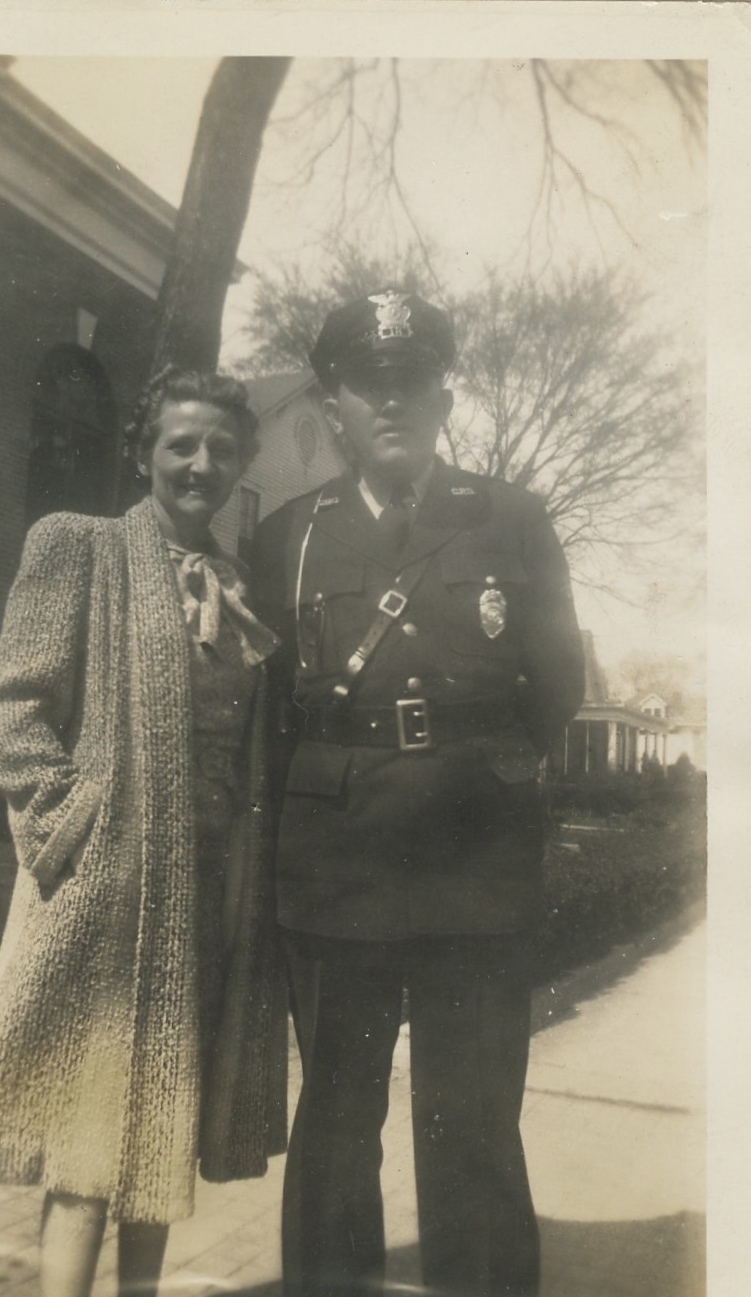
Eulalie Johnson and a Greenville policeman

“My first job almost turned into a disaster as the woman I had to work under, Bernice Pabst, was well known for her mean disposition. She immediately decided to take it out on me because I was young, and she knew she could get by with it since the boss, Rex Morphis, was like a big overgrown baby and had no backbone at all. He would let her get by with anything. The district director, Mr. Rich, knew how she was treating me so in April he asked me if I would like to go back home and work in the office there while the secretary, Olene Lary, took time off to have a baby. I jumped at the chance though I hated to leave Greenville where, other than at work, I was having a good time.

“I had been dating a boy named Billy Payne, who I had a date with the last night I was in Greenville. I asked Russell to get me a big box to pack some of my things in. When he found out I had a date he sent me the box but did not even say goodbye, and I did not figure I would be seeing him anymore.”

For those of you who read romance novels, no need to panic. This is going to turn out OK, trust me. It’ll just take a bit longer.

Posted in Uncategorized | Leave a comment

City Lights

NYA poster from 1937

“I continued to attend Draughon’s. Then I got a part time job with the District Extension Office under a youth program known as the NYA, where the federal government paid me a huge salary of $11 a month to help them out. Meanwhile as a result of my Civil Service exam I was beginning to get more telegrams offering me jobs with the Farm Security Administration (later called the Farmers Home Administration) at the Stoneville Experiment Station near Greenville and at Key Field, an air base near Meridian. After several offers at FSA offices in rural areas, I finally decided to take one a Mayersville, a small village which was the county seat of Issaquena County.

“Mama hired a black man to drive Big’s car, and we loaded up all my possessions and headed to that remote spot which had little other than county offices and a few houses. Without a car, and not being able to drive if I’d had one, I would have been totally isolated with no way to even get home. It was a disappointing trip, but Mama and I both decided it would be best to head back to Greenwood with all my belongings.

“When I turned that job down they offered me one in Greenville, where I would earn $70 a month. So again in December, 1940, we loaded up and set out for Greenville, not knowing anyone or where I would stay. Of course, Greenville was a big improvement over little Mayersville, and I was excited and scared over my first real job. We found a room at Miss Annie Moore’s for $15 a month.

Miss Annie Moore's boarding house, 113 North Shelby, Greenville, 1941. Sara lived here from December, 1940 until April, 1941. That's Eulalie Johnson on the left and maybe Russell Criss on the right.

She was a delightful landlady, about sixty, and lived in the family home with big old fashioned high ceilinged rooms. It was less than a block from downtown Greenville and only a few blocks from the office where I would be working. The only bathroom had been added on to the back of the house, and I even had an old fashioned wash bowl and pitcher in my room since it was so far back to the bathroom. I shared the bath with Miss Annie and Mrs. Eulalie Johnson, who also had a room there.

Miss Annie and Eulalie, clowning around in the clothesline laundry.

“Miss Annie worked for the Welfare Department and was a fun person. Eulalie was  about forty and divorced and worked at one of the downtown banks. The two of them just took me under their wing since I was only nineteen and really on my own for the first time.

 Eulalie Johnson and Miss Annie Moore, 1941.

I wonder if these two little ladies realized at the time, or even years later, how much their kindness affected nineteen-year-old Sara? If they had been aloof or cruel, she would have fled back east on Highway 82 for the safety of Greenwood and family. Instead, she found a new home, if only briefly, on Greenville’s Shelby Street, and those few months would change her life forever. She was gone again by April of 1941 but I like to think that she stayed in touch with Miss Annie and Eulalie, and that they stayed as witty and impish as they seem to be in these photos.

Ed.note: Eulalie Johnson does not appear on any available Ancestry.com records, but Annie Moore was living in the same 113 Shelby Street house as early as 1930. Her mother, Eliza B. Moore, was listed as “widowed” and was already renting out rooms to lodgers. Annie was 47 at the time of the 1930 census, so she would have been in her late 50s when Sara moved in. On Google maps, the house appears to have been torn down and replaced by Methodist Church buildings, but I’ll just have to drive over to Greenville and see for myself.

Posted in Uncategorized | 2 Comments

The Gathering Storm

Sara in 1940

“By this time [1940] the war in Europe was worsening and it looked more like we would be drawn into it. All of the boys had had to sign up for the draft, and a lot of them were joining the Royal Air Force of England or signing up for the Air Corps or other branches of service. The local National Guard unit the 114th F.A. of the 31st Division, was mobilized, and when they left in late 1940 we began to realize that this thing was for real. They went to Camp Blanding in Florida.

“The government was beginning to hire girls for Civil Service jobs in Washington. Those jobs started out paying $120 while most local secretarial jobs paid only $60 or $70 a month, and it seemed sort of glamorous to be going to Washington for work. So I took the Civil Service exam and soon received a telegram offering one of those ‘big’ government jobs. I was the first person in Greenwood to receive an offer so immediately my head was filled with dreams of a glamorous life in the nation’s capital.

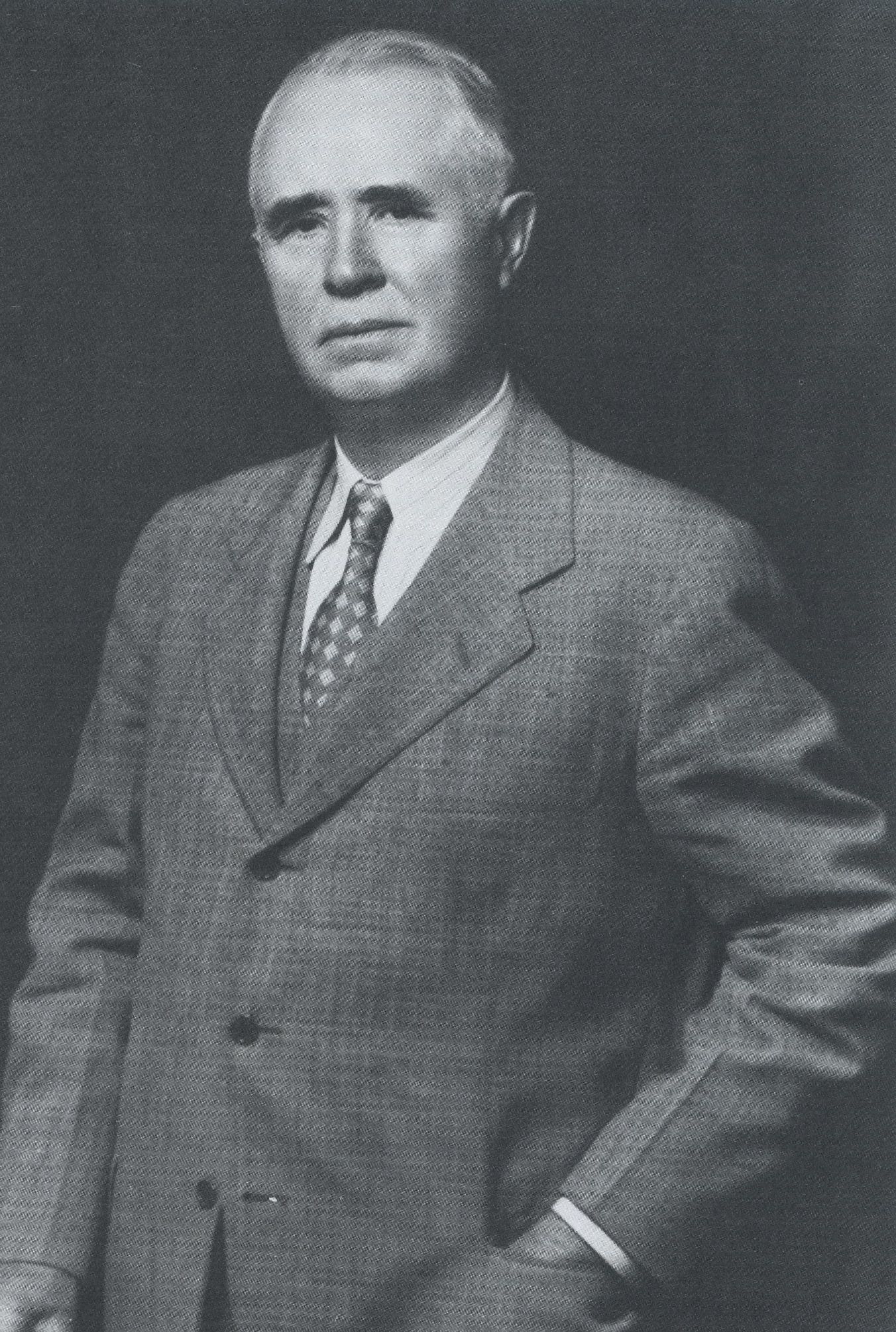
Congressman Will Whittington

“Mr. Will Whittington, who served as our Congressman for many years and who lived past us on Market Street, walked past our house every day when he was back in Greenwood. Mama could hardly wait to corner him the next time he went by to get his opinion on young girls going to Washington to work, feeling sure that in his good Baptist opinion, it would not be the proper thing to do. He obliged, telling her of the bad things which went on in the big city and adding that he would not want a daughter of his working up there. His message was passed on to me with the suggestion that I forget any plans I might have to go, and when Mama said ‘No,’ we just accepted it that that was the way it was.”

I found that telegram among Sara’s mementoes after she died (and of course now I can’t locate it to be scanned) and I had to sit down and think about its implications for awhile. She never once mentioned that she had this offer or that she desperately wanted to accept it. Isn’t it odd how you just assume your parents’ lives were preordained and that there were never roads not taken? And don’t you know there were sparks flying on East Washington when Jessie burst her bubble? Sara always seemed to admire Congressman Whittington, but it wouldn’t surprise me if she never gave him her vote.

Posted in Uncategorized | Leave a comment

Working Girl

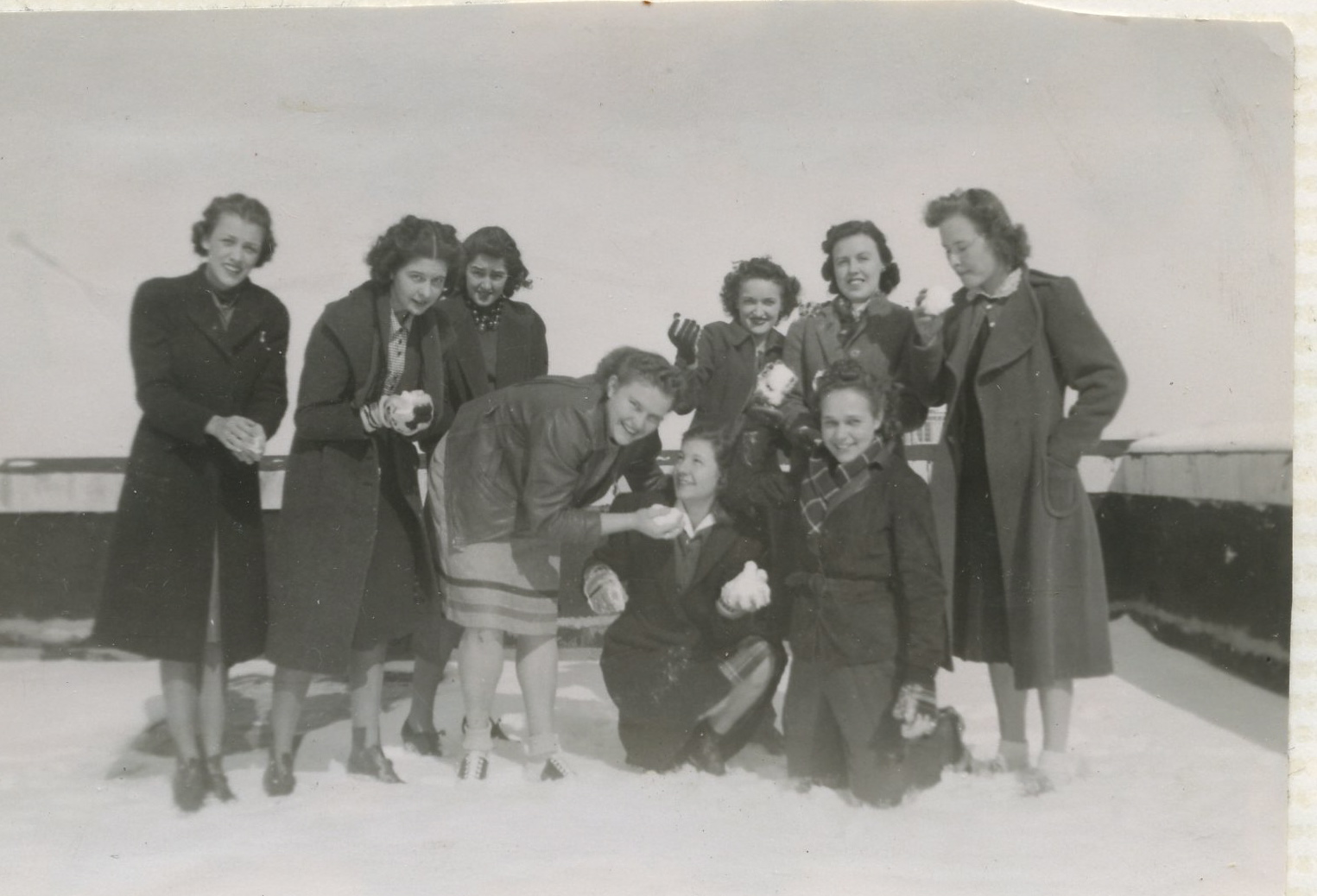
George Woolfork, S.R.Stephens and Hilda Pritchard, cutting up at DSU in the 1940 snow.

“We could only date on the weekend [at Delta State] and were not allowed to ride in a car (although we did). You could walk to the show on Friday night but had to be back in the dorm by ten. Saturday night you could only date in the lobby of the dormitory, and Sunday you could walk to church and be back in by nine. We had to sign in and out of the dormitory and were not supposed to even walk to town without signing out that we were going. There was one telephone in the three story dorm, and you could receive calls only during a thirty minute period each night, so with everyone receiving them or making them during that time, it was hard to talk to anyone.

“T.D. and I dated until about Thanksgiving, and then I think he got tired of all the restrictions, and he stopped calling for dates, thus ending about the only fun I was having. Later during the war he was stationed in the Pacific and we started writing. When he came home he wanted to start going together again, but this time it was my turn to back off since I was going with Russell, who was overseas.

Ward Hall girls in the Great Snowstorm of 1940.

“In January, 1940, we had a big snow and we enjoyed playing in it. It was still on the ground when I came home and went to Memphis with Lucille McAlexander and her family and Mack to see the movie Gone With the Wind, which had just been released.

Christine Dorsey, Sara's best friend and co-conspirator in dropping out.

“My best friend at college was a girl named Christine Dorsey from Clarksdale. She didn’t like school any better than I did. After Christmas we started talking about quitting school, and in early February she and I caught a ride to Greenwood and talked it over with Mama. I told her I was just wasting her money sending me over there to take business courses, so she agreed to let me quit if I would go to Draughon’s Business College in Greenwood, and that I could not just play and visit Christine, which is really what we had in mind, espcially since I was dating a friend of hers in Clarksdale.

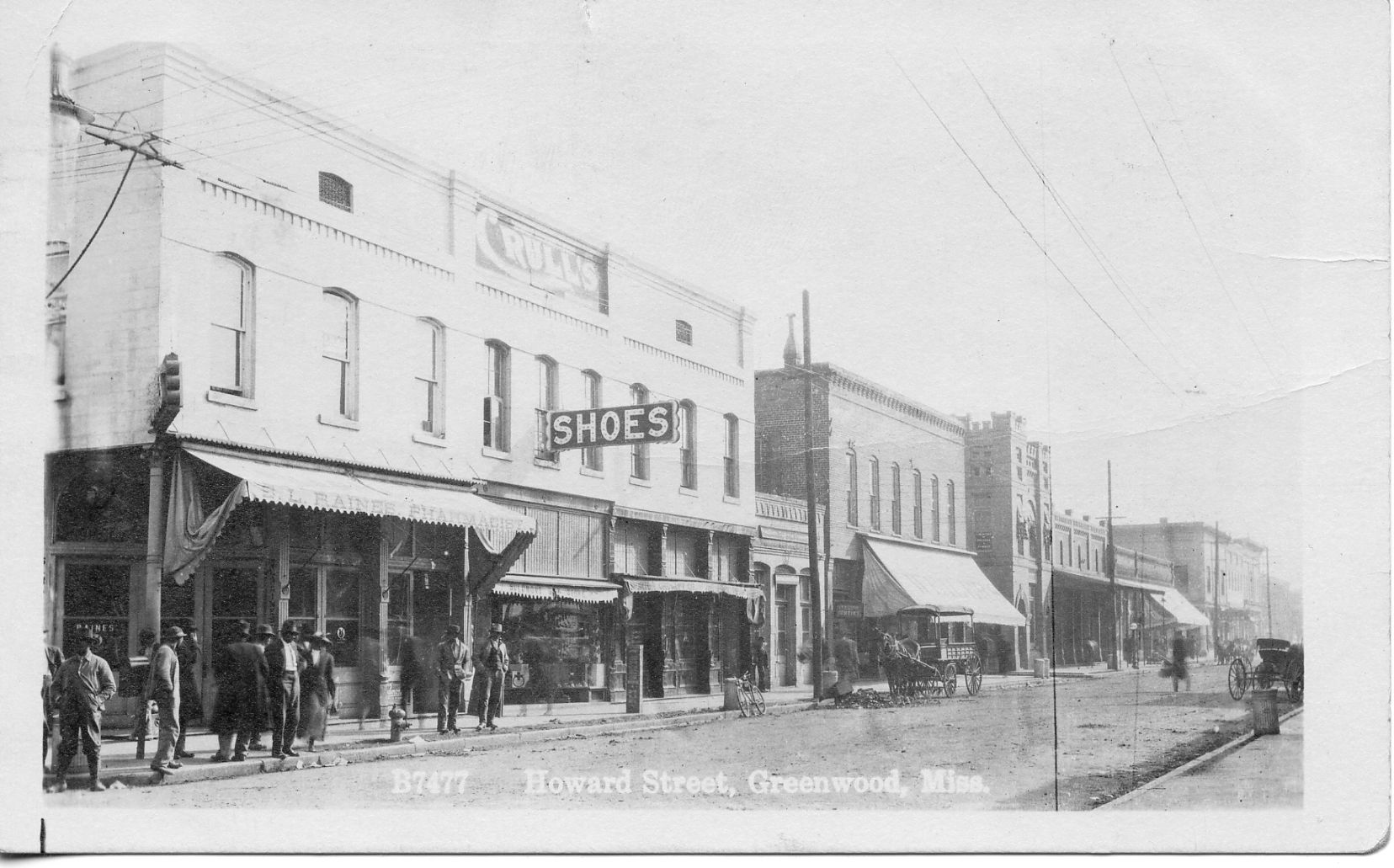
“And so soon after I got home I headed to the business college, which was up over the City Drugstore on Howard Street. Again I was just taking subjects I had already had in high school and at Delta State, but I was to stay there until a job came along. Meanwhile Mr. and Mrs. Bloodworth, who ran the school, would send me out to work in various offices or businesses while a secretary was on vacation. I got a lot of experience this way. Some were pleasant, others were not. The worst place I worked was at Weiler’s Jewelry Store, a big store on Howard Street across from the Bank of Greenwood.

This photo of Howard Street was taken many years before Sara's days at Weiler's Jewelry, but the store is the one with a large awning, just behind the buggy.

It was supposed to be one of the finest jewelry stores in the south and was owned by Rebecca and Millard Weiler. They had an old beat up typewriter on which they expected me to turn out neat looking correspondence. One or the other of them would stand up at the front of the store and shout, ‘Take a letter,’ to me, sitting in the back of the store. I was scared to death of them. That job lasted two weeks and I was glad to see it end. Later Mrs. Weiler begged me to come to work there. I was already working at the Chamber of Commerce by that time but don’t think I could have stood to work there anyway.”

Ed.note: Weiler’s Jewelry Store was located on the east side of Howard Street in the 200 block. For many years it housed Fisher’s Stationery and now Port Eliot.

Posted in Uncategorized | Leave a comment